







What Sets Panama Geisha Coffee Apart?
Panama geisha coffee owes its reputation largely to Hacienda La Esmeralda, which brought the variety to prominence. The plant originated in Ethiopia's Geisha forest, was sent to Kenya in 1932, and later reached Panama. Today Panama's three core producing regions and La Esmeralda's plots define much of the top-tier market.
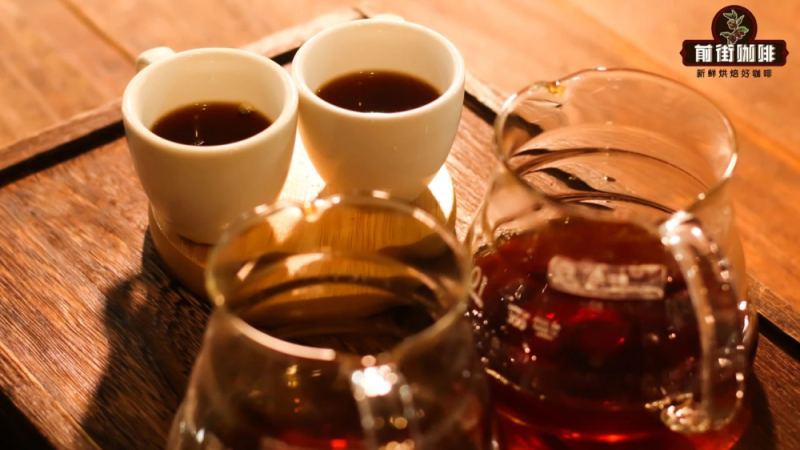
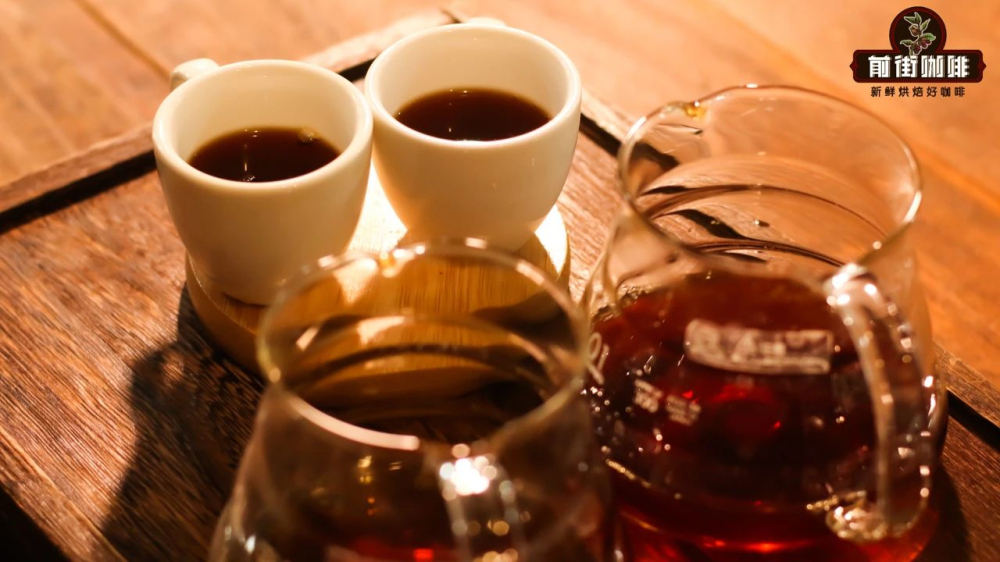
La Esmeralda grades its geisha as Red, Green, and Blue Label, each with its own flavor positioning and price tier. Comparing washed and natural Green Label lots shows how processing shifts the cup. A V60 pour-over, with a set dose, grind, and water temperature, is commonly used to brew these lots cleanly.
Geisha coffee has become the most sought-after variety in the specialty coffee world in recent years, and Panama's Hacienda La Esmeralda is the key force that propelled this variety to legendary status. Starting from observations at Front Street Coffee's stores, this article traces Geisha's spread from the forests of Ethiopia to Panama, explains Panama's three core producing regions and Hacienda La Esmeralda's three major plots, and breaks down the flavor positioning and grading logic of the three tiers: Red Label, Green Label, and Blue Label. At the same time, Front Street will also compare and brew the washed and natural versions of Green Label Geisha, providing specific V60 pour-over parameters and flavor descriptions to help coffee lovers understand Geisha's charm more systematically.
For more specialty coffee knowledge, please follow the WeChat official account: Front Street Coffee (FrontStreet Coffee)
During Front Street's in-store service, the age distribution of consumers is quite broad, which has also led Front Street to notice an interesting change: older coffee lovers often regard Blue Mountain coffee as the top choice in their minds, while the "most expensive and best" pursued by relatively younger consumer groups has quietly shifted from Blue Mountain to Geisha.
During Front Street's daily operations, this enthusiasm for Geisha is especially obvious. Many customers, upon hearing that Front Street's most expensive natural Red Label Geisha is only 75 yuan per cup, directly ask for Geisha as soon as they come in; if they prefer the clean and crisp mouthfeel of washed coffee, they can also choose the 60 yuan Green Label Geisha. However, if you look closely at Front Street's bean list, you'll find that the store simultaneously sells Geisha from two producing countries—one is Ethiopia, and the other is Panama. Recently, Front Street has also added two new Geisha coffee beans, from Colombia and Costa Rica respectively.
When it comes to Geisha, how much do people actually know? Although Geisha rose to fame in Panama, according to testing results from authoritative institutions, the variety's place of origin is actually Ethiopia. Next, Front Street will discuss the variety origins and historical trajectory of Geisha coffee beans: in 1931, Geisha was discovered in the Geisha forest in Ethiopia; in 1932 it was sent to the Kenya Coffee Research Institute; in 1936 it was introduced to Uganda and Tanzania; in 1953 it spread to Costa Rica; and only in 1960 did it finally arrive in Panama.
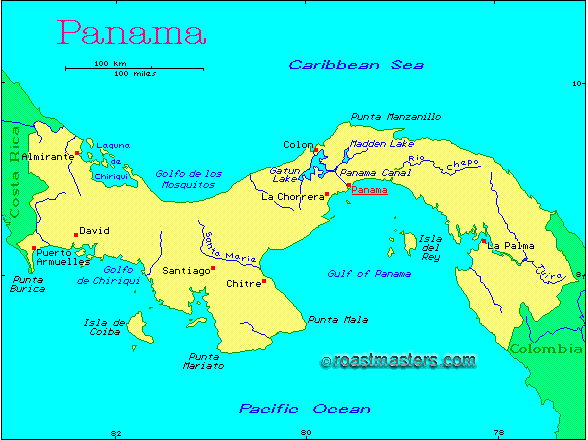
Nowadays, whenever Geisha coffee is mentioned, everyone almost assumes it refers to Panama Geisha. So Front Street might as well take this opportunity to introduce Panama's coffee-producing regions and the world-famous Hacienda La Esmeralda. First, a bit of basic geography: Panama is located in Central America. On a world map, it borders Colombia to the east, the Pacific Ocean to the south, Costa Rica to the west, and the Caribbean Sea to the north. It lies between 7° and 10° north latitude, right within the coffee-growing belt. Specialty coffee emphasizes high-altitude cultivation, and Panama also has this condition. The eastern region has lower elevations, while the west is the area most suitable for growing coffee. Panama's three main coffee-producing regions are all concentrated in Chiriquí Province.
According to Front Street's understanding, Panama's specialty coffee-growing areas are mainly divided into three: Boquete, Volcan, and Renacimiento. Among them, Boquete is the most famous, with an average elevation between 1,400 and 1,900 meters, near the western border with Costa Rica. The Boquete producing region is home to many excellent estates, such as Elida Estate, Hacienda La Esmeralda, and Duncan Estate. It is located in the Barú Volcano area, where the soil is fertile volcanic ash and the microclimate is quite variable.
Hacienda La Esmeralda in Panama can be said to be a coffee estate with a very long history.
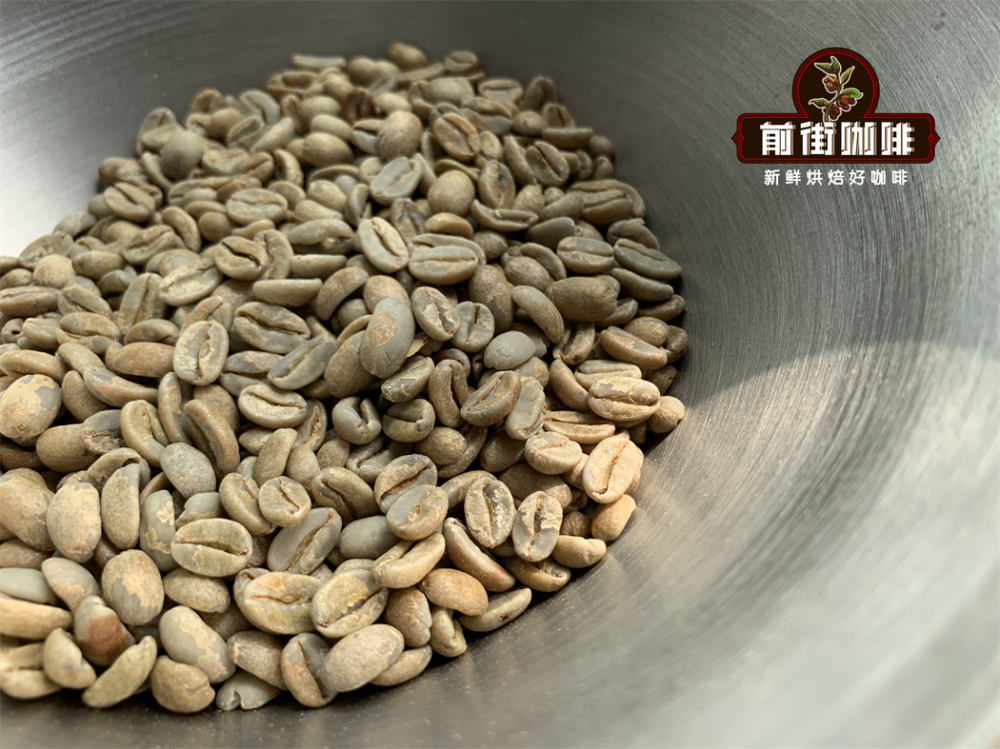
In 1964, retired American banker Rudolph Peterson moved to Panama and bought the land that later became Hacienda La Esmeralda. In 1973, his son returned home after earning a doctorate to help manage the estate. In 1987, the estate introduced the Caturra and Catuai varieties. In 1994, the estate established a wet-processing plant and from then on had its own coffee-processing facilities. In 1997, it also purchased the nearby Jaramillo estate, which has superior geographical conditions, and incorporated it into the Hacienda La Esmeralda holdings.
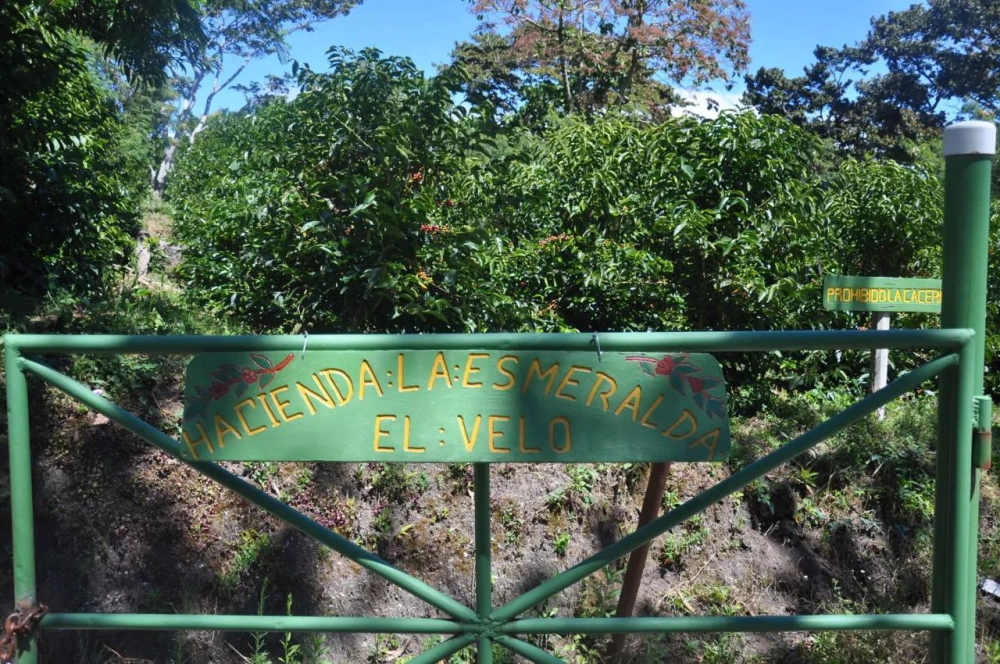
At present, Hacienda La Esmeralda has three major plots: Canas Verdes, Jaramillo, and El Velo. Front Street also found detailed information on these three plots on Hacienda La Esmeralda's official website:
Canas Verdes has annual rainfall of about 3,500 milliliters, average daytime temperature of 16 to 23°C, average nighttime temperature of 10 to 15°C, and average elevation of 1,600 to 1,800 meters. This plot contains 9 small subdivisions: Lino, Coronado, Fundador, León, Montaa, Trapiche, Chinta, Cabaa, and Tumaco.
Jaramillo has annual rainfall of about 4,000 milliliters, average daytime temperature of 19 to 25°C, average nighttime temperature of 11 to 15°C, and average elevation of 1,600 to 1,700 meters. Jaramillo is subdivided into 5 small plots: Mario, Noria, Reina, Bosque, and Buenos Aires.
El Velo is the most recently purchased plot of Hacienda La Esmeralda, with an average elevation of 1,700 to 1,900 meters. In addition to growing Geisha and Catuai, it also retains a small number of other introduced varieties, such as Laurina, Pacamara, Mocha, and SL28. El Velo is divided into 7 small plots: Guabo, Portón, Durazno, Higuerón, Higo, Buena Vista, and guila.
Front Street believes that one important reason Hacienda La Esmeralda is so highly sought after is that it has established a very refined grading system. In order to cater to the flavor preferences of different audiences, the estate divides Geisha coffee into three grades based on growing elevation, growing plot, and cupping performance: Esmeralda Special, Private Collection, and Geisha 1500 (Hacienda La Esmeralda cancelled the Geisha 1500 grade in 2021). Next, Front Street will introduce these three grades of Geisha coffee one by one.
First, Esmeralda Special, commonly known in China as Red Label coffee beans. Its growing elevation is between 1,600 and 1,800 meters, its cupping score must reach 90 points or above, and it comes from the Jaramillo and Canas Verdes plots.
Hacienda La Esmeralda holds its own independent auction every year. Only Geisha lots from designated plots that are put up for auction can truly be called auction Red Label. There are also non-auction Red Labels on the market, which are actually Geisha from the same plots that did not participate in the auction and flowed into the market. The variety and quality are the same; the only difference is the price. Red Label Geisha is processed by natural or washed methods, with flavor expressions of distinctive and bright floral and citrus notes.
Front Street's latest batch of Red Label Geisha comes from the Mario plot of Jaramillo farm and uses a slow natural process. It has an intense aroma of jasmine, citrus, and berries, accompanied by a honey-like sweetness.
Front Street Coffee (FrontStreet Coffee): Hacienda La Esmeralda Red Label Geisha Coffee Beans
Region: Mario plot, Hacienda La Esmeralda, Panama Elevation: 1700+m Variety: Geisha Processing Method: Slow Natural Flavor: Citrus, Jasmine, Honey, Berries
Private Collection, commonly known as Green Label, belongs to non-independent competition lots, meaning Geisha varieties that do not participate in auctions but still have excellent quality. It uses a blend of micro-lots grown at elevations between 1,600 and 1,800 meters from different plots such as Jaramillo, Canas Verdes, and El Velo.
Because it is a blend, the specific plot is not specially marked, but occasionally Green Label's flavor can be very similar to Red Label. Although Green Label is a lower grade than Red Label, it still retains the classic Geisha flavor. Like Red Label, it also has washed or natural processing options.
Front Street Coffee (FrontStreet Coffee): Hacienda La Esmeralda Green Label Geisha Coffee Beans
Region: Boquete producing region, Panama Elevation: 1600m——1800m Variety: Geisha Processing Method: Washed Flavor: Jasmine, Citrus, Melon, Berries, Orange Peel.
Finally, let's talk about the most common Blue Label Geisha, also known as Geisha 1500. Its elevation information is directly reflected in the name—1,400 to 1,500 meters—and it is a blend of beans from the three plots of Jaramillo, Canas Verdes, and El Velo. In 2020, Hacienda La Esmeralda added a washed processing method to Blue Label, so Blue Label also has both washed and natural versions. But Hacienda La Esmeralda made a new move in 2021, cancelling the Blue Label brand, which means Blue Label is about to exit the market—once it's gone, it's gone. As for the specific reason for the cancellation, it is currently unclear.
Front Street Coffee (FrontStreet Coffee): Hacienda La Esmeralda Blue Label Geisha Coffee Beans
Region: Boquete producing region, Panama Elevation: 1500m Variety: Geisha Processing Method: Natural Flavor: Lemon, Oolong Tea, Cane Sugar, Peach
Front Street's regular customers should know that Front Street's Green Label has both washed and natural versions, so many consumers ask baristas: what exactly is the difference between the two? Today, Front Street will do a comparative brew of the two in this article. Before that, let's first understand how these two processing methods differ.
Natural processing means drying the whole coffee cherry directly. During the drying process, the skin and pulp are retained. This means that natural beans will be more complex in flavor and mouthfeel than washed beans, with more prominent sweetness; washed beans, on the other hand, are cleaner and brighter than natural beans.
Front Street Coffee (FrontStreet Coffee) Pour-over Brewing Parameters: Dripper: V60 #01 Coffee Dose: 15g Coffee-to-Water Ratio: 1:16 Grind Size: EK43s#10.2 Water Temperature: 90-91°C
Front Street Coffee (FrontStreet Coffee) uses staged extraction, also called three-stage brewing: first bloom with 30 grams of water for 30 seconds, then pour in a small stream in circles to 125 grams for one stage, wait until the water level drops and is about to expose the coffee bed, continue pouring to 225 grams and stop, and when the water level drops again and is about to expose the coffee bed, remove the dripper (timing starts from the bloom). The total extraction time is 2 minutes 00 seconds to 2 minutes 05 seconds.
[Washed Green Label] Obvious floral aroma, with a soft acidity of citrus and grapefruit on entry, honey sweetness emerging in the middle, and oolong tea character and brown sugar sweetness in the finish. The mouthfeel is clean, bright, and full.
[Natural Green Label] It smells of fermentation aroma and fruity sweetness. When tasted, it has the sweetness of melon and tropical fruits, with a mouthfeel like fruit juice, and the overall sweetness is very high.
The above content is compiled by CoffeeHunters, a coffee news website.


