







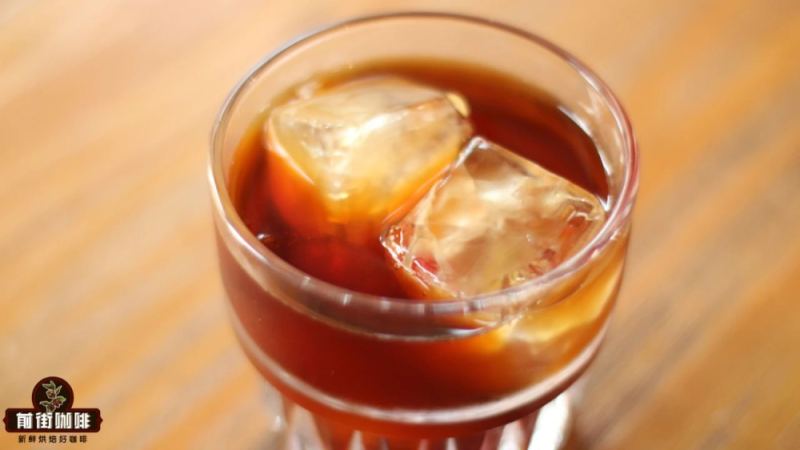
Does Cold Brew Coffee Making Change How Caffeine Affects You?
Cold brew coffee making relies on low-temperature, slow extraction: ice water drips through a coffee bed at a steady rate, pulling out aroma under normal pressure without drawing much bitterness. A typical setup uses 60 grams of medium-ground coffee, an ice-water mix in the upper pot, and a valve set near 7 drops every 10 seconds, with the whole brew running for hours.
Because cold brew is concentrated and drunk over time, the caffeine can add up quickly, which is why people ask whether you can get drunk off coffee and why timing matters if you sip it within coffee six hours before bed. The article also explains how grind size affects extraction, coffee-to-water ratio and fermentation time, and suggests medium-light roasted beans with floral and citrus notes.
In the height of summer, a glass of ice drip coffee is undoubtedly a great choice to cool down and refresh yourself. In this article, Front Street Coffee will systematically explain how to make ice drip coffee, from the structure and operating steps of the ice drip tower, to the effect of grind size on extraction, and then to key details such as the coffee-to-water ratio and fermentation time, one by one. It will also analyze why ice drip coffee is suitable for medium-light roasted beans, and recommend Front Street Yirgacheffe Gotingding, a bean with a prominent floral and citrus flavor, to help you make a clean, bright, and clearly flavored ice drip coffee at home.
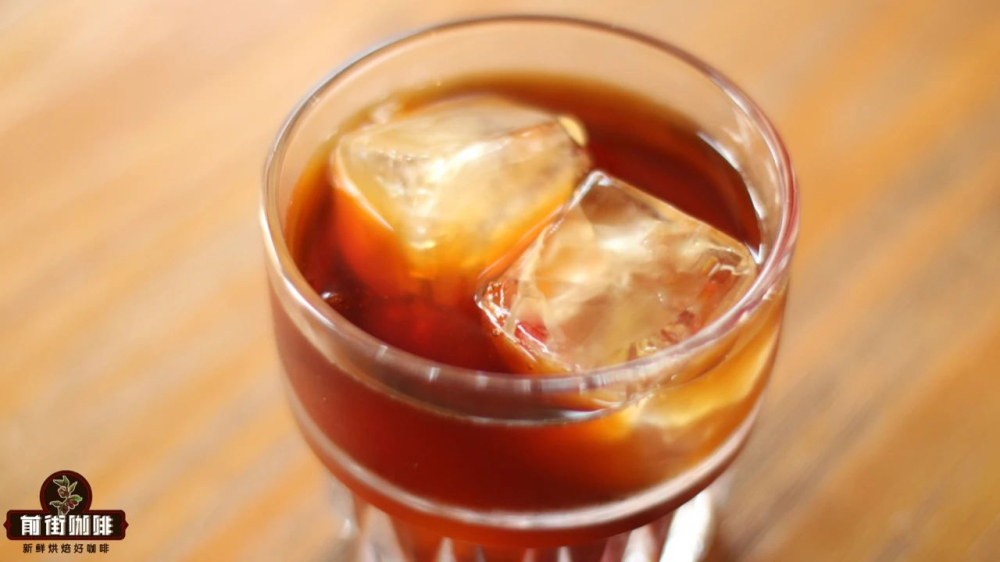
As soon as the weather gets hot, iced coffee becomes a favorite for many people. I believe many friends, on such a scorching early morning, most look forward to a glass of iced coffee to quickly wake themselves up.
Then let's not wait any longer. Front Street Coffee will immediately take everyone through the ins and outs of ice drip coffee.
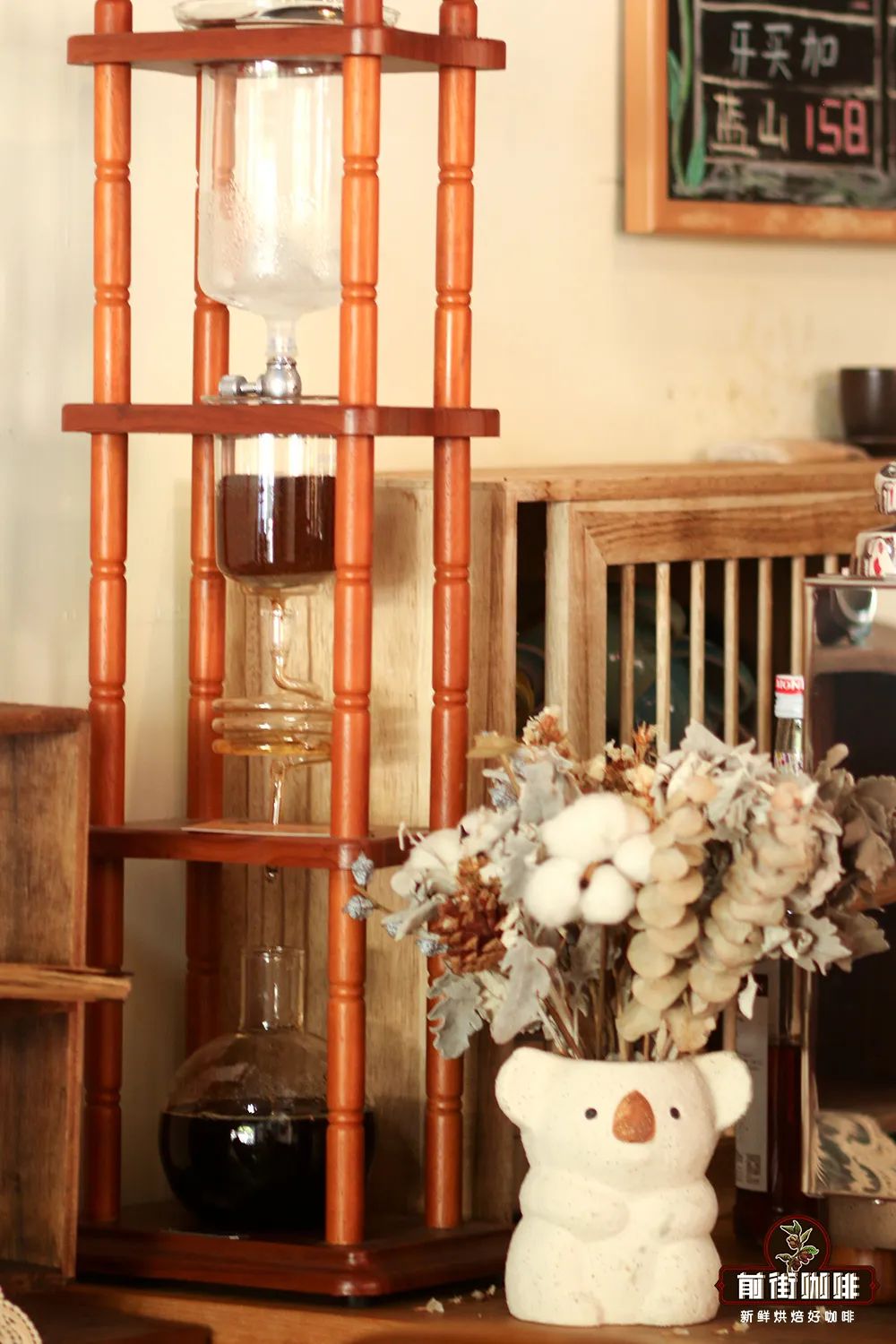
First, let's talk about how to make ice drip coffee. At Front Street, we use an ice drip tower to produce ice drip coffee, and it is also something of a "scenic spot" in the shop that attracts customers. On Taobao, ice drip towers are priced from 200 yuan to 2,000 yuan, so everyone can choose according to their budget. If you think an ice drip tower takes up too much space, you can also switch to a household ice drip coffee pot. The price is usually cheaper than an ice drip tower, and it is likewise a very worthwhile option to consider.
So what parts make up Front Street's ice drip tower? Here is a brief explanation for everyone. As can be seen from the picture, Front Street's ice drip tower is divided into six components in total: the upper pot, the lower pot, the adjustment valve, the coffee filter cup, the serpentine tube, and the all-wood stand.
The specific operation process for Front Street ice drip is as follows:
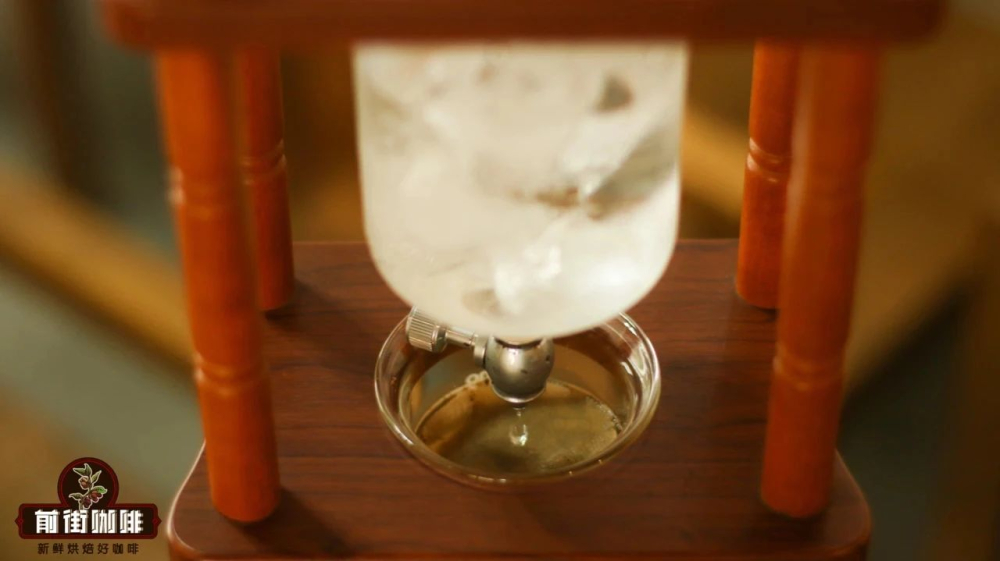
First place filter paper in the middle coffee filter cup, add medium-ground coffee powder according to the number of servings to be made (Front Street usually uses 60 grams at a time), and then cover the surface of the coffee bed with a round filter paper. Next, pour the ice-water mixture into the upper pot. Then adjust the valve to control the dripping speed of the water flow (Front Street generally sets it at 7 drops every 10 seconds). The coffee liquid will drip from the container holding the grounds into the serpentine tube, and flow along the tube into the lower pot. After all extraction is completed, pour the coffee liquid into a sealed bottle and put it in the refrigerator to ferment for about 12 to 24 hours before drinking for a better flavor. The principle and steps of household ice drip coffee are also much the same. Before use, you can consult customer service or read the instruction manual carefully.
When making ice drip, Front Street generally chooses medium-light roast beans, and also adjusts the grind coarser (EK43S set to 10).
Why do it this way? First, you need to understand how grind size actually affects a cup of specialty coffee.
If the grind is very fine, the total surface area of the coffee grounds will increase. During brewing, the coffee grounds come into contact with water. The larger the surface area of the grounds—that is, the finer the grind—the faster the aroma is released. So when making ice drip, the right grind size is especially important. Choosing a coarser grind, the coarse particles are particularly suitable for extraction methods in which coffee grounds contact water for a long time, and are also suitable for various fully immersed cold brew methods.
If the coffee grounds release too much aromatic material during brewing (more precisely, more than 22%), it will cause so-called over-extraction. This means that a large amount of bitter components will be extracted from the grounds. Therefore, over-extracted coffee often tastes bitter. Grinding too fine or extracting for too long can both lead to over-extraction. For example, if any cold brew coffee is mixed with finely ground coffee powder, it is almost certain to be over-extracted. The reason lies in the fact that this method lets the coffee grounds soak in water for a long time.
Some cold brew methods even soak the grounds for several hours. Therefore, a coarse grind size is most suitable for making ice drip coffee. Seeing this, some friends will definitely ask: then what is the coffee-to-water ratio for making ice drip?
Front Street usually fills the entire upper pot (ice and water at a 1:1 ratio).
Front Street's ice drip extraction takes about 5 to 8 hours, taking up most of a day, and after dripping it cannot be drunk immediately; it must be put in the refrigerator to ferment and mature. So if you have a particular preference for a certain bean and want to specify it for making ice drip, it is best to call two days in advance to place an order.
The taste of ice drip coffee is very clean and bright, and can fully highlight floral and fruity notes. Front Street believes that choosing medium-light roasted coffee beans can better showcase the bright acidity of the coffee, and the flavor direction will also be clearer.
Ethiopian beans are very suitable. Yirgacheffe, as the introductory first choice for many coffee lovers, has excellent flavor and very high cost performance. If you like coffee with rich floral aroma, obvious caramel notes, and a clear sweet aftertaste, Front Street Yirgacheffe Gotingding is recommended. When brewed, it has very clear citrus and white floral flavors, a clean and sweet taste, and the finish also carries a slight tea-like note.
Gotingding is the earliest village area to be separated out on its own. Many local smallholders were also members of the Worka cooperative back then, so the coffee cultivation techniques are quite solid. The Gotingding cooperative is also called the last pure land of Yirgacheffe, and the processing methods used are very traditional (both natural and washed processing methods).
In order to more fully showcase the characteristics of this bean, Front Street trial-roasted three roast profiles, and finally selected the one in the picture:
For professional coffee knowledge exchange and more coffee bean information, please follow Coffee Workshop (WeChat public account: cafe_style)
For more specialty coffee beans, please add the private WeChat of Front Street Coffee (FrontStreet Coffee), WeChat ID: kaixinguoguo0925
The above content is compiled by CoffeeHunters, a coffee news website.


