







What makes Tarrazú coffee brewing different from other regions?
Tarrazú sits about two hours from San José and is one of Costa Rica's eight coffee regions, locally called Los Santos because its cantons are named after saints. Beans grow around 1,500 meters, are washed and roasted medium-light, and cup with soft sweet orange, citrus and nut notes, plus the bright acidity the area is known for.
Because every region in Costa Rica signed quality agreements promising ripe cherries only, all coffee grown there is Arabica, so the arabica coffee bean character stays clean and consistent. For brewing, a V60 works well: watch water temperature, coffee-to-water ratio, grind size and pouring rhythm to recreate the classic profile at home.
Tarrazú is one of Costa Rica's most prestigious coffee-producing regions, known for producing Arabica coffee with bright acidity and clean flavors. This article will systematically introduce the characteristics and brewing methods of Tarrazú coffee, from the geography of the producing region, variety composition, and processing methods to specific brewing parameters. The Costa Rica Tarrazú daily drinking beans selected by Front Street Coffee are grown at an altitude of 1,500 meters, use washed processing and a medium-light roast, and present soft notes of sweet orange, citrus, and nuts. The article will also share Front Street's standard V60 brewing recipe, including water temperature, coffee-to-water ratio, grind size, and pouring rhythm, to help coffee lovers recreate a classic cup of Costa Rican flavor at home.
For more specialty coffee knowledge, please follow: Front Street Coffee (Frontsteet Coffee)
Tarrazú ranks among Costa Rica's eight major producing regions. In recent years, it has won awards in Cup of Excellence competitions. Whether in the cultivation stage or post-harvest processing, it demonstrates a quite mature level of technical expertise, and Front Street is very optimistic about its future development. Today, let us walk together into this land that has nurtured so many high-quality coffees.
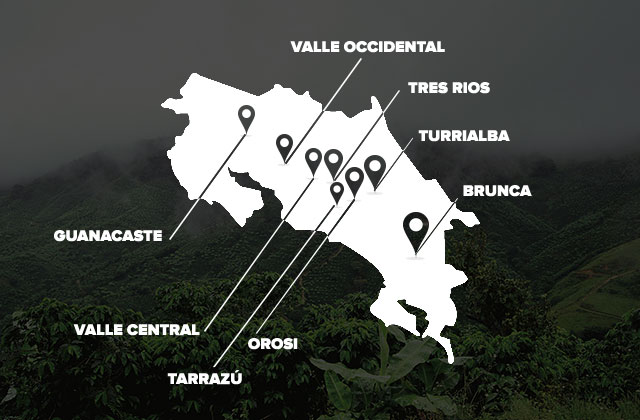
According to ICAFE (Costa Rican Coffee Institute), as Front Street has previously introduced to everyone, Costa Rica has eight coffee-producing regions in total: Tarrazú, West Valley, Tres Ríos, Guanacaste, Turrialba, Orosi, Brunca, and Central Valley. It is worth mentioning that all regions in Costa Rica have signed quality improvement agreements, and mill owners promise to produce only the highest-quality coffee and accept only ripe cherries, ensuring that only the best coffee enters the revenue process. Therefore, you will notice an interesting phenomenon: in Costa Rica, all the coffee grown is Arabica.
Costa Rica's Tarrazú growing area is locally called "Los Santos" because its cantons (similar to towns) are mostly named after various saints. Tarrazú is about a two-hour drive from San José, with roads winding around mountainsides and coffee plantations along the way. Tarrazú is an ideal place for growing Arabica coffee beans. The region is known for producing coffee with pronounced acidity, which is largely related to the soil composition of this area. In addition, altitudes of 1,200 to 1,900 meters also give coffee cultivation here rich and diverse microclimatic variations.
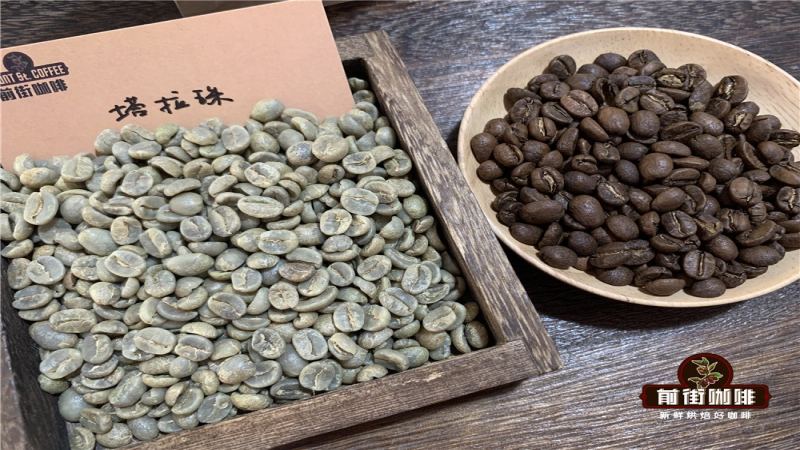
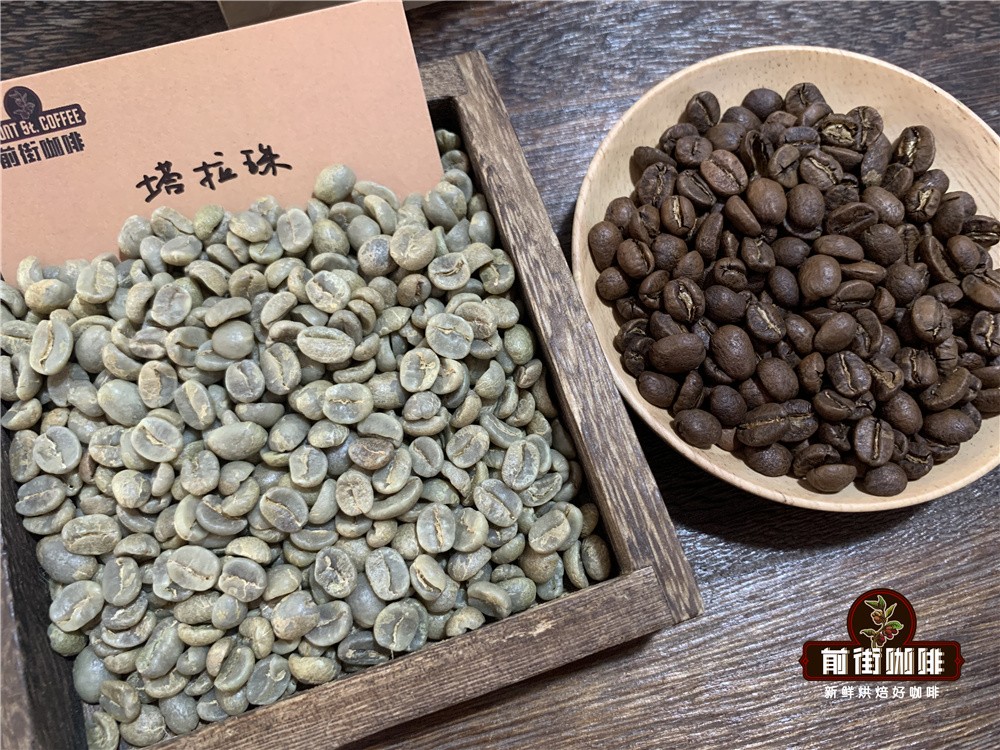
Every Costa Rican coffee selected by Front Street is grown at an altitude above 1,500 meters. Take the affordably priced daily drinking bean—Front Street Costa Rica Tarrazú—as an example. This coffee is grown at an altitude of 1,500 meters and uses traditional washed processing. In order to present its own character, Front Street roasts it at a medium-light level. After brewing, it has soft notes of sweet orange, citrus, and nuts. Everyone can purchase it at the Front Street Taobao store or Front Street flagship store.
Front Street Coffee (FrontStreet Coffee): Costa Rica · Tarrazú Coffee Beans
Variety: Caturra, Catuai
Altitude: 1,500 meters
Processing method: Washed
Grade: SHB
In Costa Rica, rainfall, relative humidity, and temperature tend to decrease as altitude increases, and this difference affects the size, hardness, and flavor profile of coffee beans. According to Front Street's research, Tarrazú is protected by mountains on the Pacific slope and is a refuge for forests and mysterious birds. Its ecological environment is very superior and highly suitable for coffee cultivation. Moreover, this coffee bean is grown in the small valleys and slopes of the country's highest mountain range.
Tarrazú is located southeast of the capital, San José, and grows Arabica coffee with small beans, a bluish color, and a beautiful appearance. Their land produces about 650,000 quintals from about 22,000 hectares, composed of small farms averaging 2.5 hectares. 95% of the coffee sold is graded Strictly Hard Bean (SHB). These coffees are produced under ideal growing conditions, and the soil is mainly sediment, which is acidic due to its composition. Most plantations are shaded, and different trees are planted in the region.
The main bean varieties grown in this region are Caturra and Catuai. Caturra is a natural mutation of the Bourbon line, discovered in Brazil in 1937. Its tree shape is shorter than Bourbon. Because it inherited Bourbon's weaker resistance, its yield is higher than Bourbon's. Caturra's flavor mainly presents fruity notes and berry-like acidity. Catuai is a hybrid of Mundo Novo and Caturra, and it also inherits Caturra's characteristic of a short tree shape, but it has higher resistance, and its cherries are firm and not easy to drop. In terms of flavor, Catuai is more monotonous than Caturra, mainly with nutty notes, and lacks Caturra's rich layering. The blend of the two varieties makes Tarrazú coffee more balanced and soft.
Next, Front Street will provide Front Street's standard serving method:
Front Street brewing parameters:
V60 dripper
Water temperature 91°C
Water-to-coffee ratio 1:15
Dose 15g
Grind size (80% passing rate on China No. 20 standard sieve)
Front Street brewing method: Use 30 grams of water for a 30-second bloom, pour in a small stream in circles until 125 grams, then pause in stages. When the water level is about to expose the coffee bed, continue pouring until 225 grams and stop. When the water level is about to expose the coffee bed again, remove the dripper. (Start timing at the beginning of the bloom.) Extraction time is 2'00".
Overall, the overall flavor presentation of Tarrazú daily drinking beans is clean, fresh, with rounded and soft acidity, and there will be a hint of dark chocolate in the cup. It is a primitive, classic Costa Rican flavor coffee.
The above content is compiled by CoffeeHunters, a coffee news website.


