








What Is Kopi Luwak Coffee and Why Is It Costly?
Kopi luwak is coffee made from cherries eaten and excreted by the Asian palm civet, a feline native to Indonesia. The civet selects only the ripest red cherries, and enzymes in its digestive tract alter the beans during fermentation. In 2002, luwak beans sold for about $500 per pound in New York, and scarcity remains the main reason for the price.
The civet, or kopi civet, was first linked to luwak coffee in Indonesia in the early 18th century, when Dutch colonists banned farmers from picking cherries. Farmers noticed the animals eating only the ripest fruit. Lacking solid data to prove in-vivo fermentation improves flavor, much of the price reflects rarity rather than measurable cup quality, so buyers should weigh legend against gimmick.
Indonesian Kopi Luwak has long been regarded as a luxury in the specialty coffee circle. In 2002, it fetched $500 per pound on the New York market, with its scarcity being the main reason. Despite its inelegant name, its flavor carries Indonesia's distinctive herbal notes and rich body, along with an indescribable sweet aftertaste. This article, compiled by Front Street Coffee, sorts out the origin story of Kopi Luwak, the causes of its flavor, the real role of the civet's in-vivo fermentation processing method, and includes the roasting and brewing data for this bean at Front Street's shop, for coffee lovers to reference in judging whether it is a legend or a gimmick.

For more specialty coffee information, welcome to follow our WeChat official account: Front Street Coffee (FrontStreet Coffee)
In the specialty coffee market, Indonesian Kopi Luwak is often compared to an "Hermès"-level existence. In 2002, a pound of Kopi Luwak beans was priced at $500 on the New York market, and behind this hefty price tag is extremely limited output. The name doesn't sound particularly elegant, but the Indonesian herbal tonality, full body, and an indescribable sweetness it displays in the cup have truly captivated many. Below, Front Street Coffee (FrontStreet Coffee) will walk you through the characteristics and origins of Kopi Luwak beans.
The Origin of Indonesian Kopi Luwak
The hometown of Kopi Luwak is Indonesia. Later, as its fame spread, Vietnam and Myanmar also successively launched their own versions, but their quality struggles to match that of Indonesian beans, and their prices are naturally cheaper as well.
According to information available to Front Street Coffee (FrontStreet Coffee), the earliest discovery of Kopi Luwak in Indonesia can be traced back to the early 18th century. At that time, Dutch colonists brought coffee trees to Sumatra and Java for cultivation, developing the coffee trade, while prohibiting local coffee farmers from picking and eating coffee cherries themselves.
But Indonesian coffee farmers also wanted to taste what the cherries they grew with their own hands actually tasted like. It just so happened that the local civet cat—a unique feline species—frequently sneaked into the plantations to steal coffee cherries. Although the civet is omnivorous and primarily carnivorous, it is extremely picky, choosing only the reddest and ripest cherries to eat. This infuriated the coffee farmers, who watched their labor fruits being enjoyed for free by wild civets while they themselves couldn't taste a single one.
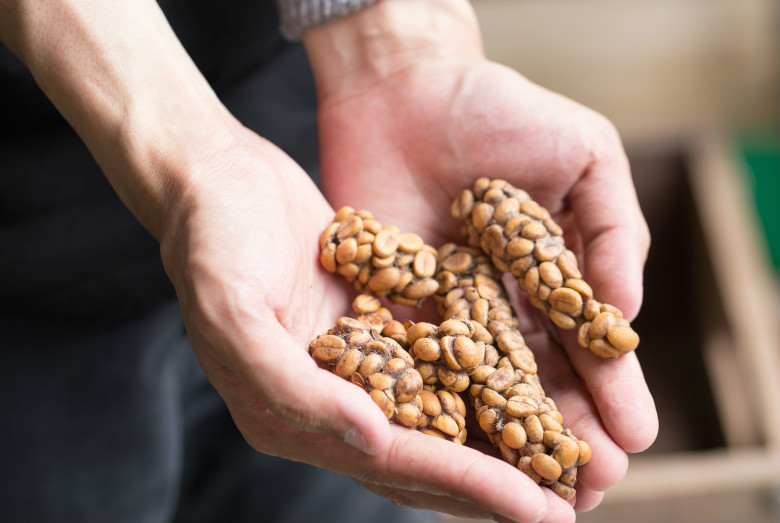
Under these circumstances, the coffee farmers noticed that coffee cherries excreted by civets often appeared in the outdoor grass. The civet cannot digest the hard beans, only breaking down the ripe pulp, and the beans are excreted intact after partial digestion. So the local coffee farmers, with curiosity—and perhaps a bit of greediness—picked up these excreted coffee beans, took them home, washed and processed them, and after roasting, tasted them. They found the flavor surprisingly good—not only rich but also sweet. Overjoyed, the farmers spread word of Kopi Luwak among themselves.
Unfortunately, the good times didn't last long. The Dutch colonists soon discovered Kopi Luwak as well and resold it at high prices to European royalty. Due to its extremely low production, its value at the time even surpassed famous coffees like Jamaican Blue Mountain, making it the most expensive coffee bean in the industry.
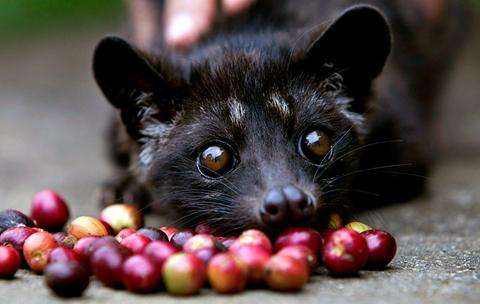
Here, Front Street Coffee (FrontStreet Coffee) must specifically clarify: not just any coffee beans excreted by any feline can be called Kopi Luwak. Only beans excreted by local wild civets in Indonesia deserve this title.
What Does Indonesian Kopi Luwak Taste Like?
Just how good is Kopi Luwak that it drives coffee fans worldwide crazy? Actually, Front Street Coffee (FrontStreet Coffee) thinks its flavor is broadly similar to Indonesia's most famous Mandheling coffee beans.
Civets mostly inhabit the hilly areas below 2,100 meters altitude in Indonesia, which are low-altitude regions, and the local coffee varieties are primarily Robusta. Therefore, Kopi Luwak contains both Indonesian Typica varieties and Robusta beans, naturally carrying the earthy and herbal aromas characteristic of Robusta. Combined with Indonesia's unique wet-hulling processing method, the cup becomes even fuller, presenting a distinctive herbal tone.
The biggest difference between Kopi Luwak and Indonesian Mandheling is that the civet uses its keen sense of smell to personally select the ripest and sweetest cherries, which is similar in logic to Ethiopia's Red Cherry Project—the only difference being that one involves manual picking of 100% fully ripe cherries, while the other lets an animal do the work. And fully ripe cherries themselves lay the foundation for Kopi Luwak's excellent flavor.
So Front Street Coffee (FrontStreet Coffee) believes Kopi Luwak's flavor is indeed not bad. However, with the development of the specialty coffee industry, many producing regions have switched to using fully ripe cherries for coffee bean production. For example, Indonesian PWN Company's Golden Mandheling selects fully ripe cherries and undergoes three rounds of manual hand-sorting plus one machine sorting to remove defective beans, ensuring quality. By comparison, Kopi Luwak seems more like a gimmick. Unless you are genuinely curious about its flavor, Front Street Coffee (FrontStreet Coffee) still recommends coffee lovers choose Indonesian PWN Golden Mandheling coffee beans.
When Front Street was researching materials, we also came across cup testing experts pointing out that Kopi Luwak's selling point lies in its story rather than its quality. Scored according to SCAA standards, Kopi Luwak sometimes does not rate higher than ordinary coffee beans, and may even rate lower.
Front Street also found in cupping that Kopi Luwak's flavor, compared to other Indonesian coffees like Mandheling, is somewhat flatter in both acidity and taste. Front Street Coffee (FrontStreet Coffee) quotes experts who have tasted Kopi Luwak: Indonesian coffee typically has earthy and herbal medicine notes, thick consistency, and distinctive aroma. If you don't like the Indonesian coffee style, Kopi Luwak may not suit you; but if you can accept the fishy notes of aged Mandheling, you might fall in love with its unique flavor.
Civet Kopi Luwak's In-Vivo Fermentation Processing Method
Front Street Coffee (FrontStreet Coffee) has often said in previous articles that a coffee bean's flavor is mainly determined by producing region, variety, and processing method. So does the civet's in-vivo fermentation processing method really have such a big impact on flavor?
Some merchants believe that although the coffee beans are not digested in the civet's digestive tract, the highly corrosive digestive fluids have already eroded their surface. These digestive fluids contain a special protease that can break the coffee beans' original protein chains, decomposing long-chain structures into small particles, forming short-chain peptides and amino acids, thereby improving flavor.
But according to Front Street's understanding, civets typically excrete coffee beans only within one to two hours after eating. With the beans staying in the stomach for such a short time, Front Street believes it is insufficient to produce the series of changes described above. The bean is still the same bean that went in; even if the flavor changes, it's only a subtle difference.
The in-vivo fermentation processing method is nothing more than a gimmick merchants use to sell Kopi Luwak. After collection, local coffee farmers still need to process it using Indonesia's unique wet-hulling method. The civet's actual contribution is limited to selecting ripe cherries. Therefore, the civet's in-vivo fermentation actually contributes quite limitedly to Kopi Luwak's flavor.
The above is Front Street Coffee's (FrontStreet Coffee) compilation of the Kopi Luwak story and related content. Next, Front Street shares this Kopi Luwak from our shop along with its roasting and brewing data.
Front Street Coffee (FrontStreet Coffee) Indonesian Kopi Luwak Beans
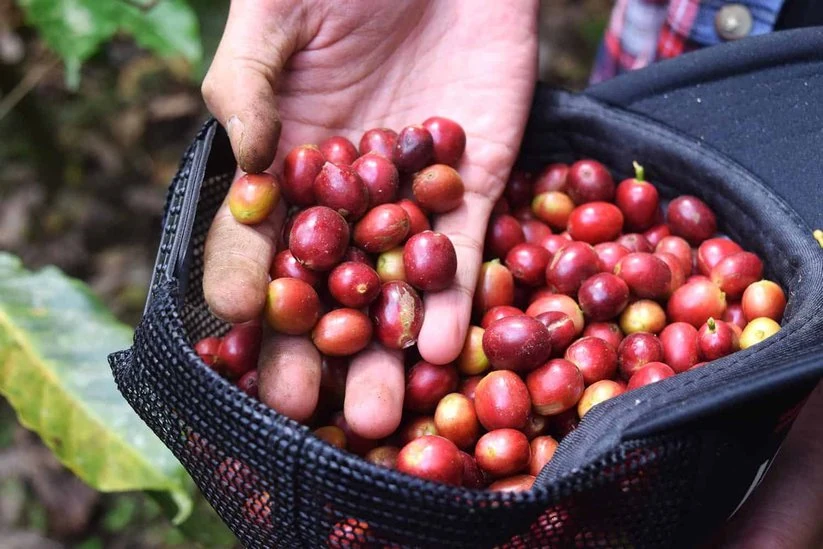
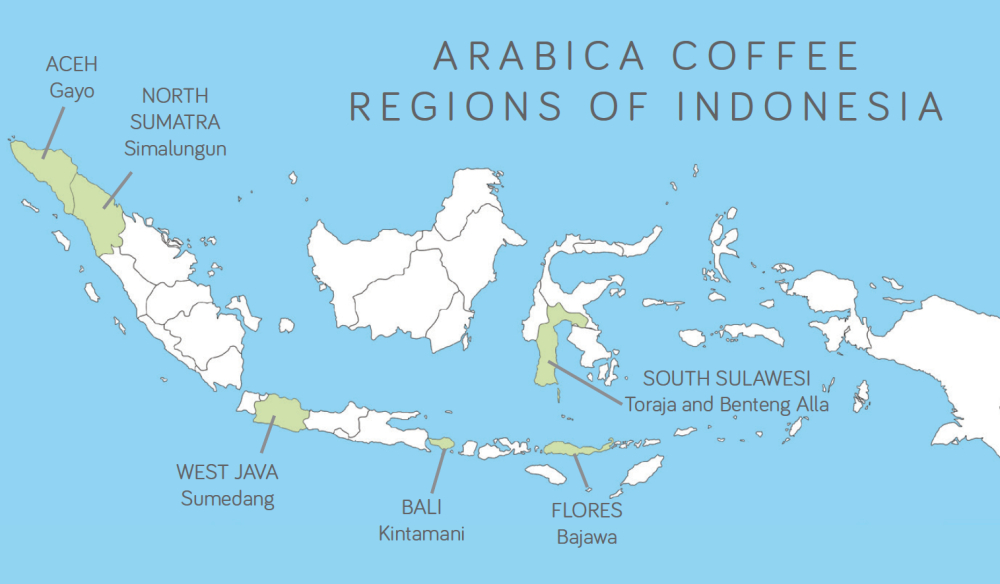
Country: Indonesia Region: Sumatra Altitude: 1600-2100 Variety: Arabica Processing Method: Civet in-vivo fermentation Flavor: Herbal, nuts, dark chocolate, fermented notes
Front Street Kopi Luwak Roasting Suggestions
Roaster: Yangjia 800N: Preheat to 200°C, lower to 160°C for charging, set airflow to 3, adjust heat to 130, turning point at 1'28", maintain heat, at 5'40" turning yellow, grassy notes disappear, entering dehydration phase, raise heat to 140, open airflow to 4, surface wrinkles appear, toast aroma turns to coffee aroma, signaling pre-first crack, lower heat to 100, open airflow to 5, and listen carefully for first crack. At 9'15" first crack begins, airflow fully open to 5. Post-first-crack development time 4'25", drop at 203°C.
Front Street Kopi Luwak Brewing Suggestions
Dripper: KONO Water Temperature: 86-87°C Coffee-to-Water Ratio: 1:15 Grind Size: Medium-coarse (75% passing through Chinese standard No. 20 sieve)
Front Street uses staged extraction: Bloom with 30g of water for 30 seconds, then pour in a slow circular motion with a small stream until reaching 125g for the first stage; when the water level is about to expose the coffee bed, continue pouring until 225g and stop; when the water level is about to expose the coffee bed again, remove the dripper. (Timing starts from the beginning of blooming) Total extraction time: 2'00"
Kopi Luwak Flavor Description: Herbal, nuts, dark chocolate, fermented notes; full-bodied, smooth.
The above content is compiled by CoffeeHunters, a coffee news website.


