








How Does Black Honey Processing Change Coffee Flavor?
Black honey is the honey processing style that leaves the most mucilage on the bean, dries the slowest, and cups with the richest sweetness. Costa Rica, where the method began, is the reference point: farmers there developed honey processing because steep mountain roads and weak prices made it hard to deliver ripe cherries to washed stations in good condition.
Honey processing sits between washed and natural, and is divided into yellow, red, and black honey by how much mucilage remains. On a typical coffee farm, cherries that survive the trip down the mountain keep more quality. Because buyers rarely came up the mountain, farmers gained more control by processing on site. Comparing black honey with the natural method shows how drying time shapes sweetness.
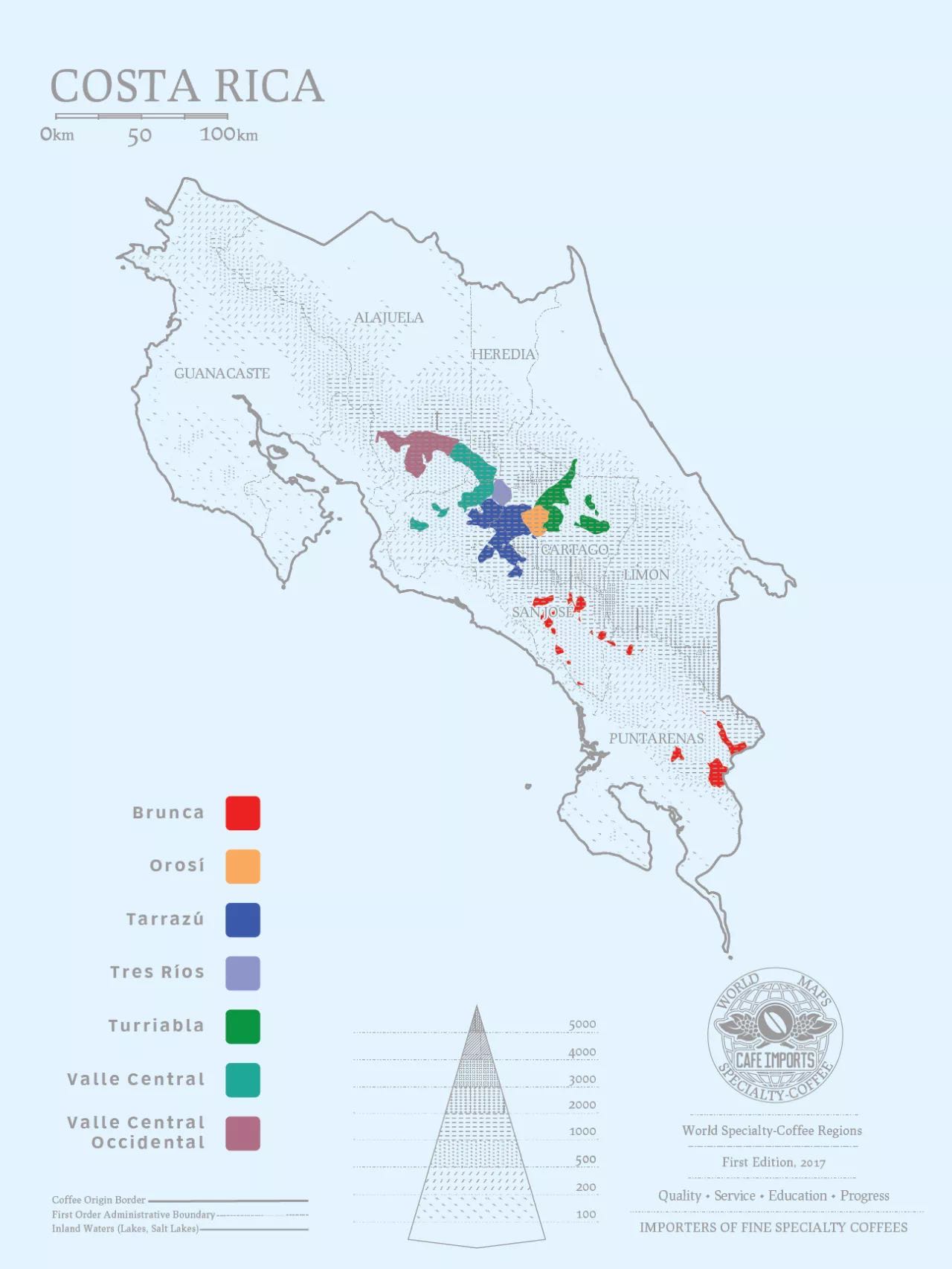
Costa Rica is the birthplace of the honey processing method. Local coffee farmers, grappling with inconvenient transportation and thin profit margins, developed this processing approach that sits somewhere between washed and natural. Depending on how much mucilage is retained, honey processing is further divided into yellow honey, red honey, and black honey—with black honey retaining the most mucilage, taking the longest to dry, and delivering the richest flavor. In this article, Front Street Coffee will systematically sort through the origins, workflow, pros and cons, and flavor characteristics of honey processing, compare it with the natural method, and use two beans—Costa Rica Fuego Phoenix Sapphire and Canet Estate Bach—as examples to share roasting curves and pour-over parameters, helping coffee enthusiasts understand where the sweetness in black honey processed coffee comes from and the key points for brewing.

For more specialty coffee knowledge, follow our WeChat official account: Front Street Coffee (FrontStreet Coffee).
Front Street Coffee often points out that the final flavor of a coffee bean is determined by three main variables: terroir, varietal characteristics, and processing method. Among these, processing methods are especially diverse, with washed, natural, and honey processing being the three mainstream approaches. But judging by current market popularity, honey processing seems to have won over the most coffee fans. This method bears some resemblance to natural processing. Below, Front Street Coffee will explain the flavor characteristics of honey processed coffee beans.
The Origins of Honey Processing
Honey processing was born in Costa Rica, invented by local coffee growers. The backdrop for its emergence lies in the fact that most Costa Rican coffee farms are located on steep mountainsides with poor transportation conditions. When farmers transport harvested coffee cherries down the mountain to washed processing stations, a large number of cherries have often already deteriorated or been damaged, leading to reduced yields and diminished income. Honey processing was developed as a way out of this predicament.
Another reason for the emergence of honey processing, according to Front Street Coffee, was the scarcity of green bean buyers coming up the mountain to purchase quality coffee cherries, resulting in a lack of sales channels. These buyers offered extremely low prices, seriously exploiting the growers. Coffee farmers on the mountain therefore lacked trust in the buyers and chose to process and sell their coffee themselves using the honey method, in order to earn more reasonable profits and sustain their livelihoods.
Today, honey processing is widely adopted across Central American growing regions thanks to its outstanding flavor performance. In Costa Rica, various special honey processing techniques have even been developed, such as the Costa Rica Musician Series sold at Front Street Coffee shops, where the Bach coffee beans use raisin honey processing and the Mozart coffee beans use anaerobic honey processing.
What Is Honey Processing?
Honey processing is written as Honey Process or Miel Process in English. Its core operation is to remove the pulp and then dry the coffee cherries while the mucilage still attached to the parchment remains.
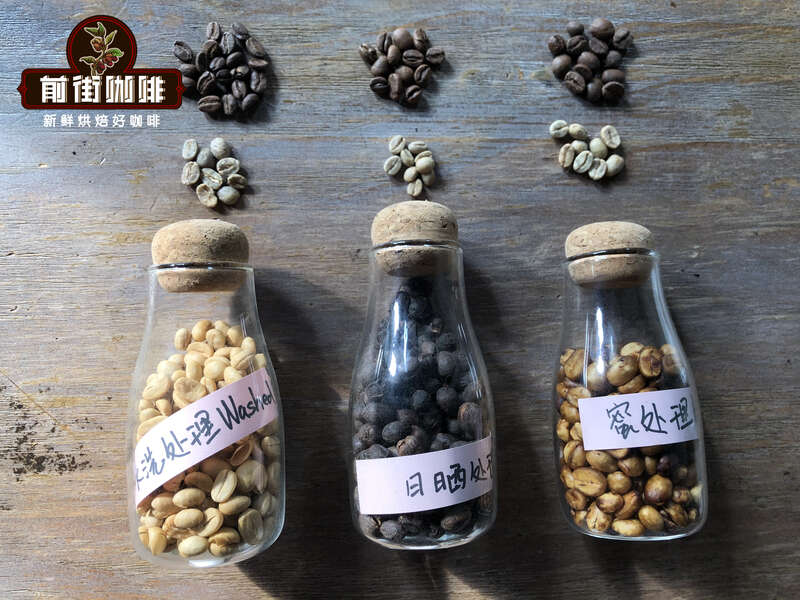
As Front Street Coffee mentioned earlier, coffee processing methods fall mainly into two categories: washed and natural. Natural processing, as the name suggests, means letting coffee beans dry naturally in the sun right after harvest; washed processing involves removing the pulp and then using fermentation to remove the gelatinous mucilage on the surface; honey processing sits right between the two—a compromise solution. Many people, upon first hearing the term "honey processing," mistakenly assume that honey is added during processing or that the coffee will taste like honey afterward. This is not the case. The real reason is that during drying, the moisture in the gelatinous mucilage on the surface of the bean constantly evaporates until it becomes as sticky as honey—hence the name.
The Honey Processing Workflow
1. As with the first step of washed processing, all coffee cherries are immersed in water, and floating beans and defective beans are skimmed off, leaving only sound cherries.
2. The sorted coffee cherries are spread directly on raised beds to dry for at least three days, bringing the moisture content down to around 20%.
3. The dried coffee cherries are then fed into a depulper to remove the skin and pulp, retaining only the mucilage—this is precisely why honey processed coffee beans have such pronounced sweetness, because the mucilage is the highest-sugar part of the coffee cherry.
4. The coffee beans with mucilage still attached are then dried until the moisture content drops to 11%, at which point they can be stored.
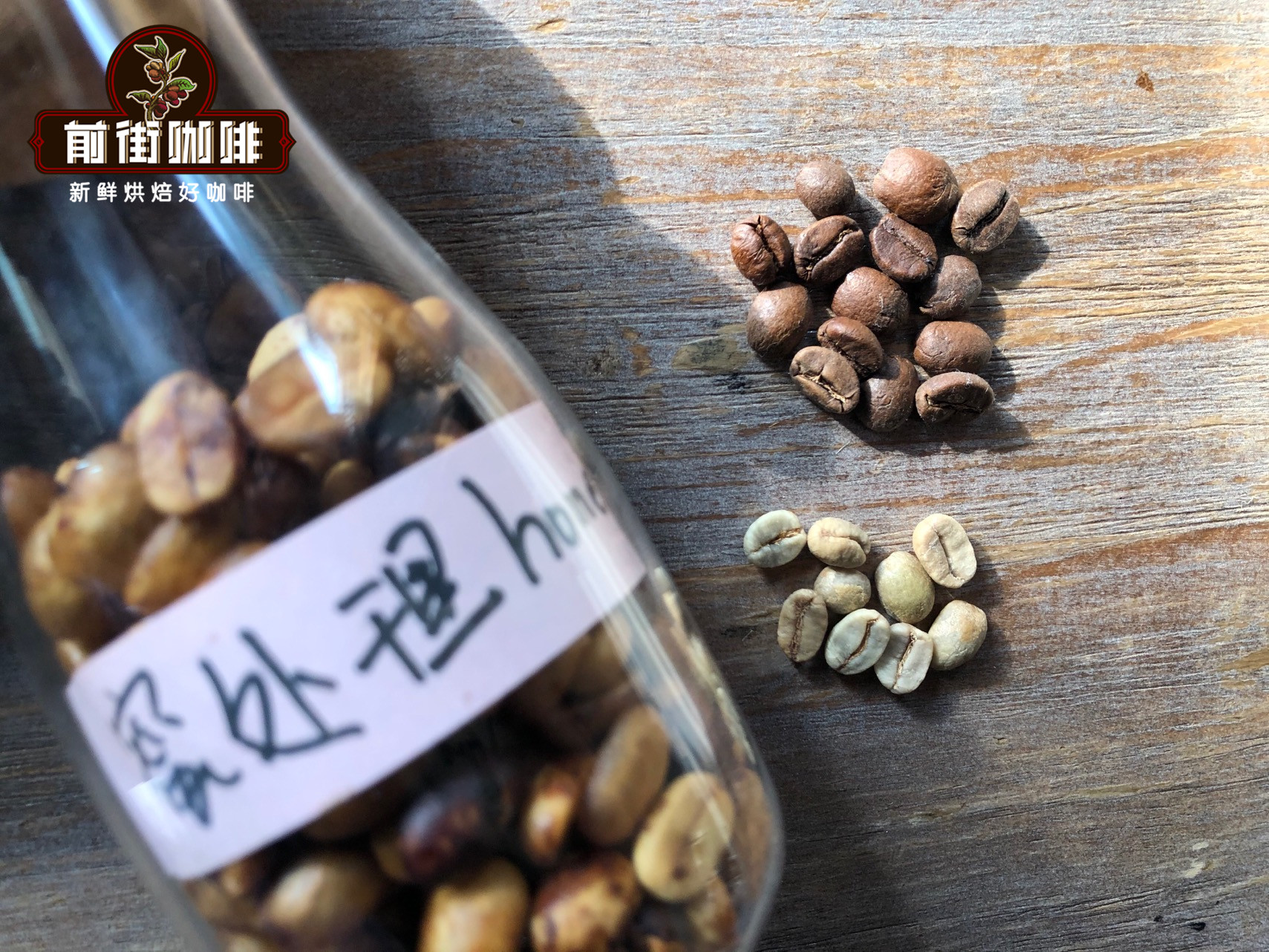
Additionally, according to Front Street Coffee, honey processing is further classified by the percentage of mucilage retained. Typically, removing 40% of the mucilage produces what is called yellow honey; removing 25% is classified as red honey; and green beans that retain 100% of the mucilage are classified as black honey.
Honey processed green beans require extra care during the drying stage. Because mucilage remains on the surface, the beans carry a lot of sticky residue and must be turned constantly during drying to avoid mold or over-fermentation.
Advantages and Disadvantages of Honey Processing
Advantages: Honey processing can be seen as an improved version of natural processing. Because the pulp is removed from the start, mold problems do not occur; at the same time, it consumes almost no large amounts of fresh water, making costs relatively low.
Disadvantages: The entire workflow is the most cumbersome and labor-intensive of all methods.
Honey Processing Flavor
As Front Street Coffee mentioned above, honey processing can enhance the sweetness of coffee while relatively restraining acidity and making the aroma more refined—provided, of course, that the processing is executed properly. If done poorly, the cup will present unpleasant acetic acid notes, or pungent aromas reminiscent of onion or garlic. Even when processed quite well, it may still carry a slight earthy taste, with lower cleanliness in the finish and more off-flavors than typical washed beans. Overall, the risks involved in honey processing are considerably higher than in conventional wet processing.
Honey processing is also divided by color into three types: yellow honey, red honey, and black honey. What exactly are the differences between them? Front Street Coffee will now explain them one by one for coffee fans.
What Are the Differences Between Yellow Honey, Red Honey, and Black Honey?
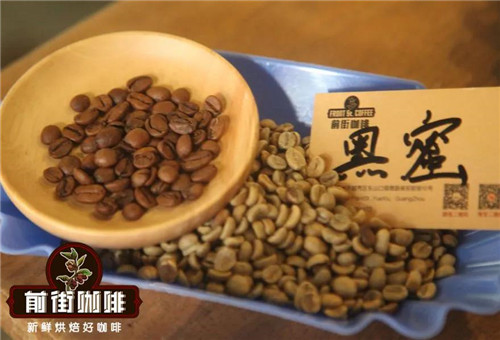
Black Honey: Almost no mucilage is removed, so drying takes the longest—over 14 days. During the process, covers are used to block excessive sunlight and slow the drying rate, allowing sugars to convert more fully.
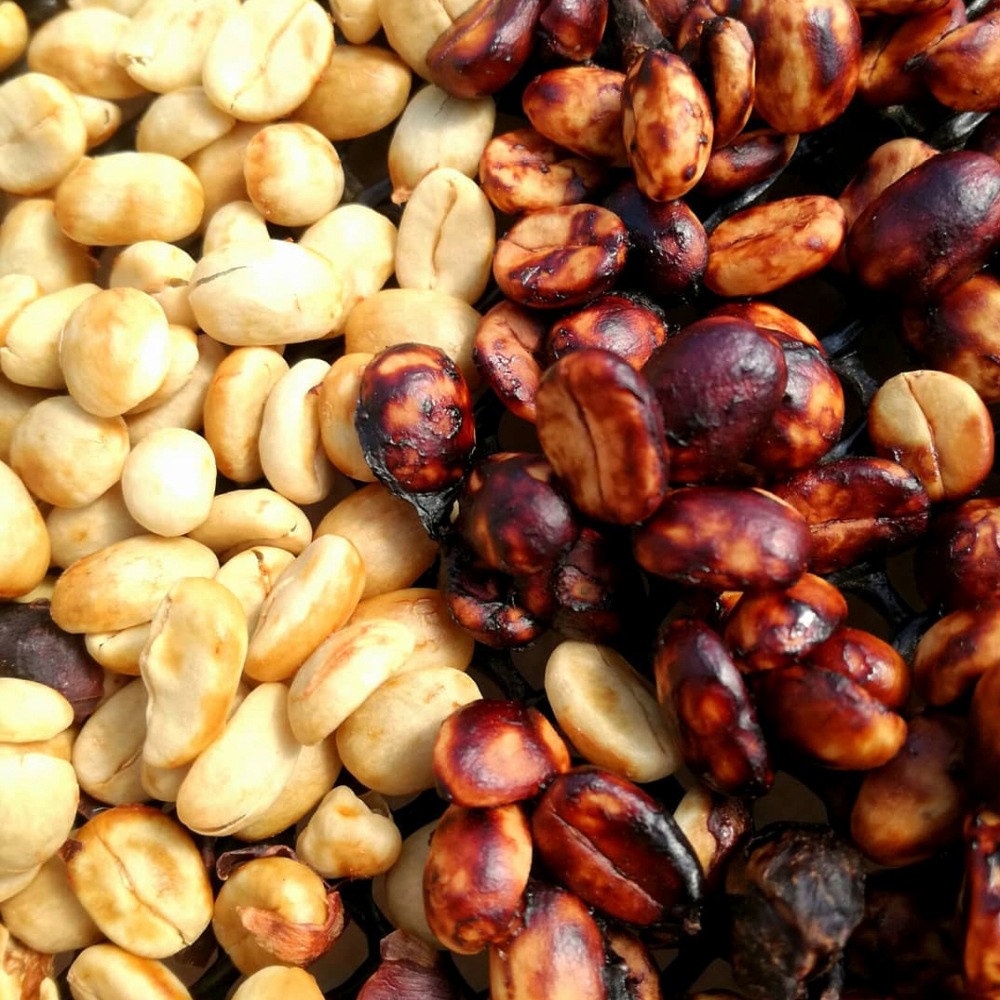
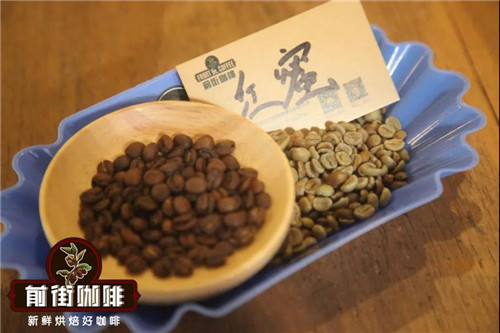
Red Honey: 25% of the mucilage is removed (specific practices vary by estate). Sun drying lasts about 12 days, and shade covers may also be used. The coffee is turned several times a day, but less frequently than with yellow honey.
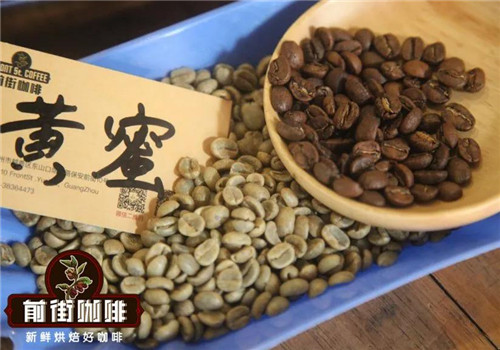
Yellow Honey: 40% of the mucilage is removed. It receives the most sunlight, with drying lasting around 8 days. The coffee is placed on raised beds and turned once per hour.
It can be seen that from yellow honey to black honey, the required drying time grows longer and the management demands become increasingly strict. If one had to rank the three, Front Street Coffee believes black honey delivers the finest flavor, because it retains the most parchment, giving it the richest, most intense mouthfeel.
As for producing yellow honey and red honey, it is because coffee farmers also need to weigh costs and prices from a business perspective, and providing consumers with diverse choices is a reasonable thing to do.
Why Are Honey Processed Coffee Beans So Popular?
As Front Street Coffee mentioned above, honey processed coffee beans display excellent sweetness in flavor. This sweetness breaks the stereotype that coffee is only bitter, making it especially popular among enthusiasts new to coffee beans. In addition, many enzyme processing methods inspired by honey processing deliver even more pronounced sweetness.
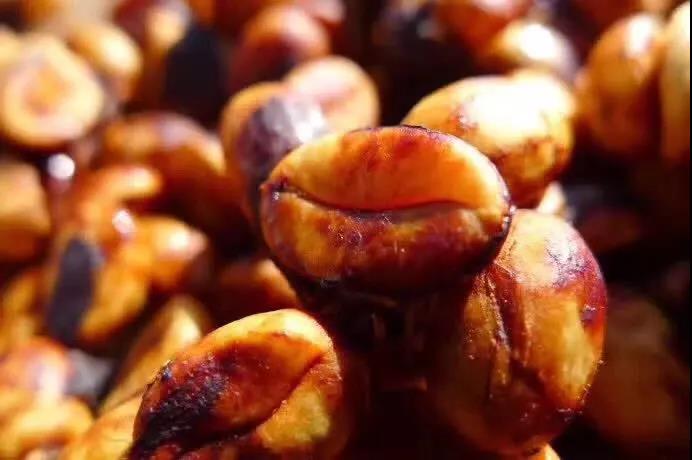
Front Street Coffee also noted above that honey processing comes in three types, and black honey processed coffee beans have the highest sweetness and the best flavor, with correspondingly more demanding processing conditions—which means the quality of the beans is more assured. Naturally, coffee fans are willing to pay for something delicious, and this is one of the reasons honey processed coffee beans are so widely popular.
So what exactly is the difference between honey processing and natural processing? Front Street Coffee mentioned above that honey processing emerged as a combination of washed and natural methods—so what is natural processing like?
Natural Processing
Natural processing is one of the oldest and most traditional methods. Coffee cherries are dried in the sun immediately after harvest. It is more common in areas with abundant sunlight or scarce water resources—for example, nearly 70% of coffee cherries in Ethiopia undergo natural processing.
1. Collection & Sorting After harvesting, the coffee cherries first undergo manual sorting to remove defective cherries, including overripe, underripe, and insect-damaged ones, as well as foreign matter.
2. Drying The sorted coffee cherries are sent to drying areas. Different regions may use different drying racks—some use tarps, some use raised beds, and some use concrete patios. Drying takes an average of 3 to 4 weeks, until the moisture content drops to 11%.
3. Depulping The dried coffee cherries are sent to a processing station for depulping and hulling, and sometimes polishing. The skin, pulp, and other parts are all removed at this step.
4. Sorting & Storage After depulping, the green beans undergo another round of sorting to remove beans with poor appearance. This step also reflects the quality of the drying process: over-dried beans are brittle and easily crushed during depulping; under-dried beans have higher moisture content, and the overly active moisture can breed bacteria or cause mold.
Advantages and Disadvantages of Natural Processing
Advantages: As Front Street Coffee mentioned above, natural processing is relatively simple to carry out, meaning it does not require much cost, and natural coffee beans possess an irreplaceable fermented flavor. Nowadays, coffee farmers are also paying more attention to the quality of natural beans—for example, placing beans on racks to dry and turning them frequently to prevent contamination. It is precisely because of this that Front Street Coffee shops can offer so many excellent natural coffee beans.
Disadvantages: Front Street Coffee also noted above that natural coffee beans have extremely demanding weather requirements, and the degree of cherry dryness is harder to control. If the drying area is not clean enough, the coffee beans can easily pick up impurities, raising the proportion of defective beans. During drying, the coffee cherries retain both skin and pulp, making them highly susceptible to mold and spoilage. Fortunately, with advances in technology, coffee farmers seeking higher-quality natural beans have begun using instruments and intensive labor to closely monitor fermentation and drying levels, promptly removing any abnormal beans. This approach costs more but is more precise—hence the term "refined natural."
Flavor Profile of Natural Coffee Beans
Because they are exposed to sunlight for extended periods, natural coffee beans have more intense flavors and richer layers, with wine-like and fermented notes, and relatively high sweetness as well.
The Difference Between Honey Processing and Natural Processing
Based on the above, Front Street Coffee concludes that honey processing, like natural processing, involves sun-drying and fermentation, so both carry fermented notes and pronounced aromas in the flavor. The only difference is that honey processed coffee beans have higher sweetness than natural beans. After cupping and brewing, Front Street Coffee believes that compared with washed and honey processed coffee, natural coffee has the lowest acidity and the highest sweetness, but slightly inferior cleanliness. Its flavor presents more berry-like qualities and is more complex.
Next, Front Street Coffee will conduct a roasting and brewing test using the naturally processed Costa Rica Fuego Phoenix Sapphire coffee beans and the raisin honey processed Costa Rica Canet Estate Bach coffee beans, and share the results with coffee fans.
Front Street Coffee Costa Rica Fuego Phoenix Estate Sapphire Coffee Beans
Country: Costa Rica Region: Central Valley, Fuego Phoenix Estate Altitude: 1600m Varietal: Caturra, Catuai Grade: SHB Processing: Natural
Front Street Coffee Costa Rica Bach Coffee Beans
Country: Costa Rica Region: Tarrazu, Canet Estate Altitude: 1950m Grade: SHB Varietal: Caturra Processing: Raisin Honey
Front Street Coffee Roasting Data Sharing:
Fuego Phoenix Sapphire: This Costa Rica Fuego Phoenix Sapphire has rich berry and tropical fruit aromas. To preserve abundant fruit flavors and sweetness, the Front Street roaster uses a medium-heat approach to roast this bean.
Front Street Coffee uses a Yangjia 800N roaster (300g batch). The drum temperature is raised to 170°C for charging, airflow set to 3, heat at 110, turnaround point at 1'36", 97.9°C; when the drum temperature reaches 140°C, airflow is opened to 4; at this point the bean surface turns yellow, the grassy smell completely disappears, and the dehydration phase begins. When the drum temperature reaches 166°C, heat is reduced to 80°C and airflow remains unchanged; at 8'17", ugly wrinkles and dark streaks appear on the bean surface, and the toast aroma clearly shifts to coffee aroma—this can be defined as the prelude to first crack, and at this point you need to listen carefully for the sound of first crack. At 9'00", first crack begins; airflow is adjusted to 5 (adjust heat very carefully—do not reduce it so much that cracking sounds stop), and after first crack development proceeds for 2'05", the beans are dropped at 195°C.
Bach: This Front Street Bach green coffee appears yellow-green, a typical honey processed coffee bean appearance. It smells of fresh citrus fruit aromas and a faint fermented fruit fragrance.
The roaster Front Street uses is the Yangjia 800N semi-direct fire (300g batch). Front Street's specific roasting approach: preheat the drum to 200°C for charging, adjust heat to 160, open airflow to 3, turnaround point at 1'36", maintain heat; at 140°C keep heat at 160 and open airflow to 4. At 4'50" the beans turn yellow, the grassy smell disappears, and the dehydration phase begins; at 166°C heat is lowered to 135 and airflow remains at 4. At 8'05" dehydration is complete, wrinkles and dark streaks appear on the bean surface, and the toast aroma shifts to coffee aroma—this is the prelude to first crack, so pay attention to the sound of first crack. At 8'38" first crack begins; airflow fully open at 5, heat unchanged. After first crack, development time is 1'45", and the beans are dropped at 193.8°C.
Pour-Over Parameters:
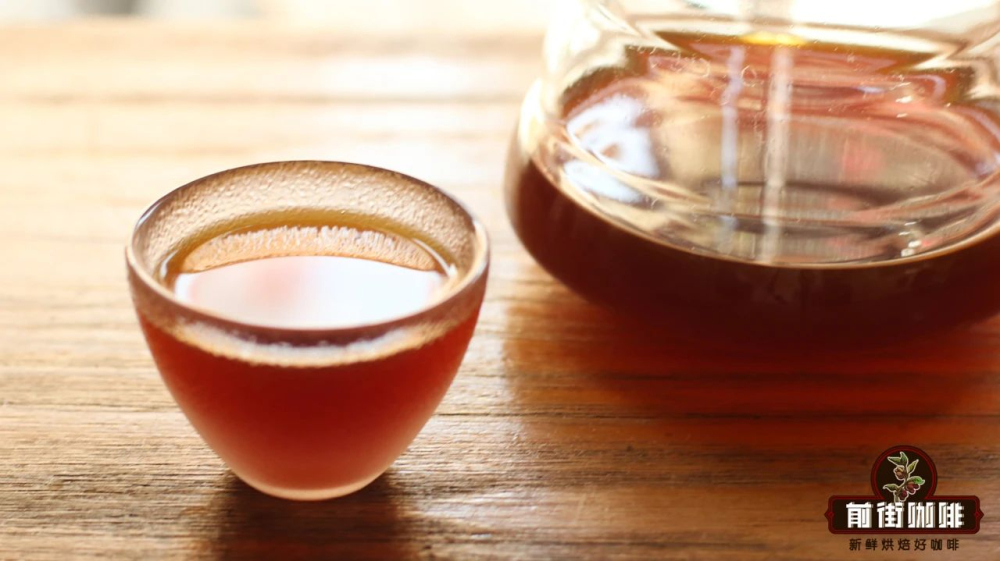
Dripper: Hario V60 Water temperature: 90°C Dose: 15g Coffee-to-water ratio: 1:16 Grind size: medium-fine (EK43s setting 10: 80% passing through Chinese standard No. 20 sieve)
Brewing technique: staged extraction.
Bloom with 34g of water for 30 seconds, then pour in a slow circular stream until the water reaches 127g for the first stage. When the water level drops and the coffee bed is about to be exposed, continue pouring until 240g and stop. When the water level drops and the coffee bed is about to be exposed again, remove the dripper. (Timing starts from the beginning of the bloom.) Total extraction time: 2'05".
Costa Rica Fuego Phoenix Estate Sapphire Flavor Description: Notes of strawberry, tropical fruit, and fermented wine on entry; honey and cocoa in the finish. The overall mouthfeel is smooth, with well-defined layers and a pronounced sweet aftertaste.
Costa Rica Musician Series Bach Flavor Description: It smells of fermented rice wine aromas. On the palate, it has the sweet-tartness of ripe tropical fruits and berries, along with nut, cocoa, and creamy flavors. The sweet aftertaste carries caramel, and the finish has a faint floral note.
The above content is compiled by CoffeeHunters, a coffee news website.


