








How did Yunnan coffee move from instant raw material to specialty lots?
Yunnan coffee began with Typica, brought by French Catholic missionaries to Dali. Large-scale planting came in the 1960s to repay Soviet loans, and in the 1980s Nestlé promoted Catimor. For decades the crop meant bitter, astringent instant coffee raw material. Since 2000, specialty demand and visiting professionals have pushed cultivation toward more scientific, refined practice.
The first tree in Yunnan belonged to the Arabica species, later confirmed by genetic testing as Typica. Growers now replant Typica and Bourbon on estates such as the one in Lincang, aiming to change flavor at the root rather than through processing alone. Planting area at the peak of the Soviet-era export period reached 50,000 mu.
Yunnan coffee has undergone a tortuous journey: from the introduction of Typica by missionaries, to large-scale cultivation in the 1960s to repay loans to the Soviet Union, to Nestlé's promotion of the Catimor variety in the 1980s. For a long time, Yunnan coffee was equated with instant coffee raw material, with a bitter and astringent flavor. After 2000, with the rise of the specialty coffee wave, Yunnan coffee began its transformation toward specialization. Front Street Coffee believes that variety is the foundation of flavor, and established an estate in Lincang to plant Typica and Bourbon, attempting to change the traditional processing flavor expression of Yunnan coffee from the root. This article will review the origin distribution, variety evolution, and taste characteristics of Yunnan coffee, and provide a detailed introduction to the brewing and flavor of Front Street Yunnan Typica.
In the 2015 book "Specialty Coffee Studies," Mr. Han Huaizong, when discussing Yunnan coffee, used the phrase "devil-like aftertaste." But today, Yunnan coffee has long since been completely transformed. In recent years, batch after batch of coffee professionals from coastal cities have gone deep into Yunnan, promoting local coffee cultivation toward more scientific and refined development, and the face of Yunnan coffee has undergone significant changes as a result.
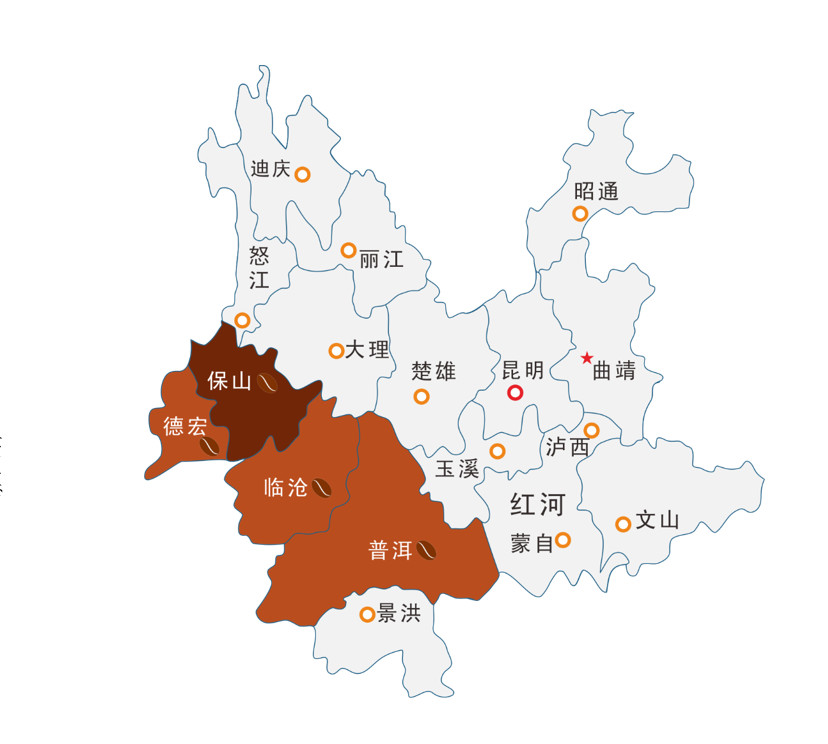
The first coffee tree in Yunnan was brought by French Catholic missionaries when they went to Dali to preach, and historical records indicate that this tree belonged to the Arabica species. Because this crop had limited yield and there was almost no domestic consumer demand for coffee at the time, although the coffee tree had taken root, large-scale cultivation never formed. By the 1960s, in order to repay Soviet loans, Yunnan began planting coffee on a large scale; after harvesting and drying, it was purchased by the state foreign trade department and shipped to the Soviet Union. During that period, Yunnan's coffee-growing areas mainly included Baoshan Lujiang Farm, Xincheng Youth Farm, Dehong Zhefang Farm, Ruili Farm, Wanding Farm, Wenshan Babu Farm, and Tianbao Farm, with a total planting area once reaching 50,000 mu.
Later genetic testing confirmed that the coffee tree brought by the missionaries belonged to the Typica variety, and what was planted in large quantities and exported to the Soviet Union back then was precisely Yunnan locally propagated Typica and its variant Bourbon. After the debt repayment task ended, domestic coffee demand remained sluggish, and the foreign trade department no longer actively purchased it either. For farmers, continuing to grow it could only barely break even. In addition, coffee leaf rust, which can kill coffee trees, broke out in Yunnan, so most people took the opportunity to cut down the coffee trees and switch to other crops with better market prospects. Yunnan's coffee planting area once shrank to just over 2,000 mu.
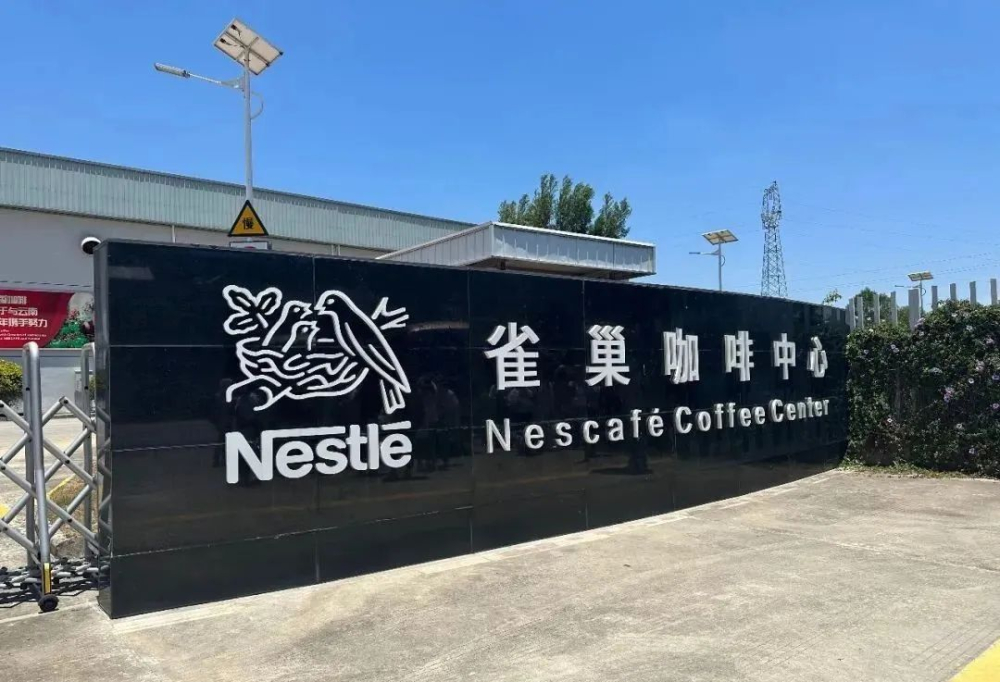
It was not until the 1980s, when the instant coffee industry expanded rapidly, that Nestlé began searching everywhere for regions suitable for large-scale coffee cultivation. In 1988, Nestlé decided to support Yunnan's coffee industry and introduced the Catimor variety, which required no meticulous management, had higher fruit yield, and stronger disease resistance. Driven by this, Catimor gradually became the main variety of Yunnan coffee. However, compared with Typica, which has pure Arabica lineage, Catimor carries Robusta genes. Although yield and disease resistance improved, the flavor was less than satisfactory—it tasted bitter and astringent, and few people were willing to drink Yunnan coffee directly. But Nestlé precisely needed this intense flavor so that coffee taste could still be detected after adding sugar and milk powder.
For this reason, before 2000, Yunnan coffee was almost equated with instant coffee in public perception. After 2000, China's economy took off, specialty coffee gradually became popular in the country, and people's requirements for coffee quality and flavor grew higher and higher. Yunnan coffee therefore received attention, and seed selection and cultivation began to adopt more scientific management and promotion methods. Today, Yunnan coffee continues to move toward specialization, and people's evaluation of it is no longer confused with instant coffee.
Front Street Coffee believes that for Yunnan coffee to truly achieve specialization, variety is an unavoidable key. Only when the variety itself is excellent enough will the coffee's flavor be outstanding. Yunnan Arabica was originally named because of Typica, but due to low yield, it was eventually replaced in that name by Catimor. Yet in the present context, yield is still the primary consideration. If people were now asked to replant Typica, it would require enormous manpower, cost, and time. Therefore, for Yunnan coffee to achieve specialization as quickly as possible, processing methods can be regarded as a "shortcut."
Ted Lingle, senior consultant at Berry COQ, once pointed out that Yunnan Catimor is grown at high altitudes above 1,500 meters, which allows it to gain aroma and roundness, and with suitable post-processing, the flavor excitement of the coffee beans is not inferior to traditional Typica varieties. Perhaps it was precisely this statement that guided people to explore in the direction of changing the "surface taste." But even with technology to correct the undesirable flavors of Yunnan coffee, the problems brought by variety still exist. Once traditional processing methods (natural or washed) are used, the bad flavors will still emerge. When we discuss coffee flavor, we often mention the concept of regional flavor, and regional flavor needs to be defined using coffee beans processed by traditional methods. Therefore, if we truly want to talk about Yunnan's regional flavor and pursue better flavor expression, we must plant better coffee varieties.
Front Street Coffee established the "Front Street Coffee Estate" in Lincang, Yunnan, in 2013, mainly planting Typica and a small amount of Bourbon. The purpose is to make changes from the root, so that Yunnan coffee beans can also present good flavor under traditional processing methods. At the same time, through its own practice, it hopes to change the stereotype that Yunnan specialty coffee consists only of flavor-enhanced processed Catimor. From the perspective of growers, encouraging and supporting adherence to the rules of specialty coffee starting from variety and altitude may be a beneficial attempt for the healthy and sustainable development of Yunnan's coffee-producing regions.
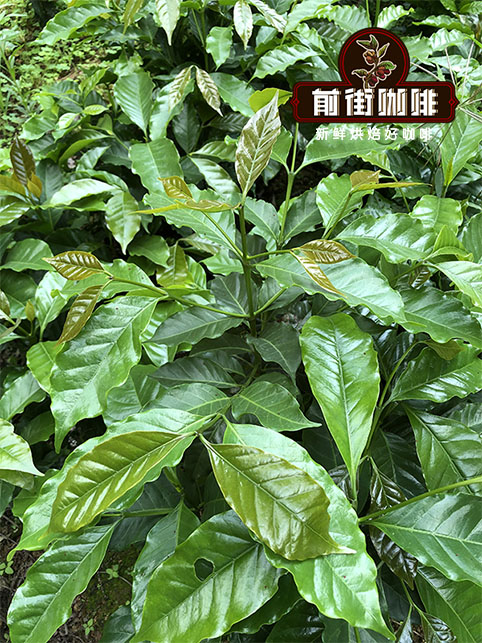
In fact, the Yunnan Typica grown by Front Street Coffee itself does not have a high yield. The 2021-2022 new harvest was about 600 kilograms, and it can be purchased at Front Street Coffee stores and on Front Street Coffee's Taobao. Every year after harvesting and completing natural processing, it is sent immediately to the coffee roasting factory for roasting and cupping. Because changes were made at the variety level, the main flavor profile of Front Street Yunnan coffee is dominated by plum, berries, brown sugar, and black tea. The climate each year has little impact on flavor expression and will not change the coffee's main profile. If there is any change, perhaps it is only a difference in body.
In order to preserve the sweet-and-sour sensation and tea-like character of Yunnan coffee, Front Street Coffee uses a medium roast for it. For brewing, a V60 dripper can be used, with a coffee-to-water ratio of 1:15, medium grind (about the size of coarse granulated sugar / 75% passing through a Chinese No. 20 standard sieve), and a water temperature of 88-89°C.
Specific brewing method: first pour 30g of water and bloom for 30 seconds; for the second stage, pour in a slow circular stream up to 125g, then after the water level in the coffee bed drops by half, continue pouring in a slow circular stream up to 225g, and wait until all dripping is complete. Total extraction time is about 2 minutes 10 seconds.
The brewed flavor expression of Front Street 2013 Yunnan Typica coffee: full berry juice sensation, plum-like acidity, roasted nut caramel aroma, black tea tea-like character, and brown sugar-like sweetness.
For professional coffee knowledge exchange and more coffee bean information, please follow Coffee Workshop (WeChat public account: cafe_style)
For more specialty coffee beans, please add the private WeChat of Front Street Coffee (FrontStreet Coffee), WeChat ID: kaixinguoguo0925
The above content is compiled by CoffeeHunters, a coffee news website.


