







How Do You Brew Panama Geisha Coffee Beans?
Panama Geisha coffee beans are a distinct coffee variety originally found wild in Ethiopia's forests and later planted in Panama, where Hacienda La Esmeralda separated and promoted them. The variety needs high altitude, cloud cover or shade, and fertile soil to develop floral aroma, delicate fruit acidity, and a tea-like sweet finish. Pour-over brewing with a three-pour method is one common way to bring out those flavors.
Geisha moved from Ethiopia's Geisha Mountain to research stations in Kenya and Tanzania in 1931, then to Uganda and Costa Rica, and reached Panama in the 1960s and 1970s through Don Pachi estate. For convenience, drip bag coffee offers a simpler route to a similar cup. Both hand-brew and drip bag methods aim to extract layered floral notes without harsh bitterness.
Geisha coffee has swept the globe with its delicate floral aromas and elegant fruit acidity, and Panama has pushed this variety to its peak. This article starts from Geisha's historical origins, variety characteristics, and growing conditions, systematically reviews the product grading system of Panama's Hacienda La Esmeralda, and explains in detail the three-pour hand-brew parameters and steps for Front Street Geisha coffee beans. At the same time, for enthusiasts seeking convenience, this article also includes a complete drip bag coffee brewing tutorial, so that whether at home or in the office, you can easily recreate a cup of full-flavored Geisha black coffee.
To brew a delicious cup of coffee, the first step is naturally to understand the beans themselves. Front Street has always believed that regardless of price, as long as the quality is good and paired with the right technique, you can make a satisfying cup of coffee.
Today Front Street wants to talk about none other than the strongly rising Geisha coffee bean of recent years. How much do you know about Geisha? Actually, Geisha is just a name among coffee varieties, a transliteration of Geisha, and like Typica and Bourbon, it is a variety designation. Geisha was originally wild in the forests of Ethiopia. In 1931 it was introduced from Geisha Mountain in southwestern Ethiopia to coffee research institutions in Kenya and Tanzania, then later passed to Uganda and Costa Rica, and finally in the 1960s and 1970s was brought from Costa Rica to Panama for planting by Don Pachi estate.
At that time, because of its low yield and tall plants that were difficult to harvest, Geisha was far less favored than varieties such as Caturra and Catuai, so Geisha trees were often used as windbreaks. It was not until Panama Geisha Hacienda La Esmeralda separated it from other varieties in 2003 and won the BOP competition in 2004 that the Geisha variety truly entered the public eye.
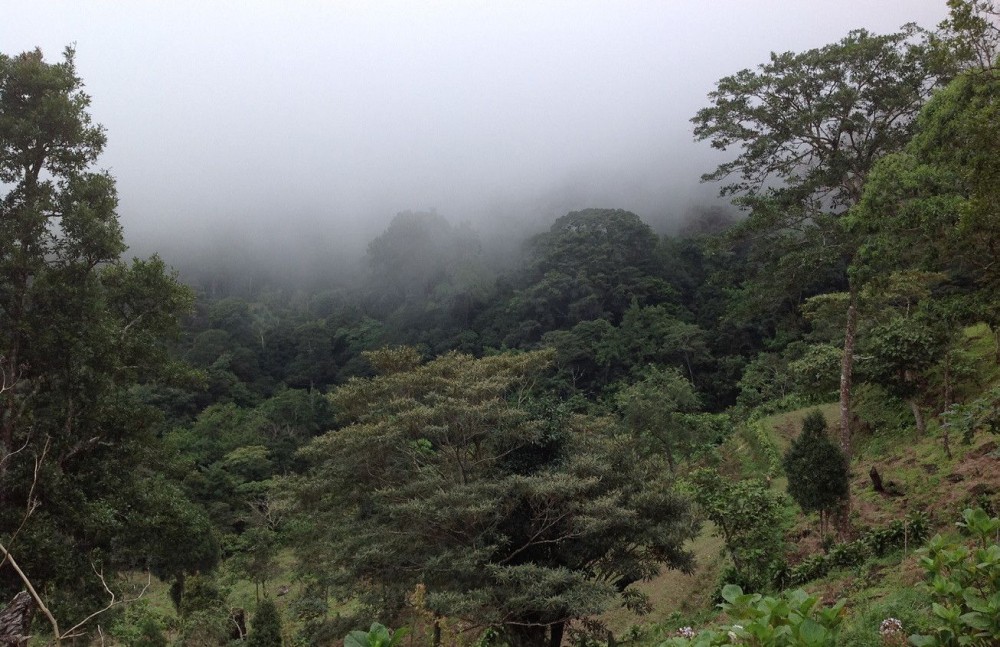
In the end, the Geisha coffee tree is quite picky about its growing environment, requiring high altitude, cloud cover or abundant shade trees, and fertile soil in order to produce layered floral aromas, delicate and elegant fruit acidity, and a tea-like sweet finish.
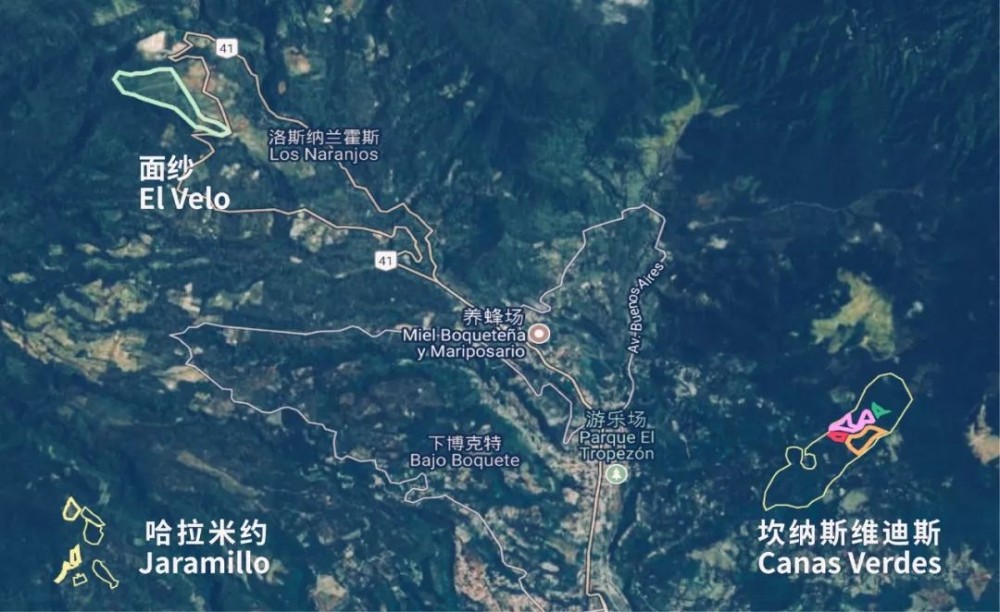
Panama's climate conditions happen to align very well with Geisha's cultivation needs. Panama borders Costa Rica and Colombia, and its east-west topography allows cold air currents to pass through the central mountain range and converge in areas above 1,900 meters, thus forming a unique microclimate around Boquete and Piedra de Candela, with temperatures and rainfall suitable for plant growth. This area is also the core production region of Panamanian coffee. In addition to climate, the surrounding land is rich in nutrients, and the fertile soil provides ideal conditions for cultivating coffee, creating a large number of coffees with unique styles and outstanding quality. Front Street believes that it is precisely Panama's overall conditions that allow Geisha coffee beans to present delicate and elegant fruit acidity and distinct floral aromas, and it is also for this reason that Panama Geisha has become popular worldwide.
Ever since Geisha rose to fame in Panama, it has been planted all over the world, and even Yunnan has joined the ranks of Geisha cultivation. Although Ethiopia, Colombia, Guatemala, Costa Rica, and even Yunnan, China all grow Geisha, many factors such as climate, altitude, temperature and humidity, sunshine duration and intensity, soil fertility, irrigation water, and the grower can all cause differences in coffee flavor, and the overall performance still does not match that of Panama Geisha. So Geisha styles are diverse and each has its own characteristics, with Panama being the mainstream, but Front Street also believes that Geisha from other producing countries and regions is equally worth trying.
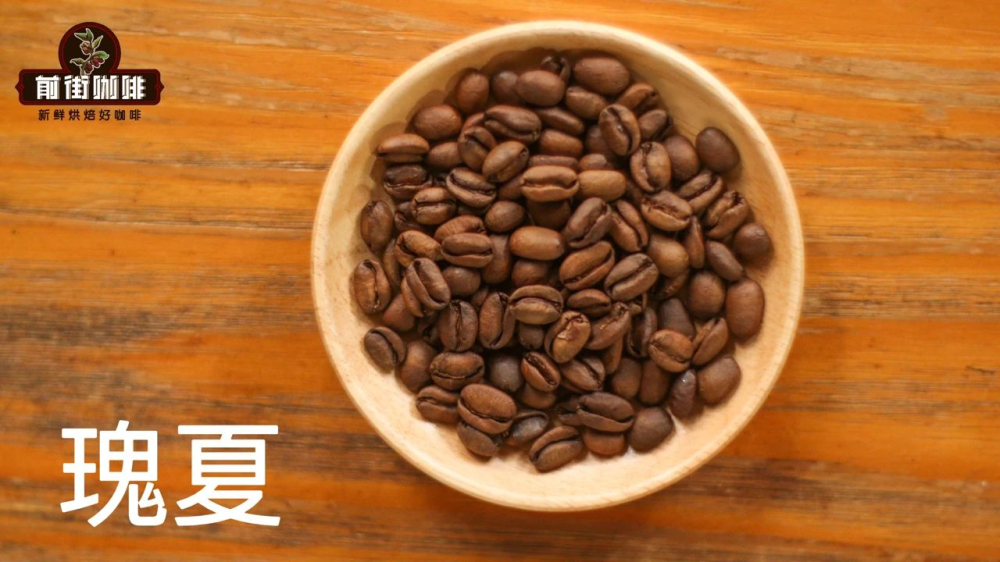
In addition to the Panama production area, Front Street's Geisha coffees also include Ethiopia Gesha Village Red Label, Colombia Finca La Esperanza Geisha, and Costa Rica Strawberry Candy Coffee, all of which are very popular single-origin choices.
As the "talent scout" that discovered Geisha, Hacienda La Esmeralda divided the estate into plots very early on and established a series of product positioning. In the early days it consisted of three Geisha brands and two non-Geisha brands — Esmeralda Special, Private Collection, and Geisha1500; the Catuai variety had two brands: Diamond Mountain grows and Palmyra.
Later, with changes in the international market, Geisha's continued rise globally, and other Panamanian estates continuously exploring Geisha's upper limits, Hacienda La Esmeralda also made corresponding product adjustments between 2020 and 2022, among which the auction lot was separated from the Red Label and established as an independent product line — the Auction Lot. The Red Label retained the attribute of traceable fine plots and is the highest-grade product outside of auction bidding. The Green Label no longer emphasizes detailed plots and is a blend harvested from various plots between 1,600 and 1,800 meters, still retaining a Geisha flavor highly characteristic of Esmeralda. The most cost-effective Blue Label series, however, was discontinued.
So how should Front Street Geisha coffee be brewed?
The flavor of Front Street Panama Geisha coffee is characterized by floral aromas, fruit aromas, honey sweetness, and a clean and bright mouthfeel, so Geisha coffee beans are usually given a medium-light roast. When brewing, Front Street baristas use a finer grind to increase the contact area between coffee particles and water, while using a higher water temperature to speed up the dissolution rate of coffee substances.
Front Street Geisha Coffee Brewing Recommendations
To brew a good cup of coffee, besides the variety itself, the freshness of the coffee beans is equally critical. Front Street believes freshness is an extremely important part of the brewing process. The coffee beans shipped by Front Street are all within 5 days of roasting, because Front Street deeply understands the huge impact of freshness on flavor. Front Street's roasting philosophy is "freshly roasted good coffee," so that every customer who places an order can receive the freshest possible state when the coffee arrives. Coffee's resting period is about 4 to 7 days, so by the time customers receive it, it is exactly at its best flavor stage.
Of course, some customers need Front Street to grind the coffee for them, and that is no problem either, but Front Street needs to remind them: once coffee beans are ground in advance, they no longer need to rest, because the pressure generated by carbon dioxide inside the packaging during transport can also make the coffee flavor rounder, so once you receive the coffee grounds you can immediately brew a cup and enjoy it. However, coffee grounds need to be brewed as soon as possible, because after the powder contacts air it oxidizes faster and the flavor dissipates more quickly, making the coffee's performance less ideal. Therefore Front Street recommends buying whole beans and grinding fresh before brewing, so you can better taste the coffee's flavor.
The three-pour brewing process for Front Street Geisha coffee beans
First, make preparations (V60 dripper, 15g coffee, 1:15 coffee-to-water ratio, 91°C, coffee grounds the size of fine granulated sugar (medium-fine / 80% passing rate on China standard No. 20 test sieve).
Step one: Add the coffee grounds and begin the first pour while starting the timer. For the first pour, pour in 30 grams of hot water, circling from the center outward. After absorbing water, the coffee grounds slowly expand, forming a plump "coffee burger." This process is called blooming. The purpose of blooming is to let the coffee grounds release internal carbon dioxide gas, thereby making the later extraction more stable.
Step two: Stop when the water reaches 30 grams and wait 30 seconds for the bloom. When the electronic scale shows the 31st second, begin the second pour, circling from the center outward, keeping the flow steady and vertical. When the stream hits the coffee bed, foam appears. This stage of brewing lets the coffee foam release and spread across the entire surface of the coffee bed, with the liquid level rising to the base of the short ribs. The amount of water in this pour is 125 grams.
Step three: When the liquid level drops to the halfway point, begin the final pour. This stage likewise pours 70 grams in a "aroma-seeking" pattern from the center outward. The originally dark brown foam turns into pale yellow coffee foam, and the liquid level also returns to the height of the second pour. After all the coffee liquid has flowed into the server, remove the dripper and end extraction. The total brewing time is 2 minutes 00 seconds.
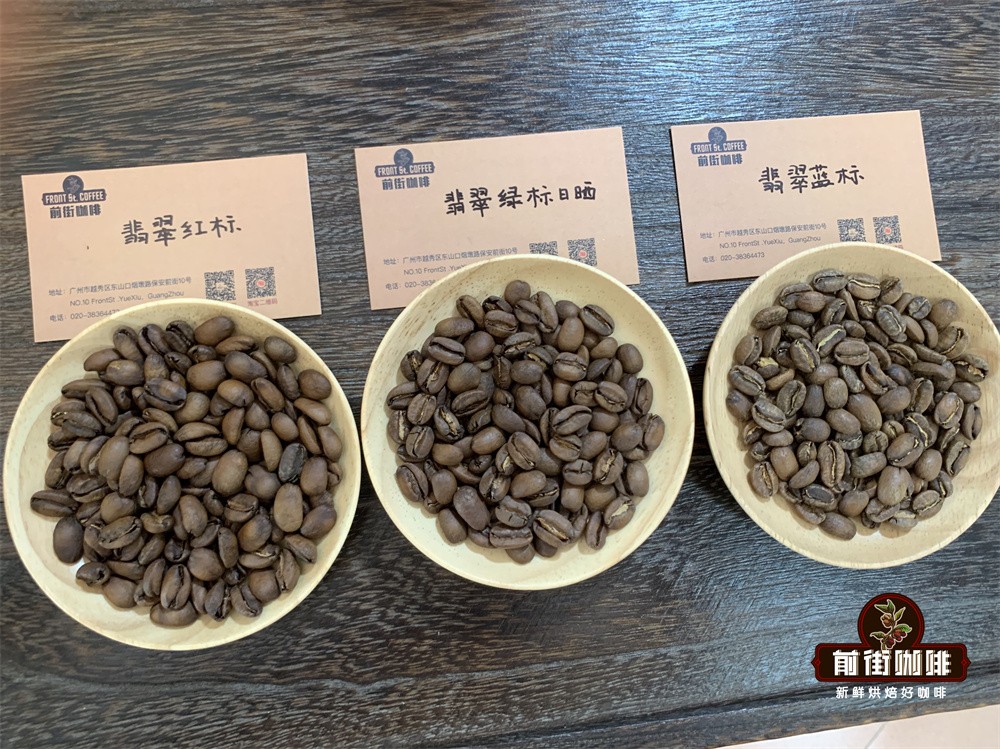
Front Street Panama Hacienda La Esmeralda Red Label Geisha coffee flavor: bright rose and citrus aromas, brown rice, berries, apricot, mixed fruits, honey, thick juicy body, rich flavor layers, and pronounced sweetness.
Front Street Panama Hacienda La Esmeralda Green Label Geisha coffee flavor: rich jasmine fragrance, high sweetness, citrus, berries, juicy body, cream, green tea, orange peel, cantaloupe, with an overall rich flavor layering and a lasting floral and citrus finish.
Front Street Panama Volcanic Rock coffee flavor: ginger flower, citrus, honey, pomelo.
Front Street's Geisha coffees cover multiple producing countries, and different production areas also have several categories. If you want to taste Geisha flavor without too much hassle, you might as well buy Geisha drip bag coffee packets. As long as you have hot water and a cup, you can brew a delicious cup of Geisha black coffee anytime, anywhere.
Front Street Geisha Drip Bag Coffee Brewing Tutorial
Because drip bag coffee needs to be ground in advance, the contact area between coffee grounds and air is larger than with whole beans, and aroma is more easily lost. Therefore Front Street recommends using freshly roasted Panama Geisha coffee beans to make it, so that the brewed coffee has a fuller aroma. Front Street hopes every customer can taste the delicate flavors in the coffee, so it only ships coffee beans freshly roasted within 5 days, and when customers receive them they are within the best tasting period.
Brewing a drip bag can be very simple: just pour a certain amount of hot water into the coffee grounds, wait for the coffee liquid to drip through, and the whole extraction process is complete. The flavor of drip bag coffee is related to many factors, such as coffee-to-water ratio, water temperature, and pouring method. If you want to brew a cup of drip bag coffee with excellent flavor and mouthfeel, Front Street recommends paying more attention to the following details during operation, which can make the coffee in your cup taste better.
First, you need to prepare sufficiently hot water, because only when the water temperature is high enough can more aromatic substances be released from the coffee grounds. When hand-brewing coffee, Front Street recommends using a water temperature of 86 to 93 degrees Celsius. If the temperature is only around 80 degrees, the brewed coffee tends to be weak and tasteless, while boiling water easily extracts burnt and bitter flavors. Therefore Front Street lets boiled water sit uncovered at room temperature for 1 to 2 minutes, allowing the water temperature to drop slightly to around 90 degrees Celsius.
First, we need to prepare a container for the coffee, a kettle for pouring water, and sufficiently hot water. A sharing pitcher or drinking cup will both work.
Tear open the sealed packaging, take out the coffee drip bag, and tear open the non-woven bag along the dotted line on top. Pull open the two ears, unfold the entire drip bag, and then hang them on the edge of the cup or sharing pitcher.
For the first pour, first moisten all the coffee grounds, blooming for about 10 to 20 seconds. For the second pour, pour steadily in a small stream until the liquid level is nearly full, then wait for the coffee liquid to drop until it has fully drained.
Pour the final stage of water until full, and after all the coffee liquid has dripped through, gently swirl to even it out, and it is ready to enjoy.
The above content is compiled by CoffeeHunters, a coffee news website.


