







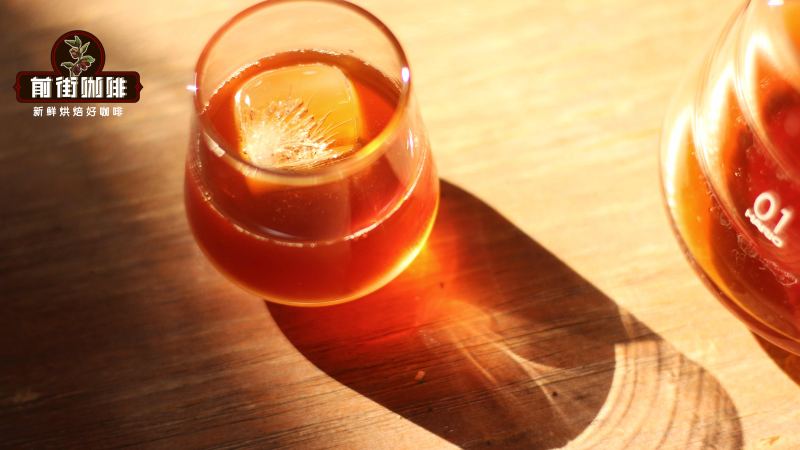
What Is Coffee Cold Extraction and How Does It Differ?
Cold drip and cold brew both extract coffee entirely with cold water rather than hot water, so they take much longer than iced Americano or iced pour-over, which are brewed hot and then cooled. Cold extraction typically needs 6 to 12 hours. The cold temperature slows bitterness release and draws out pleasant flavor compounds more gradually, giving a fuller mouthfeel.
Cold drip uses a drip-style method while cold brew uses immersion, and each calls for its own grind size, time, and coffee-to-water ratio. Medium-light to medium roasts are usually ground to a medium-coarse setting. A comparison using the same Ethiopian Yirgacheffe natural red cherry beans shows how the two methods differ in mouthfeel and flavor.
Neither cold drip coffee nor cold brew coffee relies on hot water; instead, they complete extraction entirely with cold water, so they take far longer than iced Americano or iced pour-over. Many coffee lovers want to try making these two coffees at home, but without understanding their extraction principles and operational differences, it is hard to achieve the ideal flavor. Starting from the practices at Front Street Coffee, this article first explains the basic principles of cold extraction, then explains the suitable grind size, and next breaks down the specific parameters of time and coffee-to-water ratio for cold drip's drip-style extraction and cold brew's immersion-style extraction respectively. Finally, it uses the same Front Street Ethiopia Yirgacheffe Natural Red Cherry coffee beans for comparison, presenting the differences in mouthfeel and flavor brought by the two methods, to help you find a brewing plan that suits you.
For more specialty coffee knowledge, please follow the WeChat public account: Front Street Coffee (FrontStreet Coffee)
Cold drip coffee and cold brew coffee are different from iced Americano and iced pour-over coffee, which first extract with hot water and then add ice to cool down. Their entire extraction process is completed in cold water, so they take quite a long time. Many people say they want to make these two coffees at home. Front Street believes that to make them taste good, you must first understand their extraction principles.
What is cold-extracted coffee?
The movement of hot molecules in hot water accelerates the release of heavy molecular (bitter) substances in coffee, while cold water is exactly the opposite. When coffee is extracted with cold water/ice water/in a low-temperature environment, not only is the bitterness not easily released, but other high-quality flavor molecules in the coffee are also released more slowly, so more time is needed to make up for the low efficiency.
Therefore, cold-extracted coffee usually needs 6-12 hours to allow the pleasant positive flavor substances to be better released and dissolved into the water, making the coffee show a fuller and richer mouthfeel.
Grind size for cold drip coffee and cold brew coffee
Usually, when Front Street Coffee (FrontStreet Coffee) makes cold-extracted coffee, it uses medium-light to medium-roast coffee beans, so the beans are ground to a medium coarseness (similar to granulated sugar / 75% passing through the Chinese No. 20 standard sieve).
If it is too fine, the water dripping from the upper chamber of the cold drip coffee cannot pass evenly and fully through the entire coffee bed; after water is added to cold brew coffee, the coffee grounds tend to clump together. These are all reasons that lead to uneven coffee extraction and an unbalanced taste.
The difference between cold drip coffee and cold brew coffee
Cold drip coffee belongs to drip-style extraction. It uses an ice-water mixture below 5°C, allowing the ice to melt naturally and then controlling the speed at which ice water drips into the coffee grounds through a valve. The ice water slowly dissolves the coffee's flavor from the grounds and drips out the extract little by little. The complete extraction takes about 2-8 hours.
To obtain a better taste, it then still needs 12-48 hours of refrigerated fermentation. The ratio for each extraction is relatively low. (Front Street Coffee (FrontStreet Coffee) uses a 1:10 coffee-to-water ratio for extraction, that is, 60g of coffee grounds extracts 600ml of coffee liquid.) Generally, when no ice is added, the concentration is extremely high. If the coffee liquid is too strong, add ice to dilute it according to personal taste. The mouthfeel is excellent.
Cold brew coffee belongs to immersion extraction. It is made by directly mixing room-temperature water/ice water with coffee grounds, then sealing it and placing it in the refrigerator to begin an extraction process lasting 8-12 hours. Unlike cold drip coffee, cold brew coffee, because the grounds and water are in direct contact, extracts very fully. After extraction and filtering are complete, it can be drunk directly.
When Front Street Coffee (FrontStreet Coffee) makes cold brew coffee, it usually uses a coffee-to-water ratio of 1:10 to 1:12. If a stronger ratio is adopted, that is, 30g of coffee grounds added to 300g of cold water/ice water for extraction, the final concentration of the coffee liquid is, for most people, on the strong side with a thick mouthfeel. We can first add 2-4 ice cubes to the cup to keep the coffee cold while also lowering the concentration. Cold brew made this way preserves the flavor and also achieves an appropriate concentration.
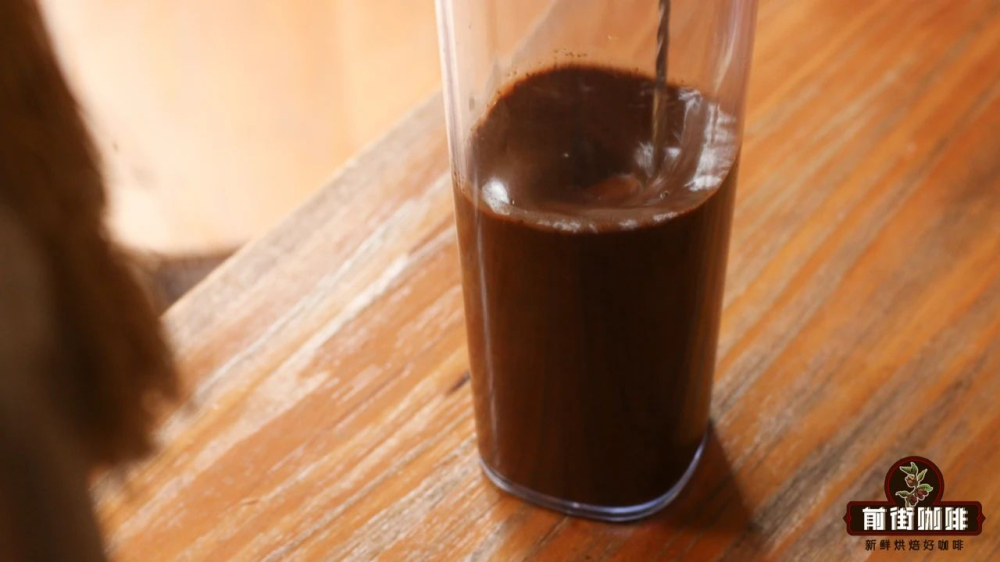
If you want the coffee to be lighter, you can change the coffee-to-water ratio to 1:12 or 1:13. The grind size and steeping time remain unchanged, and the extracted mouthfeel will clearly become lighter, suitable for most people's tastes.
Flavor and mouthfeel differences between cold drip and cold brew made with the same coffee beans
In this article, Front Street Coffee (FrontStreet Coffee) will use its own freshly roasted coffee beans for a comparative experiment. Only freshly roasted coffee beans have fuller and richer aroma and flavor, so all coffee beans sold by Front Street Coffee (FrontStreet Coffee) are shipped within 5 days after roasting is completed.
This time, a medium-light roast "Front Street Ethiopia Yirgacheffe Natural Red Cherry coffee beans" was selected. This coffee bean uses 100% fully ripe coffee cherries, so the coffee itself has a very high sweetness. Combined with the direct drying of the natural process, the sugar content is further transformed into the coffee beans, accompanied by a slight fruity fermentation note.
Made into cold drip coffee through drip-style extraction, the flavor shows citrus-like acidity, strawberry-like sweet acidity, and a black tea-like tea note, with a refreshing, clean, and clear mouthfeel. As the storage time becomes longer, the fruity wine-like fermentation note also becomes more and more obvious.
Made into cold brew coffee through immersion extraction, the flavor shows citrus-like acidity, the sweet acidity and fullness of mixed berry juice, and a black tea-like sweet aftertaste, with a full-bodied, rich, and clean mouthfeel.
The above content is compiled by CoffeeHunters, a coffee news website.


