







Where Does Yunnan Coffee Stand Among the World's Origins?
Yunnan coffee holds a small but growing place among global origins, with cultivation dating to 1904 and large-scale planting starting after the 1950s. Growing regions such as Baoshan, Pu'er, Xishuangbanna, Dehong, and Lincang each show distinct flavor profiles, and the industry moved from Typica and Bourbon to Catimor and, after 2000, toward specialty coffee.
That shift in coffee growth followed three stages: varieties grown to repay Soviet debt in the 1950s and 1960s, Nestle's promotion of Catimor, and the specialty coffee concept introduced after 2000. Front Street Coffee planted Typica in Lincang and harvested its first crop in 2021, part of a broader move toward refinement.
Yunnan is famous for Pu'er tea, but it also produces coffee beans that are popular among young people. Coffee cultivation in China can be traced back to 1904, while large-scale cultivation in Yunnan began after the 1950s and went through three stages of development. From the Typica and Bourbon varieties initially purchased to repay Soviet debt, to Nestlé's promotion of the Catimor variety, to the introduction of the specialty coffee concept after 2000, Yunnan coffee is gradually moving toward refinement. Today, producing regions such as Baoshan, Pu'er, Xishuangbanna, Dehong, and Lincang each have their own flavor expressions. Front Street Coffee established an estate in Lincang, planting the elegant Typica variety, and welcomed its first harvest in 2021. This article will sort out the development of Yunnan coffee and introduce the flavor and brewing parameters of Front Street Yunnan sun-dried Typica.
China is vast, and each region has its own specialty agricultural products. Yunnan is world-famous for tea, and Pu'er tea has won the favor of many tea drinkers with its mellow taste. But this land does not only produce tea; it also has colorful flowers, unusual ingredients, and coffee that many young people love today.
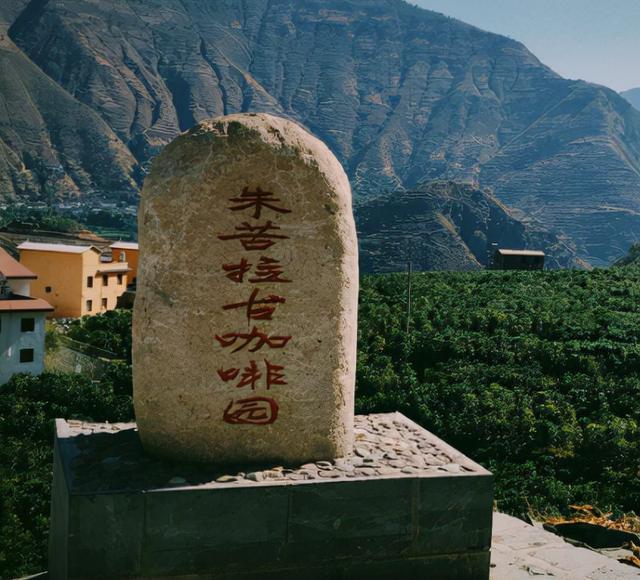
China is a country of tea, and coffee was originally a foreign import, but that has not prevented it from taking root, sprouting, and growing here. The history of coffee cultivation in China can be traced back to 1904. According to the Binchuan County Gazetteer, in the 30th year of the Guangxu reign of the Qing Dynasty (1904), the French missionary Tian Deneng was sent by the Dali diocese to Zhukula Village to build a church and preach. Because Tian Deneng had the habit of drinking coffee, he planted several coffee trees beside the church for his own consumption.
Large-scale coffee cultivation in Yunnan had to wait until after the 1950s. China's coffee cultivation has roughly gone through three stages.
The first stage was in the 1950s and 1960s. At that time, in order to repay Soviet debt, the foreign trade department would regularly make large-scale purchases in Yunnan and then ship the coffee to Europe and America. The coffee bean varieties in Yunnan during that period were locally propagated Typica and Bourbon variants.
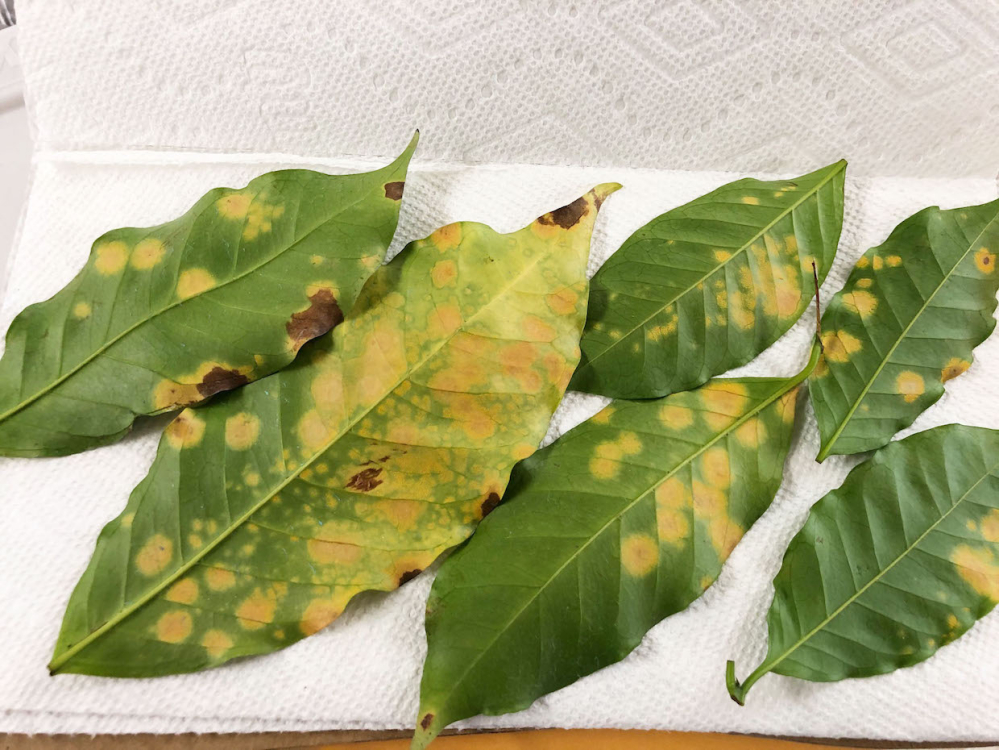
As the debt repayment work neared completion, the foreign trade department no longer actively purchased Yunnan coffee beans. In addition, coffee leaf rust spread locally, and a large number of coffee trees became infected or even died. To stop the disease from spreading, growers had to cut down many trees. At one point, Yunnan's coffee planting area was less than 3,000 mu.
The second stage was in the 1980s. After the reform and opening-up policy was implemented, a large number of international brands were able to enter the Chinese market. Yunnan attracted the attention of the coffee giant Nestlé, which strongly supported the development of Yunnan's coffee industry and promoted the Catimor variety locally.
Catimor is a hybrid of the Timor variety, which carries Robusta genes, and the Bourbon variant Caturra. Because it contains some Robusta genes, Catimor has a certain resistance to coffee leaf rust, and its yield is three times that of Typica. Faced with these advantages, growers who did not understand coffee flavor and cared only about returns found growing Catimor clearly the more cost-effective choice. More and more growers cut down the elegant Typica and switched to the higher-yielding Catimor. Catimor thus became the main force among Yunnan coffee varieties, once even accounting for as much as 90 percent of Yunnan coffee.
The third stage came after 2000. As China's economy improved greatly, more and more people in the country drank coffee, and many coffee brands began to pay attention to this market. The concept of specialty coffee was then introduced into China. As demand for specialty coffee rose, local growers in Yunnan began to attach importance to coffee variety selection and the development of post-harvest green bean processing methods.
Today, Yunnan coffee beans can be seen in more and more specialty coffee shops. Many friends who come to FrontStreet Coffee ask: Is there Yunnan small-bean coffee? The flavors of Yunnan coffee beans on the market are becoming richer and richer. People who pay attention to coffee bean information should notice that even though the flavors differ greatly, Yunnan coffee beans come from only a few producing regions: Baoshan, Pu'er, Xishuangbanna, Dehong, and Lincang.
Friends who have visited FrontStreet Coffee stores will notice that on the small blackboard in the store there is a coffee bean labeled "Front Street 2013." While roasting coffee, Front Street is also continuously learning about coffee cultivation.
Front Street first grew the Catimor variety in a place called Dazhen in Guangdong Province, but after more than half a year it found that the direction was wrong. To make coffee taste good, you need to choose the right variety, plant it at the right altitude, and finally use the right processing method to express the unique flavor of the coffee beans.
After several twists and turns, FrontStreet Coffee found a suitable place in Lincang, Yunnan, and established its own FrontStreet Coffee estate. After gaining a deeper understanding of coffee, FrontStreet Coffee planted the oldest and most elegant Arabica variety in its estate—Typica—in order to explore the uniqueness of traditional Yunnan small-bean coffee.
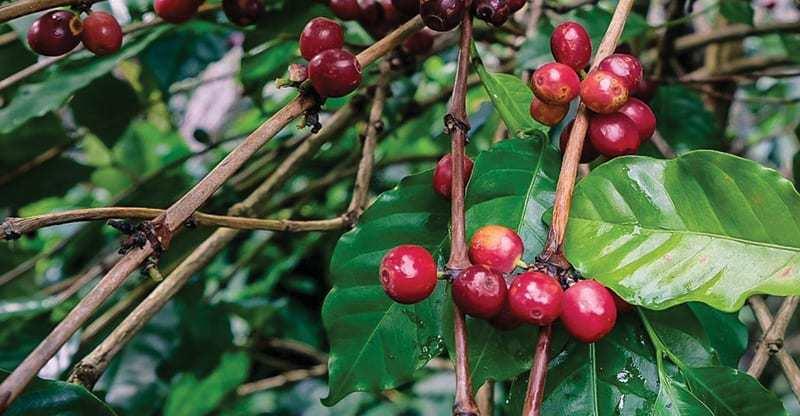
[Typica] Typica is the oldest native coffee variety, and all Arabica varieties are derived from Typica. Typica has an elegant flavor, but weak disease resistance and low yield. Many of the world's excellent coffee beans are Typica varieties, such as Jamaican Blue Mountain coffee beans and Hawaiian Kona coffee beans. The new top leaves of Typica are copper-red, which is why it is also called red-top coffee.
Yunnan has distinct rainy and dry seasons. The location of the FrontStreet Coffee estate is the same, with mild temperatures year-round, not too hot in summer and not too cold in winter, providing a suitable temperature for coffee growth. When the rainy season comes, it is sometimes sunny and then suddenly pours, providing enough moisture for coffee cultivation.
The Typica coffee trees in the FrontStreet Coffee estate thrive under such comfortable conditions and finally welcomed the joy of their first harvest in 2021. After Front Street harvested the ripe coffee cherries, it spread the cherries evenly on raised beds to avoid a earthy smell from contact with soil, and turned them regularly so they would dry more evenly, avoiding unpleasant fermented flavors.
When FrontStreet Coffee's roasters received the fruits of their own estate's labor, they were also very joyful. During roasting, in order to highlight the aroma of this sun-dried coffee bean, a medium roast level was used.
FrontStreet Coffee Yunnan Sun-Dried Typica Coffee Beans
Region: Lincang, Yunnan, China
Estate: FrontStreet Coffee Estate
Altitude: 1,300 meters
Variety: Typica
Processing method: Sun-dried processing
After the coffee beans were roasted, FrontStreet Coffee's baristas cupped them. On the palate there is a rich nutty character, soft plum acidity, brown-sugar-like sweetness, and a black tea note. The wonderful taste of Front Street's Yunnan sun-dried Typica cannot be separated from the unique terroir of the growing region. Because the skin and pulp are retained for sun drying, more sugars in the fruit are preserved and permeate into the green coffee beans, making the sweetness more intense and the layers richer.
When FrontStreet Coffee serves this Yunnan sun-dried Typica, the brewing parameters used are as follows:
Dripper: Hario V60
Water temperature: 87°C
Dose: 15 grams
Coffee-to-water ratio: 1:15
Grind size: 75% passing through a Chinese standard No. 20 sieve
First pour 30 grams of hot water and bloom for 30 seconds, then pour from the center in a thin stream and slowly circle to 125 grams. When the water level in the dripper drops to the point where the coffee bed is about to be exposed, continue pouring in circles to 225 grams. The total extraction time is about 2 minutes.
Because Front Street ships coffee beans freshly roasted within 5 days, by the time they arrive they have gone through a 4- to 7-day resting period. The coffee beans contain sufficient carbon dioxide gas, so blooming during brewing helps promote the release of carbon dioxide from the coffee grounds and makes flavor extraction more stable.
At the same time, Front Street also provides a grinding service for friends. However, Front Street must remind everyone that once coffee beans are ground into powder, degassing intensifies and the flavor dissipates accordingly. Therefore, Front Street recommends that friends whose home conditions allow it buy whole beans and grind fresh before brewing for better flavor.
For more coffee bean information, please follow Coffee Workshop (WeChat public account: cafe_style) For professional coffee knowledge exchange, please add WeChat ID: kaixinguoguo0925
The above content is compiled by CoffeeHunters, a coffee news website.


