







Why Are Green Coffee Beans From Blue Mountain Packed in Barrels?
Jamaican Blue Mountain green coffee beans are exported in wooden barrels rather than burlap sacks, a practice said to date to the mid-18th century British colonial era, when empty flour barrels sent from Britain to Jamaica were reused to hold coffee and rum. Today the barrels are built from wood sourced in temperate US forests.
The sealed barrel buffers sudden temperature swings in transit and slows moisture exchange, since the wood absorbs and releases humidity gradually instead of changing abruptly, and it keeps the coffee aroma from escaping. Blue Mountain lots also carry certification marks, estate background and strict processing standards behind the packaging.
Green coffee beans are usually transported in burlap sacks, but Jamaican Blue Mountain coffee has always been packed in wooden barrels. This unique tradition has both historical origins and implications for quality assurance. Front Street Coffee will provide a comprehensive interpretation of Blue Mountain coffee's unique features, from the origin of barrel packaging, wood characteristics, and Rainforest Alliance certification marks, to Blue Mountain coffee's certificate system, estate background, processing methods, and varietal characteristics. At the same time, Front Street Coffee will also share the brewing parameters and flavor performance of two Blue Mountain No. 1 coffees—washed and natural—taking you deep into every detail of this top-tier coffee.
For more specialty coffee knowledge, please follow the WeChat official account: Front Street Coffee
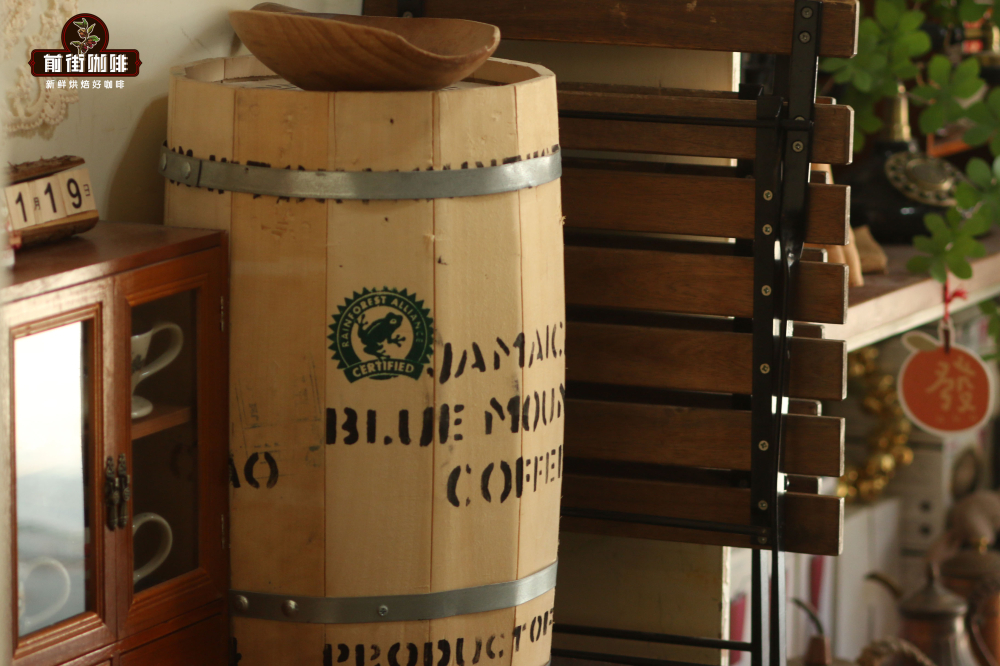
Not long ago, when some coffee enthusiasts visited the Front Street Coffee store, they noticed a uniquely shaped wooden barrel on display and asked where it was purchased. In fact, this is a special container used for holding Jamaican Blue Mountain green coffee beans. Since most people associate green coffee beans with burlap sack packaging, they are quite curious about Blue Mountain coffee being packed in wooden barrels. Next, Front Street Coffee will explain in detail why Blue Mountain coffee uses wooden barrel packaging.
Why is Blue Mountain coffee packed in wooden barrels?
According to Front Street Coffee's years of experience purchasing green coffee beans, among all coffee-producing regions, only Blue Mountain coffee is exported and sold in wooden barrels, while other origins generally use burlap sacks for transport. As for the origin of Jamaican Blue Mountain coffee using wooden barrels, it is said to date back to the mid-18th century during the British colonial era, when flour shipped from Britain to Jamaica was used up, and the empty barrels were recycled to hold coffee and rum.
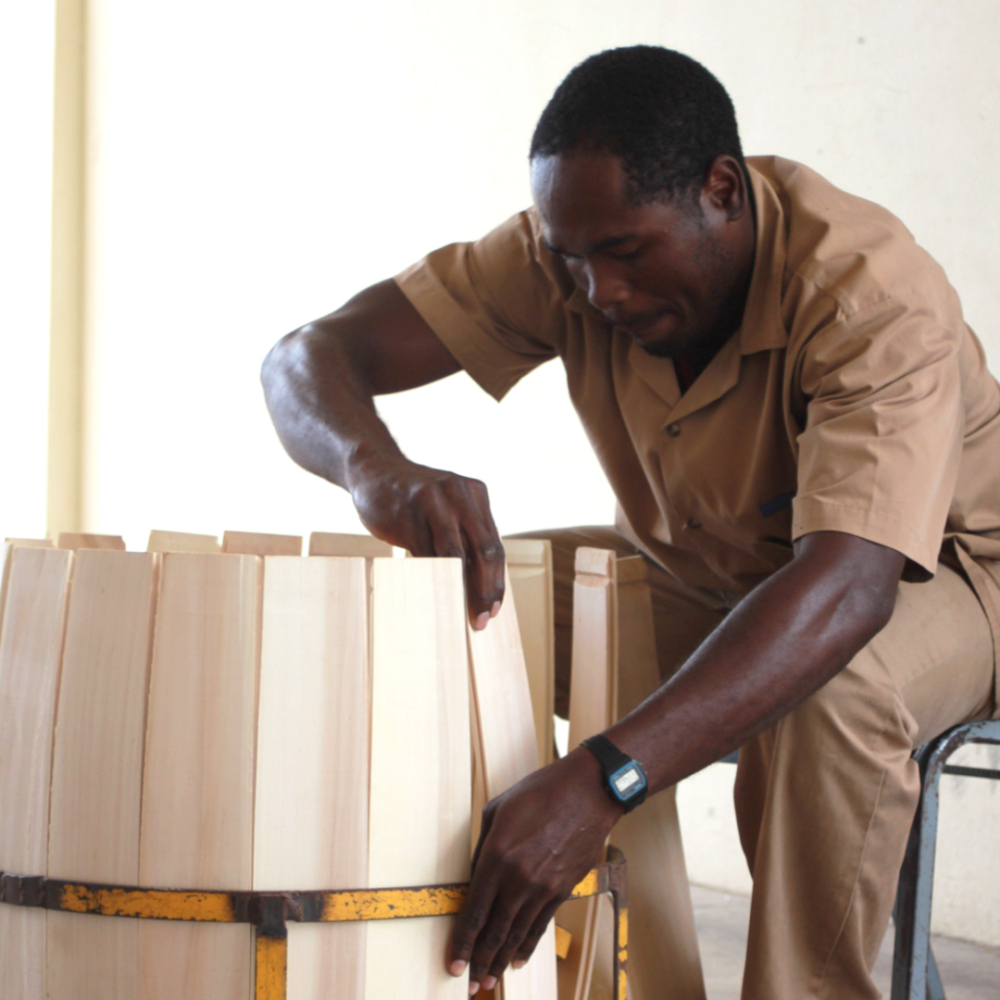
According to Front Street Coffee's understanding, the wooden barrels used today are all made from wood sourced from temperate forests in the United States. The advantage of wooden barrels is that they can absorb and release internal and external moisture without drastic changes, thereby buffering sudden temperature fluctuations during transportation. In addition, the sealed barrel can isolate the coffee aroma from escaping and maintain coffee quality to the greatest extent, but the corresponding additional cost is also relatively high. Nevertheless, in order to keep coffee beans in optimal condition, Jamaican estates producing Blue Mountain coffee still continue the tradition of packing green beans in wooden barrels to this day, and this has also become a signature feature of Blue Mountain coffee.
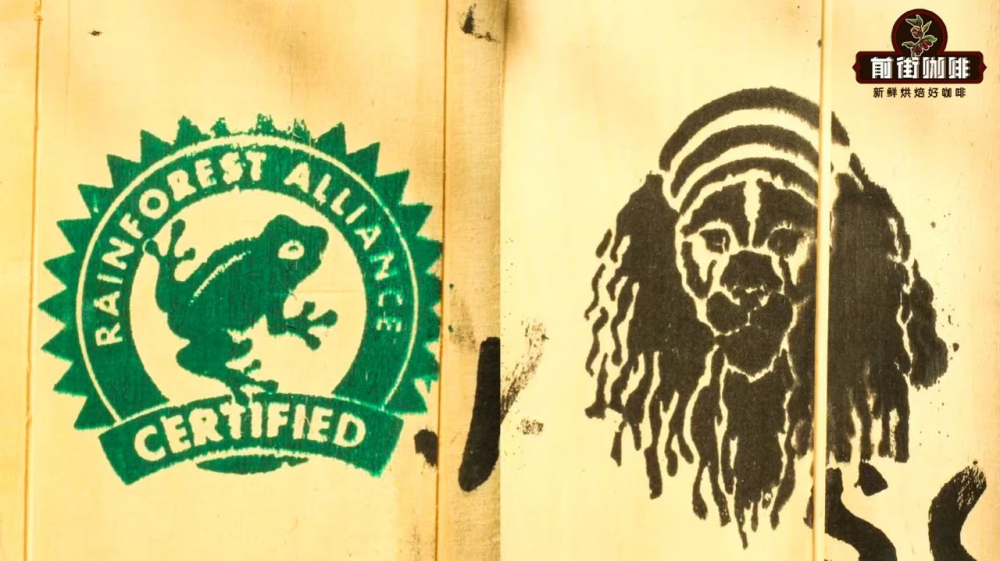
For example, the wooden barrel of Blue Mountain green coffee beans in the Front Street Coffee store comes from Blue Mountain Clifton Estate. The biggest difference between this barrel and those used by other estates exporting Blue Mountain coffee beans is that it has a small green frog printed on it. This little frog represents "Rainforest Alliance certification," referring to farms that meet the standards set by the Rainforest Alliance. The alliance evaluates the protection of the farm and its surrounding ecosystem, limits pesticide use, and audits benchmarks such as waste management. Only coffee that passes the assessment and obtains certification can be called "Rainforest Alliance Certified coffee." According to Front Street Coffee's understanding, Clifton Estate is the only estate in Jamaica with "Rainforest Alliance certification."
In addition, Front Street Coffee has introduced Jamaican Blue Mountain coffee from its place of origin. At present, the Jamaica Coffee Board can issue certificates for all Blue Mountain coffee exported.
Blue Mountain coffee bean certificates are divided into the following three types:
(1) Quality certificate issued by the Jamaica Coffee Board (2) Authorized sales certificate issued by Blue Mountain coffee producers. (Blue Mountain coffee is distributed by 4 processing producers licensed by the Jamaican government and exported by 16 licensed exporters) (3) Certificate of origin for Jamaican Blue Mountain coffee
Quality certificates all indicate time and quantity. The Jamaica Coffee Board randomly selects one package from submitted Blue Mountain coffee for inspection. If it meets the conditions for Blue Mountain coffee, a certificate is issued.
Next, Front Street Coffee will introduce the Blue Mountain coffee beans from Jamaica's Clifton Estate.
Front Street Coffee Jamaican Washed Blue Mountain No. 1 Coffee Beans
Country: Jamaica
Region: Blue Mountain (Clifton Estate)
Altitude: 1310m
Variety: Typica
Processing method: Washed
Flavor: On the palate, there is the sweetness of brown sugar and the acidity of berries; the middle and finish carry nutty and cocoa flavors, with a creamy mouthfeel and rich, obvious layering; the aftertaste has the aroma of walnuts.
Front Street Coffee Jamaican Natural Blue Mountain No. 1 Coffee Beans
Country: Jamaica
Region: Blue Mountain (Clifton Estate)
Altitude: 1310m
Variety: Typica
Processing method: Washed
Flavor: On the palate, there are flavors of dark chocolate and nuts, with high cleanliness, very bright acidity, good body, and a balance of acidity, sweetness, and bitterness.
These two Blue Mountain coffee beans introduced by Front Street Coffee both come from Clifton Estate. According to Front Street Coffee's understanding, Clifton Estate is the largest estate in the Blue Mountain region. Although by international standards it is still considered small-scale cultivation, it should be noted that the total area of the Blue Mountain region is only 6,000 hectares, and it is impossible for all of it to be used for coffee cultivation.
At the same time, Clifton Estate began growing coffee as early as the mid-18th century, so it absolutely qualifies as a highly qualified estate producing premium Blue Mountain coffee beans.
Blue Mountain coffee bean processing methods
From what Front Street Coffee mentioned above, it can be seen that Blue Mountain coffee beans are divided into washed and natural processing methods, but before the end of 2019 Blue Mountain coffee only had washed processing, and it was not until early 2020 that natural processing was introduced. This measure was a change made for innovation and to keep up with the times, but changing the processing method will inevitably change its flavor structure.
However, Front Street Coffee has always believed that newcomers to coffee should start by drinking washed coffee beans, because washed coffee is the processing method that best reflects a coffee bean's original flavor, and this is also one of the reasons Blue Mountain coffee had previously always exported washed coffee beans. At the same time, washed coffee beans are also cleaner and more refreshing in mouthfeel.
The difference between natural processing and washed processing is that natural processing retains the flavor of the fruit pulp, while washed processing removes the flavor of the fruit pulp, representing the most essential flavor of the coffee bean. An obvious difference can be felt in the mouthfeel: washed is cleaner and more transparent, while natural is richer in taste. Therefore, Front Street Coffee suggests that when choosing, everyone can make a selection according to personal taste, but if you want to understand this coffee-producing region, then you must try this coffee bean's most original flavor.
Blue Mountain coffee bean variety
One of the most notable features of Blue Mountain coffee beans is that the coffee variety used is always Typica, the oldest native Arabica variety. This variety has excellent flavor expression and is recognized as a specialty coffee variety, but its yield is extremely low and it is susceptible to rust disease, requiring more manpower for management. Typica coffee beans originated in Ethiopia and southeastern Sudan and are the most widely cultivated coffee variety in the Western Hemisphere. The plant is relatively robust but not tolerant of light, and yields are higher in Hawaii. The top leaves of Typica are red-copper in color, so it is called red-top coffee.
At the same time, Typica coffee has its own unique, quiet, and clean flavor, as well as balanced characteristics and high cleanliness in the mouthfeel, which special processing methods cannot achieve. Whether coffee tastes good or not ultimately depends on the coffee bean variety, since special processing methods will not be a long-term solution. This is also one of the reasons why Blue Mountain coffee's flavor has always been so excellent.
Grading of Jamaican Blue Mountain coffee beans
Blue Mountain coffee is also divided into four grades by quality; from top to bottom they are: NO.1, NO.2, NO.3, and PB, with PB being peaberry. Front Street Coffee's Blue Mountain coffee beans are precisely Blue Mountain No. 1 coffee beans, which are also called the finest among Blue Mountain coffees, and therefore are also the most expensive among Blue Mountain coffee types. For example, the Blue Mountain coffee introduced by Front Street Coffee is precisely the highest-grade No. 1 Blue Mountain.
Blue Mountain No. 1 is grown in Jamaica's Blue Mountain region at altitudes as high as 2000-2256m. Because the coffee trees are located on steep mountainsides, the yield is low, the beans are large, the quality is excellent, and the flavor is harmonious, so it simultaneously has appropriate acidity, bitterness, aroma, body, and sweetness. Therefore, it is recognized by coffee fans around the world as the finest, which naturally makes the price of Blue Mountain No. 1 the highest among all Blue Mountain coffees.
In addition to altitude, the grading of Blue Mountain coffee beans also requires screening for defect rates, such as the following standards:
The above is the relevant answer compiled by Front Street regarding why Blue Mountain coffee beans are packed in wooden barrels. Before offering each new bean to coffee fans for tasting, Front Street conducts a large number of cupping and brewing tests. Next, Front Street will share its brewing data for washed Blue Mountain and natural Blue Mountain with all coffee fan friends.
Front Street Jamaican Blue Mountain Coffee Bean Brewing Data Sharing
Front Street uses a KONO dripper when brewing Blue Mountain coffee. This is because it brings out a rounder and fuller mouthfeel. However, the KONO dripper has relatively poor exhaust performance.
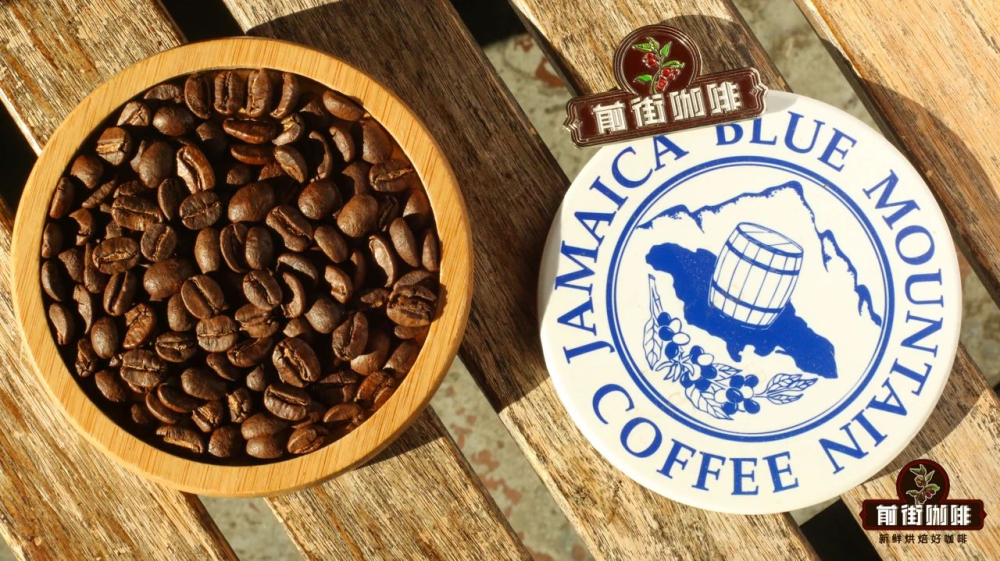
Brewing parameters:
15g coffee grounds
Dripper: KONO
Coffee-to-water ratio: 1:15
Grind size: medium granulated sugar coarseness
Water temperature: 86°C
Brewing method: staged extraction.
Use 30g of water to bloom for 30 seconds, then pour with a small stream from the center to 125g in stages. When the water level is about to expose the coffee bed, continue pouring to 225g and stop. When the water level is about to expose the coffee bed, remove the dripper. The extraction time is 2 minutes.
[Flavor characteristics of natural Blue Mountain coffee] On the palate, there is the sweetness of brown sugar accompanied by the acidity of berries; the middle and finish carry nutty and cocoa flavors, with a creamy mouthfeel and rich, obvious layering; the aftertaste brings out the aroma of walnuts.
[Flavor characteristics of washed Blue Mountain coffee] On the palate, there are flavors of dark chocolate and nuts, with high cleanliness, very bright acidity, good body, and a balance of acidity, sweetness, and bitterness.
The above content is compiled by CoffeeHunters, a coffee news website.


