







What Makes Java Variety Coffee from Bolivia Distinct?
Waliki Estate's Java coffee from Bolivia's La Paz region shows grape, nut, and honey flavors produced by the Cacao Natural method, which relies on low-temperature slow drying. Bolivia remains a niche South American origin, but its highland Yungas terroir and the Java variety's journey from Ethiopia to Latin America give these beans a distinct profile.
Coffee cultivation in Bolivia dates to 1880, when production was controlled by large farms in northern La Paz. A 1991 government plan encouraged indigenous farmers to grow coffee, though quality was not the first priority because coca was legal and about four times more profitable. Today, the highland environment near La Paz, the highest capital city, suits Arabica growing.
In the landscape of South American specialty coffee, Bolivia, though a niche producing country, harbors potential that cannot be overlooked. Front Street Coffee ventures deep into the La Paz region to bring you Java coffee beans from the Waliki Estate. This article will guide you through Bolivia's turbulent coffee history, the terroir of the Yungas Province, and the legendary journey of the Java variety from Ethiopia to Latin America. The estate employs a unique Cacao Natural processing method, shaping flavors of grape, nut, and honey through low-temperature slow drying. Front Street Coffee also shares roasting and brewing parameters to help you fully appreciate the charm of these beans.
For more specialty coffee knowledge, please follow the WeChat public account: Front Street Coffee (FrontStreet Coffee)
The Latin American region produces a wide variety of single-origin coffees and has always been active in the specialty market, with names like Brazil, Costa Rica, and Colombia already familiar to everyone. However, today Front Street Coffee would like to talk about a relatively obscure coffee nation—Bolivia. In the view of Front Street Coffee, this producing region holds considerable potential, so let us take you through the characteristics and stories behind Bolivia's coffee-producing regions.
Bolivia's Coffee History
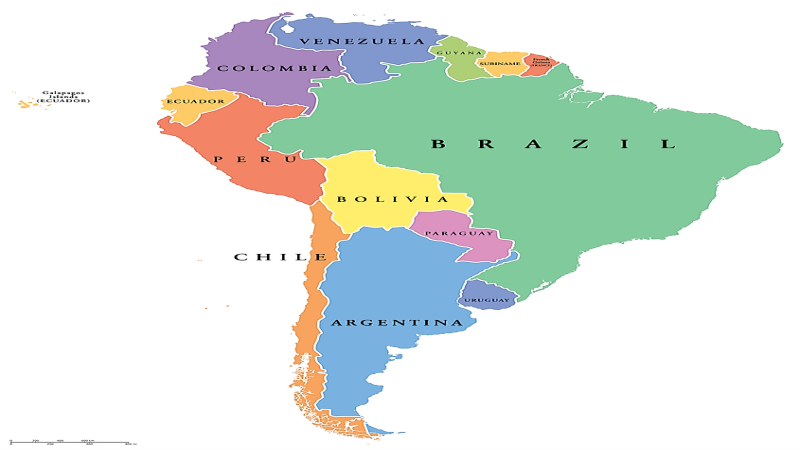
Front Street Coffee has learned that Bolivia is a landlocked country in South America, bordering Brazil and Colombia. However, its economic development lags far behind its neighbors, making it one of the poorest countries in Latin America. In addition to lacking access to the sea, the local government's severe corruption is also a major cause of the country's poverty. Nevertheless, Bolivia's capital, La Paz, sits at an altitude of over 3,600 meters, making it the highest capital in the world, and such a highland environment is quite ideal for Arabica coffee cultivation.
Coffee cultivation in Bolivia can be traced back to 1880, when production was essentially controlled by the owners of large farms in northern La Paz. In 1991, the government introduced a plan to encourage indigenous people to grow coffee, but quality was not placed as a priority.
The reason is that at the time, coca cultivation was legal in Bolivia, and under government encouragement, coca leaves were four times more profitable than coffee, and much less labor-intensive to grow. Many farmers therefore abandoned coffee and even completely deserted their farms. Against this backdrop, the land in Bolivia's producing regions suffered severe damage—coca cultivation requires large amounts of chemical pesticides and fertilizers, causing tremendous harm to the soil. In other words, after a few years of growing coca, the soil became barren and could no longer support other crops.
However, Front Street Coffee has learned that as early as before 2000, the United States provided substantial aid to Bolivian agriculture. Later, because the Bolivian government supported coca cultivation, relations between the two countries deteriorated, and the aid program was forced to halt. It was not until Bolivia's anti-drug war ended that many coffee planting projects were restarted, and the United States once again assisted local coffee farmers—for example, the COE Cup of Excellence coffee cupping competition was held with support from USAID.
But the good times did not last. After 2009, Bolivia's COE event was cancelled. The reason was that the Bolivian government held a strongly anti-American stance and was unwilling to let USAID fund any subsequent development plans for the country, and the COE program had no other source of funding.
In 2013, leaf rust struck, and in that year alone Bolivia lost 50% of its coffee production. Coupled with the earlier government coca leaf policy and the double blow of leaf rust, Bolivia's coffee production shrank by 70% over the past decade, reducing it to a minor coffee-producing country.
This is also one of the reasons why Bolivian coffee beans are less well-known than those of its neighbors. But today, Bolivia's producing regions have begun to prioritize the development of specialty coffee, and Front Street Coffee believes the region still has potential, which is why it has introduced Bolivian Java coffee beans.
Bolivia's Coffee-Producing Regions
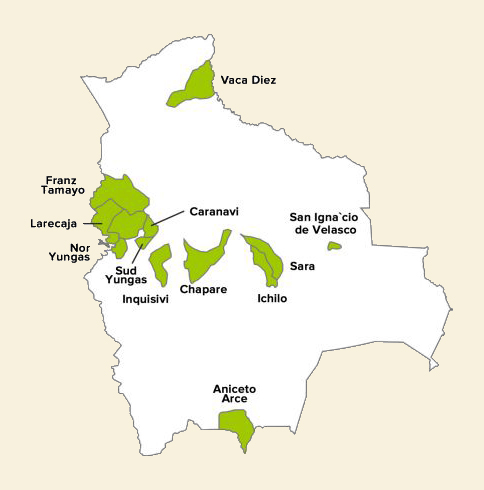
According to Front Street Coffee, the most well-known producing region in Bolivia is La Paz, which further includes sub-regions such as Caranavi, Yungas, and Inquisivi.
Yungas Province
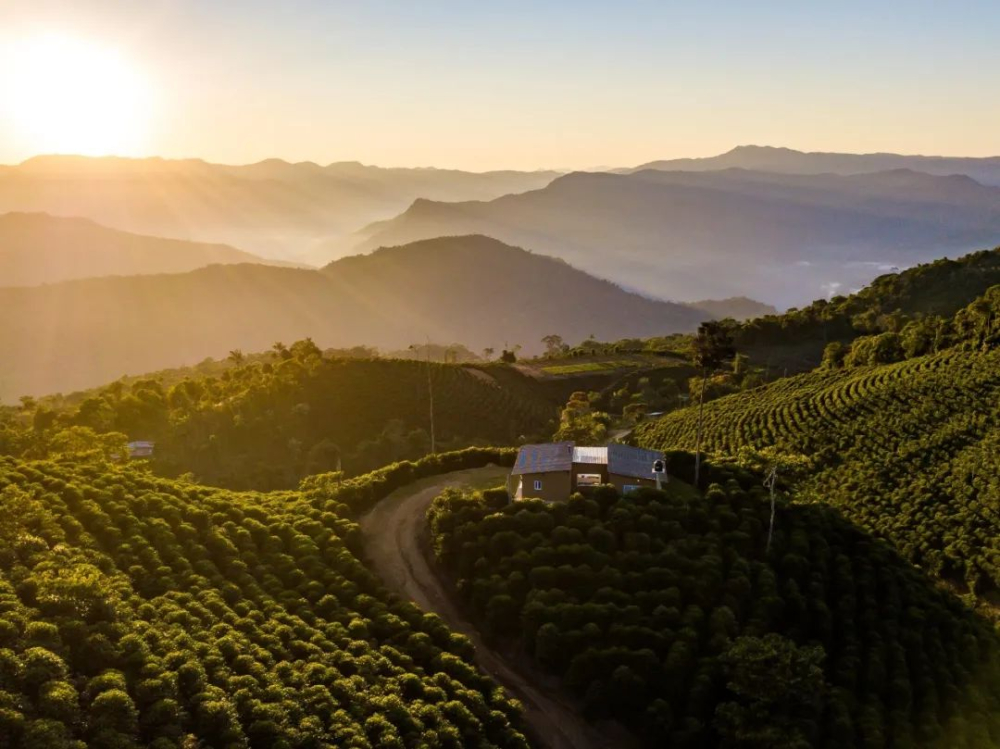
This province is located in the Caranavi Province, northeast of La Paz city. With altitudes reaching 800-1,800 meters, it features vast forests and fertile land extending from the eastern slopes of the Andes. The rainy, humid, and warm climate provides favorable conditions for coffee cultivation. This is also home to the famous "Death Road," the Yungas Road, known as "the world's most dangerous road." According to Front Street Coffee, 95% of Bolivia's coffee is currently produced here.
Bolivian Coffee Bean Varieties
According to Front Street Coffee, Bolivia mainly cultivates varieties such as Typica, Caturra, Catuai, and Catimor, with the harvest season from July to November. Among the several Bolivian coffee beans Front Street Coffee has acquired, after cupping comparisons, it ultimately decided to offer a Java coffee bean from the Waliki Estate. This bean's cupping performance shows gentle grape-like fruit acidity, raisin-like fermentation notes, and a chocolate-nut finish, reflecting the distinctive flavors of Bolivia's producing region—which is also why Front Street Coffee chose to offer it.
Java Variety Coffee Beans
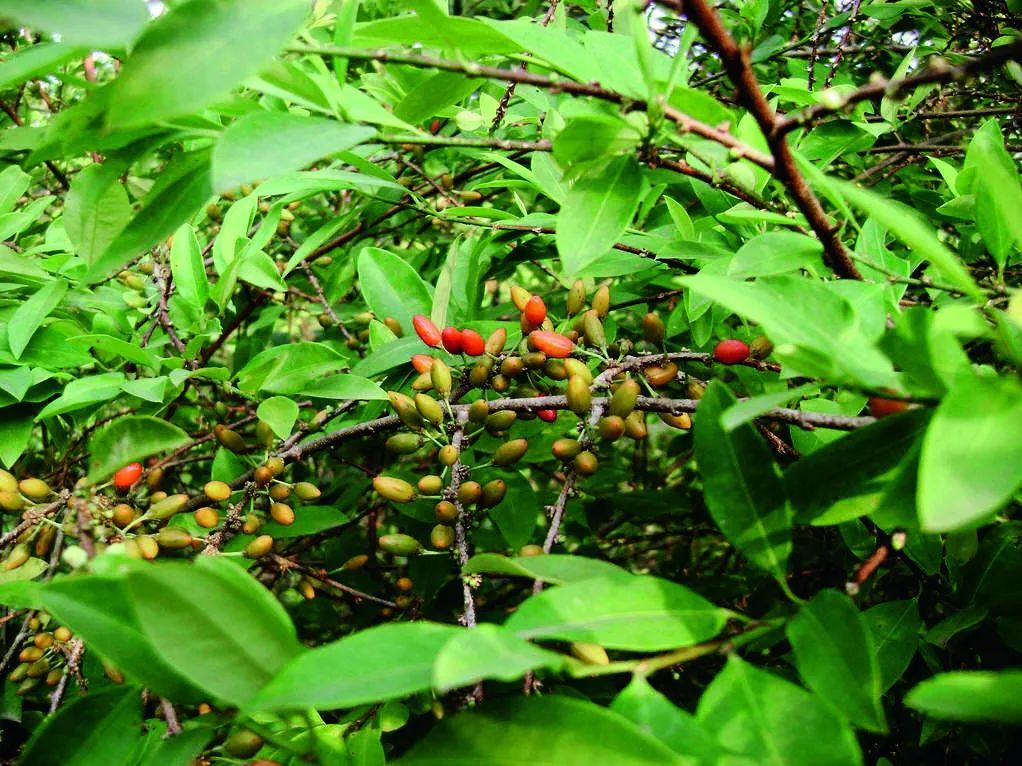
Java coffee beans are known locally in Bolivia as "Long Beans" due to their elongated shape, and their formal name should be Java. This variety is quite interesting—its name clearly suggests a close connection to the Indonesian island of Java. But in fact, Java originated from coffee tree species in the primitive forests of Ethiopia, collected by local ethnic groups, then introduced to Indonesia via Yemen, where it was named Java. People used to generally believe that Java was a mutation of Typica, but after genetic comparison, it was discovered that Java actually comes from the Ethiopian coffee variety Abysinia.
After leaving Indonesia, the Java variety first spread to the nearby Timor island group, then to Cameroon in East Africa, where it was first released to farmers for cultivation in 1980. As for its introduction to Central and South America, it was led by breeding expert Benoit Bertrand and introduced to Costa Rica through CIRAD in 1991. But the first Latin American country to officially recognize the Java variety was Panama.
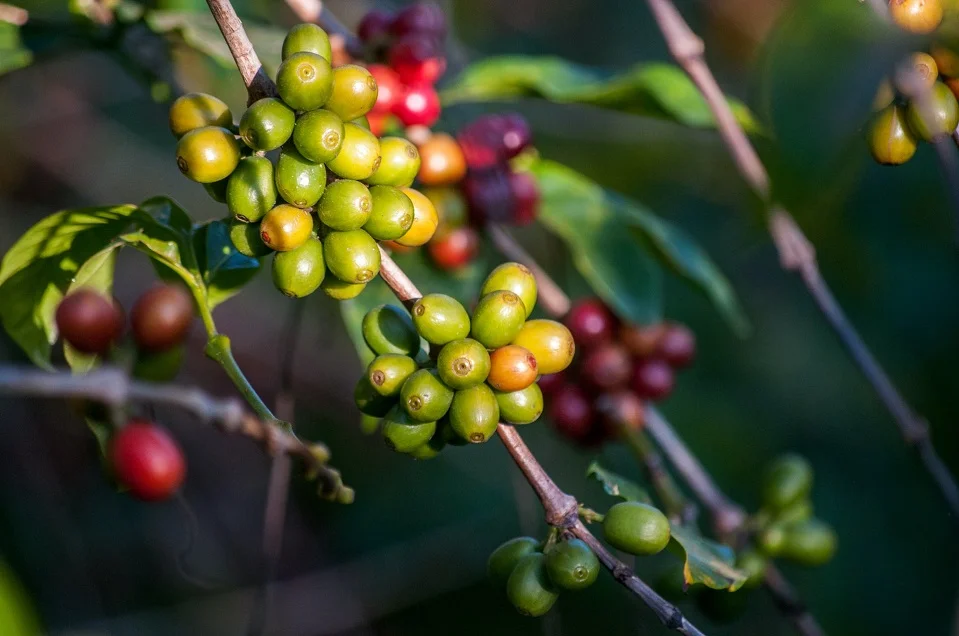
Java's fruit and seeds are both very long, with bronze-colored young shoots. The plant is relatively tall but low-yielding. It has stronger resistance to leaf rust and coffee berry disease, making it very suitable for smallholder farmers. Through cupping, Front Street Coffee found that this Java coffee bean has outstanding flavor, rivaling Geisha, which is one of the reasons Front Street Coffee decided to introduce it.
Next, Front Street Coffee will introduce the flavor characteristics and processing method features of this Bolivian Java coffee bean.
Front Street Coffee Bolivia Waliki Estate Java Coffee Beans
Region: La Paz Altitude: 1,600 meters Variety: Java Processing Method: Cacao Natural Flavor: Fermentation notes, grape, nut, slight floral, honey, cream
Waliki Estate
It is worth mentioning that, as previously noted, Bolivia did not prioritize coffee cultivation in its early years, resulting in scarce production. But Front Street Coffee specifically selected this Java coffee bean from Waliki Estate—on one hand because of its special variety, and on the other because Front Street Coffee recognized the estate's professionalism and dedication.
The name Waliki Estate is inspired by a local greeting meaning "How is everything?", to which the answer is "All good" or "Hakuna Matata."
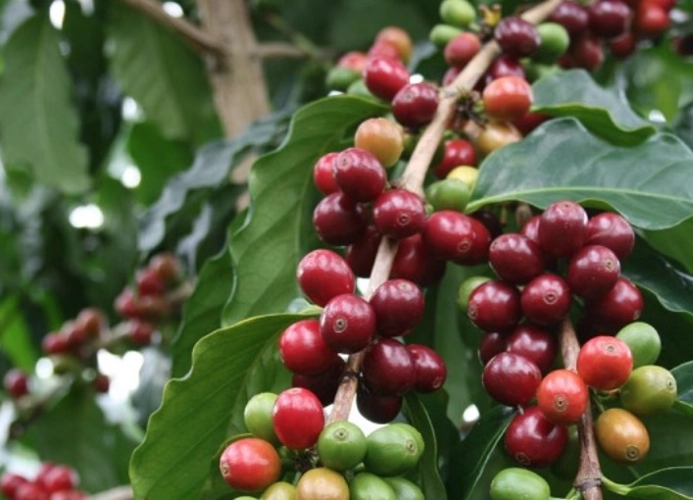
Waliki Estate is located in the Colonia Bolinda, in a dense and steep valley about 10 kilometers outside the town of Caranavi in La Paz, Bolivia. The estate covers approximately 3.62 hectares at an altitude of 1,600 meters. The high altitude helps coffee cherries mature slowly, a process that increases the sugar concentration in the fruit, thereby making the coffee sweeter. According to Front Street Coffee, the estate is owned by the Rodriguez family. The family owns a company called Agricafe, which both produces coffee from its own estates and purchases high-quality micro-lots from small producers in the Yungas region.
Waliki Estate Coffee Processing Method
As Front Street Coffee mentioned above, Waliki Estate places great importance on coffee cultivation. During the harvest season, the estate hires pickers from the Bolinda community to carefully select cherries. These pickers are trained to select only ripe cherries, and during harvest season they pick in multiple passes to ensure the fruit is at optimal ripeness.
The estate also uses crates to ensure the coffee is not damaged during transport, while maintaining air circulation to prevent unwanted early fermentation. After selection and weighing, the coffee cherries are carefully washed and placed on raised African drying beds to dry, being turned every hour. After about a week, the cherries are placed in a cacao dryer. This is why the processing method is named Cacao Natural.
Cacao Natural Processing Method Steps
The Rodriguez family has always been innovating and experimenting with different processing techniques. They discovered that cacao dryers can slowly and continuously dry coffee beans at low temperatures, thereby reducing the impact of weather conditions. The coffee beans are placed in large steel drums at temperatures not exceeding 40 degrees Celsius for about 35 hours, being turned every 30 minutes. After drying, the beans are transported to La Paz to rest, and then hulled at Agricafe's dry mill, La Luna. The mill uses machinery for fine hulling and sorting, and additionally requires hand sorting under ultraviolet and natural light.
It is precisely because of this that this Bolivian Java coffee bean is of such excellent quality. The above is the information about Bolivian coffee beans compiled by Front Street Coffee. Every time Front Street Coffee offers a new bean, it conducts extensive roasting and brewing tests to ensure the coffee's flavors are presented at their best. Next, Front Street Coffee will share the roasting and brewing parameters for this Bolivian Java coffee bean.
Front Street Coffee Roasting Sharing Bolivia Java: In order to highlight the natural sweetness and cacao aroma, the Front Street Coffee roaster extends the development phase to roast out a sweet and delicious flavor. Using the Yangjia 800N as an example, with 500g of green beans.
Charge at a drum temperature of 170°C, heat setting 120, airflow opened to 3; the turning point is at 1'36", when the drum temperature reaches 111°C, open the airflow to 4 and adjust the heat to 140; when the drum temperature reaches 151.1°C, the bean surface turns yellow, the grassy smell completely disappears, and it enters the dehydration phase. At 7'56", the bean surface shows ugly wrinkles and dark patches, and the toast aroma clearly transitions to coffee aroma, which can be defined as the prelude to first crack; adjust airflow to 5. At this point, listen carefully for the sound of first crack. First crack begins at 10'18", develop for 1'00" after first crack, and drop at 190°C.
Front Street Coffee Cupping Report
【Bolivia Java】 The dry aroma has hazelnut notes. On the palate, it starts with the sweetness of cream, hazelnut, and almond, along with the sweet-tart notes of citrus and tropical fruit, carrying fermented wine aromas.
Front Street Coffee Brewing Sharing
Filter: HARIO V60 Water temperature: 90°C Coffee-to-water ratio: 1:15 Grind size: fine sugar consistency
Front Street Coffee uses a staged extraction: use 30g of water for a 30-second bloom, then pour in a slow circular motion until reaching 125g for the first stage; when the water level drops and is about to expose the coffee bed, continue pouring until 225g and stop; when the water level drops and is about to expose the coffee bed, remove the filter. (Timing starts from the beginning of the bloom.) Total extraction time is 2'00".
Bolivian Java Coffee Flavor Description: On the palate, there is a distinct sweet-tart sensation of citrus, lime, and hawthorn, with some fruity chocolate and vanilla cream in the finish. As the temperature drops, it becomes the acidity of sweet orange. When cool, it has a subtle maple syrup sweetness and the finish of jasmine tea and rose tea, with a lasting sugarcane sweet aftertaste.
The above content is compiled by CoffeeHunters, a coffee news website.


