







How Does the Geisha Coffee Grading System Set Prices?
Panama's Hacienda La Esmeralda separates its Geisha into Red, Green, and Blue labels, and that grading system explains the wide price range. Red Label comes from the highest-scoring micro-lots, Green Label sits in the middle, and Blue Label offers a more accessible entry, with growing altitude, plot microclimate, and cupping scores driving the difference.
Geisha was first found in 1931 in Ethiopia's Geisha forest, reached Kenya's coffee research institute, spread to Uganda and Tanzania around 1936, and arrived in Costa Rica in 1953. Panama began planting it in the 1970s, but low yields kept it overlooked until La Esmeralda's later competition wins raised its profile and price.
Geisha coffee has conquered the taste buds of countless coffee lovers with its unique floral and fruity notes, and Panama's La Esmeralda estate is undoubtedly the king of origins for this variety. But why does Geisha command such a wide price range? What exactly is the difference between Red Label, Green Label, and Blue Label? This article, from the perspective of Front Street Coffee, systematically traces the origin and spread of Geisha coffee, takes a deep dive into the microclimate characteristics of La Esmeralda's three main plots, and breaks down one by one the cupping performance, growing altitude, and flavor direction of the Red, Green, and Blue Label Geishas, along with Front Street Coffee's roasting and brewing parameter recommendations, to help you fully understand the Geisha coffee grading system and key tasting points.
For more specialty coffee knowledge, please follow the WeChat public account: Front Street Coffee
When it comes to Geisha coffee, its signature floral and fruity notes have captivated countless coffee fans. Today Geisha holds a pivotal position in the specialty coffee world, and Front Street Coffee often has customers who come specifically for Geisha. On Front Street Coffee's bean list, the most expensive is Panama La Esmeralda Red Label Geisha, though there are also more budget-friendly Geisha options, such as La Esmeralda Blue Label Geisha and Boquete Geisha, at just 30 yuan per cup.
At Front Street Coffee's stores, many customers raise similar questions: it's all Geisha, so why is the price gap so huge? What is the essential difference between high-priced and low-priced Geisha? In this article, Front Street Coffee will systematically lay out the relevant knowledge about Geisha coffee. I believe that after reading it, you will have a clearer understanding of Geisha coffee, and the confusion above will be resolved.
What exactly is Geisha coffee?
The industry currently widely agrees that the best-quality Geisha comes from Panama. But according to Front Street Coffee, the Geisha variety was first discovered in 1931 in the Geisha forest of Ethiopia, then sent to the coffee research institute in Kenya, introduced to Uganda and Tanzania around 1936, and brought to Costa Rica in 1953. Panama only began planting Geisha in the 1970s, but because yields remained low, it was not taken seriously for a long time.
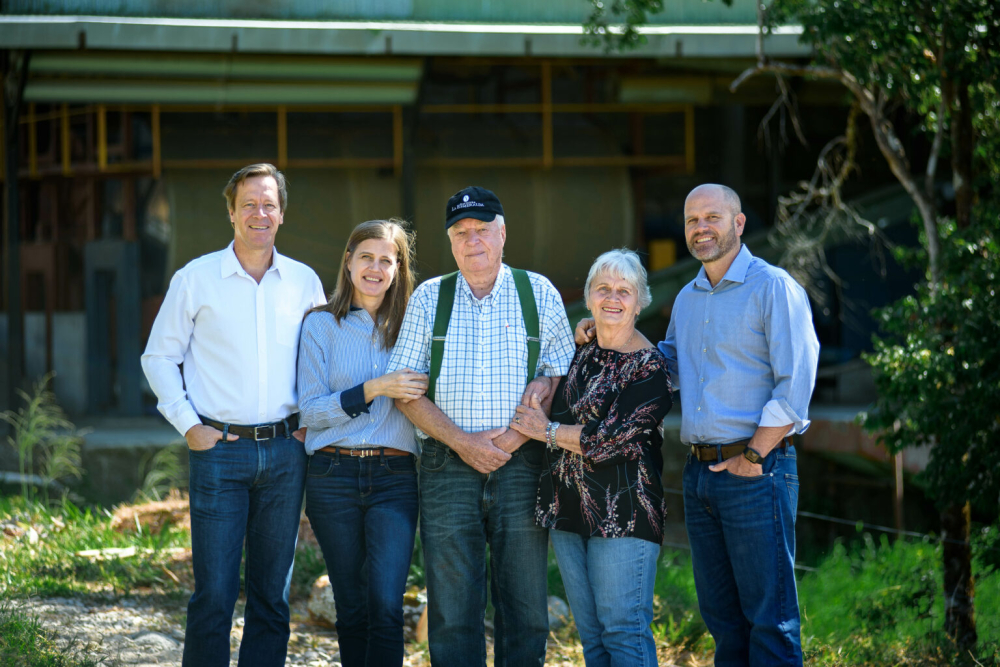
It was not until Daniel Peterson, the third-generation owner of Panama La Esmeralda, took first place in the 2004 Panama coffee cupping competition that Geisha truly began its legendary journey. Since then, in countless green bean competitions and brewing championships, Geisha has always been the winning contestant's trusted partner, and its price has risen accordingly.
However, not all Geisha from every region can display the stunning flavors of Panama La Esmeralda. Geisha is extremely demanding when it comes to growing conditions, requiring high altitude, cloud cover, fertile soil, and sufficient accumulated heat. Aurora Coffee Estate is located in the northwestern corner of Chiriquí Province, Panama, with an average altitude of 1,625 meters, an average annual temperature of 16°C to 25°C, and annual rainfall of about 3,500 millimeters. The plantation uses a semi-shade growing model, with tree species all selected from local native varieties, some of which are high-altitude avocado trees. It is precisely this unique environment and climate that nurtures the king of coffee.
And such conditions are indeed something only La Esmeralda can achieve to the extreme. Next, Front Street Coffee will introduce the flavor characteristics of Panama La Esmeralda Geisha coffee beans.
Panama La Esmeralda
Panama is located in Central America, connecting North America and South America, and bordered by Costa Rica and Colombia. Panama's coffee development path can be described as inherently advantaged. As is well known, the Panama Canal was built by the United States, and after completion it was independently controlled by the United States for a period. It was precisely the opening of the canal that brought a large number of American elites southward at the end of the 20th century, partly for work needs and partly to seek business opportunities.
La Esmeralda was a product of that era. In 1964, American banker Rudolph Peterson retired and moved to Panama, buying La Esmeralda in Boquete, initially focusing on dairy farming. Later, his son Price resigned from his position as a doctor to help his father manage the farm, introduced the Caturra and Catuai coffee varieties in 1987, and built a washing station in 1994, from then on possessing its own coffee processing capability. In 1996, they also purchased the nearby Jaramillo estate, which had superior geographical conditions and outstanding flavors from its original coffee varieties, and incorporated it into La Esmeralda.
The reason Jaramillo estate was favored by the Petersons was precisely that the coffee beans originally planted there carried pleasant orange and floral-fruity aromas, completely different from the traditional flavor of Panamanian coffee. After cupping coffee beans from different areas of the estate, they discovered that the source of the aroma was a patch of unidentified coffee trees growing at the highest point of the estate. Because production was scarce, the previous owner had merely used it as filler and had not paid it much attention. In the end, it was discovered by the Petersons, who decided to plant and cultivate the coffee trees in that area separately.
After competing in Panama's Best of Panama green bean competition in 2004 and winning the championship, this coffee performed astonishingly all the way, and later expert identification confirmed it as the Ethiopian Geisha variety. After that, the Peterson family devoted most of its energy to infrastructure construction to support excellent lot separation and meticulous processing.
Plot divisions of La Esmeralda
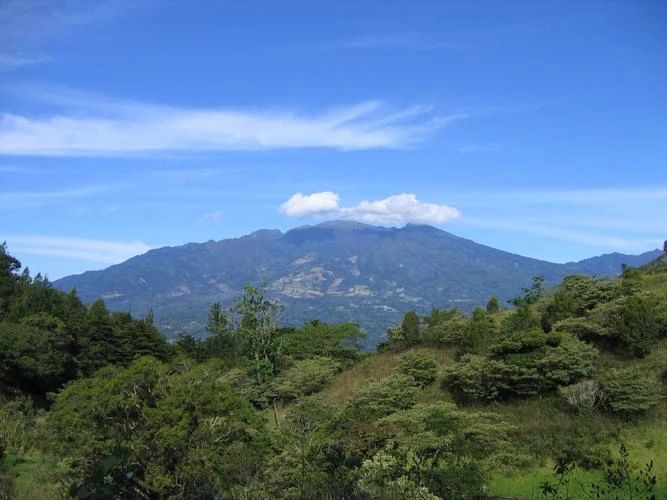
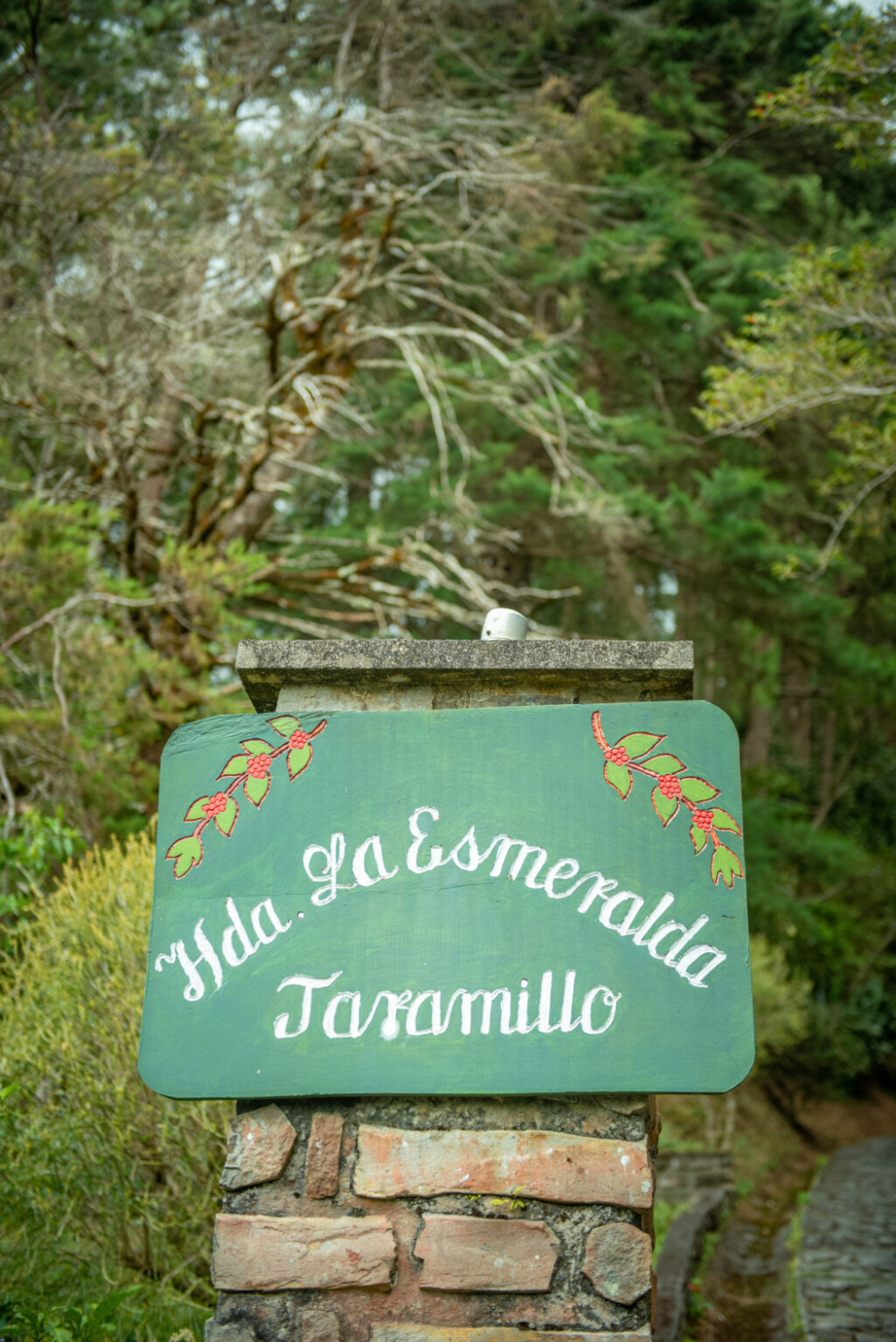
La Esmeralda is located in Panama's Boquete production area, an important coffee-producing region in Panama where many well-known estates originate, such as Elida Estate and Kotowa Estate. La Esmeralda is extremely meticulous in its Geisha plot division, mainly divided into three plots: Cañas Verdes, Jaramillo, and El Velo, with each plot further subdivided into smaller parcels.
As the first estate purchased by the Peterson family, Jaramillo is precisely where Geisha was discovered, and the average age of the coffee trees exceeds 15 years. The terrain here is relatively low, with an average maximum altitude of only 1,700 meters, but the slopes are steep, making harvesting quite difficult. Jaramillo is named after the Jaramillo mountain range east of Boquete, with annual rainfall of 4,000 millimeters, average daytime temperatures of 19-25°C, and average nighttime temperatures of 11-15°C, and the entire area is humid and cold. Jaramillo is subdivided into 6 Red Label plots: Mario, Noria, Reina, Bosque, Buenos Aires, and Caballeriza, which was added last year.
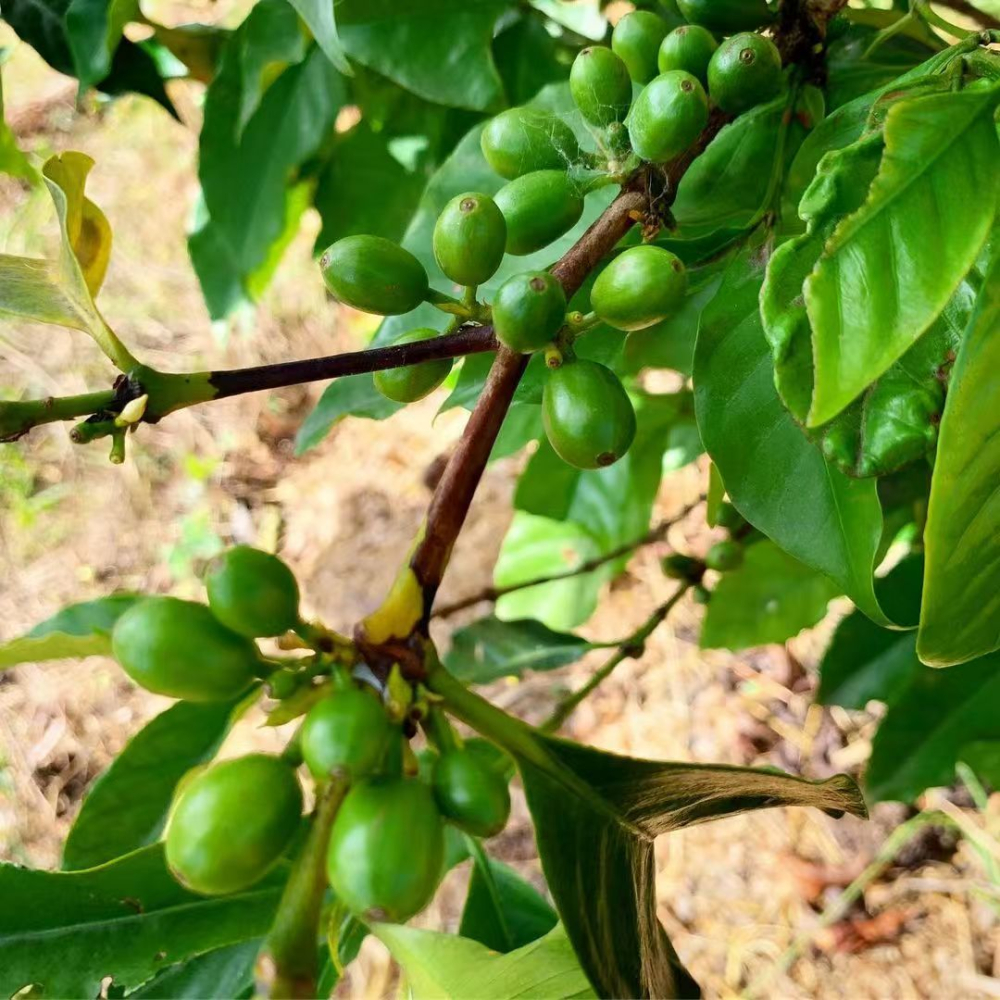
Canas Verdes estate is usually transliterated in China as Kannasiweidisi, and its original Spanish meaning is "green reeds," "green fields," and so on. Half of Canas Verdes was purchased together with Jaramillo in 1967. After Geisha became famous overnight in 2004, the Peterson family began gradually acquiring surrounding small planting plots. Because the entire growing area is located on the eastern slope of Barú Volcano, the altitude range is wide, spanning from 1,500 meters to 2,050 meters.
Canas Verdes has annual rainfall of 3,500 millimeters, average daytime temperatures of 16-23°C, and average nighttime temperatures of 10-15°C. The highly complex terrain structure, volcanic soil, and significant temperature difference between day and night give Geisha its richly aromatic character. At present, the areas where Canas Verdes grows Geisha cover a total of 11 small plots: Lino, Coronado, Fundador, León, Montaña, Trapiche, Jacinta, Cabaña, Tumaco, as well as Nido and Colga.
El Velo is the most recently purchased plot of La Esmeralda, with an average altitude of 1,700-1,900 meters. In addition to growing Geisha and Catuai, this plot also has a small amount of other introduced varieties, such as Laurina, Pacamara, Mocha, and SL28.
La Esmeralda Geisha Red Label, Green Label, Blue Label
La Esmeralda's marketing strategy differs from that of other estates. Based on cupping performance, planted varieties, and growing plots, it is divided into five major brands, of which the Geisha variety occupies three: Esmeralda Special, Private Collection, and Geisha1500. The Catuai variety has two brands: Diamond Mountain grows and Palmyra.
La Esmeralda Red Label Geisha
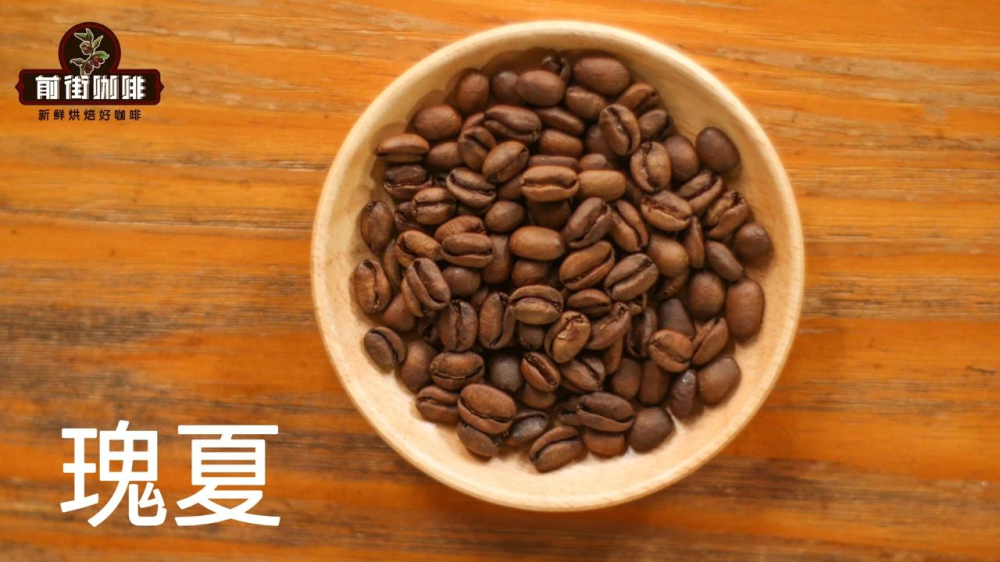
The Geisha produced under Esmeralda Special is what everyone commonly calls Red Label. It uses Geisha coffee beans grown at an altitude of 1,600-1,800 meters with a cupping score above 90, and must participate in La Esmeralda's own independent auction. Only Geisha lots put up for auction from the divided plots can truly be called auction Red Label. However, non-auction Red Label also circulates on the market. In fact, it is Geisha selected from the same plots that did not participate in the auction and flowed into the market. The varietal quality is no different; only the selling price differs.
Front Street Coffee: Panama La Esmeralda · Red Label Geisha Coffee Beans
Country: Panama
Region: Boquete (La Esmeralda)
Altitude: 1700 m
Variety: Geisha
Processing Method: Natural
Flavor: Citrus, complex fruit, rose tea, honey
La Esmeralda Green Label Geisha
Private Collection, commonly known as Green Label, differs from Red Label Geisha in that it is not an independent competition lot, but its quality is still excellent. Green Label Geisha uses mixed micro-lot beans grown at an altitude of 1,600-1,800 meters from the estate's three major plots.
Because it uses a blended-bean model without detailed plot labeling, Green Label sometimes has a fairly high flavor similarity to Red Label. Second, although Green Label Geisha is not as highly graded as Red Label, it still retains Geisha's classic flavors, such as its distinctive floral aroma, fruity notes, citrus acidity, and a rich, juicy mouthfeel. Therefore, Front Street Coffee believes that Green Label Geisha has the best value for money among the three labels.
Front Street Coffee: Panama La Esmeralda Green Label Geisha Coffee Beans
Country: Panama
Region: Boquete (La Esmeralda)
Altitude: 1700 m
Variety: Geisha
Processing Method: Natural
Flavor: Jasmine, citrus, honeydew, berries
La Esmeralda Blue Label Geisha
The Geisha1500 brand is the commonly seen Blue Label Geisha. It uses blended beans grown at an altitude of 1,400-1,500 meters from three different plots: Jaramillo, Cañas Verdes, and El Velo. Blue Label Geisha's flavor profile is mostly faint floral notes, fruity acidity, and sweetness, with a mouthfeel that is not rich enough. Therefore, its price is the most affordable of the three labels, but its coffee beans still possess good Geisha flavor.
Front Street Coffee: Panama La Esmeralda Washed Blue Label Geisha Coffee Beans
Country: Panama
Region: Boquete (La Esmeralda)
Altitude: 1400-1500 m
Variety: Geisha
Processing Method: Washed
Flavor: Lemon, oolong tea, cane sugar, white peach
The above is Front Street Coffee's summary of the respective characteristics of Panama La Esmeralda's three grades of Geisha coffee and the price distinctions among the different label Geisha coffee beans. In addition, as the birthplace of the Geisha variety, Ethiopia's Gesha Village estate also produces Geisha coffee beans with outstanding flavor, and it has likewise borrowed La Esmeralda's label system, with a more affordable price. Coffee fans who are interested may want to give it a try. But when it comes to expensive Geisha coffee, it is inevitably still La Esmeralda Geisha coffee beans.
At the same time, before Front Street Coffee lists each new coffee bean, it conducts extensive roasting cupping and brewing tests. Next, Front Street Coffee will share the brewing parameters for these three coffee beans.
Front Street Coffee's Recommendations for Roasting La Esmeralda's 3 Geisha Coffee Beans
[Red Label Geisha]
Charge at a drum temperature of 150°C, heat power 120, airflow damper set to 3; turning point at 1'36", when the drum temperature reaches 140°C open the airflow damper to 4 and keep the heat power unchanged; when the drum temperature reaches 147.6°C the bean surface turns yellow, the grassy smell completely disappears, and the dehydration stage begins; when the drum temperature reaches 150°C, adjust the heat power to 100 and keep the airflow damper unchanged; at 7'38", ugly wrinkles and dark streaks appear on the bean surface, and the toast aroma clearly turns into coffee aroma, which can be defined as the prelude to first crack. At this time, listen carefully for the sound of the first crack point. First crack begins at 8'10", open the airflow damper to 4, develop for 1'28" after first crack, and drop at 189.5°C.
[Green Label Geisha]
Charge at a drum temperature of 190°C, heat power 150, airflow damper set to 3; turning point at 1'36", when the drum temperature reaches 140°C open the airflow damper to 4 and lower the heat power to 130; when the drum temperature reaches 150.8°C the bean surface turns yellow, the grassy smell completely disappears, and the dehydration stage begins; when the drum temperature reaches 161°C, adjust the heat power to 90 and keep the airflow damper unchanged; at 7'55", ugly wrinkles and dark streaks appear on the bean surface, and the toast aroma clearly turns into coffee aroma, which can be defined as the prelude to first crack. At this time, listen carefully for the sound of the first crack point. First crack begins at 8'30", open the airflow damper to 5, develop for 1'30" after first crack, and drop at 193.5°C.
[Washed Blue Label Geisha]
Charge at a drum temperature of 180°C, heat power 130, airflow damper set to 3; turning point at 1'32", when the drum temperature reaches 104°C open the airflow damper to 4 and keep the heat power unchanged; when the drum temperature reaches 151.6°C the bean surface turns yellow, the grassy smell completely disappears, and the dehydration stage begins; at 7'56", ugly wrinkles and dark streaks appear on the bean surface, and the toast aroma clearly turns into coffee aroma, which can be defined as the prelude to first crack. At this time, listen carefully for the sound of the first crack point. First crack begins at 8'30", open the airflow damper to 5, develop for 1'28" after first crack, and drop at 190°C.
Front Street Cupping Report on La Esmeralda's 3 Geisha Coffee Beans
[Red Label Geisha]
Dry aroma: Jasmine, citrus
Wet aroma: Citrus, lemon, honey
Palate: Lemon, honey, berries, orange peel, mango, cream, citrus, tea-like
[Green Label Geisha]
Dry aroma: Jasmine, ginger flower
Wet aroma: Lemon, sweet orange
Palate: Lemon, sweet orange, honey, cream, almond, tea-like
[Washed Blue Label Geisha]
Dry aroma: Floral, citrus
Wet aroma: Citrus, lemon
Palate: Citrus, lemon, honey, nuts, tea-like
Front Street's Brewing Recommendations for La Esmeralda's 3 Geisha Coffee Beans
Dripper: V60 #01
Coffee dose: 15g
Coffee-to-water ratio: 1:16
Grind size: fine granulated sugar coarseness (80% passing through a No. 20 sieve)
Water temperature: 91-93°C
Front Street Coffee brewing method: staged extraction
Bloom with 30 grams of water for 30 seconds, then pour in a small steady stream in circles to 125 grams for the first stage; when the water level drops and is about to expose the coffee bed, continue pouring to 225 grams and stop; when the water level drops and is about to expose the coffee bed, remove the dripper. (Start timing from the beginning of the bloom.) The extraction time is 2'00".
Panama La Esmeralda Geisha Flavor Descriptions
[Red Label Geisha Coffee Flavor Description] Bright rose and citrus aromas, brown rice, berries, apricot, complex fruit, honey, with a rich juicy mouthfeel, layered flavors, and obvious sweetness.
[Green Label Geisha Coffee Flavor Description] Rich jasmine aroma on the palate, high sweetness, citrus, berries, juicy mouthfeel, cream, green tea, orange peel, cantaloupe, with overall rich layering and a lingering floral and citrus finish.
[Blue Label Geisha Coffee Flavor Description] Soft lemon and grapefruit acidity on the palate, with oolong tea, honey, and cane sugar sweetness returning as it cools slightly, and a relatively clean, bright mouthfeel.
Professional Coffee Knowledge Exchange
More Coffee Bean Information
Please follow Coffee Workshop (WeChat public account cafe_style
)
For more specialty coffee beans, please add the private WeChat of Front Street Coffee, WeChat ID: kaixinguoguo0925
The above content is compiled by CoffeeHunters, a coffee news website.


