







Why does the geisha coffee variety command such high prices?
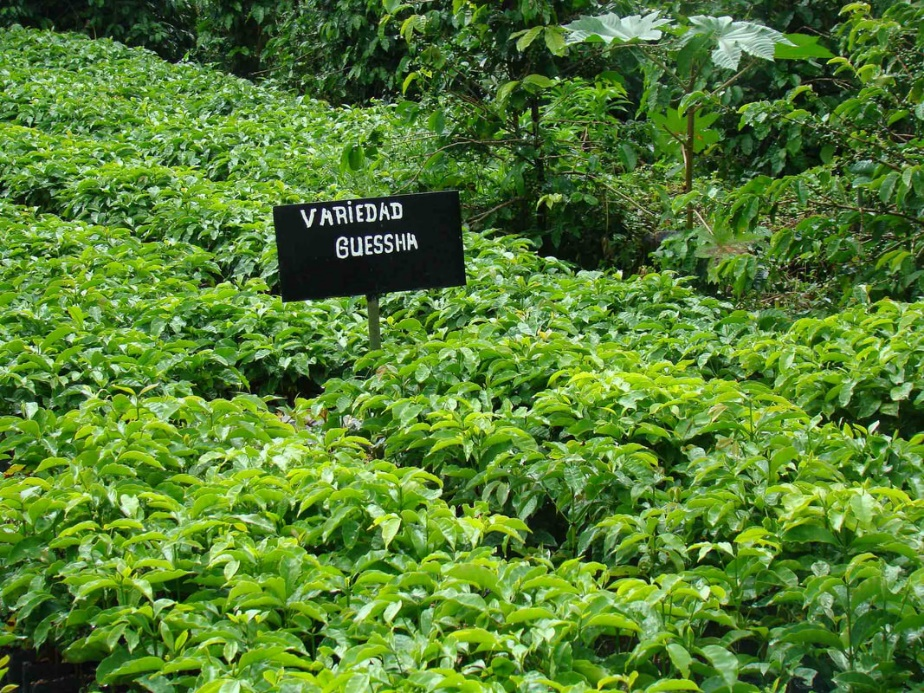
The geisha coffee variety is expensive for two main reasons: very low yields and strict grading. Geisha trees are tall and produce little fruit, so farmers once planted them only as windbreaks. Its cup profile combines bright, complex acidity, honey-like sweetness, and intense floral aroma, which drew global attention once Panama's Hacienda La Esmeralda began entering it in competitions.
Geisha originated in Ethiopia's Geisha forest, was collected in 1931, sent to Kenya, then moved to Uganda and Tanzania in 1936 and to Costa Rica's CATIE station in the 1950s as T2722. CATIE distributed seeds to Panama in the 1960s; later, panama geisha coffee from Boquete won auctions and set record prices, lifting demand far beyond limited supply.
Geisha coffee has been incredibly popular in recent years, replacing Blue Mountain and Kona to become the new darling of the specialty coffee world. It possesses both the bright, complex acidity of African beans and a honey-like sweetness with captivating floral aromas, but its exorbitant price often deters many enthusiasts. Where exactly does Geisha come from? Why can it sell for such high prices? This article will sort through the variety's origins, its path to fame in Panama, flavor characteristics, and the reasons behind its price, and use Front Street's Panama Boquete Washed Geisha as an example to share specific brewing parameters and techniques, helping readers who want to get started with Geisha find a suitable entry point.
In the early days, most top-tier coffees were incredibly rich and full-bodied. At that time, people focused more on the bitterness in coffee, and many who didn't understand coffee even mistook "dishwater" for the taste of coffee. With the rise of the third wave of coffee, people have become more meticulous and transparent about tracing coffee beans. Compared to milk coffee with intricate latte art, people increasingly care about which land and which variety the coffee beans come from.
The former top two — the king and queen (Blue Mountain and Kona) — have now been replaced by a new noble coffee variety from Panama: Geisha. Geisha coffee's flavor has the uplifting, complex acidity of African beans, along with the honey-like sweetness of Costa Rican coffee. At the same time, its unique, intense floral aroma has successfully captured the hearts of picky coffee lovers around the world.
Although the Geisha coffee variety rose to fame in Panama, it still originated from Ethiopia, the globally recognized birthplace of coffee. After the Geisha coffee variety was discovered in the Geisha forest of Ethiopia in 1931, it was harvested and sent to the coffee research institute in Kenya, and in 1936 was introduced to Uganda and Tanzania. Later, in the 1950s, it was introduced to the CATIE research institute in Costa Rica and labeled as T2722. In the 1960s, CATIE distributed Geisha coffee seeds to Panama for cultivation.
Initially, because Geisha coffee trees had low yields, farmers did not put much effort into them and instead planted them roughly around the edges of farms as windbreak trees. At the end of the 20th century, Hacienda La Esmeralda in the Boquete region of Panama discovered coffee with intense floral aromas, honey sweetness, and citrus juice-like qualities on the estate. Upon tracing it to its roots, they discovered it came from the Geisha variety found in the wild forests of Ethiopia.
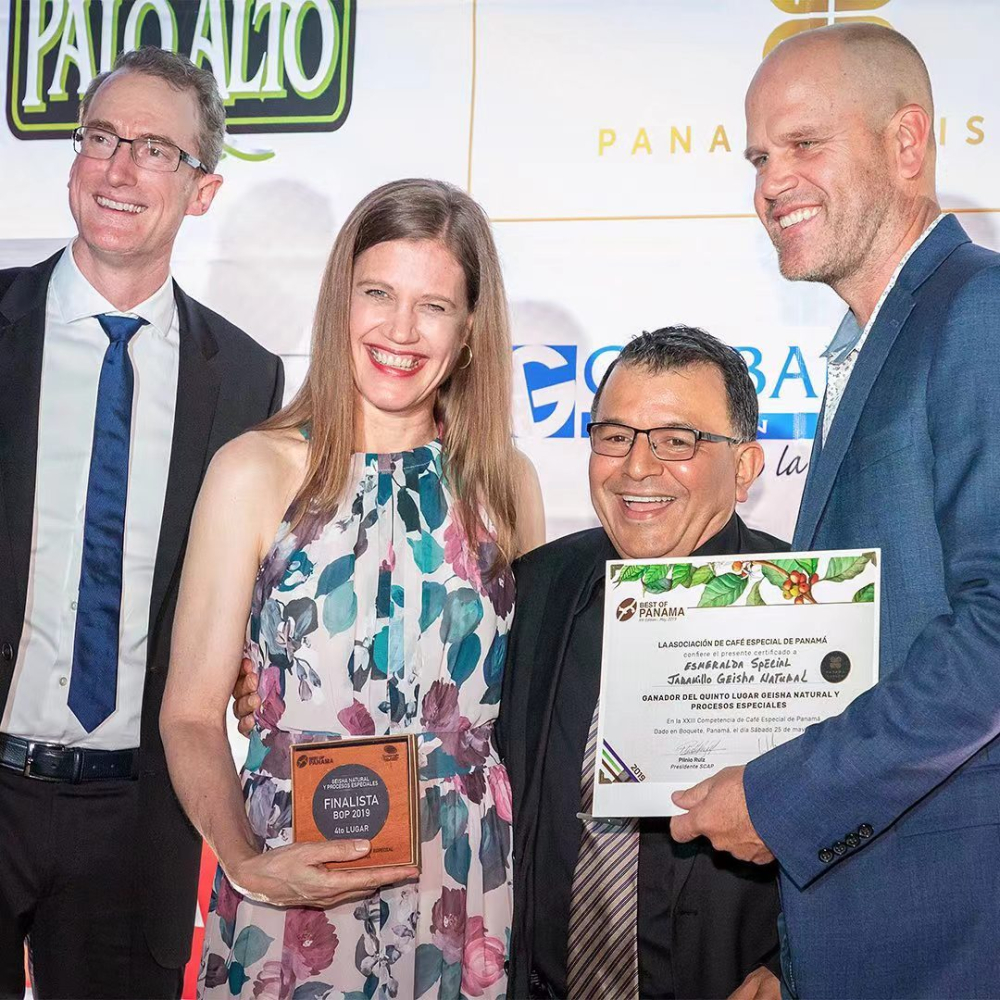
In 2003, Hacienda La Esmeralda sent Geisha coffee beans to compete in the Best of Panama (BOP) competition and achieved a respectable ranking. Then in 2004, Hacienda La Esmeralda again sent Geisha coffee beans to the BOP competition and took first place in one fell swoop, also breaking that year's green bean auction price record. Geisha coffee thus became famous and grew more popular year by year, with each year's BOP Geisha champion setting new auction records time and again.
Geisha coffee has a unique flavor, and Geisha coffee beans are expensive. Coffee growers around the world all want a piece of the pie. But coffee, as a crop, inevitably carries the unique flavors of its producing region. Front Street's bean list is not lacking in Geisha coffee beans from around the world — from Costa Rica, Colombia, and Ethiopia. However, Front Street believes that to taste the Geisha coffee as commonly recognized, Panama Geisha is the one to go for.
Later, because Geisha coffee's flavor in the Best of Panama (BOP) competition was so unique, in order to prevent other coffee varieties from being completely overshadowed and left in the dark, the competition divided coffee beans into two major categories: one group for Geisha, and another group for non-Geisha.
Front Street's Panama Geisha coffee beans make up the largest portion, because Hacienda La Esmeralda is both the discoverer of Geisha coffee and the promoter of Geisha coffee's flavor. Front Street has stocked the estate's Red Label, Green Label, and Blue Label as entry-level options for Geisha coffee. Hacienda La Esmeralda's Geisha coffee beans can indeed be considered classic Geisha coffee beans.
Whenever people mention the price of Geisha coffee beans, the deepest impression is simply that it's expensive. Because of its high price, people only dare to use it occasionally to reward themselves. Those who have noticed coffee beans on the market may wonder: Geisha coffee seems to be more abundant than Kopi Luwak, so why does the price of Geisha coffee remain so high?
Actually, the Geisha coffee beans that can win at the Best of Panama competition are not produced in large quantities, while global demand for Geisha coffee has never eased — it has even grown hotter year by year. With supply already insufficient and demand exceeding supply, prices naturally rise accordingly. In addition, estates need substantial investment in cultivation management and green bean processing to ensure coffee flavor and quality. Higher prices also stimulate coffee growers to adopt higher standards for coffee cultivation and output.
But then again, as an ordinary coffee lover, if you just want to try Geisha casually, you actually shouldn't start with the expensive high-grade ones. Instead, first try Front Street's Boquete Washed Geisha, also from an excellent producing region in Panama.
Front Street's Panama Geisha coffee beans are world-renowned, and coffee cultivation throughout Panama revolves around the Chiriquí volcano region. Among these, the most beautiful is the Boquete producing region, where the unique advantages of fertile volcanic soil, ample moisture, regular rainfall, dense vegetation, and cloud cover nourish the coffee trees, resulting in high-quality coffee beans with rich flavors. Many different microclimates also help produce coffee beans with diverse flavor characteristics. Hacienda La Esmeralda is also located within this producing region.
Washing, as one of the most traditional green bean processing methods, not only makes coffee production quality more stable but also gives Geisha a flavor profile with higher cleanliness and a fresher taste. After roasting, Front Street sensed Geisha's elegant white floral notes, uplifting citrus and lemon acidity, with a slight green tea quality, like drinking a cup of gentle Tieguanyin tea.
During green bean processing, the selected coffee cherries are first put into a depulper to initially remove the skin and flesh. The green coffee beans with residual flesh and mucilage are placed in water to ferment for about 24 hours. After fermentation, the green coffee beans with parchment are placed in a flowing water channel to wash off the flesh and mucilage. After washing, the coffee beans are sun-dried or dried with a mechanical dryer to reduce the moisture content to about 12%. Finally, the parchment is removed from the green coffee beans.
Geisha coffee's flavor is world-renowned for its rich floral aromas and complex fruit tones. Front Street's roasters hope to preserve more of Geisha's high-quality acidity, so they choose a medium-light roast (with slight adjustments made for different batches). This roast level does not alter much of the high hardness of beans grown at high altitude, so brewing requires a higher extraction rate to present a fuller flavor layering. Here, a higher water temperature and a finer grind size are used to stimulate more aromatic substances. Additionally, Front Street wants Geisha coffee's flavor to be expressed more clearly, so they widen the coffee-to-water ratio slightly, using 1:16.
Front Street's flavor descriptions for each coffee are based on freshly roasted beans. If coffee beans are stored for more than a month, the aroma may have already partially dissipated, making it difficult to reproduce in brewing. Front Street is well aware of the importance of freshness, so they ensure only coffee beans freshly roasted within 5 days are shipped, allowing everyone to enjoy the fullest flavor window upon receipt. Below, Front Street demonstrates the brewing steps for the in-store Panama Boquete Geisha. You can use it as a reference and compare it with your own brewing approach.
The pour-over parameters for Boquete Geisha coffee are: dripper: V60, water temperature: 91-92°C, coffee dose: 15g, coffee-to-water ratio: 1:16, grind size: fine granulated sugar (80% passing through a No. 20 sieve).
Three-stage extraction: Fold the filter paper and fit it snugly into the dripper. Wet the filter paper with a small amount of water while making it adhere better, then pour out the water in the lower server. Next, add the coffee grounds and gently tap to distribute the bed evenly. For the first stage, gently pour 30g of water for blooming, with a bloom time of 30 seconds. For the second stage, pour water until about 125g, circling outward evenly and steadily. Then wait for the coffee liquid to drop. When it has dropped by half, pour the final stage of water until 225g. After all the coffee has dripped through, the total extraction time is generally about 2 minutes.
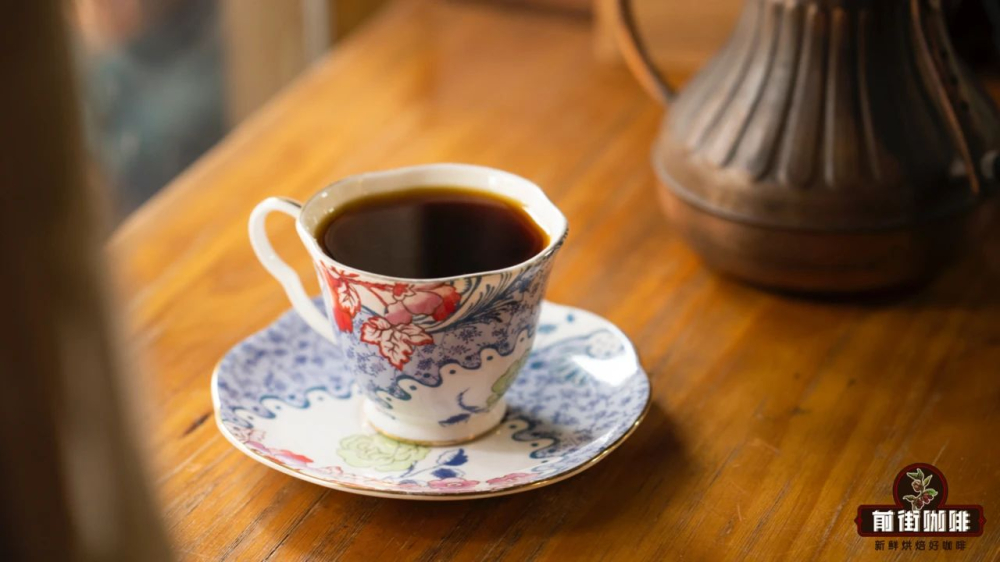
The pour-over Panama Washed Boquete Geisha coffee has a clear acidity of citrus, lemon, and bergamot, a creamy smooth mouthfeel when swallowed, and a sweet finish of green tea and honey.
The above content is compiled by CoffeeHunters, a coffee news website.


