







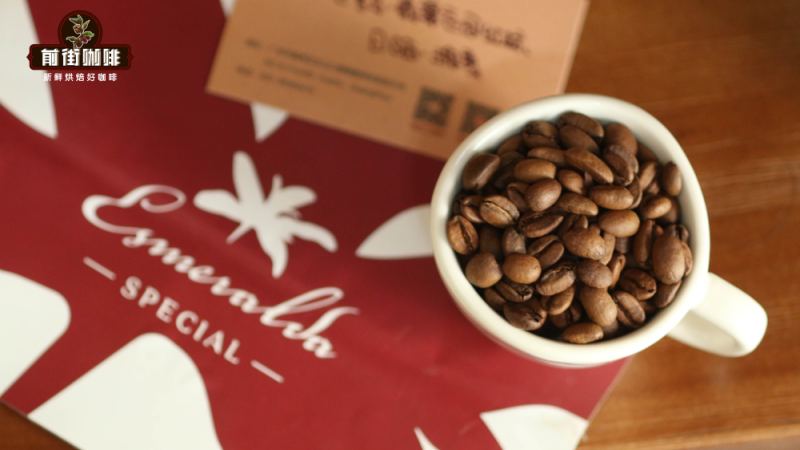
What made the 2018 Red Label Geisha auction lot stand out?
The 2018 Red Label Geisha from Panama's Hacienda La Esmeralda drew attention for a rare yeast anaerobic fermentation process, and the lot fetched $340 per pound at auction. Red Label is the estate's auction tier: beans grown between roughly 1,600 and 1,800 meters, scoring above 90 points, with bright floral and citrus aromas, sold only through the annual global auction.
The estate sits in Boquete, on the eastern slope of the Baru volcano, a settled area with a long coffee history dating back to the early 20th century. This geisha coffe reflects how variety, terroir, and controlled fermentation combine. Green bean density and careful roasting and brewing are needed to preserve the delicate floral character of these lots.
In the specialty coffee world, the Red Label Geisha from Panama's Hacienda La Esmeralda has always been a focal point of attention. In 2018, this competition lot debuted with a rare yeast anaerobic fermentation process, ultimately fetching a high price of $340 per pound at auction. This article will take you deep into the estate's terroir background, the discovery journey of the Geisha variety, the specific techniques of the yeast processing method, as well as the green bean characteristics and roasting and brewing key points of this Red Label Geisha. This year, Front Street Coffee has also obtained a small quantity of Red Label natural and yeast-processed lots, sharing them with coffee enthusiasts at a relatively affordable price.
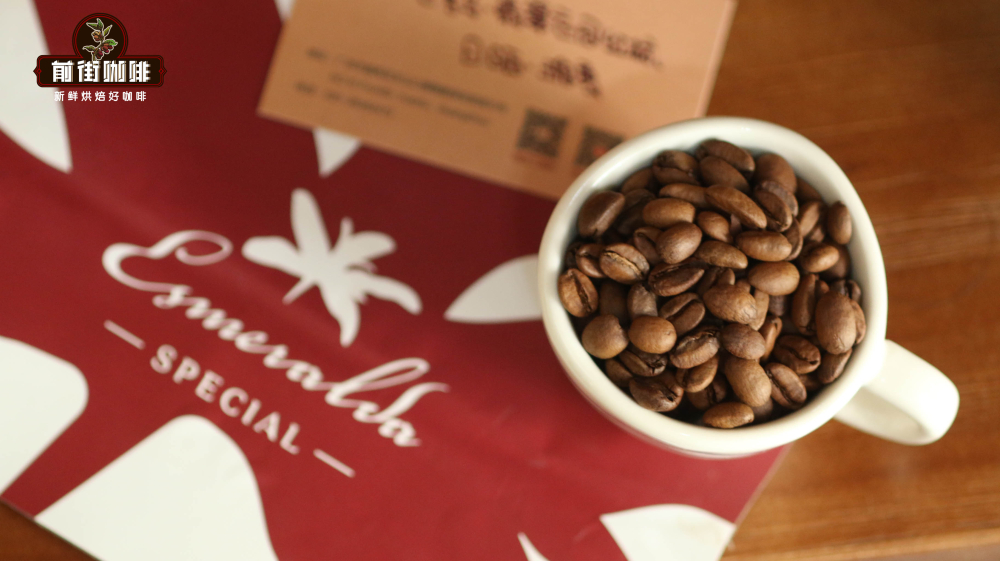
【Front Street Hacienda La Esmeralda Red Label Geisha】 Country: Panama Region: Boquete Estate: Hacienda La Esmeralda, Cañas Verdes plot Altitude: 1800+ Processing method: Natural process Variety: Geisha
(1) Region Introduction Hacienda La Esmeralda Boquete
What is Red Label Geisha? What is the origin of Front Street Hacienda La Esmeralda Geisha? Top-tier——Red Label 【Auction Lot】 ⇒Growing altitude 1,600-1,800 meters ⇒Cup score above 90 points ⇒ High-quality Geisha beans ⇒ Geisha beans harvested from the highest areas of the Boquete mountain region, possessing special, bright floral and citrus aromas ⇒ Coffee of this grade is later processed into natural or washed green beans ⇒ Can only be purchased through the annual global auction The birthplace of the famous Geisha is at Hacienda La Esmeralda in the small mountain town of Boquete on the eastern slope. Boquete, with its beautiful mountains and waters, has always been a sanctuary for European and American elites to enjoy life and retire. Of the town's 20,000 residents, over 2,000 are high-level immigrants from abroad. The coffee farm owners here speak and write fluent English and European languages, possess a broad worldview, and have a ratio of doctoral or master's degree holders that ranks at the top among all coffee-producing countries. As early as 1904, when the Panama Canal was under construction, a large number of European engineers and senior management personnel were hired to work in the scorching eastern Panama City. In 1917, after the Panama Canal was completed, this group of highly educated intellectuals, especially Scandinavians, fell in love with Boquete, Panama. The climate here is cool, spring-like year-round, and many stayed, bought farms, and retired here, enjoying the living environment of rosy clouds and misty fragrance.
The Discovery Story of Geisha In 1980, Price introduced the Caturra and Catuai varieties, and in 1994 established a washing station. In 1996, Price heard that a farm in neighboring Jaramillo had good coffee with a strong citrus flavor, so he bought the Jaramillo coffee farm and merged it into Hacienda La Esmeralda. The Peterson family initially blended and sold coffee from both farms, but always sensed a subtle orange-honey sweetness and elegance, a flavor profile completely different from the plum flavors of Central American coffee. One day in 2002, Price's son Daniel had an inspired thought that this flavor profile should come from a single variety in a particular planting area, so he cup-tested all varieties in different altitude planting zones of the estate one by one.
The cupping results came out, and the crowd-pleasing floral honey sweetness and citrus notes actually came from the windbreak at the edge of Jaramillo. This area has the highest altitude, about 1500-2000 meters. The coffee trees here are tall and thin with sparse leaves, unimpressive in appearance, with greater vertical spacing between branches than ordinary coffee trees, and the distance between each bud node where branches flower and fruit is as long as 7.26 centimeters. This means that within the same branch unit, the area available for flowering and fruiting is not dense enough, making it a low-yield variety with low economic value. This is likely why the previous estate owner relegated it to the most remote, windiest area as a windbreak, shielding other high-yield varieties with shorter and tighter internodes from strong winds. The two concluded: the unknown coffee trees in the windbreak possess unique genetics and must be cultivated at altitudes above 1500 meters, tempered by cold moonlight, wind, and mountain air, to produce a world-shaking flavor profile. Ordinary coffee trees planted in the Jaramillo windbreak cannot survive because the wind is too strong and the temperature too low, but these tall, thin coffee trees thrive contentedly. Their coffee cherries are also plumper than ordinary varieties and not easily blown off. Although production is scarce, the orange-honey sweetness is intoxicating. What variety is this? After consulting many sources, it was learned that this variety is called Geisha, introduced in 1963 by Don Pachi, an Italian-descended person working for the Ministry of Agriculture. However, because it was all planted at 1200 meters altitude, with low yield, small beans, and poor flavor, it was abandoned.
Large-scale processing equipment In 2004, Jeff, an intellectual green bean purchasing expert, served as a BOP judge. He recalled: a total of twenty-five Panamanian specialty coffee beans entered the finals, but one of them perplexed the judges. It emitted citrus notes, lime acidity, sugarcane sweetness, jasmine fragrance... filling the room. Sipping it was like a hundred flowers blooming, fireworks exploding in the mouth. Even Ethiopia's Yirgacheffe couldn't possibly have such intense orange-honey sweetness. The champion bean was decided. Estate owner Price explained to everyone that this bean was the Geisha variety, and Geisha became famous ever since.
Coffee trees under shade It can be said that the European retired engineers from a century ago were the pioneers of today's Boquete livestock and coffee planting industry. The advanced washing stations and agricultural infrastructure here are all the work of those engineers from back then. Hacienda La Esmeralda Estate Hacienda La Esmeralda is located at the corner of Baru Volcano, so the coffee beans produced in this area were mostly named after Baru Mountain before gaining fame. The surrounding area of Boquete has beautiful scenery, with many leisure hotels, villas, vacation estates, even built along the important Rio Caldera river. Hacienda La Esmeralda is on the right side of this river at Jaramillo, and later coffee was planted at even higher altitudes on the left side of the river at Canas Verdes. All of this is thanks to Rudolph Peterson's decision to purchase this property back then.
The Peterson Family

Rudolph A. Peterson, first-generation estate owner of Hacienda La Esmeralda In 1964, Swedish-American financier Rudolph A. Peterson retired, moved to Panama, and bought Boquete's Hacienda La Esmeralda, focusing on dairy. He had served as president of Bank of America and was a major figure in the financial world at the time. Rudolph bought Hacienda La Esmeralda merely for vacation and later retirement use. He probably never anticipated that this estate would become world-famous, even becoming the representative of Panama's specialty coffee estates. In 1973, his son Price Peterson earned a doctorate in neurochemistry in the United States, but returned to Boquete to help his father run the farm. After taking over, Price segmented the market by altitude and microclimate, as well as by cup performance and planted variety, into three major brands for sale (Esmeralda Special, Diamond Mountain grows, Palmyra). Starting in 2012, Geisha was added, making it four major brands. 【Hacienda La Esmeralda】 comprises 4 farms: Canas Verdes, El Velo, Jaramillo, and Palmira. All coffee beans are sent to these 4 farms for processing. The first farm purchased by the Peterson family was Palmira. Esmeralda Special is Hacienda La Esmeralda's own independent auction, entirely featuring Geisha, auctioned by production plot name, with each plot further subdivided into small lots. Only Geisha lots that the estate puts up for independent auction can use the Esmeralda Special name. Starting in 2013, Esmeralda Special had nine lots.
Geisha participated in auctions in 2004, and the auction battles have pushed Geisha to astonishing prices. Looking back at the 2017 Panama specialty coffee auction, a lot of natural Geisha from Hacienda La Esmeralda fetched a sky-high price of $601 per pound, nearly double the previous auction. That means one kilogram of green beans was priced at 8,900 RMB. This year, the champion of the 2018 Panama coffee competition is also Geisha produced by Hacienda La Esmeralda, with an auction price of $340 per pound, won by HARU International Corp. This auction's Geisha groups: Yeast process (ES-Y): a total of four LOT lots, nine boxes of beans Natural process (ES-N): a total of nine natural lots, thirty-five boxes of beans Washed process (ES-W): a total of two traditional washed lots, six boxes of beans
The champion's auction price is $340 per pound, belonging to yeast group Lot ES-Y-1 Natural group, highest $109 per pound, ES-N-9-1 Washed group, highest $105 per pound, ES-W-1-5
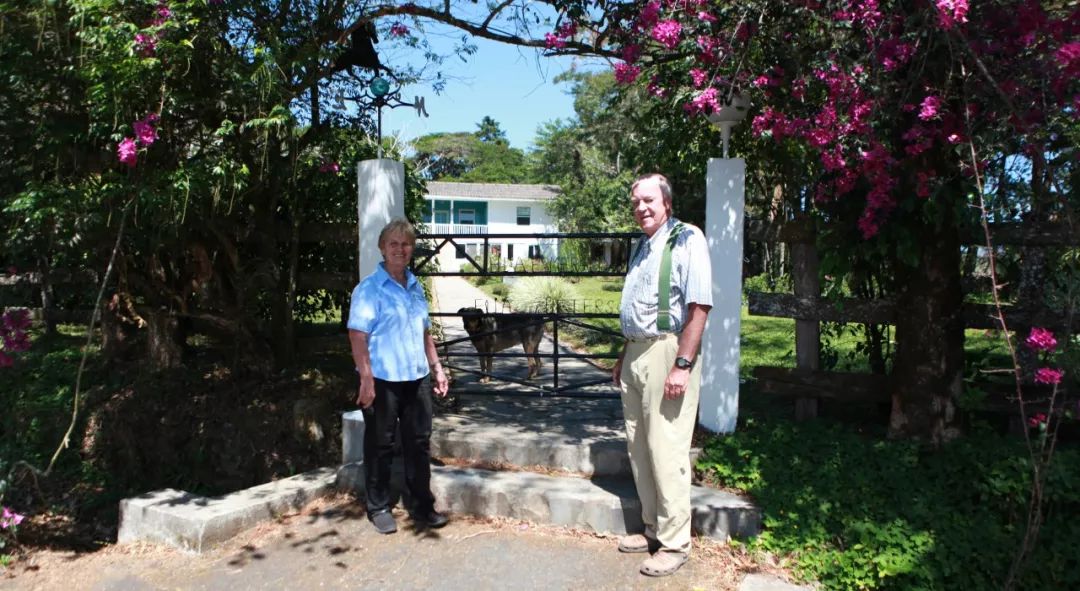
Lot ES-Y-1 Harvest time: January 31, 2018 Processing method: Yeast added, fermented for 48 hours, then washed, then dried on raised beds for 4 days Altitude: 1600 meters Region: Canas Verdes, Palmira Estate: Canas Verdes Variety: Geisha El Velo Farm
El Velo Farm was acquired by Hacienda La Esmeralda in 2012 and is the newest farm in the estate. El Velo frequently processes micro-lots, sold in small quantities through direct trade. For example, the coffee cherries harvested for Prueba 4 came from the Boton plot of El Velo Farm. This batch of coffee beans used a titanium dioxide soaking process. First, ripe red coffee cherries were depulped, then the depulped cherries were placed in a sealed tank filled with titanium dioxide for 62 hours, after which the cherries were dried on concrete patios for 32 hours (with residual mucilage, so it is honey process), with patio temperatures controlled between 17ºC and 24ºC. Prueba 4 belongs to a special innovative lot from Hacienda La Esmeralda's special reserve plot.
(2) Processing Method Introduction
This Red Label uses yeast processing. From any angle, adding yeast during fermentation is a bold approach. According to estate operator Rachel Peterson, this "yeast fermentation method" was an experiment by Hacienda La Esmeralda in processing methods, to observe how Geisha coffee fermented with yeast inoculation would perform. Processing steps: Hand-pick fully ripe bright red cherries, remove undersized ones and float-select, then soak in clean water. Fermentation time is approximately 48 hours with yeast added, followed by sun drying. Spread on drying beds at about 1-2 layers thick, exposed to sunlight for 4 days, average temperature: daytime: 16-23 degrees, nighttime: 10-15 degrees, completing a completely different unique flavor!
After cupping the yeast-processed Red Label, we were delighted to find that this method enhanced Geisha coffee's performance in all aspects (including aroma, body, acidity, and aftertaste), and it is very different from natural Geisha. Overall, it is closer to anaerobic fermentation. Geisha with this processing method performs excellently in aroma and flavor. It smooths out the harshness and excessive acidity of washed coffee, bringing a balanced and rich layering, and adding wine-like flavors.
(3) Green Bean Analysis Geisha green beans have a very beautiful blue-green color, with a jade-like warm texture. They smell of fresh grass, peach, berries, and the unique milky sweetness of oolong tea that most coffee beans lack. It seems that aroma and flavor really require association, but the subtle tea note is something we can clearly perceive.
(4) Roasting Analysis Having obtained a Geisha, how to roast it? To fully reveal Geisha's character, considerable effort must be put into roasting. Geisha is generally grown at altitudes above 1500 meters. What we have is 1700-meter high-hardness, high-density beans, plump in form, medium in particle size, with thick and elongated bodies and pointed ends.
To highlight this bean's characteristics and aroma, use a light roast, as this roast level can better bring out the bean's inherent qualities. Too dark will dissipate floral aroma and fruit acidity. Of course, this also needs to be adjusted based on the coffee bean's characteristics and the roaster's understanding of the bean itself. Personal experience: during roasting, note that the Geisha roasting curve should not be too long, otherwise the flavor will become dull. After first crack, the temperature rise should not be too high. Geisha has pointed ends, prone to black scorch spots. A temperature rise below 6 degrees is better. A light roast brings out more tea rose aroma. (4) Roasting Analysis
\n\n
Roaster: Yangjia 600g semi-direct fire Charge when drum temperature reaches 170°C, air damper set to 3, after 30 seconds adjust heat to 140°C, air damper unchanged, turning point at 1'27", adjust heat once at 120°C. At this point the bean surface turns yellow, grassiness completely disappears, dehydration is complete. Adjust heat to 100°C, air damper to 4;
At 7'40", ugly wrinkles and dark patches appear on the bean surface, the bread-like smell clearly transitions to coffee aroma, which can be defined as the prelude to first crack. At this point, listen carefully for the sound of first crack. At 8'05", first crack begins. Reduce heat to 90°C, air damper to 4 (adjust heat very carefully, not so low that cracking sounds disappear). After first crack, develop for 1'28", drop at 188°C.
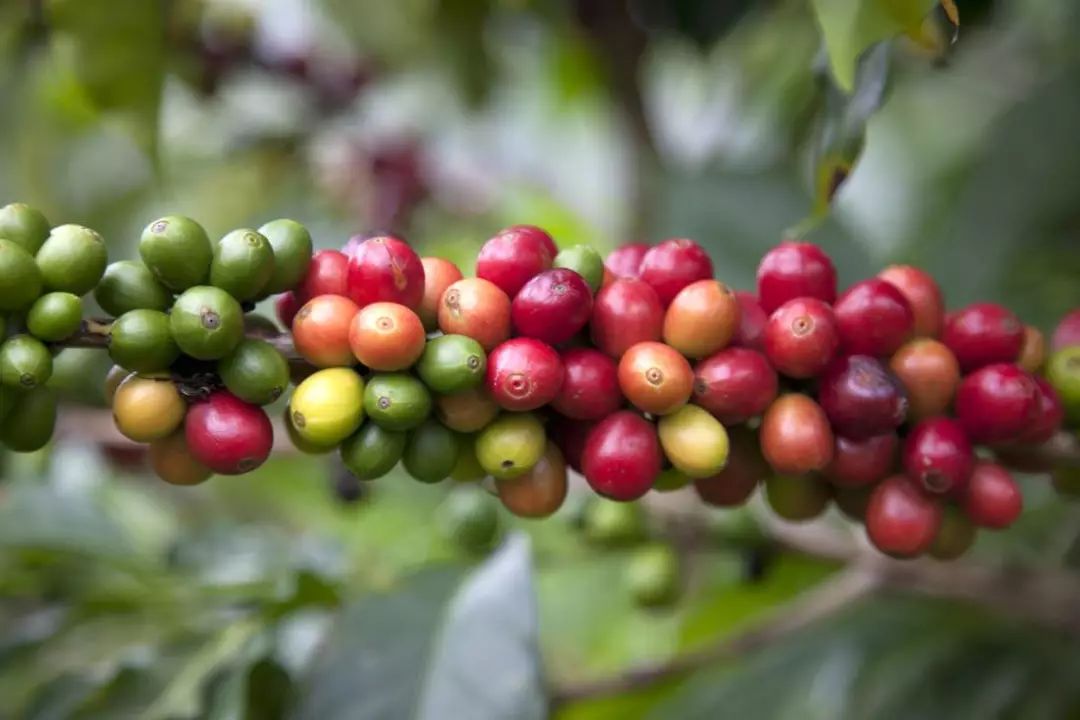
Cupping results: the entrance has a delicate and soft acidity, quickly followed by sweetness that appears on the tongue and lasts a long time. The mouthfeel is clean and transparent, like black tea. Aromas of rose, honeysuckle, sweet potato, grapefruit, lemon, black tea, and sucrose, with clear layers and a long aftertaste.
\n\n
(5) Brewing Suggestions
Recommended brewing method: Pour-over Grind size: 3.5 (Japanese Fuji R440) Water temperature: 91-92°C Cake filter, 15g coffee, water temperature 91°C, grind 3.5, water-to-coffee ratio approximately 1:15 35g water for blooming, bloom time 30s Stages: pour to 100ml and stop, slowly pour to 225ml, i.e. 30-100-95
So everyone thinks, Geisha is just expensive.... This year's Red Label Geisha is still fairly normal. In 2018, Hacienda La Esmeralda Red Label Geisha's auction price was $340 per pound. Other auction Geishas were at $80-100 per pound. To review, the annual 2018 Red Label Geisha auction results are out! First place $340 per pound! Geisha's extremely low production is just an excuse for selling it expensive. What truly fascinates is Geisha's unique and alluring coffee flavor, which is the most important reason Geisha is exceptionally precious. At FrontStreet Coffee in Guangzhou, this year we obtained 3kg of Red Label natural Geisha and yeast-processed Red Label Geisha. A cup of Red Label natural Geisha is 75 RMB per cup, which is a relatively affordable price. Limited quantity, haha.
The above content is compiled by CoffeeHunters, a coffee news website.


