








How Does Golden Mandheling Coffee Differ From Regular Mandheling?
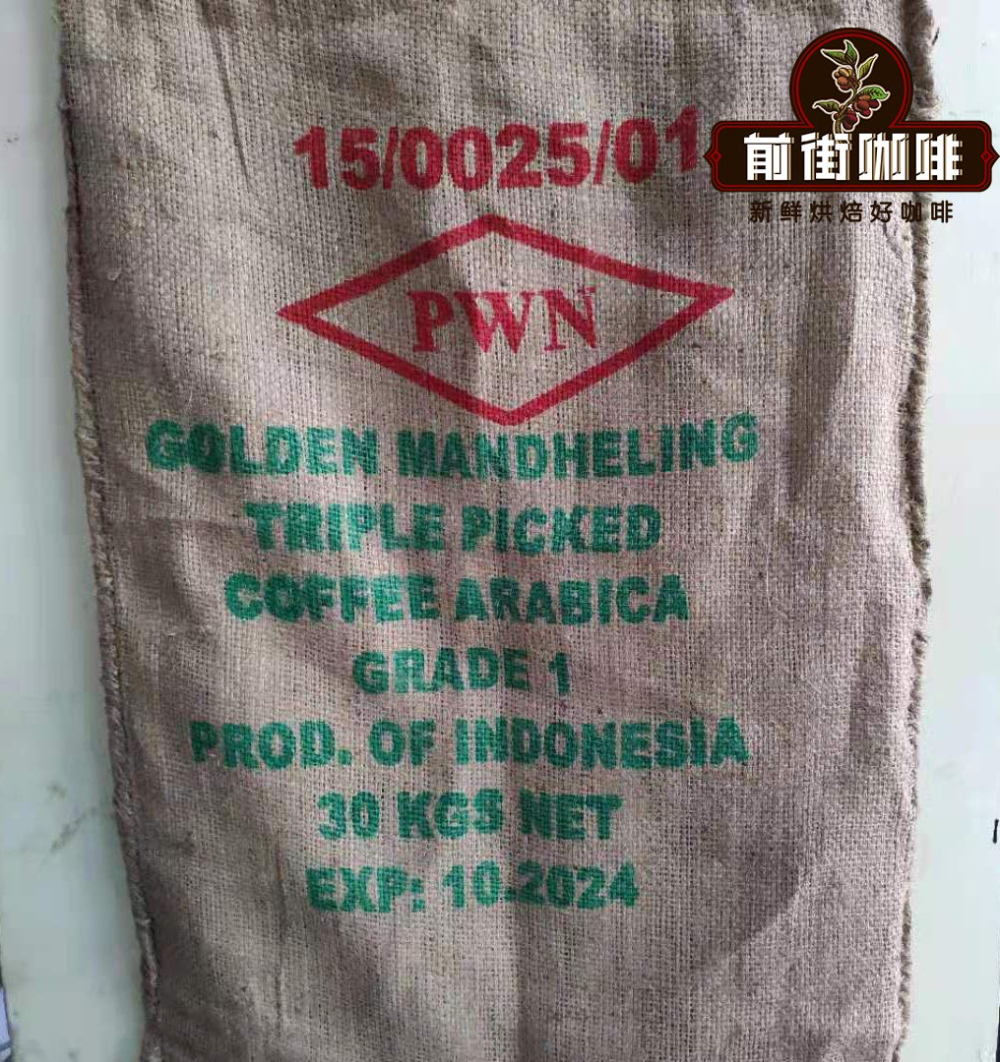
Golden Mandheling is the top tier of Indonesia's Mandheling single-origin coffees, and only beans exported by PWN (Pawani) carry the authentic name. The company registered the English trademark, and a similar bean sold as Gold Top Mandheling differs in source and cup profile. Mandheling itself is a place and ethnic name from Sumatra rather than a variety, which explains the confusion around these labels.
Pawani is an export trading firm founded in 1957 by a Chinese-Indonesian family in Medan, Sumatra, and it built Mandheling's reputation by supplying Japan. It specializes in high-grade Mandheling and controls beans from several quality regions. The coffee beans process, growing region and brewing parameters decide whether a bag tastes citrusy and herbal or heavier and spicier.
Mandheling is one of Indonesia's most iconic single-origin coffees, and Golden Mandheling is the crème de la crème. PWN's Golden Mandheling is a household name, but there's another bean on the market called Gold Top Mandheling—what exactly is its relationship to PWN Golden Mandheling? How do their flavors differ? From the perspective of Front Street Coffee, this article traces the origins of the names Mandheling and Golden Mandheling, the story behind PWN's trademark registration, and provides a detailed introduction to Front Street PWN Golden Mandheling's growing region, variety, processing method, and brewing parameters, helping coffee lovers fully understand the ins and outs of these two renowned Indonesian beans.
When people think of Mandheling coffee beans, many immediately think of Golden Mandheling produced by Indonesia's PWN company. However, this bean was not originally a PWN product—it was first developed by the Japanese. So why is it that today, when people mention Front Street Golden Mandheling, their first thought is Indonesia's PWN rather than a Japanese company? Below, Front Street Coffee (FrontStreet Coffee) will address these questions one by one.
The Origins of the Names Mandheling and Golden Mandheling
Mandheling was originally an obscure place name on the island of Sumatra, which later evolved into the name of an ethnic group—the Mandheling (mandheling)—and today it is one of the most celebrated single-origin coffees in all of Indonesia. Regarding the origin of the name Mandheling, various theories circulate, and although those stories are ultimately just "rumors"—no one to this day can say with certainty how the name came to be applied to coffee—what is certain is that it became hugely popular in the Japanese market.
Mandheling coffee rose to fame because Pawani Coffee Company (PWN) successfully brought it to the Japanese market. Pawani is an export trading company founded by a Chinese-Indonesian family from Quanzhou, Fujian, located in Medan, an important port city in Sumatra. It has been in the export business since 1957, dealing in rubber, cassia, cloves, patchouli oil, and other goods, including exporting Sumatran coffee beans to Japan. Unlike many local Indonesian green bean traders, Pawani specializes in supplying high-grade Mandheling coffee beans, and all the Mandheling it produces is of superior quality.
The outstanding quality of Front Street Golden Mandheling lies in the fact that PWN subjects G1-grade Mandheling green beans to three rounds of hand sorting. The G1 grade means the beans are strictly sized at 18 screen or above, and each 300-gram green bean sample contains no more than 3 defective beans. After multiple rounds of screening, the defect rate of Front Street Golden Mandheling is reduced to an extremely low level, yielding superior batches that present a clean sweetness and a richer aroma.
When the Japanese took an interest in Sumatran coffee years ago, they initially intended to purchase it long-term, but gradually discovered that bean quality was inconsistent. They therefore had to invest more effort in the Mandheling production process, establishing strict screening standards and defect-removal procedures. Starting with metrics such as bean density, size, shape, and color, all green beans had to go through machine and manual defect removal to ensure the Mandheling produced was whole, uniform, large, and translucent, while reducing earthy and grassy flavors. At that time, this bean was called Golden Mandheling, which translates literally into Chinese as "黄金曼特宁."
However, Golden Mandheling was registered as a trademark by Pawani first, and all Japanese companies importing the product could no longer use the name. So Japanese importers changed the original Golden Mandheling to Gold Top Mandheling, which translates into Chinese as "鼎上黄金曼特宁."
So is Indonesian Gold Top Mandheling good? And how does it differ from Front Street PWN Golden Mandheling?
According to Front Street Coffee (FrontStreet Coffee), both Gold Top Mandheling and the Front Street PWN Golden Mandheling on Front Street's menu originate from the Lintong region in northern Sumatra, Indonesia. Both are harvested entirely by hand, with individual picking of fully ripe cherries to ensure initial bean selection quality. The coffee cherries are processed using the wet-hulling method, and after hulling, the beans undergo another round of drying and refinement, plus two rounds of green bean cleaning and four rounds of hand sorting. Therefore, both coffees can be considered strictly selected top-grade Mandheling.
The only difference is that Golden Mandheling has been registered as a trademark by Indonesia's Pawani Coffee Company, making it a PWN-exclusive name. It follows that the flavor difference between these two beans is not significant—the distinction lies mainly in the brand. Next, Front Street Coffee (FrontStreet Coffee) will share information and flavor characteristics of the Front Street PWN Golden Mandheling that the shop carries.
Front Street Coffee (FrontStreet Coffee) Front Street PWN Golden Mandheling Coffee Beans
Country: Indonesia Region: Sumatra, Aceh, Mount Gayo Altitude: 1100-1600m Variety: Ateng Processing: Wet-hulled Flavor: Baked toast, nuts, pine, caramel, herbal
Front Street PWN Golden Mandheling Growing Region
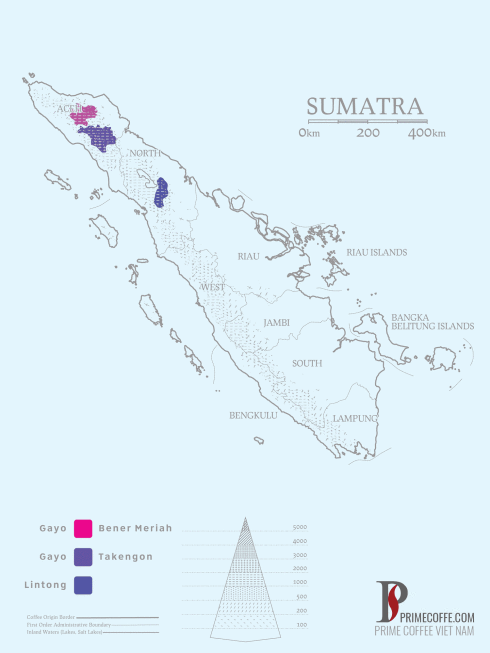
According to information on the newly introduced Front Street PWN Golden Mandheling from Front Street Coffee (FrontStreet Coffee), PWN selected a new growing region in 2020—Mount Gayo in Aceh, within the Sumatra region, located at the northernmost tip of Sumatra island. Coffee cultivation on Mount Gayo is mainly concentrated in Takegon town and the hillsides beside Lake Tawar, with the production area at an average altitude of 1,100 to 1,600 meters, and coffee quality has always been excellent.
However, due to earlier political instability, coffee from this region was difficult to export. In recent years, as the situation has stabilized, coffee cultivation in Aceh has developed, with quality even surpassing that of the Lintong region. This move is undoubtedly an affirmation of the quality of Mount Gayo coffee cherries, and Front Street PWN Golden Mandheling, as Indonesia's top coffee brand, will certainly not disappoint coffee lovers.
Front Street PWN Golden Mandheling Coffee Variety
According to Front Street's understanding, Mandheling coffee varieties are typically pure Arabica beans, but Arabica has weak resistance to pests and diseases. Therefore, in October 2020, Indonesia's PWN company abandoned the original Typica variety used for Golden Mandheling and switched to the Ateng variety to produce Golden Mandheling. The "Ateng" mentioned here is actually the Catimor variety commonly seen in China.
Ateng (Catimor)
Catimor is a hybrid of the Robusta subspecies TimTim and Caturra, first developed in 1959 and promoted in Brazil in the 1970s and 1980s. With its disease resistance and high yield, it has secured a place among Central and South American coffee varieties. The recurring coffee leaf rust crises in Central and South America also drove the adoption of Catimor coffee beans. Its characteristics include high yield, short stature, suitability for dense planting, and reddish-brown new leaves. However, because of its fast maturation and high yield, it requires adequate fertilizer supply and shade. According to Front Street's understanding, its lifespan is quite short—only about ten years on average.
Front Street PWN Golden Mandheling Processing Method
In addition, the green bean processing method used for Front Street Golden Mandheling coffee beans is Indonesia's most distinctive wet-hulling method, and it is precisely this processing method that creates the unique earthy, herbal, and spicy notes of Indonesian Mandheling.
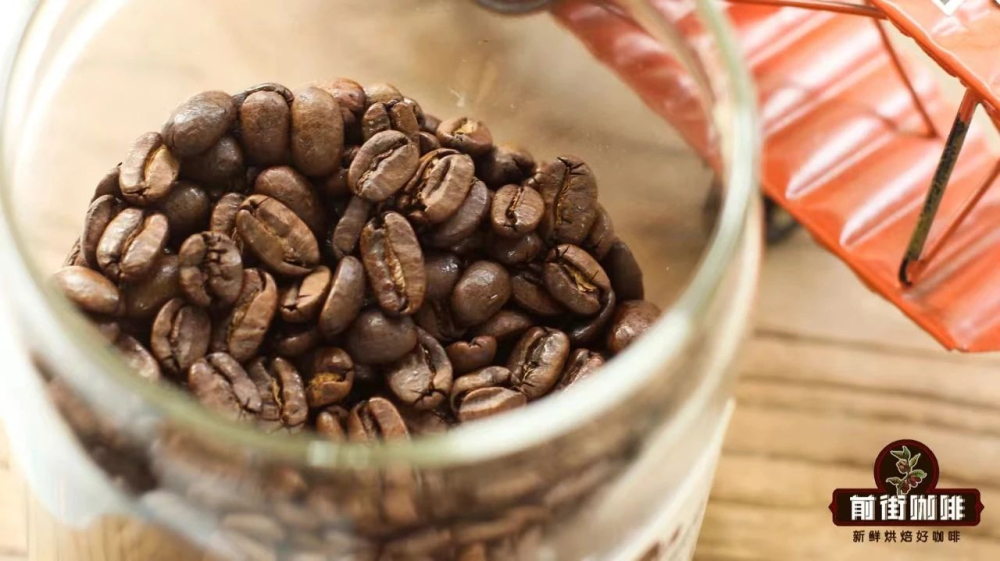
This processing method came about because the local climate is mostly rainy, with constant typhoons, making it impossible to meet the good weather conditions required for natural sun-drying. Combined with poor local economic conditions, farmers could not afford the more expensive washed method either. The combination of these factors gave rise to the highly localized wet-hulling method. Wet-hulling is a fast-processing method for green beans: the coffee cherry's skin and pulp are removed, followed by a brief fermentation and drying, then the mucilage and parchment layer are removed, and drying continues until the moisture content drops to 12%. Mandheling coffee beans processed by the wet-hulling method clearly show挤压裂痕 of varying degrees—Front Street Coffee (FrontStreet Coffee) considers these not to be defects, but rather an inherent characteristic of Mandheling.
Next, Front Street will share the flavor performance of this coffee bean when brewed by pour-over.
Front Street Coffee (FrontStreet Coffee) Golden Mandheling Brewing Recommendations
Dripper: Kono dripper Water temperature: 86°C Dose: 15g Coffee-to-water ratio: 1:15 Grind size: medium-fine (EK43s grinder setting 11)
*Why choose the Kono dripper: The Kono dripper has few ribs, positioned at the lower end, and the filter paper fits snugly against the dripper, which restricts airflow and extends the contact time between water and coffee grounds, allowing the grounds to be fully extracted and enhancing the full-bodied mouthfeel. Therefore, this dripper is not only suitable for brewing Front Street Golden Mandheling, but can also be used for brewing Front Street Brazil Queen's Estate, Front Street Jamaica Blue Mountain No. 1, and other medium-dark roasted coffee beans.
Brewing technique: Pulse pouring Bloom with 30g of water for 30 seconds, then pour in a slow circular motion until the water reaches 125g for a pulse, and when the water level drops and is about to expose the coffee bed, continue pouring until 225g and stop. When the water level drops and is about to expose the coffee bed again, remove the dripper. (Timing starts from the beginning of the bloom.) Total extraction time: 2'00".
Front Street Golden Mandheling Flavor Description: Layered and complex, full-bodied and clean, with high balance, strong nutty and chocolate flavors, rich spice and caramel aromas, fruity notes, and a long-lasting finish.
The above content is compiled by CoffeeHunters, a coffee news website.


