







What are the main arabica coffee types grown today?
Arabica coffee is one of three commercial categories, alongside Robusta and Liberica, and it makes up roughly 60 percent of global production. The family includes Typica, Bourbon, Catimor, and Ethiopian Heirloom, each with its own plant traits and cup profile. Arabica originated in Ethiopia and is the category behind most specialty coffee sold under variety labels.
Robusta ranks second in world production, adapts easily to its environment, and shows a fuller body with lower acidity and chocolate notes when quality is high. Liberica is rare now, with larger, asymmetrical beans and a distinct aroma. Reading arabica coffee types on a bag helps buyers connect a variety name to the processing method and flavor they can expect in the cup.
Walk into any specialty coffee shop and you'll almost certainly hear the word "Arabica." What exactly does it refer to? And which specific varieties fall under it? This article begins with the distinction between the world's three major commercial coffees—Arabica, Robusta, and Liberica—and then focuses on the origins, plant characteristics, and flavor profiles of the main members of the Arabica family, including Typica, Bourbon, Catimor, and Ethiopian Heirloom. It also draws on products sold by Front Street Coffee—such as Blue Mountain, Brazil, Golden Mandheling, and Yirgacheffe—to explain the processing methods and cup profiles associated with different varieties, helping coffee lovers understand what variety labels really mean when making a purchase.
For more specialty coffee knowledge, follow: Front Street Coffee (Frontsteet Coffee).
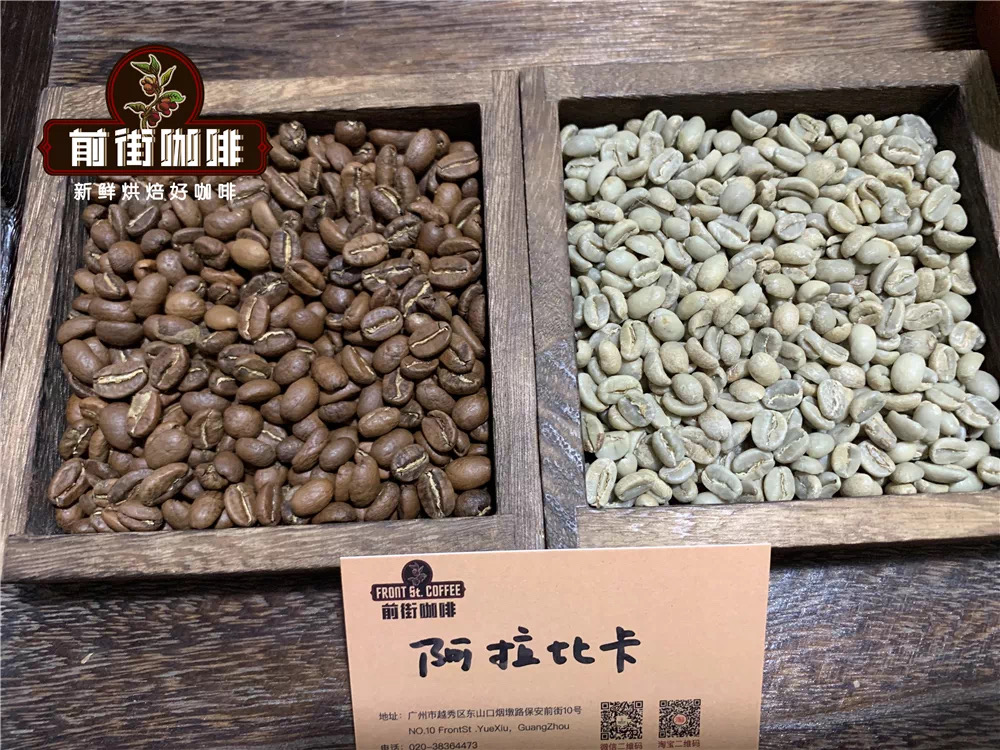
In chain coffee brand stores, we often see slogans like "100% Arabica"; and if you ask some cafés what beans they use for their espresso blend, the answer is often "Arabica." These statements are not wrong—just overly general. So what exactly does Arabica refer to? From the perspective of global commercial trade, coffee in circulation is mainly divided into three categories: Arabica, Robusta, and Liberica.
Arabica originated in Ethiopia and is currently the most consumed coffee category in the world, accounting for roughly 60% of total global coffee production. Nearly all the coffee served at Front Street Coffee's physical stores belongs to the Arabica category, with the only exception being the commercial espresso blend in its Taobao shop, which incorporates a small amount of Robusta to enhance crema.
Robusta ranks second in coffee production worldwide, behind only Arabica. This variety is extremely adaptable to its environment and is virtually immune to disease. Compared with Arabica, Robusta typically has a fuller body. High-quality Robusta beans have a smooth surface, lower acidity, and often carry chocolate-related flavors; poor-quality Robusta, on the other hand, can exhibit a slight earthy or even rubbery taste.
Liberica coffee is now extremely rare on the market, but it once occupied an important place in coffee history. Liberica beans are larger than ordinary coffee beans, usually asymmetrical in shape, and are the only coffee beans in the world with such an irregular form. It is said to have a unique aroma woven from floral and fruity notes, with an overall hint of smokiness.
There is also a variety called Excelsa, which in recent years has been reclassified under Liberica coffee, though the two are actually quite different. Excelsa is mainly grown in Southeast Asia and accounts for only about 7% of global coffee circulation. It is mostly used in blends to enhance flavor layering and complexity, and is said to have sour and fruity notes.
Arabica coffee trees thrive at high altitudes, where rainfall is regular and there is sufficient shade. Arabica trees are usually relatively short and easy to prune (generally no more than 6 feet), but they are the most delicate of the four coffee types and the most sensitive to their environment. High-quality Arabica beans have a bright, pleasant acidity and often display layered, complex flavors and aromas.
Today, what Front Street Coffee wants to focus on is precisely Arabica coffee beans.
Common Arabica coffee types include:
Typica
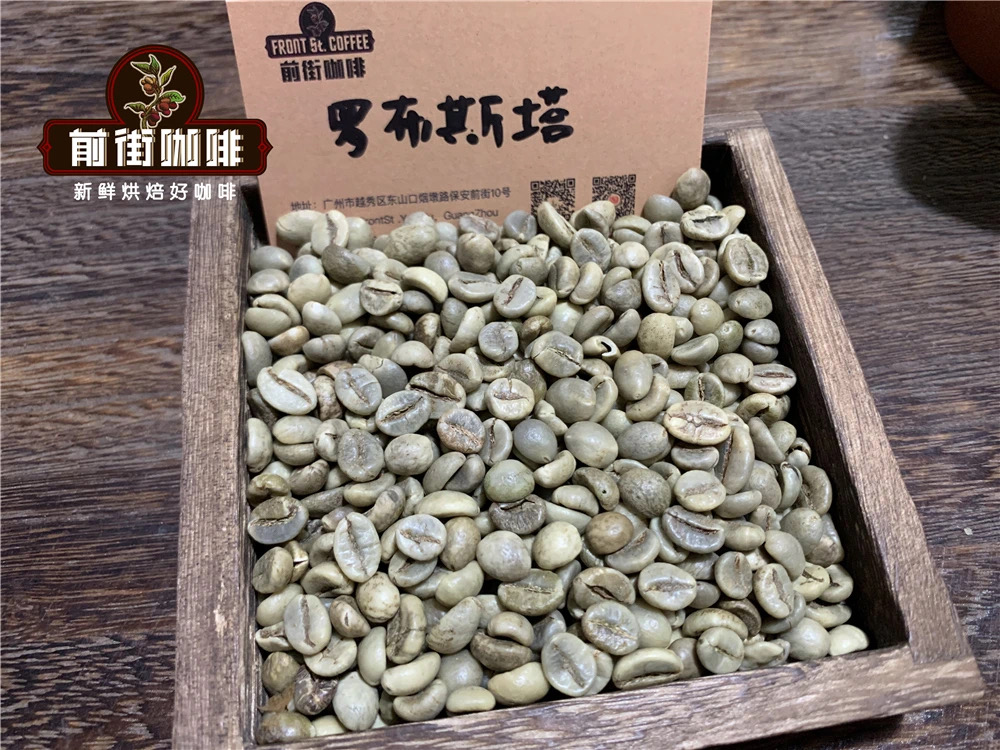
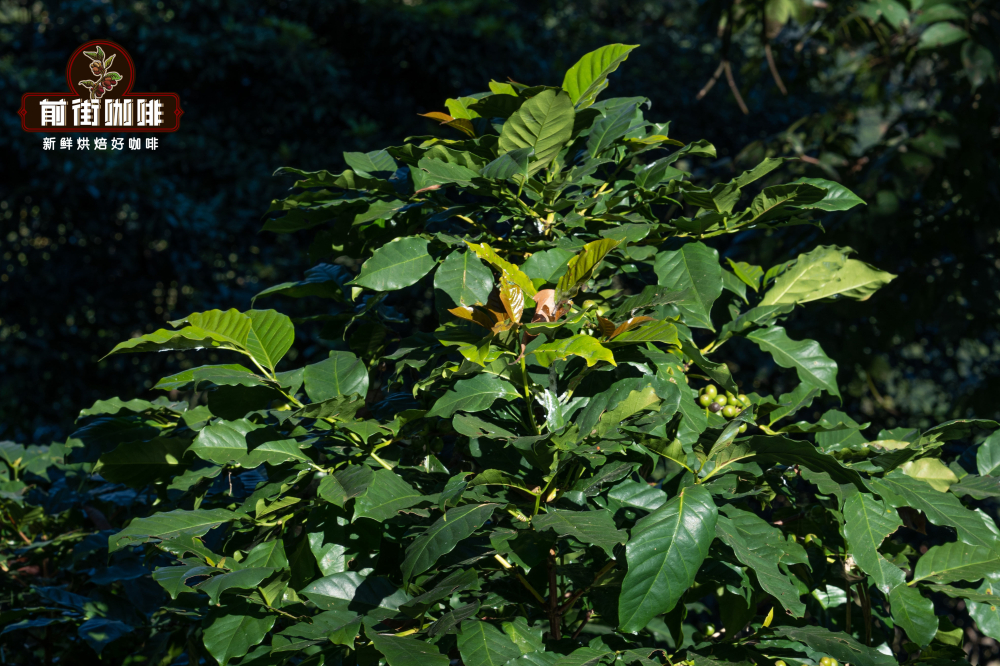
The most distinctive marker of the Typica coffee tree is that the leaves at the top are a reddish bronze color, which is why it is also called "red-top coffee." Its trunk is slender, its branches weak and slightly tilted, and the angle between the lateral branches and the vertical main stem is 50 to 70 degrees. The whole plant stands about 5 meters tall, which makes manual picking quite difficult. Next to Front Street Coffee's shop, there happens to be a pot of Typica and a pot of Catimor growing—while enjoying your coffee, it's worth taking a look. Typica green beans are relatively large, elongated, with pointed, upturned ends, somewhat resembling an egg in shape. In terms of flavor, Typica often has citrus-like acidity and a sweet finish, and is praised by many as an elegant, clear coffee. Front Street Jamaica Blue Mountain coffee is precisely the Typica variety.
Typica's disease resistance is very weak, making it hard for it to withstand common diseases such as leaf rust and berry disease, and its yield is quite limited. Once a coffee tree is infected with leaf rust, it is basically sentenced to death and will eventually wither or even die. As a cash crop, Typica—with its low yield and frail constitution—is difficult to make profitable, so many growers choose to give it up and switch to varieties with stronger disease resistance. Growing elegant, pure-flavored Typica is not easy: from terroir conditions, plant management, and fruit picking to post-processing, every step requires full support before the beans can develop positive flavors and mouthfeel. This also means that producing high-quality Typica requires more labor costs and technical dedication.
The flagship Typica offering from Front Street is Front Street Blue Mountain coffee, which originally comes from Typica lineage. Authentic Front Street Jamaica Blue Mountain coffee ranks among the world's most expensive coffees due to its scarcity. Jamaica Blue Mountain was introduced to Jamaica in the early 1700s and is produced in a small area on the eastern side of the island, in the Blue Mountains, growing at altitudes between 2,000 and 5,500 feet. The cool mountain temperatures, volcanic soil, and abundant rainfall together give Jamaica Blue Mountain coffee its distinctive flavor. The cultivation of this specialty coffee is closely monitored and globally protected by the Jamaica Coffee Industry Board, and only coffee from that specific area can receive authentic certification and bear the label.
For this reason, the Jamaica Coffee Industry Board's label has become an anti-counterfeiting mark for Blue Mountain coffee. There is another point worth noting: only Jamaican coffee is packed in wooden barrels for green beans, so to a certain extent, the wooden barrel of Blue Mountain coffee can also be used to verify authenticity.
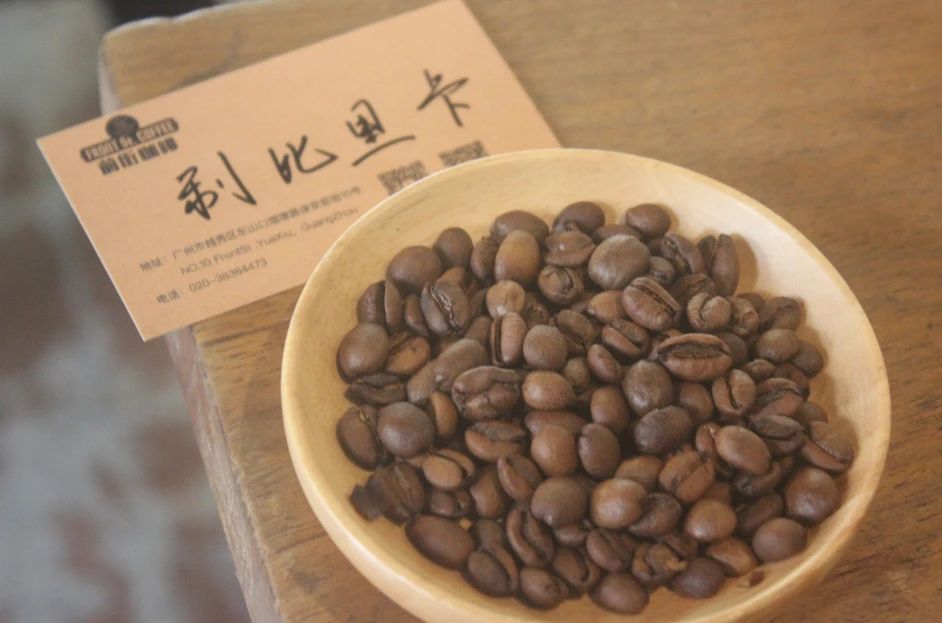
The Front Street Blue Mountain coffee that Front Street Coffee has sourced comes from Jamaica's Clifton Mount Estate, the only estate in Jamaica with Rainforest Alliance certification. The Blue Mountain coffee produced by this 200-year-old coffee estate achieves an almost perfect balance of flavor, body, and aroma, with a long, lingering finish.
Bourbon
Bourbon arose from a natural mutation of Typica, with the bean shape changing from slender and pointed to round. It was first discovered on Bourbon Island—now Réunion Island—off the east coast of Africa. In 1715, the French transplanted round beans from Yemen Mocha to Bourbon Island off the east coast of Africa (renamed Réunion Island after the French Revolution), and only afterward did the name Bourbon come into use. Bourbon round beans were introduced to Brazil in 1727 and began to be cultivated there. Although its yield is not especially high, Bourbon has better resistance to leaf rust than the frail Typica. Bourbon coffee grown at high altitudes has a rich, delicate flavor, a fragrant aroma, and soft, smooth acidity. The Bourbon fruit we usually see turns from green to slightly yellow, orange-yellow, red, and finally fully ripe dark red—this is what is known as Red Bourbon.
Take Front Street Coffee's Brazil as an example: this coffee has obvious nutty and chocolate flavors, medium caramel sweetness, a smooth mouthfeel, and is overall very balanced.
Catimor
Catimor 7963 is a hybrid variety developed by Portugal's Tropical Research Institute (HCT) to combat coffee rust, and its characteristics are stable. This variety appears compact in tree shape, is low-growing, has many branches and short internodes, grows vigorously, and has extremely strong vitality. Its greatest features are its astonishing rust resistance and high productivity. Because of this, it is favored by Yunnan coffee farmers, and currently more than 90% of coffee trees in Yunnan are Catimor.
The Golden Mandheling that Front Street has sourced is the Catimor variety. After processing with Indonesia's unique wet-hulling method, the roasted product has a full, solid aroma of herbal spices, dark chocolate, and nuts. Speaking of this, some friends who regularly buy Front Street Coffee beans may wonder: doesn't the packaging say the variety is "ateng"? In fact, ateng is the local Indonesian term for coffee varieties, and since Catimor belongs to the broader Arabica category, Golden Mandheling's variety is indeed Arabica.
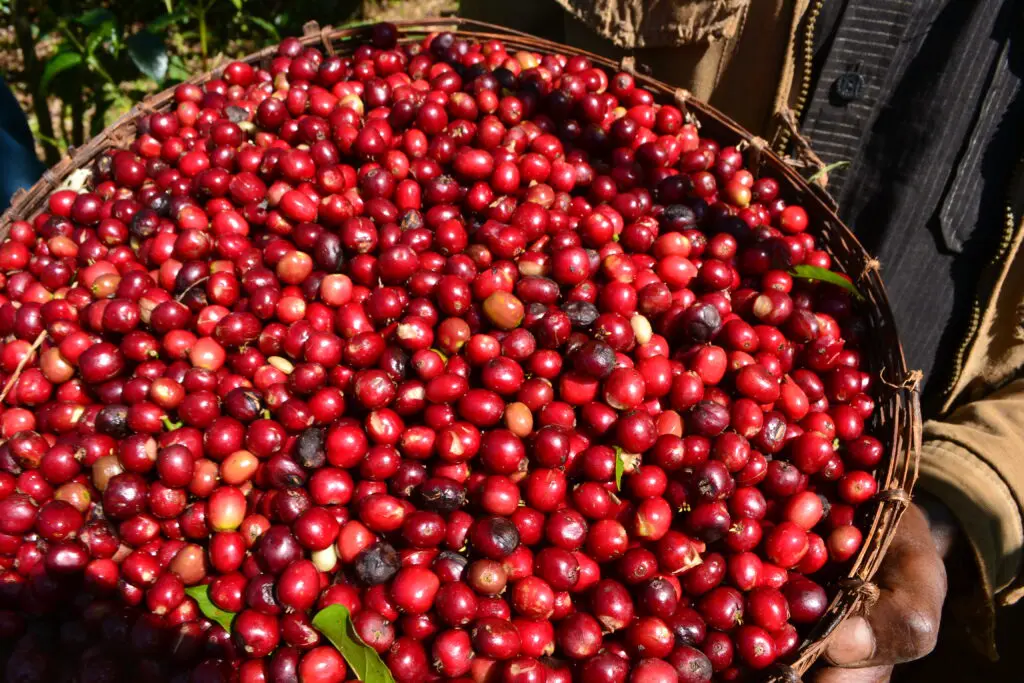
Front Street Coffee's Mandheling is not limited to Front Street Golden Mandheling; there are four others: Front Street Tiger Mandheling, Front Street Aged Mandheling, Front Street Lintong Mandheling, and Front Street Sumatra Wahana Estate Mandheling. Front Street Lintong Mandheling comes from Indonesia's Sumatra Lintong region, and its main varieties are Typica and Caturra. Front Street Tiger Mandheling comes from the Sumatra Aceh region, and its main varieties are likewise Typica and Caturra. Front Street Aged Mandheling comes from the Sumatra Tawahu region, and its bean variety is Typica. Front Street Golden Mandheling comes from Indonesia's Sumatra Aceh region. In addition, because the Golden Mandheling trademark has been registered by PWN, only Golden Mandheling produced by PWN is authentic Golden Mandheling.
So how do you tell real Golden Mandheling from fake? The method is actually very simple: just look at Golden Mandheling's factory certificate and the green bean burlap sack printed with the PWN company logo. The Front Street Golden Mandheling purchased by Front Street Coffee comes precisely from PWN, and is usually also called Front Street PWN Golden Mandheling coffee.
Most Mandheling coffee uses the wet-hulling method, which gives it a relatively distinctive flavor: earthy and herbal notes often appear, and its low acidity and high body are deeply loved by coffee fans worldwide. Wet-hulling is a processing method unique to Indonesian coffee regions, and its process is as follows:
1. Pick the coffee cherries and remove the skin. 2. Ferment the cherries overnight to break down the mucilage (the fruity layer beneath the skin), then wash it off. 3. Dry for several hours until the moisture content drops to about 50%. 4. Sell the coffee to a collector or mill, where the beans are further dried to a moisture content of 25%-35%, and then the parchment layer is removed with a wet huller. 5. The processing plant air-dries the hulled beans to a moisture content of 12%-13%.
Unlike other Mandheling coffees, Sumatra Wahana Estate Mandheling uses a natural (sun-dried) processing method. Front Street Coffee has also adjusted its roast level; a medium roast better brings out tropical fruit flavors. Because of the natural processing, this coffee also has a rich, fermented wine-like aroma.
Heirloom
In Ethiopia, Heirloom is an umbrella term referring to the country's many wild or genetically undefined native varieties. In the dictionary, Heirloom means "a valuable possession passed down through generations," meaning that coffee is an irreplaceable "treasure" to Ethiopians; baristas translate it more smoothly as "native species." Many of Front Street Coffee's beans from Ethiopian regions are labeled as the "Heirloom" variety, such as washed Front Street Yirgacheffe, Front Street Huakui 8.0, and Front Street Sun-Dried Red Cherry.
Ethiopia is the homeland of Arabica coffee, and the country preserves tens of thousands of native Arabica varieties. Local coffee cultivation is broadly divided into three systems: smallholder farming, semi-forest cultivation, and forest cultivation. Among these, the coffee trees in semi-forest cultivation are mostly wild varieties growing in the wild, and farmers manage the growing area while also planting other cash crops. Heirloom coffee is usually identified and confirmed based on growers' experience accumulated over many years, because the number of varieties is simply too vast to genetically test and verify them on a larger scale.
From the introduction above, I believe everyone now has a clear idea: Front Street Mandheling coffee is certainly good coffee, but everyone's taste preferences differ, so the types of coffee they like naturally vary as well. For friends who prefer prominent floral and fruity flavors, Ethiopian floral-and-fruity coffees are also a good choice; while for those who love body and herbal flavors, Front Street Mandheling should be the obvious choice.
The above content is compiled by CoffeeHunters, a coffee news website.


