








What Does Iced Pour-Over Coffee Method Change in the Cup
Brazilian beans carry the thick, mellow profile of classic coffee, in contrast to the floral, fruity acidity of African lots. Queen's Farm in the Mogiana region, a multiple Brazilian COE winner since 1999, supplies the example here. Its sun-dried processing holds the fruit pulp's sweetness, and a medium-dark roast highlights nutty chocolate and sugarcane. Iced pour-over keeps that clean sweetness while adding refreshment.
The iced pour-over coffee method depends on a few settings: grind finer, keep water temperature lower, and extract slowly with a KONO dripper, working out the coffee-to-water ratio to taste. Queen's Farm (Fazenda Rainha) grows on nutrient-rich red volcanic soil among shrubs and grassland, with part of the estate under traditional management and part under modern standardized practice, which raised cup quality over time.
Brazilian coffee is known for its rich, bitter profile, which stands in sharp contrast to the floral and fruity acidity of African beans. If Brazilian beans are used for iced pour-over, what kind of flavor performance will they show? This article takes Front Street Coffee's Queen's Farm sun-dried coffee beans as an example, systematically sorting out the grind size, water temperature, dripper selection, and coffee-to-water ratio for iced pour-over, from the background of the producing region, processing method, and roasting approach, and provides complete brewing steps. Queen's Farm is located in the Mogiana region and has won multiple Brazilian COE awards since 1999. The sun-dried processing preserves the sweetness of the fruit pulp, while the medium-dark roast highlights nutty chocolate and sugarcane sweetness. By mastering key points such as finer grinding, lower water temperature, and slow extraction with the KONO dripper, you can brew a clean and refreshing iced Brazilian coffee at home.

If African coffee wins with floral and fruity acidity, then Brazilian coffee takes another path—the thick, mellow bitterness of classic coffee. When brewed as hot pour-over, Brazilian beans can show quite a rich layering. So what kind of taste experience will it bring when extracted as iced pour-over?
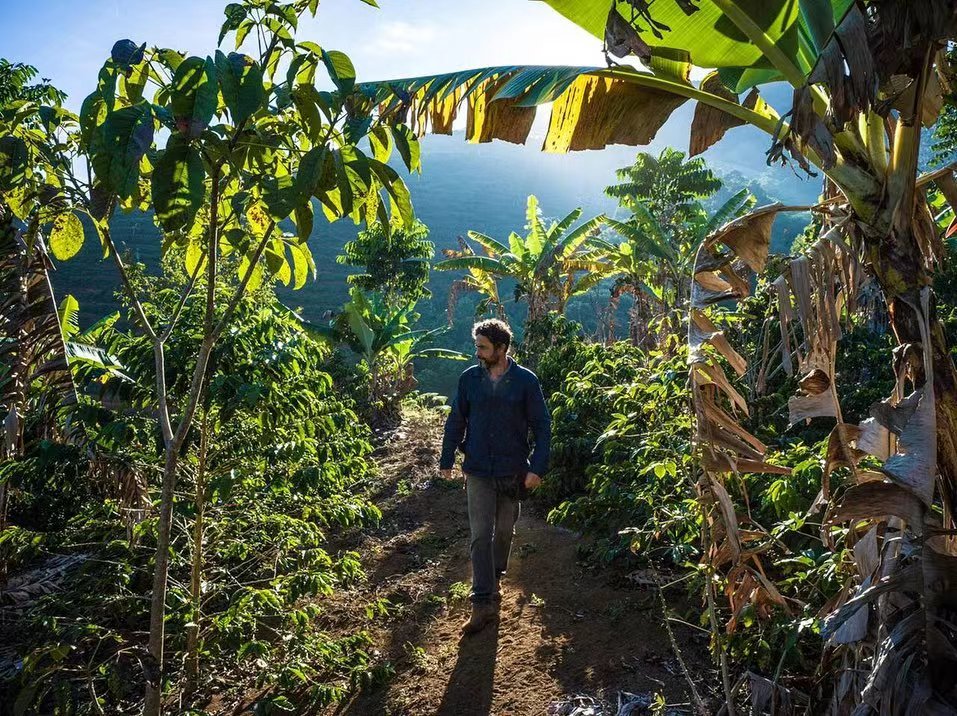
Front Street's bean list currently has two Brazilian coffee beans: one is a semi-washed Cerrado everyday drinking bean, presenting the signature "taste of Brazil"; the other is Queen's Farm coffee beans, known for their clear sweetness and fragrance. Both have many fans, with full aroma and a clean mouthfeel, always making people want another cup after finishing. Queen's Farm (Fazenda Rainha) is located in the Mogiana region, not far from South Minas. Most of the coffee trees grow in an environment interwoven with shrubs, grassland, and vegetation. The nutrient-rich red volcanic soil allows the fruit to accumulate sufficient nutrition and eventually develop a full aroma. Part of the estate continues traditional farm management, while another part introduces modern standardized management, significantly improving coffee quality as a result. At Front Street, we tasted in this bean a clear sugarcane sweetness rarely found in other regions, accompanied by fruity aromas and chocolate notes.
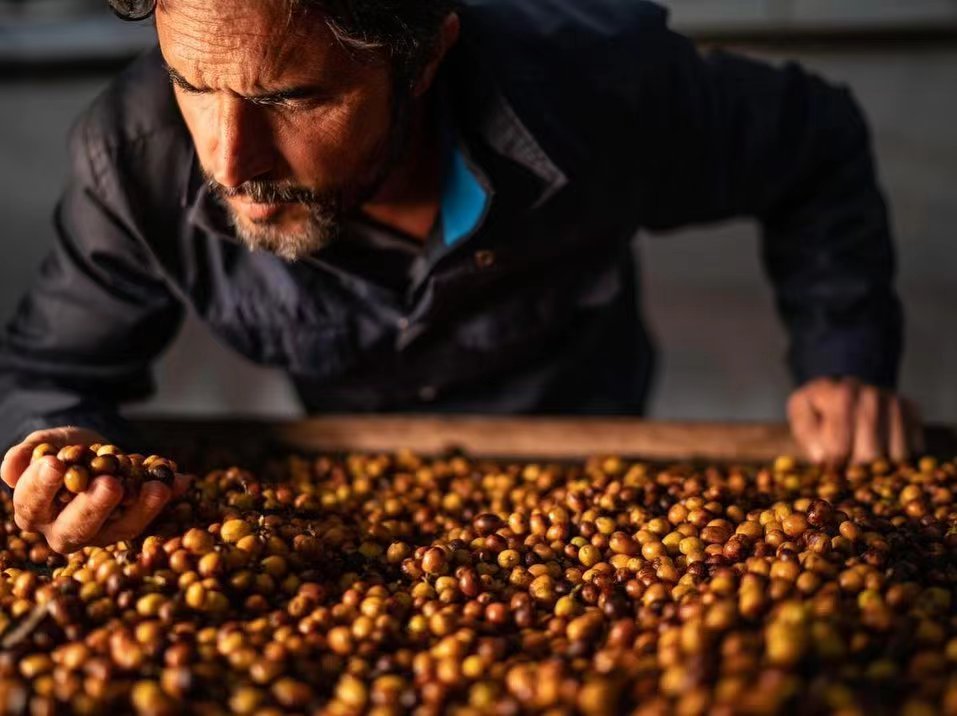
Since 1999, Queen's Farm has won multiple awards in Brazil's COE competition thanks to its outstanding coffee quality and is widely praised in the coffee community. Front Street's Queen's Farm coffee beans use the sun-dried processing method, allowing the fruit pulp to be retained so that the coffee absorbs more sweet aroma during the drying stage.
The traditional sun-dried method is to pour the coffee cherries directly onto concrete ground and sun-dry them until dry, but the processing method is rather rough, and the finished product easily picks up off-flavors such as dirt, or develops an unpleasant over-fermented taste. Queen's Farm, however, first pours the cherries into a water tank before drying and uses flotation to remove underripe fruit. To avoid earthy and fermented flavors, the estate spreads the cherries on African raised beds throughout the process and arranges for staff to turn them at regular intervals, reducing uneven heating and maintaining the coffee's cleanliness as much as possible.
For roasting, Front Street chooses a medium-dark roast to highlight the coffee's mellow fragrance while preserving the bean's natural sugarcane sweetness. After hearing this introduction, many friends must be eager to try it. Front Street also often receives inquiries about "how to make iced pour-over with Brazilian coffee." For aromatic specialty coffee, Front Street has always believed that the premise of good taste is that the beans are fresh enough. Coffee beans enter their best flavor period 4 to 7 days after roasting. Once this window is exceeded (about a month and a half after roasting), the aroma may dissipate and a woody taste may develop. Front Street only ships fresh coffee beans within 5 days after roasting, so everyone can drink fresh coffee at its peak flavor.
When brewing medium-dark roasted beans, Front Street uses different parameters from light-roasted beans to bring out a richer chocolate note in the coffee. The difference between iced pour-over and hot pour-over is that hot water is first used to complete extraction, and then ice cubes are used to cool and chill it, creating a refreshing taste. Because the amount of brewing water is reduced, if hot pour-over parameters are still used, the coffee easily becomes thin and the aroma does not come out. To make the iced coffee taste better, Front Street increases the extraction rate by adjusting to a finer grind.
In terms of grind size: as the roast level deepens, the coffee beans become porous, and after grinding they easily absorb more water and release more soluble solids. If you are not careful, this can bring out unpleasant miscellaneous bitterness such as woodiness. Front Street Coffee baristas will adjust the grind coarser, making the particles larger to reduce the risk of over-extraction. For hot pour-over of Brazil Queen's Farm, Front Street uses a medium grind (75% passing through China standard No. 20 sieve), while for iced pour-over it is adjusted finer to a medium-fine grind (80% passing).
In terms of water temperature: when brewing medium-light roasted beans, Front Street uses a higher water temperature to release the aromatic substances from high-density beans. But medium-dark roasted Brazilian coffee has undergone a longer caramelization reaction. If the same high-temperature water is used, it easily presents a heavy, burnt-bitter taste. Appropriately lowering the water temperature helps reduce bitterness, and Front Street uses 87–88°C.
In terms of the dripper: medium-dark roasted beans mainly present a mellow, rounded mouthfeel. For this characteristic, Front Street chooses the slower-flow KONO dripper for extraction. The upper part of the KONO is a smooth curved surface, and the lower part has guide ribs about one-third of its length, which allows the filter paper to fit more tightly against the dripper, restricting airflow upward so hot water can only flow downward, forming a siphon-like extraction effect and allowing the aromatic substances in the coffee grounds to be released more fully.
Coffee grounds absorb about twice their own weight in water. Front Street's hot pour-over usually uses 15 grams of coffee and extracts at a 1:15 coffee-to-water ratio, finally yielding close to 200 ml of coffee liquid, or 1–2 servings. After switching to iced pour-over, the same coffee-to-water ratio would dilute the coffee's flavor, so Front Street changes to 1:10. In addition, enough ice is needed to create a chilled taste. Front Street stores use pre-frozen large, hard ice cubes, about 100 grams, which slows the melting rate and keeps the concentration higher.
Dripper: KONO dripper, water temperature: 88°C, coffee dose: 15 grams, coffee-to-water ratio: 1:10
Water amount: 150 ml, ice: 100 grams, grind size: medium grind level (80% passing through China standard No. 20 sieve)
Front Street's operation process is: first wet the filter paper so it fits the dripper, pour out the water in the server and add 100 grams of ice. Pour water equal to twice the coffee grounds' weight into the dripper to wet the coffee bed, and after it forms a dome, let it bloom for 30 seconds. Then pour in a small stream in circles from the inside out. At 95 grams, pause in stages. When the coffee bed drops to half the height of the dripper, continue pouring the third stage with the same thin stream until 150 grams, and only remove the dripper after all the coffee liquid has filtered through. The total time is about 1 minute 40 seconds.
Iced pour-over Brazil Queen's Farm has obvious roasted nut and creamy chocolate flavors on entry, along with a light fruity acidity. The sucrose sweetness is very clear, and the finish is a prominent chocolate aftertaste. The overall mouthfeel is clean and refreshing.
For more specialty coffee beans, please add the private WeChat Front Street Coffee (FrontStreet Coffee), WeChat ID: qjcoffeex
The above content is compiled by CoffeeHunters, a coffee news website.


