







Where Are Arabica Beans Grown? Huila Pink Bourbon as an Example
Pink Bourbon from the Isabella Estate in Huila, Colombia, is a natural cross between Yellow Bourbon and Red Bourbon. Recessive traits make it hard to breed stably, so yields stay scarce. The cup carries floral and fruity notes with the balanced profile and bright acidity typical of Colombian coffee, and the article covers the semi-washed process plus roasting and V60 brewing details.
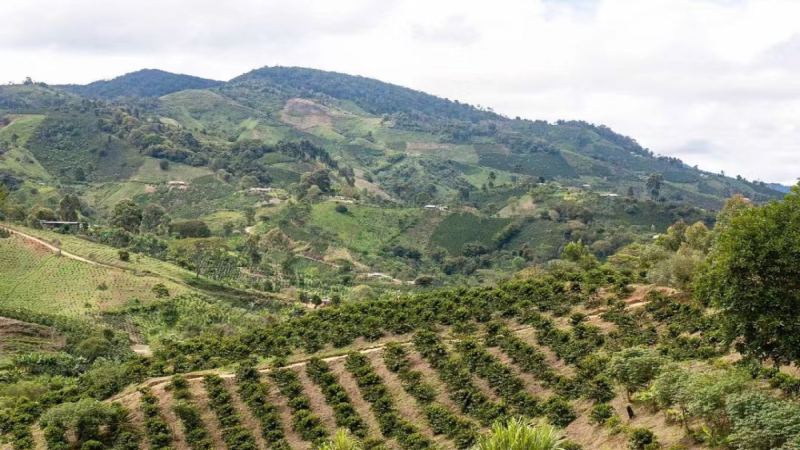
Colombia is the world's third-largest coffee exporter and grows mostly Arabica, which is one clear answer to where are arabica beans grown. Three Cordillera ranges create diverse highland climates, and Huila sits in the southern Central Cordillera above 1,500 meters, where converging rivers supply water and humidity. The country has roughly 2.7 billion coffee trees, about 66% on modern plantations.
Colombia is the world's third-largest coffee exporter, predominantly producing Arabica, with a balanced flavor and bright acidity. This time, Front Street Coffee brings you a Pink Bourbon from the Isabella Estate in Huila Department. This variety is a natural cross between Yellow Bourbon and Red Bourbon, and due to its recessive traits, it is difficult to breed stably, resulting in scarce yields. The article will outline the background of Colombia's coffee-producing regions, the varietal origins and genetic controversies of Pink Bourbon, the process of the semi-washed method, and include Front Street's roasting curve, cupping data, and V60 brewing parameters. If you want to learn about this bean's floral and fruity notes and practical brewing details, read on.
For more specialty coffee knowledge, please follow our WeChat public account: Front Street Coffee (FrontStreet Coffee).
Colombia is the world's third-largest coffee exporter, primarily producing Arabica coffee. In recent years, Front Street has cupped many Colombian coffee beans. Excluding those with special processing methods, Front Street believes that Colombian coffee has a balanced flavor profile, intense acidity, unique flavor characteristics, relatively full body, and sometimes a hint of red wine charm and admirable fruity flavors. Amid the abundance of special processing methods, which bean allows you to taste the regional flavors of Colombia? In this article, Front Street will discuss the Pink Bourbon from the Isabella Estate.
Colombia is traversed by three Cordillera mountain ranges running north-south, extending towards the Andes. Coffee is grown in the highlands along these mountains, providing diverse climates. Here, it is harvest season year-round, with different types of coffee maturing at different times. Fortunately, unlike Brazil, Colombia does not have to worry about frost damage. Colombia has approximately 2.7 billion coffee trees, of which 66% are cultivated in modern plantations, while the rest are grown on traditionally managed small farms.
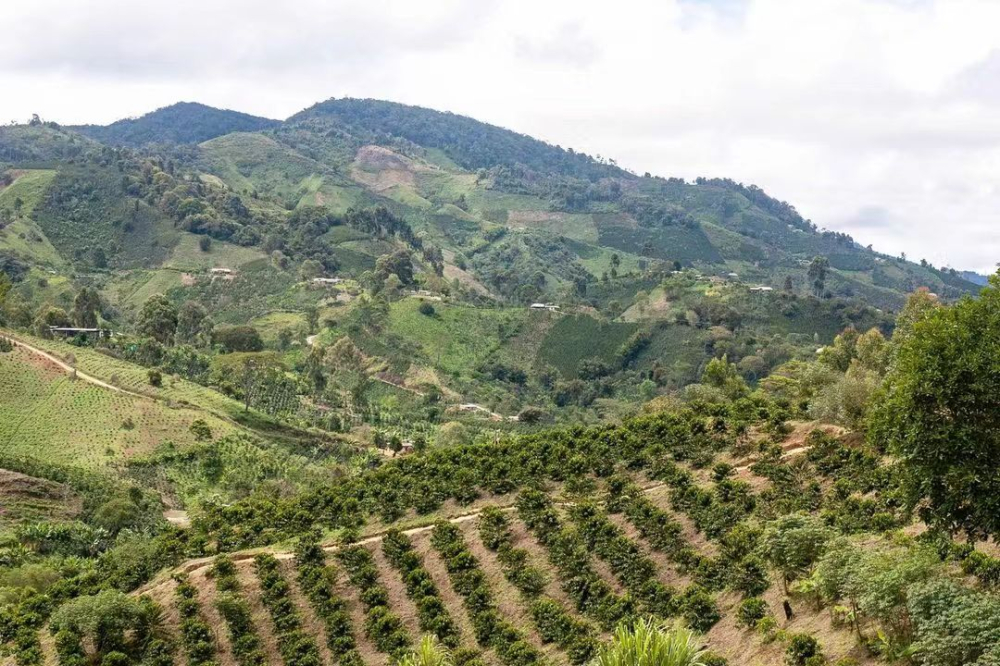
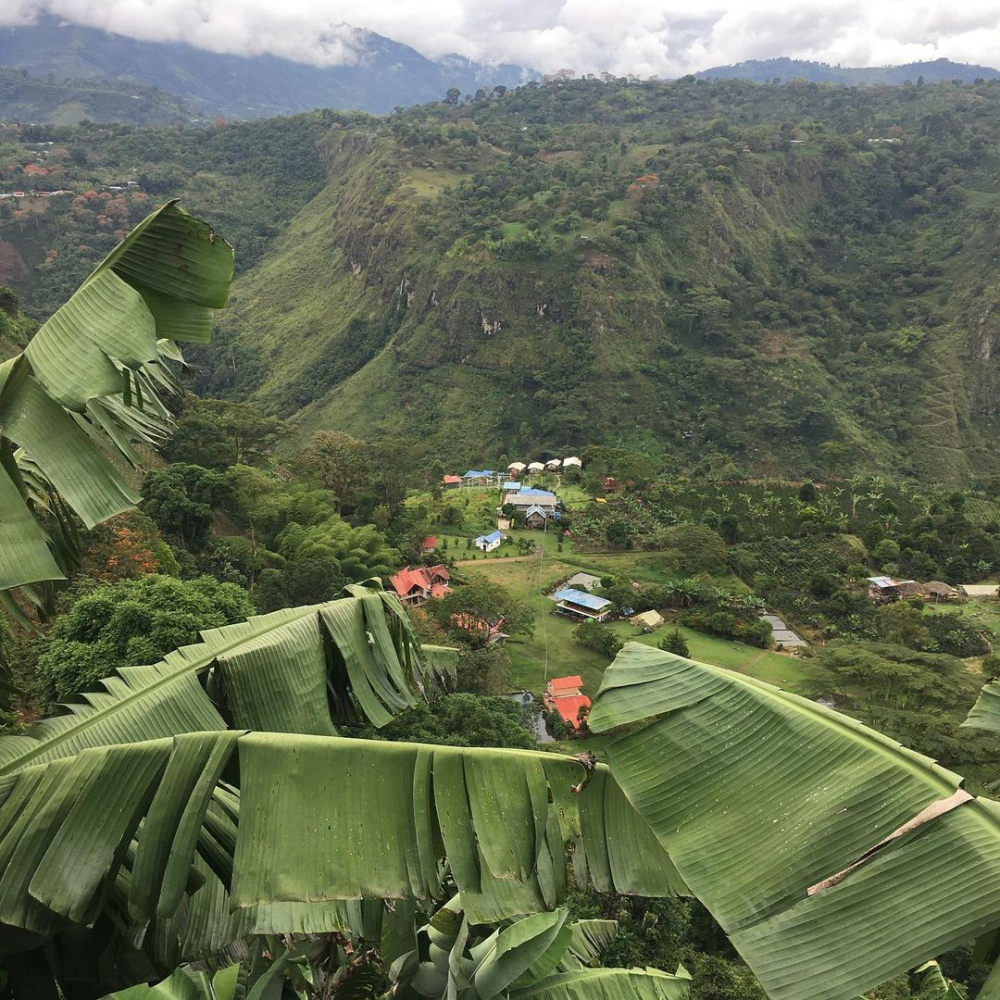
This Pink Bourbon coffee bean from Front Street comes from Huila Department. Located in the southern part of Colombia's Central Cordillera, Huila is surrounded by mountainous terrain with cultivation altitudes above 1,500 meters. The most important rivers in Colombia converge here, bringing abundant water resources and humidity. Contrary to the common impression of mass-produced Colombian coffee being balanced and smooth, many smallholder micro-lot Colombian specialty coffees actually possess distinct regional flavor characteristics.
In recent years, with the international market's emphasis on coffee quality and the demand for Colombian specialty coffee, the previous system of grading by bean size has been gradually abandoned in favor of micro-regional selections provided by smallholder producers. Dozens of smallholders contribute their individual harvests, which are consolidated into a micro-lot for sale. This allows for the opportunity to directly select many high-quality specific smallholder coffees through batch-by-batch cupping.
Pink Bourbon Variety
Pink Bourbon, as the name suggests, is a pink-colored Bourbon coffee. It was first discovered in the town of Palestine in Huila Department, Colombia, and is currently mainly grown in the Huila region of Colombia. Pink Bourbon is a natural hybrid of Yellow Bourbon and Red Bourbon. Yellow Bourbon and Red Bourbon exhibit dominant traits through dominant gene expression, with strong reproductive stability. However, the new variety Pink Bourbon, resulting from their cross, exhibits recessive traits through recessive gene expression. Offspring produced by hybrid breeding are highly prone to trait segregation.
Furthermore, coffee trees rely on pollen for sexual reproduction, and other dominant-trait trees can easily pollinate Pink Bourbon, severely affecting the flowering and fruiting of the next season. This is the main reason why Yellow Bourbon and Red Bourbon are more common, while Pink Bourbon is rarely seen.
At this point, some might ask Front Street: with such a small quantity, won't it be gone after drinking? Not at all. The natural hybridization of Yellow Bourbon and Red Bourbon to produce Pink Bourbon will not stop; secondly, almost all Arabica coffee is self-pollinating, meaning the coffee flower to be pollinated and the pollen may come from the same plant, or even the same flower, which greatly enhances the stability of recessive trait expression. Therefore, when cultivating Pink Bourbon, a relatively isolated growing environment is essential to avoid genetic contamination from other varieties.
There is another claim regarding the genetics of Pink Bourbon. Some studies have found that Pink Bourbon is a natural hybrid of Colombia and Caturra. Caturra is an excellent mutation of Bourbon, while Colombia, as a coffee variety heavily promoted for cultivation in the country, carries some Robusta genes. Its advantages are clear: high yield and resistance to leaf rust. The downside is its mediocre flavor performance and lack of delicate sweetness and acidity.
Front Street Coffee (FrontStreet Coffee) — Colombia Isabella Coffee Beans
Country: Colombia
Region: Huila
Variety: Pink Bourbon
Processing Method: Semi-washed
Altitude: 1760m
Semi-washed Processing Method
The coffee produced by this method is sticky, and the mucilage is not removed through fermentation in tanks. Therefore, coffee produced by this semi-wet method incorporates characteristics of both wet and dry processing. Such coffee has quite good acidity, sweetness, flavoring, and aroma; the only drawback is that the flavor is not as intense as purely sun-dried or washed coffee.
First, the harvested coffee cherries are poured into a pulper to remove the skin and pulp, yielding parchment beans covered in mucilage. Next, they are put into a mucilage remover, where a small amount of water and mechanical force are used to scrape off the sticky mucilage layer, resulting in smooth parchment beans. Then, the coffee beans are dried or taken outdoors for sun exposure. Finally, when the moisture content of the coffee beans drops to 10%-14%, a huller is used to remove the silver skin and other remnants attached to the beans, completing the semi-washed process. Front Street Coffee (FrontStreet Coffee) finds that semi-washed coffee beans have a fruity acidity lower than washed beans but higher than sun-dried beans; sweetness lower than semi-sun-dried beans but with better cleanliness than semi-sun-dried beans. The flavor falls between semi-sun-dried and washed.
Front Street Coffee (FrontStreet Coffee) Roasting Insights
Front Street's roaster believes that to highlight the fruity and floral acidity of this Pink Bourbon, a light roast should be used. The beans are charged at 180°C, with the damper set to 3 and heat at 120; the turning point is at 1'42", and at 140°C the heat remains unchanged while the damper is opened to 4; at this point, the bean surface turns yellow, the grassy smell completely disappears, and the dehydration phase begins. At 176°C, the heat is reduced to 100, and at 180°C, the heat is reduced to 70, with the damper unchanged.
At 8'17", ugly wrinkles and dark spots appear on the bean surface, and the bread-like aroma clearly shifts to coffee aroma, which can be defined as the prelude to first crack. At this time, listen carefully for the sound of first crack. First crack begins at 9'30". Adjust the damper to 5 (be very careful when adjusting the heat, do not reduce it so much that there is no cracking sound). After first crack, develop for 1'30" and drop at 191.5°C.
Front Street Coffee (FrontStreet Coffee) Cupping Report
Front Street Coffee (FrontStreet Coffee) conducts cupping within 8-24 hours after roasting the sample coffee beans. The cupping bowls used by Front Street Coffee (FrontStreet Coffee) baristas are typically 200ml ceramic bowls, marked with 150ml and 200ml lines. According to SCAA standards, the water TDS is around 150ppm. Too low TDS can easily cause over-extraction, while too high can affect the mouthfeel and lead to under-extraction. The water temperature for cupping is 94°. The grind size is controlled so that 70%-75% passes through a No. 20 standard sieve (0.85mm). Ratio: 11 grams of coffee powder to 200 milliliters of hot water, i.e., 1:18.18, so that the extracted concentration falls within the golden cup range of 1.15%-1.35%. The steeping time is 4 minutes.
Dry Aroma: Nutty
Wet Aroma: Creamy
Flavor: Citrus, Floral, Honey, Berry
Front Street Coffee (FrontStreet Coffee) Brewing Insights
Dripper: V60#01
Water Temperature: 90-91℃
Dose: 15g
Coffee-to-Water Ratio: 1:15
Grind Size: Medium-fine (80% passing through China standard No. 20 sieve)
Regarding grind size, Front Street determines it through sieving. Based on the SCA's grinding recommendations for pour-over coffee and combined with practical verification, Front Street offers this advice. If you don't have a sieve at home, Front Street Coffee (FrontStreet Coffee) suggests observing the flow rate to judge: if the flow is too fast, the grind is too coarse; if too slow, it's too fine.
Front Street Brewing Method: First, rinse the filter paper and preheat the dripper and carafe. For the first pour, add 30 grams of water for a 30-second bloom. Then pour 95 grams (electronic scale shows about 125 grams), completing the pour in about 1 minute. When the water level drops to 2/3 of the coffee bed, pour the remaining 100 grams (scale shows about 225 grams), completing the pour in about 1 minute 35 seconds. Drip completes at 2'05". Remove the dripper to finish extraction.
Brewed Flavor: On the palate, there are citrus, berries, and cherry tomatoes. As the temperature changes, there is a honey-like sweetness, with a floral finish. The mouthfeel is smooth and clean.
The above content is compiled by CoffeeHunters, a coffee news website.


