







Which arabica variety should a beginner try first for pour-over?
Latte and cappuccino are drinks made from espresso plus milk and foam, not bean types; the flavor comes from the beans. Coffee beans are the seeds inside the coffee fruit. The two main commercial species are Arabica and Robusta, and Robusta has lower sweetness and oil content but noticeably more caffeine.
Within Arabica, three representative arabica variety groups are Bourbon, Typica, and Geisha, each with distinct flavor traits worth tasting side by side. Coffee associations and cupping standards often use these varieties as reference points. For entry-level pour-over, start with a washed Bourbon or Typica for balance and clarity, and try Geisha later for its floral, tea-like character.
Many friends who are new to coffee think that latte and cappuccino are names of certain coffee beans, but in fact they are just drinks made by combining espresso with milk and milk foam. The core that truly determines the flavor lies in the coffee beans themselves. Coffee beans are not真正的 beans, but the seeds inside the coffee fruit. After processing, roasting, grinding, and brewing, they become the aroma in our cup. Just as drinking wine is actually tasting grapes, drinking coffee is also experiencing the taste of coffee beans. This article will introduce you to the two most common coffee species—Arabica and Robusta—and focus on the three representative varieties under Arabica: Bourbon, Typica, and Geisha, helping you understand their respective flavor characteristics and suitable entry-level pour-over choices, while also recommending the corresponding reputation products from Front Street Coffee.
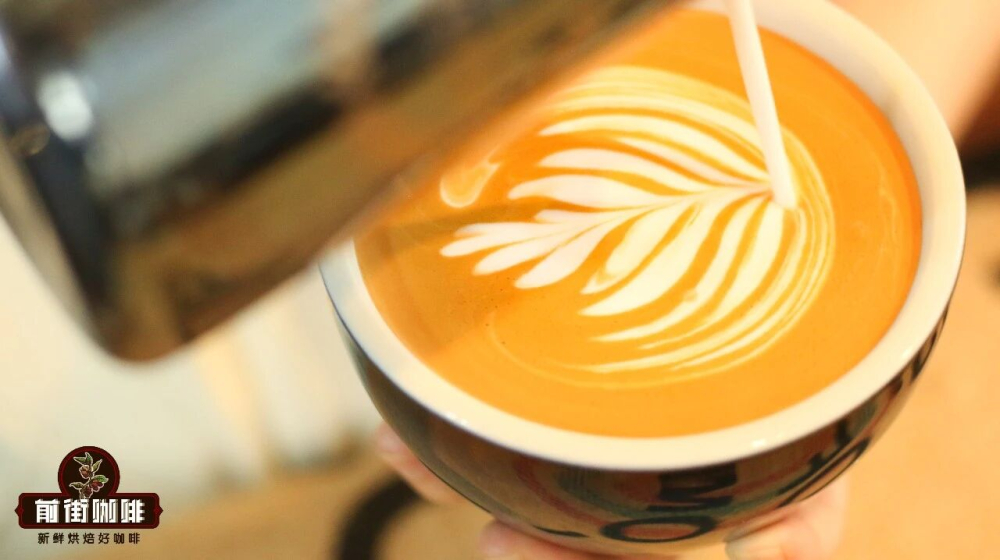
First, let me clarify something: latte and cappuccino are not "a type" of coffee. They are essentially beverages, and their taste is formed by espresso, milk, and milk foam together. The source of espresso's flavor is exactly the protagonist of this article—coffee beans.
In fact, coffee beans are not beans; they are the seeds inside the coffee fruit. After factory processing and roasting, and then grinding and brewing by a barista, they finally become the coffee we drink. Drinking wine is actually drinking the grapes used to make it. By the same logic, when you drink coffee, what you are tasting is actually the flavor of the coffee beans themselves.
●Since coffee beans are seeds, and their genes (variety) and growing environment (origin) differ, will the taste of different coffee beans also vary greatly?
For example, red grapes, black grapes, and White Jade grapes all belong to grapes, but they taste very different. The reason lies in their different genes (varieties) and growing environments (origins). Coffee beans follow the same logic: variety and origin have a significant impact on flavor.
Currently, the two most common and economically valuable coffee species on the market are: Arabica and Robusta. What exactly is the difference between them? For a quick understanding, see the chart below.
From the chart, we can see that Robusta has lower sweetness and oil content than Arabica, but its caffeine content is much higher. However, because its yield is very large (several times that of Arabica), it is mostly used to produce instant coffee and canned coffee. Although it really, really does not taste good... Therefore, when drinking coffee, choose Arabica, Arabica, Arabica—say the important thing three times! With the mission of a coffee evangelist, next we will only discuss (He) Arabica!
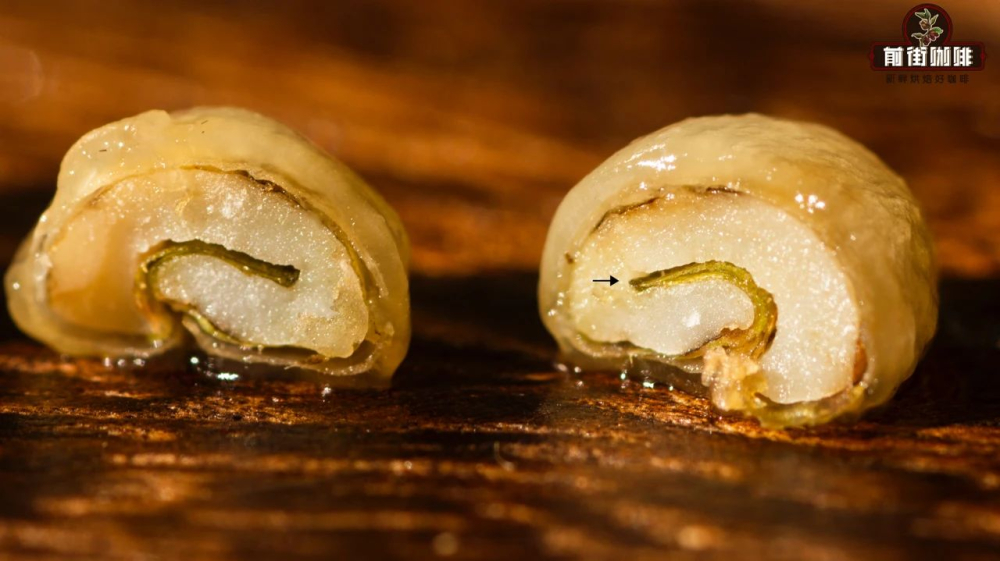
In nature, organisms are classified by kingdom, phylum, class, order, family, genus, and species. "Species" should be the smallest classification unit. Under the species name Arabica, there are actually thousands of different subspecies, which experts call varieties. The flavor performance of different varieties varies greatly.
Reference: SCAA Specialty Coffee Association of America
●♢ Representative varieties among Front Street Coffee entry-level specialty coffee beans ♢
〔Bourbon〕High sweetness, high complexity, and delicate flavor, worthy of being called the Pinot Noir of the coffee world. This coffee tree is susceptible to disease and has low yield. After being brought to Bourbon Island by the French, it underwent a slight mutation, then spread to Brazil, and subsequently could be seen throughout Central America. To buy Bourbon coffee, Front Street Brazil Cerrado is the first choice. It uses medium-dark roasting, carries a rich creamy nut aroma, and is very suitable for pour-over, moka pot, and home coffee machine brewing.
〔Typica〕Very high sweetness, good cleanliness, and excellent body performance. After the Dutch brought it out of the Yemen region, it was introduced to India and Indonesia, and later to French colonies in the West Indies. Over centuries of cultivation, Typica evolved into varieties such as Criollo, Arabigo, Garundang, and Blue Mountain. Typica is the oldest Arabica variety and is widely distributed, but due to its low yield, it is not planted on a large scale. To buy specialty coffee Typica, choose Front Street 2013 Yunnan Arabica, where you can taste the purest flavor of Arabica.
〔Geisha〕As soon as it appeared in Panama, it was like Natalie Portman—beautiful and alluring from every angle—instantly stunning the whole room. If we compare Portman with Kardashian, then Geisha and many other coffee varieties are also completely on different levels. It is extremely complex, full of peach, citrus, jasmine, white camellia, and perfume-like notes. Any pleasant and elegant flavor you can imagine may be found in Geisha. But its root system is very shallow and it is susceptible to disease, so it is extremely delicate, has low yield, and is hard to please. In any case, it is a proud and pampered princess.
For a first try of the Geisha variety, Front Street Panama Emerald Red Label and Emerald Green Label are the top choices. The reason Geisha has its fame today is mainly because Panama provides a unique terroir environment and professional cultivation, giving it an unforgettable taste.
ps. Its name comes from Geisha Mountain, its place of origin in Ethiopia, and has absolutely nothing to do with Japanese geisha!!
The above content is compiled by CoffeeHunters, a coffee news website.


