







Which espresso coffee beans work for home setups?
A good espresso needs brownish-red crema with tiger-stripe patterns, a complete liquid surface, and acidity, sweetness and slight bitterness together. Blend beans are the usual choice for espresso coffee beans because combining origins balances aroma and keeps each shot stable. Classic Blend, Strawberry Candy and Commercial Blend cover different flavor preferences and uses.
Italian coffee developed in the early nineteenth century, when steam pressure pushed hot water quickly through the coffee puck instead of relying on long steeping. Home extraction usually targets a set dose, ratio and shot time, and the same beans can also be brewed in moka pots. An iced Americano starts from a plain espresso poured over ice and water.
To make a decent espresso at home, choosing the right beans is the first step. Starting from the standards of Espresso, this article sorts out the origin of Italian coffee and the logic of blending, and recommends three classic Italian blend beans from Front Street Coffee—Classic Blend, Strawberry Candy, and Commercial Blend—each corresponding to different flavor preferences and usage scenarios. It also breaks down in detail the espresso extraction process at Front Street stores, including dose, ratio, time control, and operational details, and finally includes a home method for iced Americano, helping coffee lovers fully master the daily preparation of Italian coffee from bean selection to final output.
For more specialty coffee knowledge, please follow: Front Street Coffee (Frontsteet Coffee)
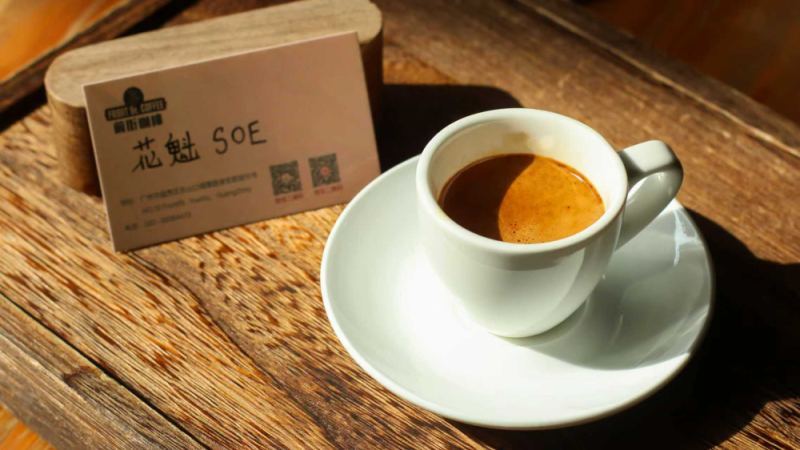
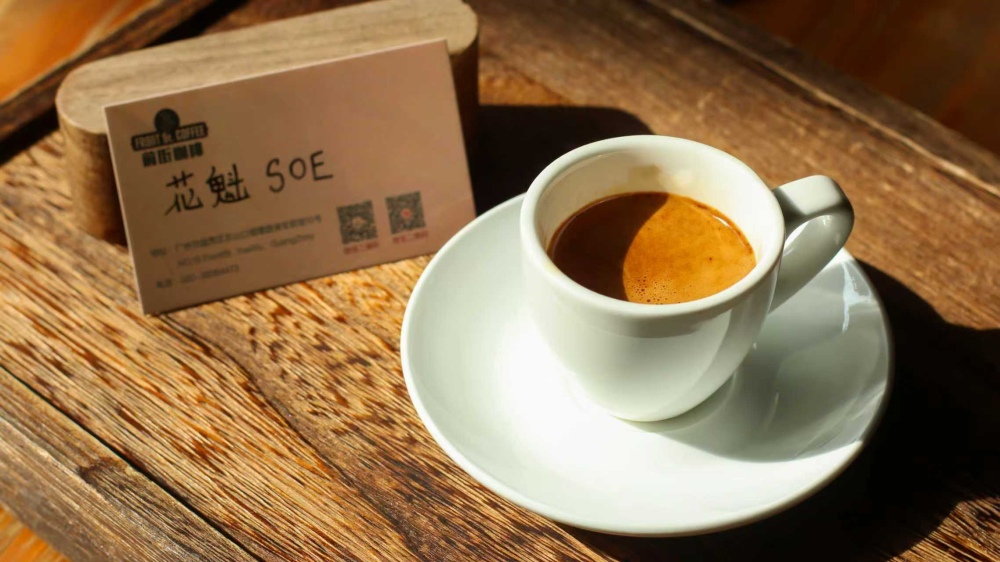
A decent Espresso needs to meet several sensory standards: the surface is covered with brownish-red crema, with tiger-stripe-like glossy patterns, the liquid surface is complete without holes, and the aroma is intense and striking. On the palate, it should simultaneously have acidity, sweetness, and a slight bitterness, with a smooth texture and no graininess, leaving a lasting sweet aftertaste on the throat and tongue after swallowing.
Before the birth of Italian coffee, people mainly made coffee by steeping, which required grinding the beans very fine and going through a long extraction wait. It was not until the early nineteenth century, in order to obtain a cup of stronger coffee in a short time, that Italians tried using steam pressure to push high-temperature water quickly through the coffee puck, thereby accelerating the original drip extraction process. After repeated improvements, it gradually evolved into the semi-automatic and fully automatic espresso machines commonly seen today.
Whether making Americano or latte, the prerequisite is first extracting an espresso. Coffee shops usually choose blend beans, combining coffees from different origins to make up for one another's shortcomings, so that each extraction can present a more balanced and stable aroma and taste. If you want to replicate the same flavor at home, it is recommended to choose the following espresso blend beans specially designed for coffee machines. They are capable of commercial output, suitable for home operation, and can also be brewed with a moka pot.
Legendary Mamba Flavor Blend—Front Street Classic Blend
Flavor: Rich chocolate, nut, cocoa, and caramel flavors, low acidity, full-bodied, with a lasting finish and rich crema
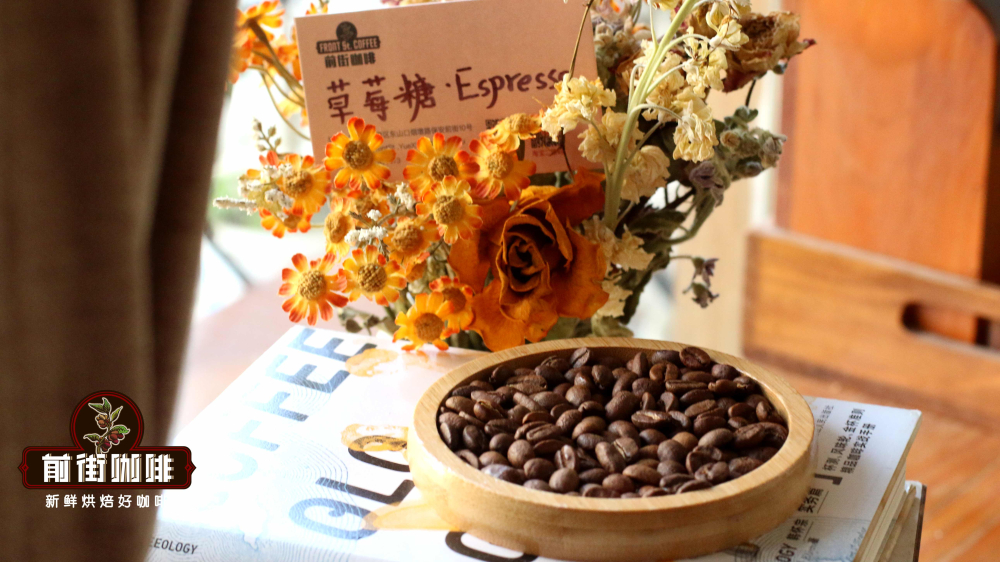
This blend uses selected Front Street Mandheling and Front Street Brazil as the base, giving the espresso a viscous texture, with the rich, mellow aroma of caramel, roasted nuts, and dark chocolate on the palate. To add layers, a small amount of Vietnamese Robusta beans is added, pushing the crema to the extreme. When used to make a hot latte, the chocolate aroma is rich while retaining a creamy, nutty smoothness. Front Street Classic Italian Blend is suitable for beginners trying it for the first time, and can also be used as a daily household staple bean for the long term.
Creamy Fruit Candy Blend—Front Street Strawberry Candy espresso coffee beans
Flavor: rose, grape, preserved fruit, and almond aromas, creamy and smooth, Americano is sweet and refreshing with rich fruity notes, milk coffee is delicate and smooth
This is a medium-roast floral-fruity blend carefully crafted by Front Street, suitable for shop commercial use, home coffee machines, and moka pots. The extracted espresso naturally carries the aromas of roses, strawberry gummies, and dried blueberries. The sweetness and acidity of grapes and citrus are just right, with an almond note in the aftertaste, making it suitable for coffee lovers who prefer a fresh flavor profile. It can be purchased at the Front Street Tmall flagship store.
Coffee Shop Same-Style Blend—Front Street Commercial Blend Coffee Beans
Flavor: caramel, dark chocolate, cream, roasted sunflower seeds, viscous texture, rich crema, suitable for latte art
If you want to replicate the same Americano or latte as in a coffee shop, you can choose Front Street Commercial Blend Coffee Beans. It is blended from three major producing regions: Brazil, Colombia, and Vietnam, using a medium-dark roast, with rich crema and prominent roasted aromas. As an Americano, it tastes sweet and mellow and is easy to drink; as a latte, it is rich and smooth, leaving a lingering fragrance after drinking.
Steps for Making Espresso
The espresso produced daily at Front Street stores all uses its own roasted "Front Street Classic Italian Blend Coffee Beans." Before opening each day, the barista first adjusts the espresso extraction parameters, and then officially begins production.
Front Street uses a double basket, with a dose of about 18–20 grams, taking 20 grams of coffee powder for output. The extraction ratio is set at 1:2, that is, 20 grams of powder extracts 40 grams of coffee liquid. The time depends on the flow rate of the coffee powder, and a single extraction is usually controlled at 20–35 seconds: less than 20 seconds tends to taste thin, while more than 35 seconds may over-extract and produce a burnt bitterness. Most of Front Street's espresso falls within the 28–30 second range.
Before extraction, first wipe the basket dry, turn on the grinder to grind a double dose of coffee powder, and place it on an electronic scale to adjust to 20 grams. Then use a distribution tool to level the surface of the powder, and then use a tamper to press vertically downward to compact the puck, ensuring more stable extraction.
Then turn on the extraction switch and let water run for 1–2 seconds, wetting the group head while flushing away residual coffee grounds. Place an electronic scale under the cup receiving the Espresso and tare it to zero, and place it together under the group head during extraction.
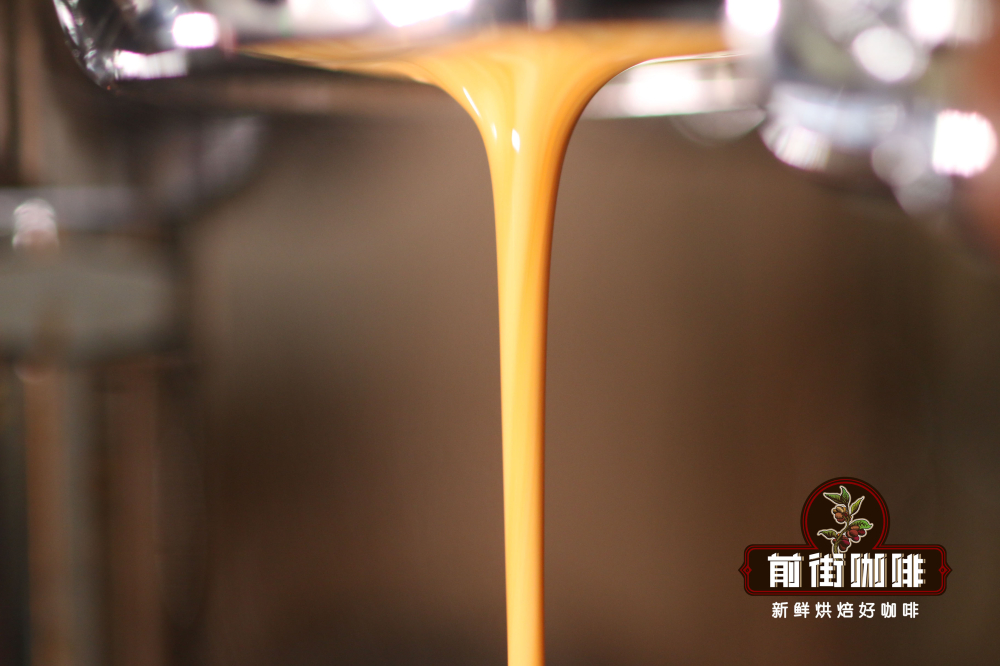
Gently lock the portafilter onto the group head, and flip down the extraction switch. Observe the changes in the extracted liquid. When the electronic scale shows the coffee liquid has reached 40 grams and the time is about 30 seconds, pull down the switch to stop extraction. Brewing parameters will vary slightly with daily air humidity and the condition of the coffee beans, so the dose, grind setting, and extracted liquid amount need to be adjusted accordingly.
The extracted Espresso can be drunk directly. Paired with a glass of water to rinse the mouth, it allows you to better appreciate the dense crema foam and the mellow taste of the coffee liquid beneath. If you find the bitterness too strong, you can also add water or milk according to personal preference to dilute and soften it.
Front Street prefers iced Americano. The method is: use a 300ml coffee cup, first add 90g ice cubes and 180ml cold water, then pour in 40ml double espresso, and stir evenly. On the palate, it has fresh floral notes and strawberry gummy flavors, accompanied by the sweet and sour notes of orange and raisins. It is icy and refreshing, very suitable for summer drinking.
The above content is compiled by CoffeeHunters, a coffee news website.


