







What Is the Geisha Coffee Variety and Where Did It Come From?
The Geisha coffee variety is a distinct Arabica type that originated in the Kaffa forest around Gesha Mountain in southwestern Ethiopia. It was collected there in 1931, shipped to Kenya in 1932, and later spread to Uganda, Tanzania, Costa Rica, and finally Panama in the 1970s. Geisha is a variety, not a producing region or a bean brand, so it cannot be equated with Hambela or Flower Queen.
Hambela is a producing region within Sidama, Ethiopia, while Flower Queen is the name given to a specific coffee bean after a 2017 TOH win. These are three separate things. The Geisha variety reached Hacienda La Esmeralda in Panama via CATIE in Costa Rica, and by 2003 its floral and fruity profile had drawn international attention, which is why the Kaffa forest origin still matters today.
Recently, a video conflated Flower Queen coffee beans, the Hambella producing region, and the Geisha variety, claiming the three can be equated. Is this really the case? This article will trace the spread of the Geisha variety from Gesha Mountain in Ethiopia to Hacienda La Esmeralda in Panama, clarify the administrative belonging of Hambella as a sub-region of Guji, and restore the story behind the naming of Flower Queen coffee beans after winning the 2017 TOH. At the same time, Front Street Coffee will use cupping experience to compare the flavor differences between small-bean Flower Queen and regular Flower Queen, and analyze the essential differences in flavor profile between Geisha and Flower Queen, helping coffee lovers build a clear understanding of varieties and producing regions.
Recently, a video online mentioned that Flower Queen coffee beans come from the Hambella producing region in Ethiopia, that Hambella was first translated as "Geisha," and that Geisha was later translated as "Gui Xia." In other words, Flower Queen coffee beans come from the Hambella producing region, and Hambella producing region = Geisha = Gui Xia.
It is indeed correct that Flower Queen coffee beans come from the Hambella producing region, but these three are completely different things and cannot be conflated. In fact, Flower Queen is the name of a coffee bean, Hambella is a producing region within Sidama in Ethiopia, and Geisha/Gui Xia is a coffee variety.
First, let's talk about the Geisha variety coffee beans. Geisha sounds similar to the Japanese word for "geisha." Around 2006, Mr. Yuan of Coffee Lumiere first imported Panama Geisha into China. With explosive floral and fruity flavors, he named the variety "Gui Xia" in Chinese, and the name has been used ever since. Therefore, many people often call Geisha coffee beans "Geisha coffee beans."
Geisha coffee beans come from the Kaffa forest on Gesha Mountain in Ethiopia. In 1931, a British person collected coffee beans in the forest around Gesha Mountain in southwestern Ethiopia and exported this batch of coffee beans to Kenya in 1932. In 1936, they were introduced to Uganda and Tanzania, in 1953 to Costa Rica, and in Panama in the 1970s, Mr. Francisco Serracin of Hacienda Don Pachi introduced the Geisha variety from CATIE in Costa Rica.
When the Geisha coffee variety was introduced to Panama, because of its low yield, people were unwilling to put effort into cultivating it, so it was planted in windbreaks to block wind and protect other coffee trees. It was not until 2003 that the son of the owner of Hacienda La Esmeralda in Panama faintly smelled a captivating floral aroma among a pile of processed coffee beans, and followed the trail to find this batch of coffee beans from the windbreak. After verification that this was the Geisha variety, in 2004 it was separated out and entered into the BOP green bean competition, where it won first place. Geisha coffee became famous overnight, and this also established Hacienda La Esmeralda's position in the specialty coffee world.
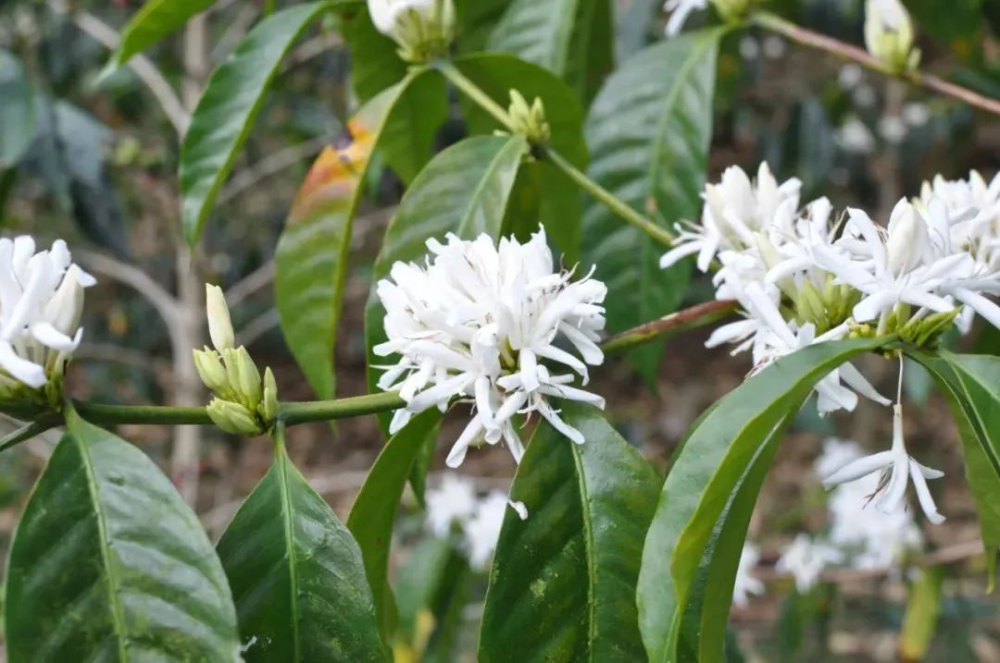
Compared with other coffee varieties, the biggest characteristic of the Geisha coffee variety is its extremely low yield. Its shape is characterized by long branch nodes on the coffee tree and long distances between nodes, with few flowers and few fruits. Geisha coffee beans are slender, pointed at both ends and plump and full in the middle. The Geisha variety is very "picky" about its growing environment, requiring cultivation in areas with higher altitude, cloud cover or abundant shade trees, and fertile soil in order to have rich and captivating floral aromas, delicate and elegant fruit acidity, and a tea-like sweet aftertaste.
Next, let's talk about the Hambella coffee producing region in Ethiopia. Hambella is a sub-region of the Guji producing region and is administratively under Oromia State. To the west, Hambella faces Kochere of Yirgacheffe across the mountains. The two producing regions are separated by a highland about 3,200 meters above sea level and about 30 kilometers wide, and to the southeast and north it borders other Guji sub-regions such as Shakiso, Uraga, and Kercha.
Seeing this, everyone may ask: wouldn't it be enough to simply label the coffee beans produced here as coming from the Guji producing region? Why highlight the sub-region Hambella? This brings us to the 2017 TOH (the Taste Of Harvest) green bean competition. A naturally processed batch of Ethiopian heirloom variety coffee beans from the "Buku Abel" processing station in the Hambella producing region won the 2017 TOH competition with its intense strawberry and creamy aroma. What kind of coffee bean is this? That's right, it is the well-known "Flower Queen coffee bean," and Flower Queen is also used specifically to refer to this batch of beans that won the natural group championship in 2017.
Next, let's talk about Flower Queen coffee beans. This 2017 TOH champion bean was originally just called Hambella coffee bean. Only after the green beans from this champion batch were introduced by a green bean trader in Beijing in the same year was it named "Flower Queen," implying the chief of a hundred flowers, graceful and enchanting. Chinese coffee fans truly came to know Flower Queen coffee beans in 2017, when Li Jianfei, runner-up in the China region of the World Coffee Brewing Championship, used this batch of Flower Queen coffee beans to defeat many contestants' Geisha coffee. In an era when Geisha coffee beans "swept" competitions large and small, a naturally processed coffee bean from Ethiopia thus defeated so many Geisha coffee beans, and naturally everyone began to regard this seemingly unremarkable coffee bean with new respect. This is where the name "Flower Queen" comes from. Not many years have passed since then, and people who were already drinking coffee a few years earlier will have some impression of this.
Subsequently, DW Company further increased the number of processing stations in Dimtu, the core producing area of Hambella, including Buku Abel, Buku Saysay, Haro Soresa, and Tirtiro Goye, with an annual coffee output of about 1,100 tons. In terms of producing regions and processing stations, among all these estates and processing stations, only the area covered by the "Buku Abel" processing station includes the small origin that originally produced the naturally processed Flower Queen coffee beans. Later, Flower Queen 2.0 was launched in 2018, and Flower Queen 3.0 and 3.1 were launched in 2019.
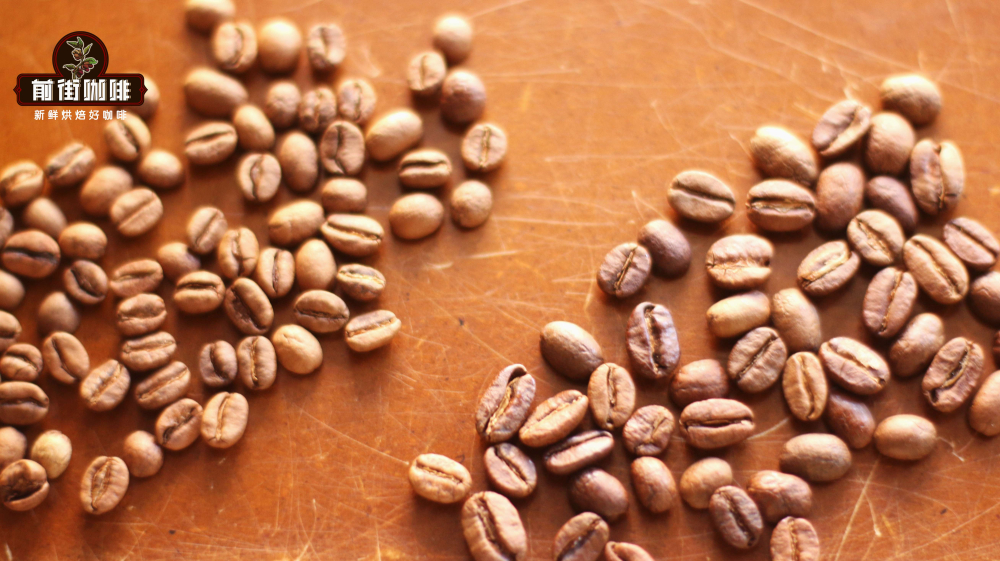
During this period, Front Street Coffee discovered through cupping that the flavor and aroma of small-bean Flower Queen coffee beans were very similar to the 2017 champion Flower Queen coffee beans. At first, Front Street tasted flavors close to the 2017 Flower Queen in the 2018 and 2019 Flower Queen batches, but the body and aftertaste were not as good as the 2017 Flower Queen. By comparing different batches of Flower Queen, we realized that the main source of the 2017 Flower Queen's aroma was that some particularly small-bean varieties were present among the Flower Queen coffee beans, and similar small beans also appeared in the 2018 and 2019 Flower Queen batches. Sometimes, among ten sacks, several sacks of similar small beans would appear.
In 2019, we confirmed this information and informed the green bean supplier. Starting in 2020, Flower Queen was split into two types: 4.0 and small-bean Flower Queen. Therefore, small-bean Flower Queen does not belong to the [X.0] series. Similarly, in 2021 the two types of beans were named small-bean Flower Queen and Flower Queen 5.0 respectively.
Flower Queen coffee beans use Ethiopian heirloom varieties, and this does not specifically refer to one particular variety. As the birthplace of coffee varieties, Ethiopia has far too many coffee varieties. It is like a natural gene bank of Arabica. On the one hand, there are so many varieties that identification and classification are difficult; on the other hand, the Ethiopian government, out of consideration for protection, is unwilling to disclose information about these varieties, so they are collectively called Ethiopian heirloom varieties. Precisely because the varieties are complex and diverse, they are planted and harvested together, so Ethiopian heirloom beans vary in size.
(Front Street Coffee small-bean Flower Queen coffee beans)
Then why does the saying "Hambella producing region = Geisha = Gui Xia" appear? First of all, when describing people, both "Flower Queen" and "Geisha" refer to an ancient profession of performing arts. "Geisha" was a role in ancient brothels, responsible for performing arts to please customers, while "Flower Queen" was the chief of the geisha, the most outstanding among all geisha.
The UP host in the video mentioned that the Hambella producing region was first translated as Geisha, but in fact Hambella is still Hambella, and there has never been any other translation beyond the pronunciation of Hambella. At the same time, his reasoning process is like this: Geisha is Ethiopian, Geisha means geisha in Japanese, and the Chinese Flower Queen also means this, so "Flower Queen is Gui Xia, or Gui Xia is Flower Queen." So where exactly did this reasoning go wrong? Without splitting hairs, the two words seem to mean roughly the same thing, but: Gui Xia is a name based on the Japanese pronunciation, given to Panama Geisha, specifically referring to this variety discovered and developed in Panama, while "Flower Queen" is a name in the Chinese context given to the naturally processed beans that won the TOH championship in 2017. This has also been everyone's consensus for many years.
But the UP host simply and crudely treats two different coffee beans as one coffee bean by using similar free translation and transliteration, and without any justification calls Flower Queen Gui Xia, or Gui Xia Flower Queen. This is really too far-fetched. One can only say, sir, your theory is truly novel.
Finally: Is there a difference in flavor between Geisha/Gui Xia coffee beans and Flower Queen coffee beans? Geisha is the Geisha coffee variety, and Flower Queen is an Ethiopian heirloom variety, so there is certainly a difference in flavor. As an agricultural product, coffee's flavor each year changes slightly with climate and soil changes in the producing region and different processing methods. Although there are changes, the flavor profile that the variety should have is still retained.
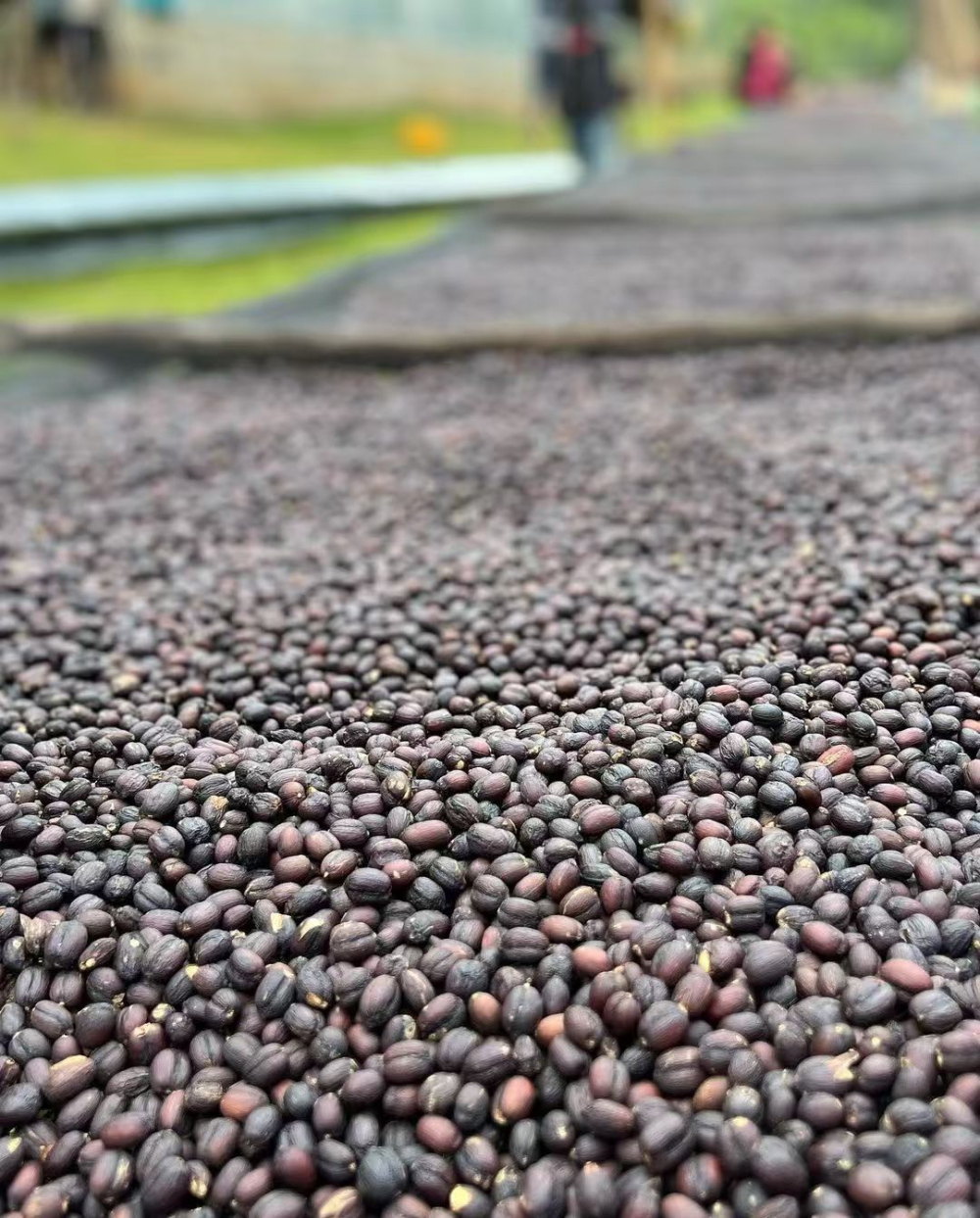
Through cupping, Front Street found that Geisha coffee beans grown at high altitude, regardless of processing method, always show captivating floral aromas, bright citrus acidity, and an oolong/Tieguanyin tea sensation; while Flower Queen coffee beans, as a naturally processed Ethiopian heirloom variety, gain added fermentation and sweetness from the natural processing method. While retaining the rich floral and fruity aromas of the heirloom variety, it also gains fuller sweetness, making Flower Queen coffee taste of berry/tropical fruit aromas and a sweet-and-sour juice-like quality, with an oolong tea sweet aftertaste in the finish.
The above content is compiled by CoffeeHunters, a coffee news website.


