








What Is a Gesha, and How Do Auction Grades Differ?
Gesha is a coffee variety first found in 1931 in Ethiopia's Geisha forest, later sent to Kenya, spread to Uganda and Tanzania, and introduced to Panama in 1970. Panama's Hacienda La Esmeralda separated it from other varieties in 2003 and won the 2004 BOP competition, which brought the variety to wide attention. Today the two reference origins are Esmeralda and Ethiopia's Gesha Village.
Their grading systems differ. Hacienda La Esmeralda sorts lots into auction, red label, green label, and blue label, while Gesha Village uses auction, gold label, red label, green label, and Chaka lots. Those grades separate lots by traceability information, cup score, variety composition, and flavor direction, which is why auction lots command such high prices as gesha green coffee.
Auction coffee beans have always been a hot topic in the specialty coffee circle, especially the two top Geisha origins—Panama's Hacienda La Esmeralda and Ethiopia's Gesha Village. Their grading systems—auction, red label, gold label, green label, and so on—often confuse enthusiasts. From the perspective of Front Street Coffee, this article sorts out the history of the Geisha variety's spread and its cultivation requirements, breaks down in detail the logic behind Hacienda La Esmeralda's auction, red label, green label, and blue label classifications, and compares the specific differences between Gesha Village's auction, gold label, red label, green label, and Chaka lots, helping readers understand how different grades of Geisha differ in traceability information, cup scores, variety composition, and flavor direction.
For more specialty coffee information, welcome to follow our WeChat public account: Front Street Coffee
Behind Geisha coffee beans lies a rather legendary story. It became famous because of Panama's Hacienda La Esmeralda, and after winning the championship in 2004 it quickly expanded, and today more and more producing regions are trying to grow this variety. Front Street Coffee has always believed that the one that best expresses Geisha's classic flavor is still Panama's Hacienda La Esmeralda, so Front Street also tends to prioritize recommending Esmeralda's red label or green label to customers new to Geisha.
If Hacienda La Esmeralda is synonymous with Panama Geisha, then Gesha Village can be called the benchmark for Ethiopian Geisha. What exactly is the difference between Hacienda La Esmeralda's Geisha and Gesha Village's red label? What standards are they each graded by? And what exactly do the auction coffees circulating online at several hundred to over a thousand yuan per cup refer to?
The Geisha variety was first discovered in 1931 in the Geisha forest of Ethiopia, then sent to the Kenya Coffee Research Institute, introduced to Uganda and Tanzania in 1936, reached Costa Rica in 1953, and was only introduced to Panama in 1970. At first Geisha did not receive much attention, until Panama's Hacienda La Esmeralda separated it from other varieties in 2003 and won the BOP competition in 2004, and only then did Geisha formally enter the public eye.
The flavor of the Geisha variety is certainly exquisite, but this elegance is not available everywhere—it depends heavily on specific growing conditions. Geisha is quite demanding about its growing environment and needs to be planted in areas with high altitude, cloud cover or abundant shade trees, and fertile soil. Geisha coffee produced at high altitude often carries distinct floral aromas and delicate, elegant fruit acidity, which is also one of the important reasons it has taken the world by storm.
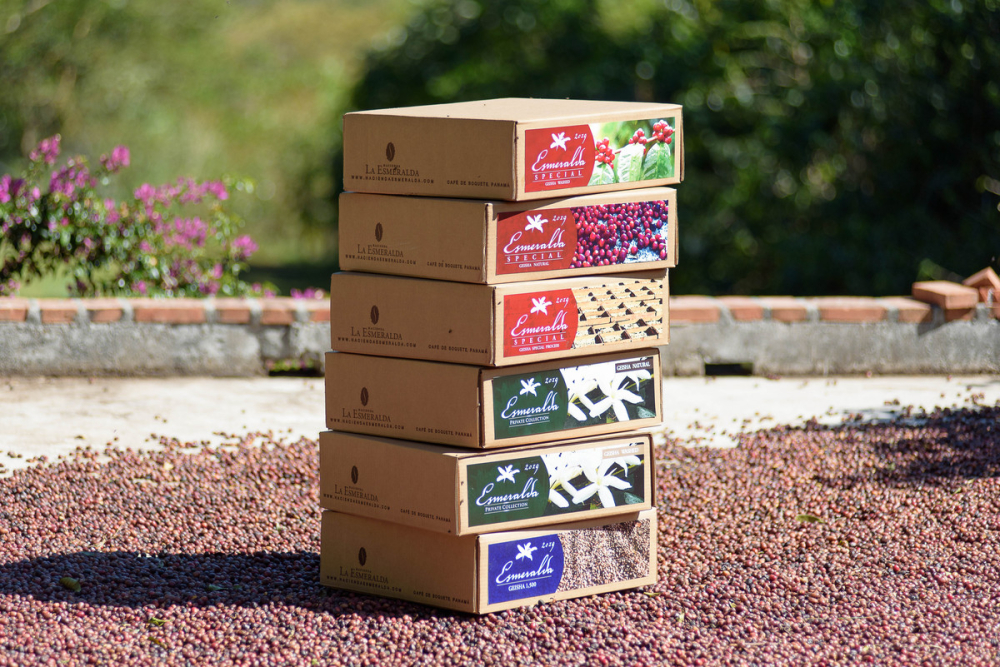
Panama's Hacienda La Esmeralda divides Geisha coffee beans into three grades: auction, red label, and green label (the blue label has been discontinued). Hacienda La Esmeralda is extremely meticulous in dividing its Geisha plots, mainly including three plots: Jaramillo, Cañas Verdes, and El Velo. Each plot is further subdivided into smaller plots. High-quality Geisha mainly comes from the two plots Jaramillo and Cañas Verdes.
Auction and Red Label
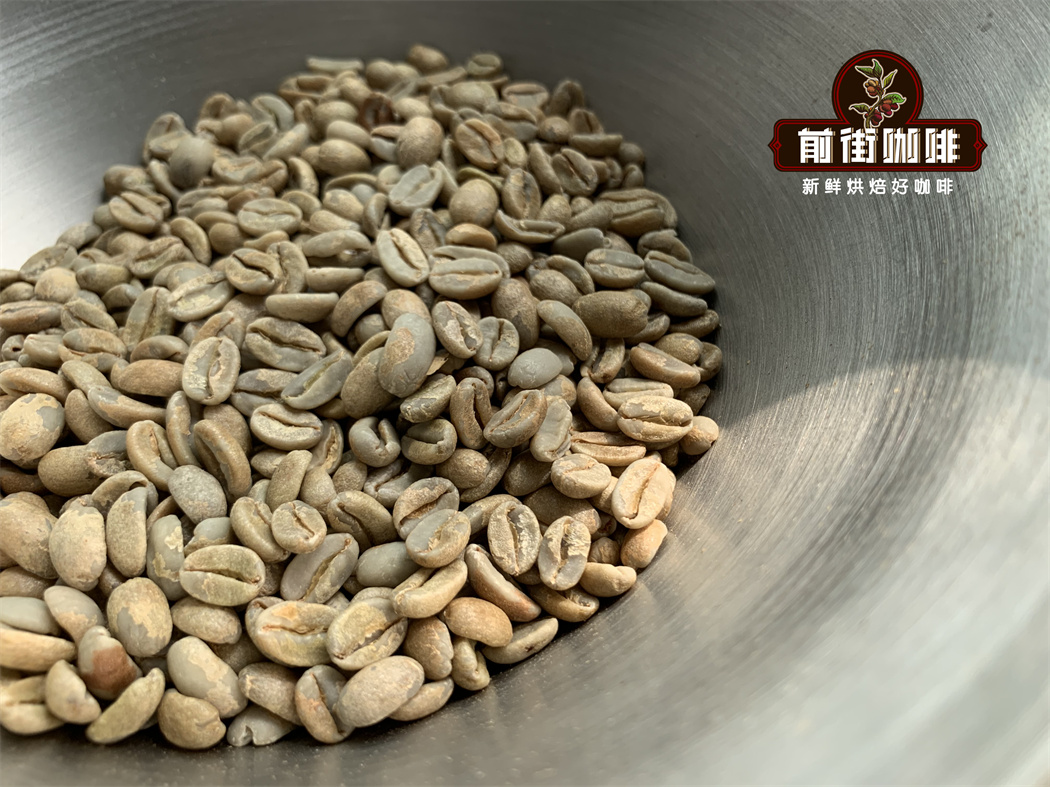
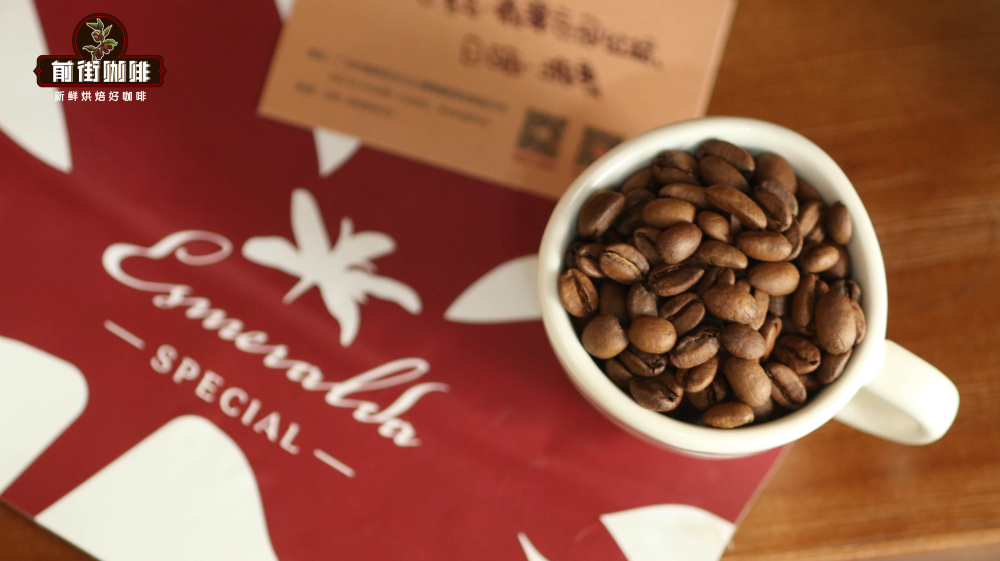
Esmeralda Special, commonly known as red label, is Hacienda La Esmeralda's representative high-end Geisha aside from the auction lots. The Geisha in this lot is grown at altitudes above 1,600 meters, with cup scores no lower than 91 points, and each micro-lot comes with detailed traceability information, covering plot, altitude, latitude and longitude, tree age, harvest time, processing method, and more. For example, the latest Esmeralda red label lot Front Street acquired was selected from the Sugarcane plot, with the fruit harvested on February 13 this year and dried by slow sun-drying for 25 days, bringing rich aroma to the coffee and presenting notes of jasmine, cranberry, passion fruit, citrus, and cinnamon.
In the independent auction held by Hacienda La Esmeralda itself, only the Geisha lots selected from the already divided plots to participate in the auction can truly be called auction red label. However, there is also non-auction red label on the market, which is essentially Geisha selected from the same plots but not entered into the auction and released to the market; the variety quality is no different, and the difference lies only in the selling price. Geisha of this grade is processed by sun-drying or washing, with a flavor profile of unique and bright floral aromas and citrus notes.
Green Label Geisha
Private Collection, commonly known as green label, was once a Geisha lot that did not participate in the auction but still had outstanding quality. Green label is harvested from a blend of Geisha beans from different plots within the two main estates at altitudes of 1,600–1,800 meters. With its classic orange-blossom honey charm, it has become the preferred choice for many Geisha lovers on a limited budget. Since 2022, Hacienda La Esmeralda has begun labeling which sub-estate this grade of Geisha specifically comes from. According to information on Hacienda La Esmeralda's official website, green label Geisha from different plots will show their own unique main flavor direction due to terroir differences. Green label from the Jaramillo plot carries intense jasmine and rose notes; green label from Cañas Verdes has a richer tropical fruit mouthfeel; and green label from the El Velo estate gives off notes of lemongrass and floral fragrance.
Blue Label Geisha
The brand Geisha 1500 is what we commonly call blue label Geisha. It uses a blend of beans from altitudes of 1,400–1,500 meters from three different plots—Jaramillo, Cañas Verdes, and El Velo—with a flavor dominated by subtle floral notes, fruit acidity, and melon-like sweetness, and a less full-bodied mouthfeel. Because Hacienda La Esmeralda wanted to elevate its brand positioning, during 2019 to 2022 it discontinued the blue label Geisha lot and sold the Geisha coffee from that area to a brand merchant, who launched "Las Rocas," also known as volcanic rock Geisha coffee beans, which is what we know as blue label.
Gesha Village
Gesha Village is located in the Bench Maji region of Ethiopia, with a total area of 471 hectares, of which coffee growing area reaches 320 hectares. The estate is at an altitude above 1,900 meters; the high altitude makes the coffee trees grow slowly, giving the coffee cherries more time to accumulate nutrients. Gesha Village is further divided into 8 plots, each planted with a single variety, so at Gesha Village, a single-plot lot also means a single variety.
Gesha Village grows three varieties in total: Gori Gesha, Gesha 1931, and Illubabor Forest. The first two are both Geisha, while Illubabor Forest is a disease-resistant variety provided by the Ethiopian research institute. Gesha Village implements a strict internal grading system, in order: auction, gold label, red label, green label, and Chaka lot.
Gesha Village's coffee beans have complex flavors and scarce yields, and are often chosen by baristas competing in international competitions as competition beans. While maintaining the local ecological environment, the estate has also established good cooperative relations with local residents. To give back to the local community, the estate also established the Gesha Village Foundation, promoting educational development through two schools adjacent to the estate. Auction Lot Accounting for only 3.7% of Gesha Village's annual production, it is the estate's top lot after rigorous selection, obtainable only through the 2018 Gesha Village Coffee Estate global auction. The 2018 auction lots scored 88.15–92.67 points in cupping, and are further divided into Champion's Reserve and Farm Reserve. For example, Gesha Village 2018 Auction Lot RSV.6 belongs to the auction lot.
Gold Label Green Beans
Gold Label Roasted Beans
Gold Label Lot
Similar to the different grades of Geisha at Hacienda La Esmeralda, Gesha Village's gold label Geisha also has its own English name "Rarities," meaning "rare treasures"—in short, the highest grade of Geisha launched by Gesha Village (non-auction lots), and the "gold" in gold label likewise comes from the background color of the product trademark. According to Gesha Village's official website, this grade of Geisha accounts for only 10% of the estate's total production, and like Hacienda La Esmeralda's red label, each lot comes with plot information for buyers' reference.
The variety name of Gesha Village's gold label Geisha is "Gesha 1931." Gesha Village's variety selection work was led by Willem Boot. Because genetic comparison technology was lacking at the time, estate owner Adam, referring to the plant morphology and flavor performance of Panama Geisha, selected two Geisha varieties from the vast Gesha area, one of which had a flavor extremely similar to Hacienda La Esmeralda's Geisha, so it was named "Gesha 1931" to commemorate the year 1931 when Geisha was discovered.
Red Label Lot Red label lot coffee beans account for about 15% of Gesha Village's annual production. They are lots with complete traceability, with cup scores above 88 points (SCA standard), presenting typical Gesha Village flavor. The flavor intensity and complexity are slightly inferior to the gold label lot, making it a single-origin lot with quite good value for money. The Gesha Village red label on Front Street's bean list belongs to the Gori Gesha variety, discovered by estate owner Adam in the nearby Gori forest; because he felt it resembled the Geisha plant in morphology, he brought it back to the estate to plant and named it Gori Gesha. Therefore, compared with Hacienda La Esmeralda's T2722, it is closer to the native Ethiopian Geisha species.
Green Label Lot The green label lot comes from a single plot of Gesha Village and is a single-variety lot. Each lot number provided for the green label lot includes complete traceability information, including the farm plot name, coffee variety, and processing date.
CHAKA Lot
The Chaka lot blends coffee from all plots of the estate and the entire production season. Chaka lot coffee comes in two processing methods, sun-dried and washed, covering three coffee varieties in Gesha Village: Gesha 1931, Gori Gesha, and Illubabor. Unlike other lots at Gesha Village, CHAKA blends Geisha coffee beans from all plots of the estate and the entire annual production season, including the three Geisha varieties grown at Gesha Village: Gesha 1931, Gori Gesha, and Illubabor.
This coffee bean has two natural processing methods, washed and sun-dried, and the lot Front Street acquired is the sun-dried one. After cupping, Front Street found that Gesha Village CHAKA presents flavors of floral, citrus, berry, cream, oolong tea, and sugarcane.
The above content is compiled by CoffeeHunters, a coffee news website.


