







Can Light Roast Espresso Coffee Beans Work at Home?
Light roast beans can be pulled as espresso, but the result is usually sharply acidic. Espresso forces flavor out under pressure, and lighter roasts carry a higher proportion of acidic compounds, so that sour coffee taste is concentrated into a small cup. Medium-dark roasts stay more balanced, with moderate crema and less piercing acidity.
If light roast is the goal, adjust grind finer, raise the dose slightly, and watch for channeling, which worsens the sharpness. For a richer crema, blends containing a small amount of Robusta help. Medium-dark blends with Brazilian, Mandheling, and Robusta components extract with butter, toasted bread, and caramel notes and stay stable shot to shot, which suits home machines.
Can light roast coffee beans hold their own in espresso? Building on Front Street's previous tests, this article further examines the flavor performance and operational key points of making espresso with light roast beans. From the causes of sharp acidity and channeling to adjustment strategies for grind size, dose, and pressure, we break down the pitfalls in extraction one by one. At the same time, for home and office scenarios, we recommend coffee beans with different positioning such as Front Street Classic Blend, Commercial Blend, PWN Golden Mandheling SOE, and Strawberry Candy Espresso, helping coffee enthusiasts find the espresso that suits them among acidity, crema, and sweetness.
Previously, Front Street published an article titled "What Happens When You Make Espresso with Light Roast Coffee Beans?", which tested the feasibility of making espresso with several light roast beans. This article will add new observations on top of the original and further discuss the differences light roast beans show when making espresso.
Does light roast espresso taste sharply sour?
When Front Street covered espresso-related knowledge, it also mentioned that making espresso usually favors darker roasted beans, because light roast beans tend to have an unusually prominent acidity when extracted as espresso. Espresso uses pressure to force out flavor compounds, and light roast coffee has a higher proportion of acidic components. Once compressed into that small cup of coffee, the sourness is multiplied, sharp enough to make you frown.
Because of this, people generally recommend medium-dark roast espresso beans. These beans have a more balanced flavor and moderate crema, neither piercingly sour nor burnt bitter.
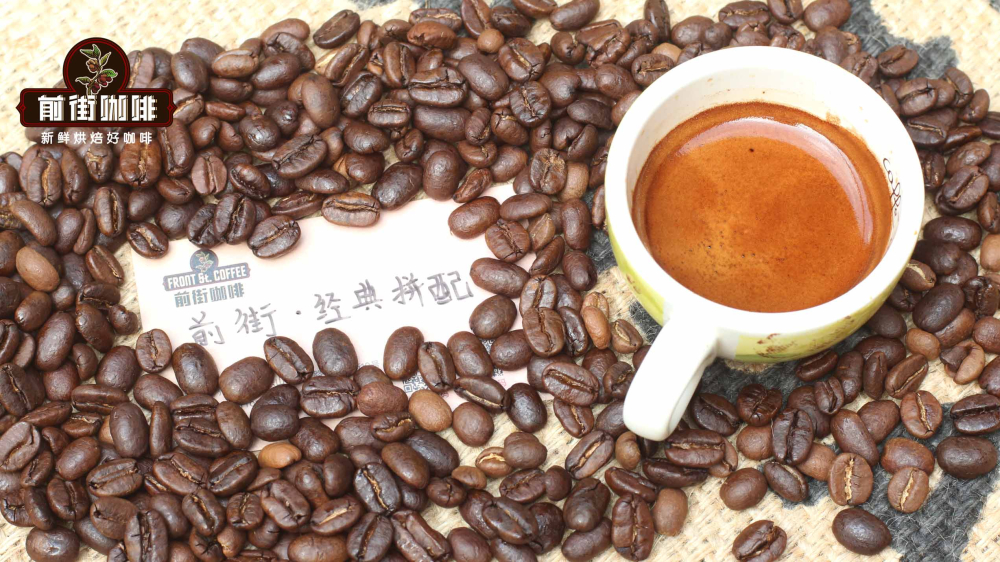
If you're after a rich crema, consider Front Street Classic Blend and Front Street Commercial Blend. Both espresso beans include a small amount of Robusta. Front Street Classic Blend combines Brazil, Mandheling, and Robusta, using a medium-dark roast. During extraction it releases distinct notes of butter, toasted bread, and caramel cookie, with a strong flavor, thick body, fine crema, and high extraction stability, making it an ideal home choice for beginners.
If you prefer an intense coffee taste, Front Street .PWN Golden Mandheling SOE coffee beans are the top choice. As one of Asia's most well-known specialty coffees, Front Street .Golden Mandheling SOE undergoes three rounds of hand sorting plus one machine sorting during processing. The beans are uniform and glossy, full after medium-dark roasting, with rich aromas of spices, caramel, cedar, and dark chocolate. Coffee extracted with a moka pot is mellow and smooth, with impressive crema, very suitable for friends who don't accept sour coffee.
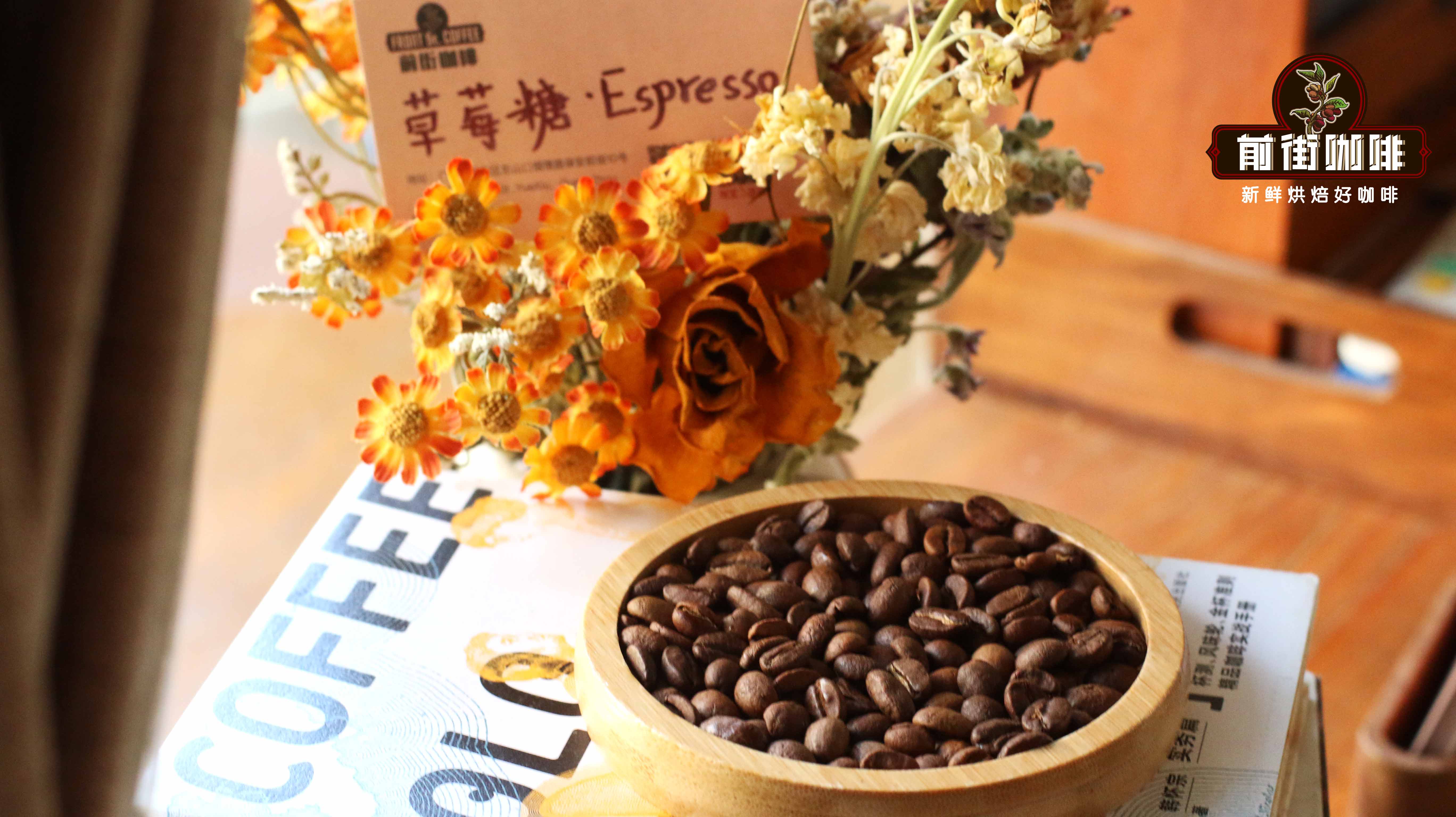
If you want to make espresso with fruity notes, you should focus on medium roast beans. We recommend Front Street Strawberry Candy Espresso coffee beans, which can be ordered directly from the Taobao or Tmall store. This bean is based on two major origins—Front Street Costa Rica Tarrazu, known for its honey processing, and Ethiopia, the birthplace of coffee—and is then blended with Colombian coffee beans. The resulting espresso not only lacks harshness, but also has good crema and a creamy texture under the espresso machine's extraction, while presenting a sweet-and-sour flavor reminiscent of strawberry gummies.
Another factor affecting extraction is operational difficulty. When sharing espresso extraction knowledge, Front Street often mentions issues like channeling and under-extraction. Even with dark roast espresso beans, insufficient extraction will also bring out sharp acidity. And light roast coffee has a higher probability of channeling and under-extraction when making espresso. Therefore, the sharp acidity of light roast espresso is mainly the result of both the coffee bean's own flavor profile and improper extraction operation.
Common problems when extracting espresso with light roast coffee beans
- Reusing the same grind size
Some friends want to try making espresso with light roast beans, so they directly replace their original espresso beans with light roast beans, briefly clean the grinder, and start making coffee using the same dose parameters as before.
After dispensing the same weight of coffee grounds, they find when tamping that it presses all the way down at once, and the volume feels much smaller than with dark roast. They lock in the portafilter and press the extraction button. Before long, the coffee liquid gushes out like a fountain, reaching the target 1:2 yield in less than 10 seconds.
The reason is that light roast coffee beans expand less than dark roast beans, so the same weight of light roast grounds appears smaller in volume. And the reason the flow is fast is that light roast coffee grounds expand only limitedly after absorbing water, making it easy for water to pass through the puck.
So the first step when extracting light roast beans with an espresso machine is to adjust the grind size. If you usually make espresso with medium-dark roast beans, you need to grind finer when switching to light roast beans. For example, when Front Street extracted a light roast washed Yirgacheffe, the espresso burr was adjusted finer by 0.3 marks. (Note: Front Street's daily grind adjustment range is ±0.05.)
- Reusing the same dose
If you don't adjust the grind size, the light roast puck is already smaller in volume than before; after grinding finer, the puck volume shrinks further. This means the distance between the puck and the shower screen increases, and during extraction the water flow hits the puck surface with greater force, potentially causing perforation in severe cases. Moreover, when the puck is thinner, water passes through in less time, extraction time is insufficient, and the coffee tastes thin and sharply sour.
The simplest way to solve this problem is to increase the dose. How much is appropriate? It depends on the extraction time and the basket's reasonable capacity range (after tamping, the puck should just reach the basket's ring line). For example, when Front Street uses Sunflower Warm Sun Blend coffee beans, the dose is 20g, while switching to light roast Yirgacheffe requires 21.3g to reach that line at the edge of the basket.
- Reusing the same pressure
The reason espresso can extract in about 30 seconds what pour-over takes 2 minutes to extract lies in pressure. Typically espresso extraction pressure reaches 9 bar; the greater the pressure, the higher the extraction efficiency.
When you've adjusted parameters like dose and grind size, and the ratio and time fall within a reasonable range, but the extracted espresso, besides the light roast's acidity, also carries a bitter taste like sawdust or herbs.
At this point, using slightly lower pressure during extraction can resolve such problems well. When Front Street makes espresso with light roast coffee beans, it controls extraction pressure at 6-7 bar.
Below, Front Street summarizes what changes need to be made when making espresso with light roast coffee, for everyone's reference.
1. The general guidelines for extracting espresso also apply to light roast coffee, namely a 1:2 coffee-to-liquid ratio and a time controlled at 25-30 seconds.
2. Compared to the dark roast espresso beans we're used to, light roast beans require grinding finer, appropriately increasing the dose, and lowering the pressure. (Grind size and increased dose are also related: the finer the grind, the smaller the volume after tamping, and the more dose needs to be increased; but these two are also constrained by time—the finer the grind and the more dose added, the longer the time required. So setting a 25-30 second extraction time is also a good way to verify whether grind size and dose are appropriate.)
3. Hitting the extraction template doesn't necessarily mean the coffee tastes good. If you feel the flavor still needs improvement, you can fine-tune grind size, extraction yield, and pressure.
Finally, how exactly does espresso made with light roast coffee beans taste?
First, if you don't usually drink espresso, light roast espresso will feel unusually intense and extremely sour, making you shiver involuntarily. If you're in the habit of drinking espresso, then light roast espresso's acidity will be very strong, accompanied by a faint salty, brine-like sensation. The body naturally can't compare to traditional espresso beans, but it does have a cheese-cream-like mouthfeel.
Second, light roast espresso performs quite well when made into an Americano with added water. The acidity is bright and full, with good sweetness in the mid-to-late palate and a coffee taste interweaving sweet and bitter, with a clear finish. (This is the flavor performance of Americano made with Yirgacheffe; not all light roast beans taste like this—it depends on the specific coffee bean's flavor description.)
Finally, light roast espresso is actually not very suitable for making milk coffee drinks. This is because light roast coffee's character is mainly fresh flavors like acidity and floral notes, which are easily masked by the taste of milk, ultimately leaving you with just a cup of milk with a hint of coffee flavor. (Friends who like a prominent milk taste and dislike coffee bitterness should enjoy it.)
The above content is compiled by CoffeeHunters, a coffee news website.


