







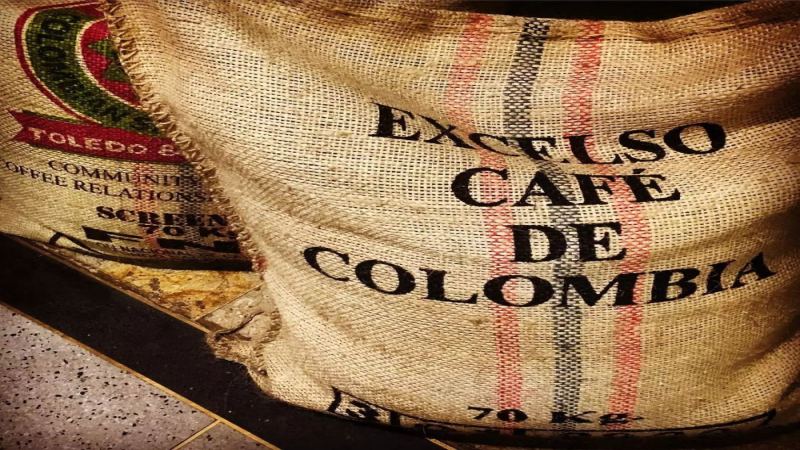
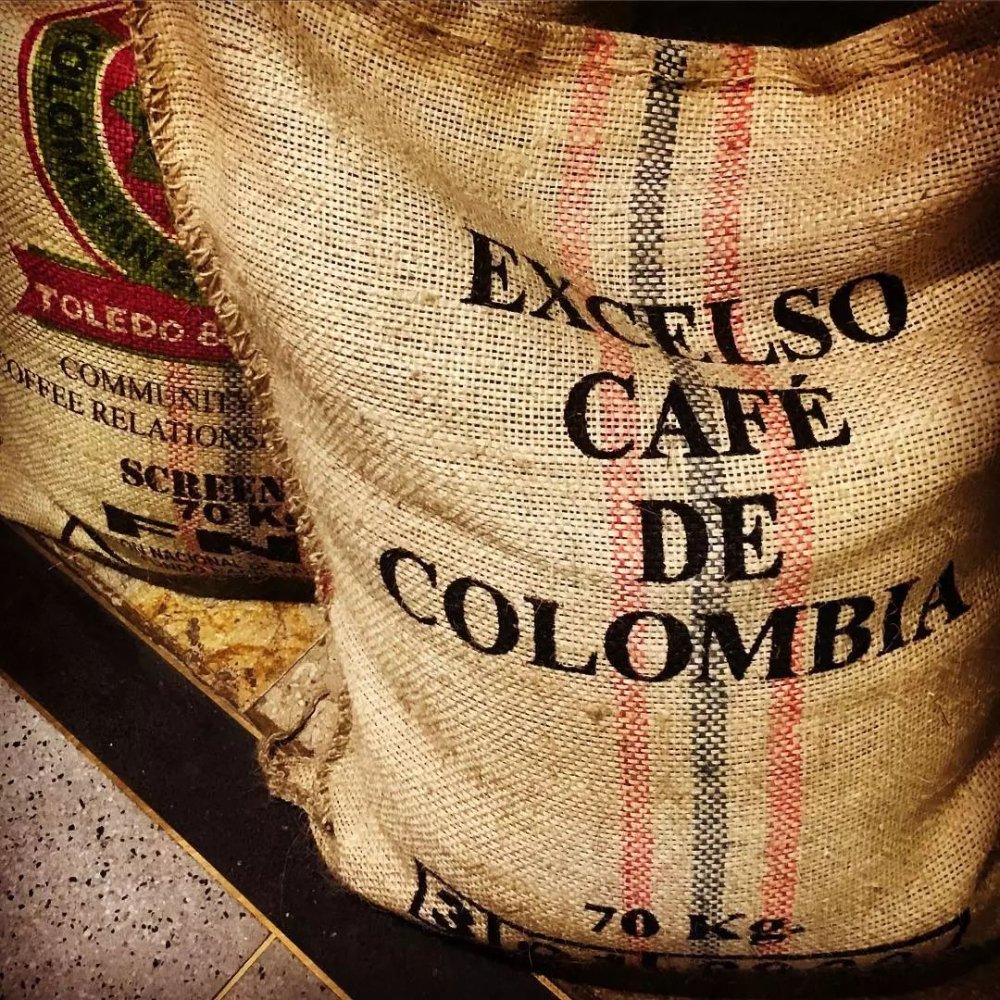
Why Does Huila Coffee Taste Different From Other Regions?
Huila coffee comes from one of four specialty regions along the Andes in Colombia, alongside Cauca, Nariño, and Santander. High altitude, microclimates, and volcanic soil give these beans a balance of acidity and sweetness with a full body. Colombia, the world's third-largest coffee exporter, built that reputation over nearly a century.
The FNC, founded in 1927, is the country's largest producer organization and its biggest green coffee exporter, funding technical guidance for growers. In Colombia, coffee is drunk three times a day and brewed fresh in cafes rather than sold as instant. For Huila everyday beans, a pour-over plan brings out the region's sweetness without losing clarity.
Colombian coffee has always been a representative of South American specialty coffee. From the promotion by the FNC to the deep-rooted image of "Juan Valdez," this country has spent nearly a century establishing itself as the world's third-largest coffee exporter. Along the Andes Mountains lie several specialty production regions with distinct styles, including Huila, Cauca, Nariño, and Santander. High altitudes, microclimates, and volcanic soil together give Colombian coffee its unique balance of acidity and sweetness with a rich, full body. In this article, Front Street Coffee will provide a complete overview of the quality logic behind Colombian coffee—from regional characteristics and flavor profiles to a pour-over extraction plan for Huila everyday drinking beans—helping enthusiasts understand the differences and charm of each production region.
For more specialty coffee knowledge, follow our WeChat official account: FrontStreet Coffee
Colombians' appreciation for coffee is almost woven into daily life. Besides football having once brought this country fame on the world stage, coffee is equally something they take the most pride in discussing. In Colombia, drinking coffee is not a rushed affair but a pleasure—drinking it three times a day is the norm, cafes are densely distributed along streets and alleys, and they stay lively from early morning until late at night. You won't find instant products in the shops; everything is brewed fresh on the spot. Servers present it solemnly in fine porcelain bowls, and sugar is added freely to one's own taste. The air is filled with aroma, the first sip is sweet, and the lingering finish is long and memorable—no wonder locals are all addicted to coffee. To explain the ins and outs of Colombian coffee, Front Street must start with the most influential coffee association in the country.
Colombian Coffee Association FNC
FNC stands for National Federation of Coffee Growers of Colombia, founded in 1927, and is the country's largest official organization of coffee producers.
This organization serves Colombian coffee farmers and is also the largest exporter of green coffee beans in the country. The association has long worked through various measures to improve the living standards of coffee producers, such as providing technical guidance to growers and helping optimize production costs, thereby safeguarding the long-term development of coffee farmers and keeping the quality of the entire industry at a relatively high level.
Through FNC's promotional efforts in the international market, the image of "Juan Valdez" was successfully established. Juan Valdez represents all Colombian coffee farmers, and his logo with a mule (set against the Andes Mountains) has become the association's official symbol, frequently appearing in various advertisements. Driven by such promotion, Colombian coffee became globally renowned, the country became the world's third-largest coffee exporter, and Colombians take great pride in this.
Colombian Coffee Cultivation
Colombia is located in northern South America. On a map, coffee-growing areas are distributed along the Andes Mountains, extending from south to north, with production regions mainly concentrated in the western part of the country. Due to the wide distribution of the growing belt, geographic conditions and climate characteristics vary from place to place, forming multiple different coffee harvest seasons—so it can be said that Colombia harvests coffee year-round.
Colombia's cultivation altitude is relatively high, ranging between 1,000 and 2,500 meters. Influenced by the complex terrain of the Andes, microclimates here are diverse, rainfall is abundant, and the year-round temperature is around 18°C, which is very suitable for coffee tree growth—this is the primary reason for Colombian coffee's outstanding quality. Locally, 30% to 40% of the rural population depends on coffee production for their livelihood, and agriculture is operated in a small-farm model, as is coffee cultivation. Farms are usually not large, generally about two hectares. Farm owners carefully tend the plants in their fields and plant tall trees or banana trees around the coffee trees to provide shade.
Geographically, Colombia's coffee-growing regions can be divided into three major zones: north, central, and south, with the southern region producing the most outstanding coffee beans. Below, Front Street introduces several of the more representative production regions: Huila, Cauca, Nariño, and Santander.
The Huila region is located in southwestern Colombia and is one of the important local specialty coffee growing areas, accounting for 12% of Colombia's total coffee production. It is surrounded by diverse hills and mountainous terrain, with an altitude above 1,500 meters. The Colombia River converges here, providing ample water for coffee tree growth. Unlike the traditional impression of Colombia's classic rich and full-bodied flavor, Huila is mostly dominated by micro-lots provided by smallholders, and different microclimates and green bean processing methods give the coffee distinctive flavors. Front Street believes that washed Huila coffee best represents the foundational flavor of Colombian coffee, so it has been included in our everyday drinking bean series.
FrontStreet Coffee: Colombia Huila Coffee Beans
Region: Huila
Altitude: 1,500-1,800 meters
Processing Method: Washed
Variety: Caturra
Flavor: Nuts, dark chocolate, caramel, mild fruit acidity
Cauca
The Cauca region features high-altitude mountainous terrain, with elevations reaching up to 2,100 meters. Suitable rainfall, large day-night temperature differences, and volcanic soil are all very suitable for coffee tree growth. The pronounced day-night temperature difference formed at high altitude is the biggest difference between Cauca and other Colombian production regions. Coffee beans take longer to mature, allowing them to fully absorb nutrients, which also creates Cauca coffee's pleasant balance of acidity and sweetness.
Nariño
The Andes run through the entire province of Nariño. Coffee trees are grown in high-altitude cloud and mist environments between 1,600 and 2,300 meters. Volcanic soil brings rich nutrients, and the resulting coffee quality is relatively high. Although Nariño's production is not large, the special microclimate formed by factors such as altitude, terrain, and soil gives the coffee in this region excellent acidity and unique flavor, along with a high taste grade and superb texture. In recent years, it has been deeply loved by coffee enthusiasts worldwide.
Santander
FrontStreet Coffee has learned that Santander is the province where coffee was first planted in Colombia. Although it is not often mentioned, it is also a very important production region in Colombia, with coffee output reaching 5% of Colombia's total production. The climate here is dry, and the altitude is relatively low, about 1,400 to 1,600 meters, with a large number of Typica plants cultivated. Local coffee trees are mostly planted in forests with appropriate shade, which makes the coffee cherries take longer to mature. Fertile soil and significant temperature differences make the coffee flavor richer, with a round and balanced mouthfeel. For example, the Rose Valley coffee beans sold by Front Street come from here.

Pour-Over Recommendations for Colombian Huila Coffee Beans
To brew a delicious cup of coffee, Front Street believes that suitable extraction parameters are indispensable. Here, using Huila everyday drinking beans as an example, we will demonstrate how to make a delicious cup of Colombian coffee. Considering that Huila everyday drinking beans use a medium-dark roast, with flavors leaning toward rich, full-bodied nutty and chocolate notes, the deeper roast makes the coffee beans more porous and the coffee grounds more absorbent, so a medium grind is chosen. To avoid extracting too many off-flavors, Front Street will slightly lower the water temperature, using a medium 90°C water temperature with a KONO dripper for extraction.
Unlike the V60 dripper, the KONO dripper's only exhaust area is that one-quarter of ribbing. When the water level rises past the ribbed section, the water volume inside the dripper keeps increasing, and the weight of the water increases pressure. Because the outlet is relatively small, this can extend the contact time between coffee particles and water, and as water is poured in, it more effectively brings out soluble substances, thereby enhancing the coffee's rich and full-bodied mouthfeel.
Brewing Parameters: KONO dripper, 90°C water temperature, grind size with 75% passing a No. 20 standard sieve, 1:15 coffee-to-water ratio, coffee dose: 15 g, three-stage extraction
Pour the coffee grounds into the V60 dripper, wet the coffee bed with twice the coffee grounds' weight in water, and let it bloom for 30s to form a dome. Then, with a small stream, pour in circles from the inside out until 125 g, pausing in stages. Wait until the coffee bed drops to halfway down the dripper, then continue pouring the third stage with the same fine stream until 225 g. Once all the coffee liquid has finished filtering, remove the dripper. The total time is about 2 minutes.
This Colombian Huila everyday drinking bean has an obvious roasty aroma of chocolate, nuts, and caramel on the palate, smooth and sweet, with a moderate body and a clean mouthfeel. As the temperature drops, you can perceive a pleasant, mild acidity.
The above content is compiled by CoffeeHunters, a coffee news website.


