







Which Arabica Coffee Varieties Suit Pour-Over Brewing?
For pour-over, start with a coffee-to-water ratio between 1:15 and 1:16, which suits most single-origin beans. A 1:10 to 1:11 ratio gives a bold, heavy cup, while more water thins the body and dilutes flavor. Weigh the beans rather than scooping, since a standard cup uses roughly 15 grams of coffee.
Arabica coffee varieties such as Typica, Bourbon, Caturra, and Catuai each bring different sweetness and acidity to the cup, and the SCA Golden Cup extraction theory frames the target range. Robusta and Liberica differ from arabica in flavor and growing needs. Matching the ratio to the variety keeps the brew consistent from one bag to the next.
More and more people are starting to try pour-over coffee at home, but when faced with basic questions like the coffee-to-water ratio, how much coffee beans to use, and how to choose single-origin beans, they often don't know where to begin. Front Street Coffee, drawing on SCA Golden Cup extraction theory, has put together a practical reference range for pour-over coffee-to-water ratios, and answers the question of how many coffee beans are needed for a cup of pour-over. The article also systematically introduces the definition and standards of single-origin coffee beans, focusing on the characteristics and flavor profiles of common varieties under the Arabica species such as Typica, Bourbon, Caturra, and Catuai, while also mentioning the differences between Robusta and Liberica, helping coffee enthusiasts build a complete framework for understanding single-origin beans.
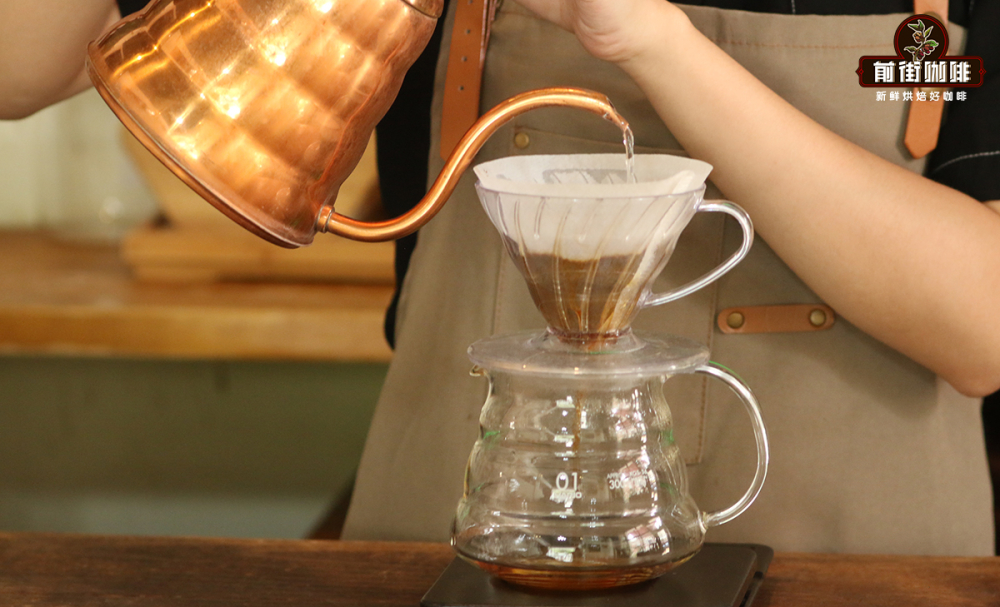
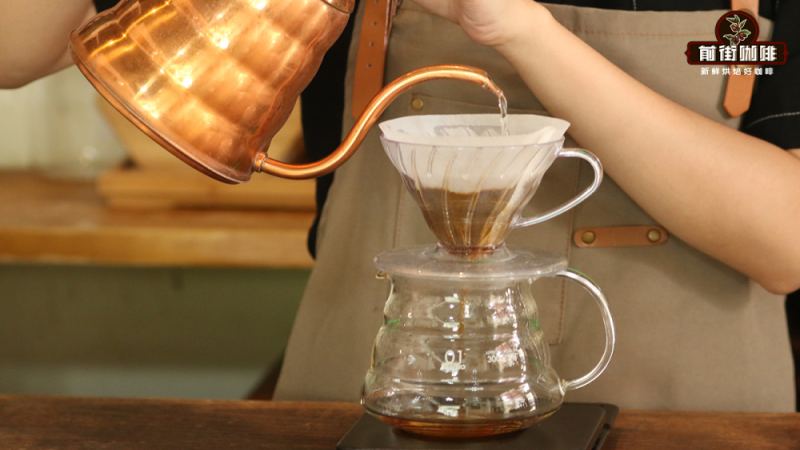
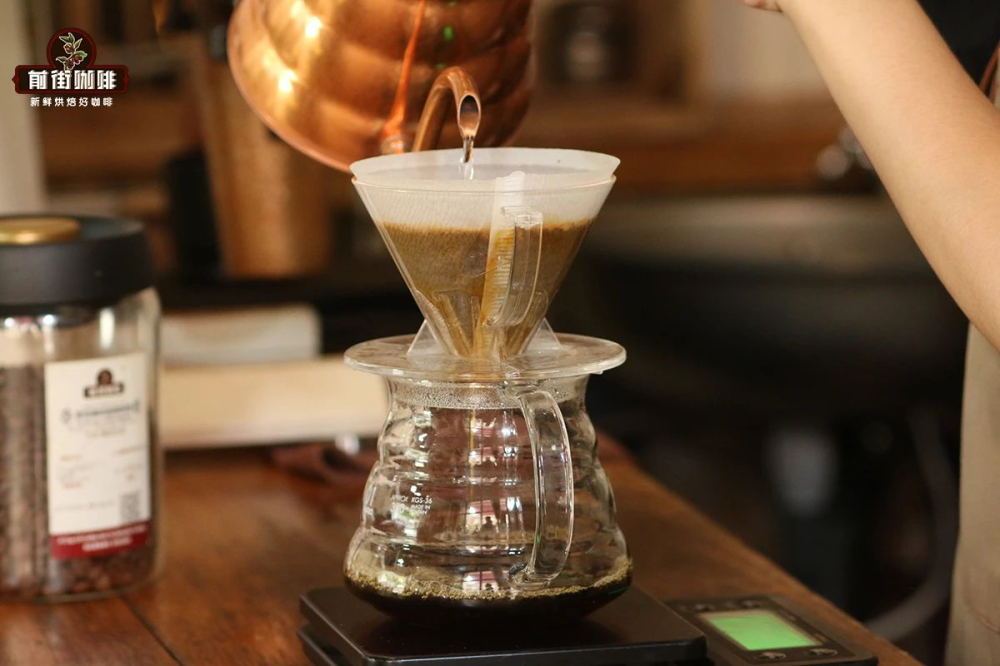
Coffee culture has gradually taken root in people's hearts, and nowadays many cafés no longer limit themselves to espresso-based offerings, adding pour-over coffee to their menus one after another, and the number of people who have encountered and grown to love pour-over has increased accordingly. Many coffee enthusiasts are starting to try brewing at home, but beginners often don't know where to start—for example, exactly how many coffee beans to weigh out for a cup of pour-over, and which single-origin pour-over beans to choose. These are the most basic and most frequently asked questions. Below, Front Street Coffee (FrontStreet Coffee) uses this article to sort out the ratio parameters for pour-over coffee.
How should the coffee-to-water ratio for pour-over coffee be determined?
The coffee-to-water ratio has a decisive influence on the final flavor of a cup of pour-over, just as cooking rice requires a suitable rice-to-water ratio: use too little water and the rice turns dry and hard, use too much and it becomes a pot of watery porridge. The same applies to pour-over coffee—when there is too much water, the coffee flavor becomes over-diluted and tastes thin and bland; when there is too little water, the concentration is too high, and the mouthfeel is heavy with flavors too concentrated. Front Street Coffee (FrontStreet Coffee), based on SCA Golden Cup extraction theory, has organized the taste differences corresponding to various coffee-to-water ratios as follows:
[Bold flavor] 1:10–1:11 (equivalent to 1:12.5–1:13.5 under the Golden Cup standard) [Moderate flavor] 1:12–1:13 (equivalent to 1:14.5–1:15.5 under the Golden Cup standard) [Light and refreshing] 1:14–1:16 (equivalent to 1:16.5–1:18.5 under the Golden Cup standard)
In addition, Front Street Coffee (FrontStreet Coffee) has also found that when the ideal brewing ratio for pour-over—that is, the ratio of coffee bean weight to milliliters of black coffee—falls between 1:12 and 1:13, which converts to 1:14.5–1:15.5 for grams of coffee beans to raw water volume in the four major European and American Golden Cup systems, it is most likely to fall within the golden range defined by the "Golden Cup Rectangle" of 18%–22% extraction yield and 1.15%–1.35% concentration, thereby avoiding a strong coffee with muddled flavors or a thin coffee that tastes too watery. This is precisely why the baristas at Front Street Coffee (FrontStreet Coffee) shops recommend using a 1:15 coffee-to-water ratio.
How many coffee beans are needed for a cup of pour-over coffee?
Front Street Coffee (FrontStreet Coffee) has already listed the coffee-to-water ratios needed for pour-over coffee above, so how many coffee beans are actually used for one cup of pour-over? If calculated using the optimal extraction ratio of 1:15, one cup of coffee requires 15g of coffee beans ground into powder. As for how much water 15g of coffee beans corresponds to, also calculated according to the 1:15 coffee-to-water ratio, that is, 15 grams of beans multiplied by 15, pouring in 225ml of water, and you get a cup of pour-over coffee.
The above is the answer compiled by Front Street Coffee (FrontStreet Coffee) regarding pour-over coffee-to-water ratios. Next, Front Street Coffee (FrontStreet Coffee) will talk about what kind of beans are currently used for pour-over in cafés, and why the flavor of pour-over coffee differs so greatly from the instant or espresso coffee people drink daily, tasting more distinctive and more captivating. In the final analysis, the reason is that the beans used for pour-over are mostly single-origin coffee beans from individual coffee-producing origins.
What are single-origin coffee beans?
So-called single-origin coffee beans, as Front Street Coffee (FrontStreet Coffee) said above, refer to single coffee beans originating from a single origin, brewed and drunk without adding milk or sugar, presenting the pure taste of coffee itself. Single-origin coffee often has a strong character and a unique mouthfeel—sometimes fresh and mild, sometimes fragrant and smooth—and the cost is relatively high, so the selling price is accordingly on the expensive side.
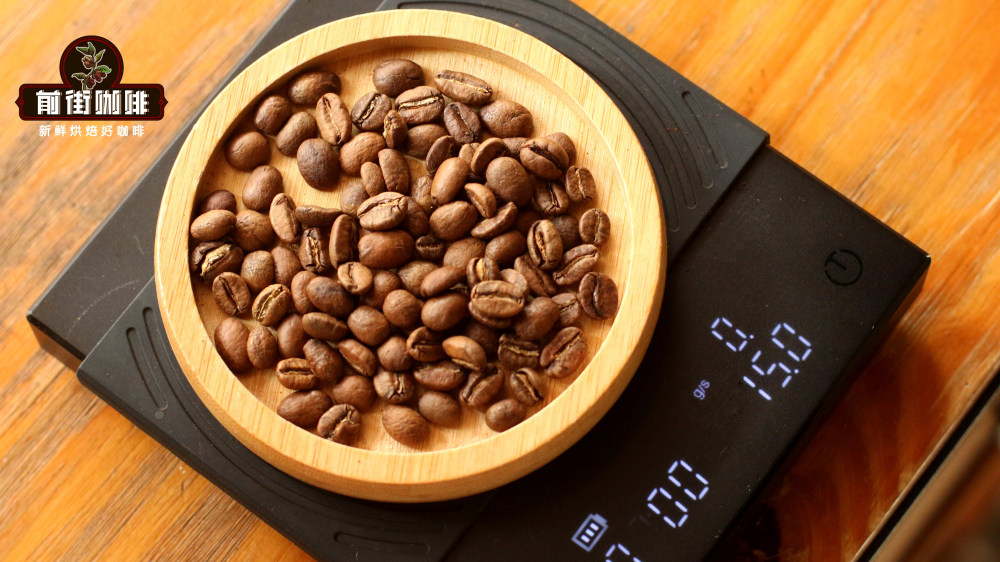
Single-origin coffee beans almost all belong to the Arabica category. For example, the Yirgacheffe coffee beans and Colombian coffee beans at Front Street Coffee (FrontStreet Coffee) shops all use 100% pure Arabica coffee beans. The Arabica variety performs extremely well in flavor and is currently also the coffee variety with the highest global production and the widest cultivation range, so most single-origin coffee beans on the market belong to Arabica. To qualify as a high-quality single-origin coffee bean, the cupping score needs to reach 80 points or above.
In order to let coffee enthusiasts taste high-quality coffee beans, all single-origin coffee beans listed by Front Street Coffee (FrontStreet Coffee) are beans with a cupping score above 80. After the beans are purchased and arrive at the shop, multiple baristas will also cup and taste them together, and only after confirming that the flavor is good, that it is not similar to the beans already available in the shop, and that the average cupping score reaches 80 will they be officially listed. In addition, when Front Street Coffee (FrontStreet Coffee) cups a new bean, it also provides small samples in the shop for coffee enthusiasts who visit to taste.
Arabica coffee beans are also called small-bean coffee beans. Although the yield per unit area is not high, they are widely commercially cultivated thanks to their excellent flavor performance, currently accounting for 70% of global coffee production. Arabica is suitable for growing in areas above 800 meters in altitude, and usually only Arabica planted above 1,200 meters in altitude can display its excellent flavor. At present, the Arabica varieties with the longest cultivation history are Typica and Bourbon.
The first common Arabica species is Typica. Typica beans are generally oval in shape, slender yet flat and plump, with a very standard appearance. The flavor is elegant, but the plant is relatively weak in constitution, has poor disease resistance, is prone to coffee leaf rust, and produces few fruits. Its most obvious characteristic is that the young leaves are brownish-red, so it is also called copper-top coffee. Today, pure Typica coffees include Blue Mountain coffee, Yunnan Typica, and others.
The second is an ancient mutation of Typica—the Bourbon variety. What is usually called Bourbon is Red Bourbon, whose coffee cherries turn wine-red when ripe. Bourbon is suitable for planting in high-altitude areas, because high altitude helps form rich aromas and bright acidity, with a flavor reminiscent of red wine.
In 1930, a Yellow Bourbon variety was discovered in Brazil. Front Street has learned that Yellow Bourbon may originate from a mutation of Red Bourbon and a yellow-fruited Typica. However, experiments have found that Yellow Bourbon has low yield and is not resistant to wind and rain, which is also the main reason it has not been widely planted among Arabica varieties. For example, the Yellow Bourbon from Front Street Coffee's (FrontStreet Coffee) Brazil Queen's Farm has a flavor with fruity sweetness and distinct nutty notes.
Another Bourbon variety, developed by crossing Yellow Bourbon and Red Bourbon, has beautiful pink fruit and is called Pink Bourbon. Its fruit color is determined by a recessive gene in the pollen grains. According to Front Street's understanding, Pink Bourbon was first planted in the Huila region of Colombia, and the rich flavors shown in cupping made Pink Bourbon famous far and wide. Riding on Pink Bourbon's reputation, Front Street has also listed a Pink Bourbon from the Huila region called Isabella Coffee, which has citrus, berry, and cherry tomato flavors on the palate.
The second common Arabica coffee is the Caturra variety. Compared with Bourbon, Caturra trees are shorter, making harvesting easier, and have extremely strong adaptability; most importantly, they do not need shade trees, so they are often called sun-exposed coffee. Caturra is currently widely planted in Colombia. Caturra coffee has a very smooth mouthfeel with berry-like acidity, which has also earned Colombian coffee the title of "gentleman among coffees."
The third Arabica species is Catuai, a cross between Caturra and Mundo Novo. Compared with Caturra, Catuai is smaller in size, has better acidity, extremely high yield, and very strong disease resistance. Catuai is also widely planted, including in Brazil, Costa Rica, and elsewhere. For example, the Honduras Sweet Orange Estate and the Panama Butterfly 30% non-Geisha blend listed by Front Street belong to the Catuai variety.
In addition, Robusta, one of the three major coffee varieties, has extremely strong adaptability and can grow under extreme weather conditions. Robusta is widely planted in Vietnam, Brazil, India, and other countries, and is also grown in Hainan, China, though it is not very well known.
The main reason Robusta coffee has not been widely planted is that it has little aroma and sometimes even an earthy taste, which is a major taboo for specialty coffee, so it is generally used in blended beans or instant coffee. However, according to Front Street's understanding, Robusta's poor flavor is not absolute. The emergence of India's Coffee Royal Premium Robusta broke people's stereotypes about Robusta. Coffee Royal-grade Robusta has an unexpectedly good flavor, quite clean, without the imagined earthy taste, and even with a fuller, more steady mouthfeel, a bit like peanut, hazelnut, and wheat flavors.
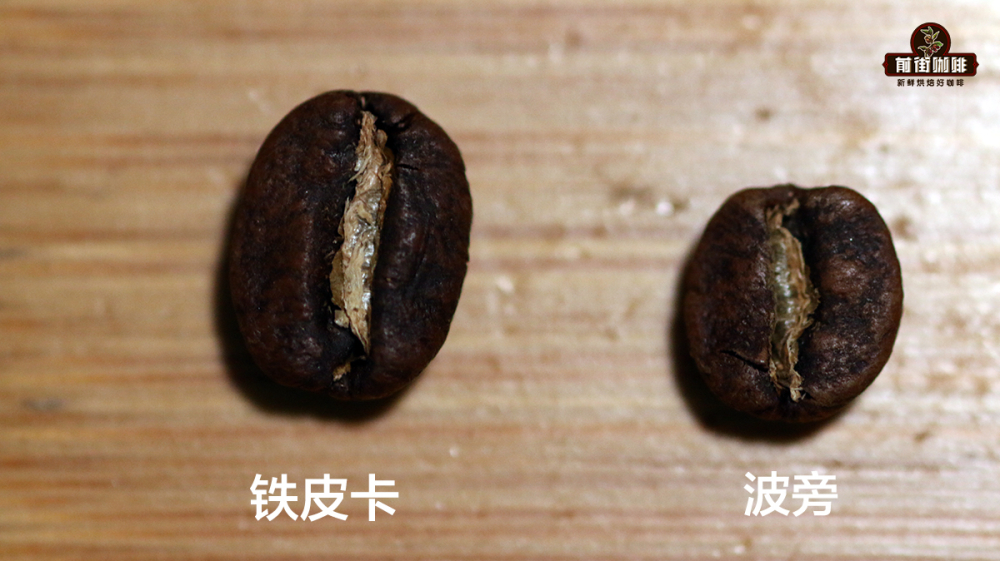
Liberica coffee is usually called large-bean coffee. It has very strong vitality, but its flavor and disease resistance are relatively poor compared with the three major native coffee species, and it has basically withdrawn from the market at present, preserved only in scientific research laboratories.
Today, Arabica coffee varieties are widely planted all over the world, and Arabica is also considered the best coffee bean. Front Street believes that the widespread cultivation of Arabica shows that everyone's requirements for coffee bean quality are getting higher and higher, and that people are paying more and more attention to coffee quality, which is a very good phenomenon for the specialty coffee world.
The above content is compiled by CoffeeHunters, a coffee news website.


