







How Do Beginners Pick Coffee Beans by Region?
Beginners can learn regional flavor at low cost with 100g sample packs from seven producing areas. Ethiopia Yirgacheffe and Kenya bring floral and fruity acidity, Costa Rica Tarrazu and Colombia Huila stay balanced, Indonesia Lintong Mandheling is earthy and low in acid, Yunnan Baoshan and Guatemala Huehuetenango sit in between, and Brazil Cerrado is nutty and sweet.
Regional character comes from position in the coffee belt and from processing. Asking what flavor someone prefers is the fastest route: fruity and floral points to African arabica bean lots, while a balanced cup without bitterness points to Central and South American options. V60 parameters and a three-stage pour let each lot show its own profile.
Friends who are just getting into single-origin coffee are often confused: they don't understand regional flavors and worry about buying the wrong beans. To address this problem, Front Street Coffee has selected entry-level everyday beans from seven regions, using 100g small packages and affordable prices to help beginners identify the basic flavors of major regions at low cost. This article will start with what everyday coffee beans are, then introduce one by one the origin background, processing methods, and brewing flavors of Front Street Ethiopia Yirgacheffe, Costa Rica Tarrazu, Colombia Huila, Indonesia Lintong Mandheling, Yunnan Baoshan, Guatemala Huehuetenango, and Brazil Cerrado, and finally attach Front Street Coffee's pour-over extraction tips, including V60 dripper parameters and the three-stage pouring method, providing beginners with a complete reference for bean selection and brewing.
Almost every day, customers ask Front Street how to choose beans when they first start drinking single-origin coffee, because they have little concept of the flavors of each region and worry that what they buy will not suit their taste. This is indeed a common confusion among many newcomers, so Front Street will talk about its own views.
When customers enter the shop, Front Street usually first asks whether they would like a pour-over. If the customer nods, it then asks what flavor profile they prefer. If the answer is that they like fruity acidity and floral-fruity notes, Front Street will bring out African beans such as Ethiopia Yirgacheffe or Kenya to recommend; if they prefer a balanced, not bitter taste, it will introduce American options such as Front Street Costa Rica or Front Street Colombia. Ultimately, whether a coffee bean tastes good or not is determined by personal taste. Now let's get straight to the point and introduce Front Street's entry-level everyday coffee beans from different regions.
What exactly are everyday coffee beans?
Some friends who have just gotten to know Front Street have some misunderstandings about Front Street's everyday bean series, thinking that the word "everyday" is just for coffee beginners to satisfy their curiosity, and sometimes when online promotional prices are very low, they worry that quality will be compromised and flavors will be messy. In fact, the everyday beans selected by Front Street are all representative beans from each region that can hold their own. The basic flavors of the regions selected for Front Street everyday beans are highly recognizable, and they are also low-priced, high-value choices.
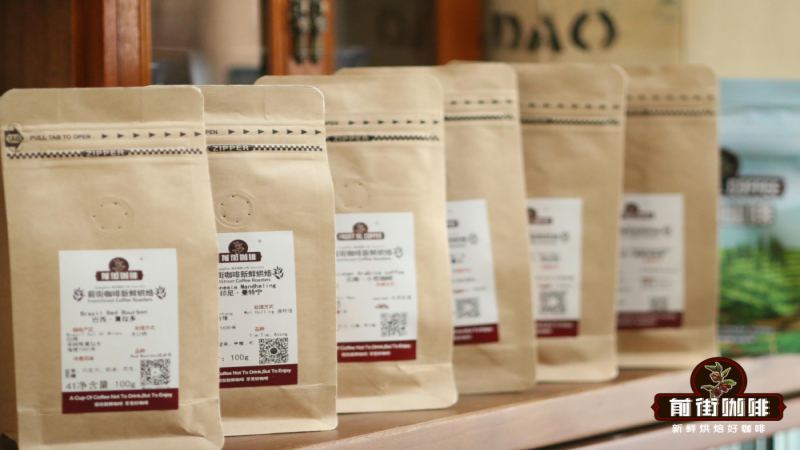
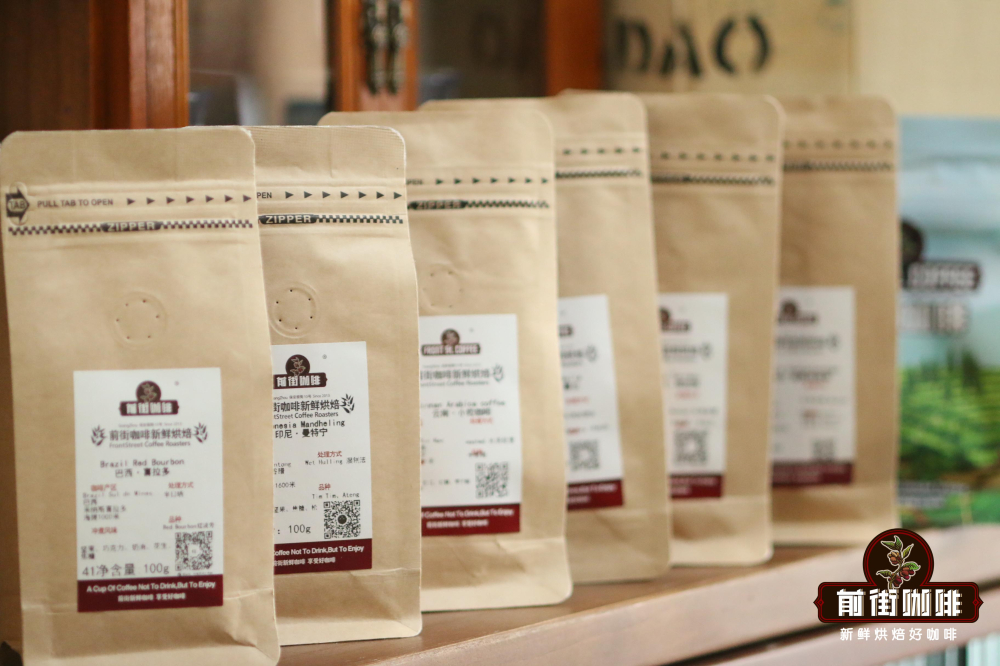
Every everyday bean listed by Front Street is carefully selected from major regions as the bean that best expresses the local original flavor, and is then recommended to enthusiasts in a small 100g portion at a very friendly price. The meaning of Front Street everyday beans is to let every beginner and every friend who wants to try something new learn the basic flavors of major regions without spending much money. At present, Front Street everyday beans cover 7 regions: Front Street Ethiopia Yirgacheffe, Front Street Costa Rica Tarrazu, Front Street Colombia Huila, Front Street Indonesia Lintong Mandheling, Front Street China Yunnan Baoshan, Front Street Guatemala Huehuetenango, and Front Street Brazil South Minas.
Front Street Ethiopia Washed Yirgacheffe
Country: Ethiopia Region: Yirgacheffe Altitude: 1800-2000 meters Variety: Local heirloom varieties Processing method: Washed processing Brewing flavor: Jasmine aroma, berry juice sensation, lemon and citrus acidity, overall bright, clean, and fresh.
Yirgacheffe coffee region: Yirga cheffe is a small town in Ethiopia, at an altitude of 1700-2100 meters. It is one of the highest coffee-growing regions in the world and also synonymous with Ethiopian specialty coffee. Lake Turkana, Lake Abaya, and Lake Chamo bring abundant moisture here. In the rift valley represented by Misty valley, fog lingers all year round, the seasons are like spring, breezes blow gently, and it is cool and humid. Thousands of coffee trees thrive and multiply, giving rise to the unique terroir of Front Street Yirgacheffe coffee beans, with intertwined and ever-changing floral and fruity aromas. Front Street believes that the flavor of Front Street Yirgacheffe coffee beans refers to rich citrus and lemon acidity, a strong jasmine floral aroma, a light and elegant mouthfeel with a tea-like sensation, drinking like refreshing, clean lemon tea.
Front Street Costa Rica Washed Tarrazu
Country: Costa Rica Region: Tarrazu Altitude: 1500 meters Variety: Caturra, Catuai Processing method: Washed processing Brewing flavor: The entry is a sweet orange-like sweet-and-sour sensation, with obvious nut and chocolate flavors in the middle, a lasting caramel aftertaste, and some cedar aroma, overall balanced.
Tarrazu coffee region: Located south of the country's capital San Jose, it is one of the most valued coffee-growing areas in the country. "La Minita Tarrazu" coffee is a local specialty, but production is limited, about 72,600 kilograms per year. It is grown on a piece of land called "La Minita," owned by the McAlpine family from the UK for the last three generations, with the La Minita estate in the Tarrazu region producing only 160,000 pounds annually. Front Street notes that Front Street Costa Rica Tarrazu coffee beans are full, with a rich body, smooth mouthfeel, rich chocolate and nut aromas, moderate acidity, and an enticing fragrance.
Front Street Colombia Washed Huila
Country: Colombia Region: Huila Altitude: 1500-1800 meters Variety: Caturra Processing method: Washed processing Brewing flavor: Nuts, dark chocolate, soft fruit acidity in the middle, caramel sweetness.
Huila coffee region: The Huila region has mountainous terrain, and coffee is planted on canyon slopes, so it has the high altitude and suitable temperatures for growing high-quality Arabica beans. The climate of the canyon slopes not only keeps cold winds out, but also brings cool mountain breezes without high temperatures, and rainfall is relatively abundant, making it a uniquely favored coffee cultivation area. Colombian coffee workers all go up the mountains to hand-pick coffee cherries, and the vast majority of coffee beans are processed by the washed method. The Huila region has an excellent combination of soil and geographical advantages for coffee cultivation, and some of the most complex, fruit-forward Colombian coffees come from here. This region belongs to the specially selected high-mountain coffee beans of the Colombian national company and is known as a national treasure of Colombia. With superior geographical and climatic conditions, Colombian coffee has always maintained relatively high quality. Front Street believes that Front Street Colombia Huila coffee beans have a full mouthfeel, a heavier body, nut, chocolate, and caramel aromas, and smooth, pleasant fruit acidity.
Front Street Indonesia Lintong Mandheling
Country: Indonesia Region: Sumatra Lintong Altitude: 1100-1600 meters Variety: Typica, Caturra Brewing flavor: Herbal medicinal notes on entry, dark chocolate, caramel, sweet aftertaste.
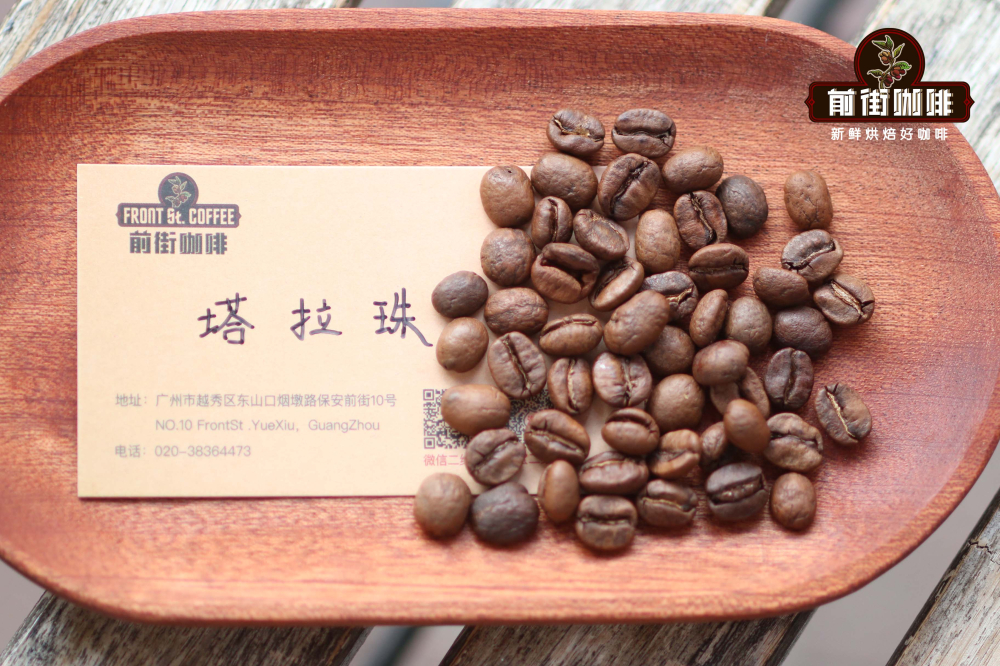
Indonesia Lintong coffee region: Front Street Lintong Mandheling comes from the Lintong mountain area in north-central Sumatra, near Lake Toba. Front Street Lintong Mandheling is the regular version of Mandheling. Front Street Lintong Mandheling also uses the conventional wet-hulling method, creating its characteristics of low acidity and high body. However, one situation that arises from using the wet-hulled method is that, because the semi-hard, semi-soft moist raw beans are easily crushed when the mucilage and parchment layer are removed, the beans are damaged and split open like goat hooves, commonly known as goat-hoof beans. This is not a defective bean and can be said to be a very prominent characteristic of Mandheling coffee beans. Front Street Lintong Mandheling does not put much effort into screening, so beans of different sizes may appear. Lack of refinement in processing can easily lead to instability in the coffee beans produced, but it does not diminish people's love for its rich, mellow flavor.
Front Street Yunnan Arabica Washed Coffee Beans
Region: Yunnan Baoshan Altitude: 1200 meters Variety: Catimor Processing method: Washed processing Brewing flavor: Melon and fruit aroma, sweet melon, brown sugar, plum acidity, black tea sensation.
China Yunnan coffee region: Yunnan Arabica coffee is suitable for growing on mountain slopes at an altitude of 800-1800 meters. If the altitude is too high, it tastes sour; if too low, it tastes bitter. Arabica coffee is mostly planted in dry-hot river valley areas at an altitude of about 1100 meters, so the acidity is moderate, and the aroma is rich and mellow.
Many areas in Yunnan have a unique environment suitable for the growth of Arabica coffee, and the Arabica coffee produced is of excellent quality. The planting areas are mainly distributed in Lincang, Baoshan, Simao, Xishuangbanna, Dehong, and other prefectures. Baoshan has an average temperature of 21.5°C, with a maximum of 40.4°C, and basically no frost all year round, making it recognized as the best Arabica coffee producing area. The Front Street Yunnan Arabica coffee cultivated here is famous at home and abroad for being strong but not bitter, aromatic but not harsh, with small and uniform beans, a rich mellow aroma, and fruity notes. Tasting experts from the International Coffee Organization have rated Yunnan coffee as belonging to the category of Colombian wet-processed Arabica coffee, the highest quality coffee in the world.
Front Street Brazil Cerrado Semi-Washed Red Bourbon
Country: Brazil
Region: South Minas Altitude: 1000 meters Variety: Red Bourbon Processing method: Semi-washed Brewing flavor: High sweetness, clean, smooth, low acidity, with tropical fruit aroma.
Brazil coffee region: Located in the Latin American region of the Western Hemisphere, in eastern South America on the western shore of the Atlantic Ocean. On land, apart from Ecuador and Chile, it borders all countries on the South American continent; the vast majority of its territory lies between the equator and the Tropic of Capricorn, making it the country with the widest tropical range in the world.
One-third of the country has a tropical rainforest climate, and two-thirds has a tropical savanna climate. The superior tropical natural conditions are very suitable for the growth and production of tropical cash crop coffee. Minas Gerais state: the representative coffee-producing regions of Minas Gerais state include Cerrado and South Minas, both of which are relatively high-altitude areas. Cerrado is located in the west of Minas Gerais state and is a flat plateau at an altitude of 750m-1200m. South Minas is hilly land at an altitude of 700m-1200m. Since 1999, among the estates winning in Brazil's Cup of Excellence auction event, South Minas has been the most numerous. Front Street believes that Front Street Brazil Cerrado coffee has obvious chocolate and nut notes, with a mellow and moderately soft body, making it the absolute choice for friends who do not like sour coffee.
Front Street Guatemala Huehuetenango
Country: Guatemala Region: Huehuetenango Altitude: 1500-2000 meters Variety: Bourbon, Caturra, Catuai Processing method: Washed processing Brewing flavor: Citrus and berry acidity, lemon peel, nut aroma in the middle, tea-like finish.
Guatemala coffee region: The average altitude is high, and the coffee belt is distributed above 1500 meters, making it easiest to grow strictly hard beans. Front Street believes that Front Street Guatemala coffee has a special smoky flavor and a rich juicy mouthfeel. Guatemala has eight major regions in total, divided into five volcanic regions and three non-volcanic regions. The Huehuetenango region is one of the three non-volcanic regions. Huehuetenango is a coffee-producing region in central Guatemala. Its name comes from Nahuatl, meaning the place of the ancients (or ancestors). This region is almost the most remote from the capital compared with other regions, and the route is rugged. Because of the dry hot winds from Mexico, the mountains, though high, have no frost damage, so coffee can be grown at nearly 2000m.
FrontStreet Coffee Brewing Tips
Dripper: V60 #01
Dose: 15g
Coffee-to-water ratio: 1:15
Grind size: BG6m (80% passing through a No. 20 sieve)
Water temperature: 90-91°C
*Regarding grind size, Front Street determines it through sieving. Based on the grinding recommendations provided by the Specialty Coffee Association of America, SCA, for pour-over coffee, and combined with practical verification, Front Street has found that brewing with different grind sizes produces clearly different results, and the grind size for each coffee bean will differ somewhat. This is the significance of sieving. If there is no sieve at home, FrontStreet Coffee suggests judging by observing the flow rate: if the flow is too fast, the grind is coarse; if the flow is too slow, the grind is fine.
FrontStreet Coffee uses staged extraction, also called three-stage brewing: use 30 grams of water for a 30-second bloom, pour in a small stream in circles until 125 grams for the first stage, then when the water level is about to expose the coffee bed, continue pouring until 225 grams and stop pouring. When the water level is about to expose the coffee bed again, remove the dripper. The extraction time is 2'00"-2'20" (timing starts at the beginning of the bloom).
The above content is compiled by CoffeeHunters, a coffee news website.


