







What are the advantages and disadvantages of coffee processed naturally?
Natural sun-drying is the oldest way to process green coffee, and it gives the cup a rich fermented character, full sweetness, and layered fruit notes. Cherries are hand-sorted to remove overripe, unripe, and insect-damaged fruit, then spread on tarps, raised beds, or concrete and dried for about three to four weeks until moisture falls to 11 percent.
The trade-off is risk. Natural drying needs a dry climate and steady sunshine, and uneven drying can produce defects, so growers weigh the advantages and disadvantages of coffee processed this way carefully. After drying, the cherries go to the plant for depulping and hulling, sometimes with polishing. Ethiopia Huakui and Panama Elida Estate Natural Typica show how much fruit a coffee beans tree's harvest can carry into the cup.
The processing method of coffee beans largely determines the flavor direction of the final cup, and natural sun-drying, as the oldest green bean processing technique, is still widely adopted by many producing regions around the world today. From the perspective of Front Street Coffee, this article systematically reviews the complete sun-drying process—from fruit picking and selection, natural drying, to depulping and hulling, and storage—and deeply analyzes the advantages and limitations of this processing method. At the same time, the article will also introduce two representative sun-dried coffee beans: Ethiopia Huakui and Panama Elida Estate Natural Typica, helping readers more comprehensively understand how sun-drying gives coffee a rich fermented feel, full sweetness, and abundant layers.
For more specialty coffee knowledge, please follow our WeChat public account: Front Street Coffee
When purchasing coffee, the processing method is often one of the key pieces of information we focus on. Different processing techniques and their execution quality directly influence the final flavor profile of the coffee. Today, Front Street Coffee will talk about the oldest traditional processing method—sun-drying—and just how its pros, cons, and flavor performance really are.
Sun-drying is a time-honored green bean processing method, usually found in producing regions with a dry climate and abundant sunshine. Today, the fruity character that sun-drying gives coffee has also led growers around the world to take the risk of trying this method.
The Sun-Drying Process
Collection and Selection
The harvested coffee cherries are first hand-sorted to remove defective fruits, including overripe cherries, unripe cherries, insect-damaged cherries, and so on, while also removing foreign matter other than the fruit.
Drying
After selection is completed, the coffee cherries are sent to drying sites for processing. The drying facilities used vary from region to region; some lay down tarps, some use raised beds, and some place them directly on concrete ground. The entire drying cycle takes on average three to four weeks, until the coffee's moisture content drops to 11% before it is considered complete.
Depulping
After drying is finished, the coffee cherries are transported to the processing plant for depulping and hulling, and sometimes a polishing step is added. The skin, pulp, and other parts are all removed at this stage.
Screening, Sorting, and Storage
After hulling, the green coffee beans are screened again to eliminate beans with poor appearance. This step also reflects the quality of the drying process: beans that are over-dried are fragile in texture and easily break during hulling; while beans that are under-dried have higher moisture content and excessively strong water activity, making them prone to bacterial growth and even mold. After screening is completed, the green beans are sent to warehouses for storage, waiting for export.
Advantages and Disadvantages of Sun-Drying
Advantages: The cost of sun-drying is considerably lower than other processing methods, and water consumption is also very low, making it very suitable for areas with abundant sunlight but scarce water resources. In addition, because sun-dried beans have a unique flavor that is hard to replace, some outstanding farms have begun to take sun-dried beans seriously, such as putting the cherries on raised beds to dry to avoid contamination and carrying out careful selection. It is precisely because of this that today we can see many excellent-quality sun-dried coffee beans.
Disadvantages: Sun-drying relies almost entirely on the weather, and the degree of drying of the coffee cherries is difficult to control precisely. If the drying yard environment is not clean enough, it is easy for impurities to mix in, and the probability of defective beans also rises. During the sun-drying process, the pulp is not removed, so mold and spoilage often occur. Of course, some farms, in pursuit of higher-quality sun-dried flavor, adopt refined sun-drying methods, using instruments and manpower to closely monitor the degree of fermentation and drying, and promptly remove abnormal beans once they are found, but the cost of such operations is noticeably higher.
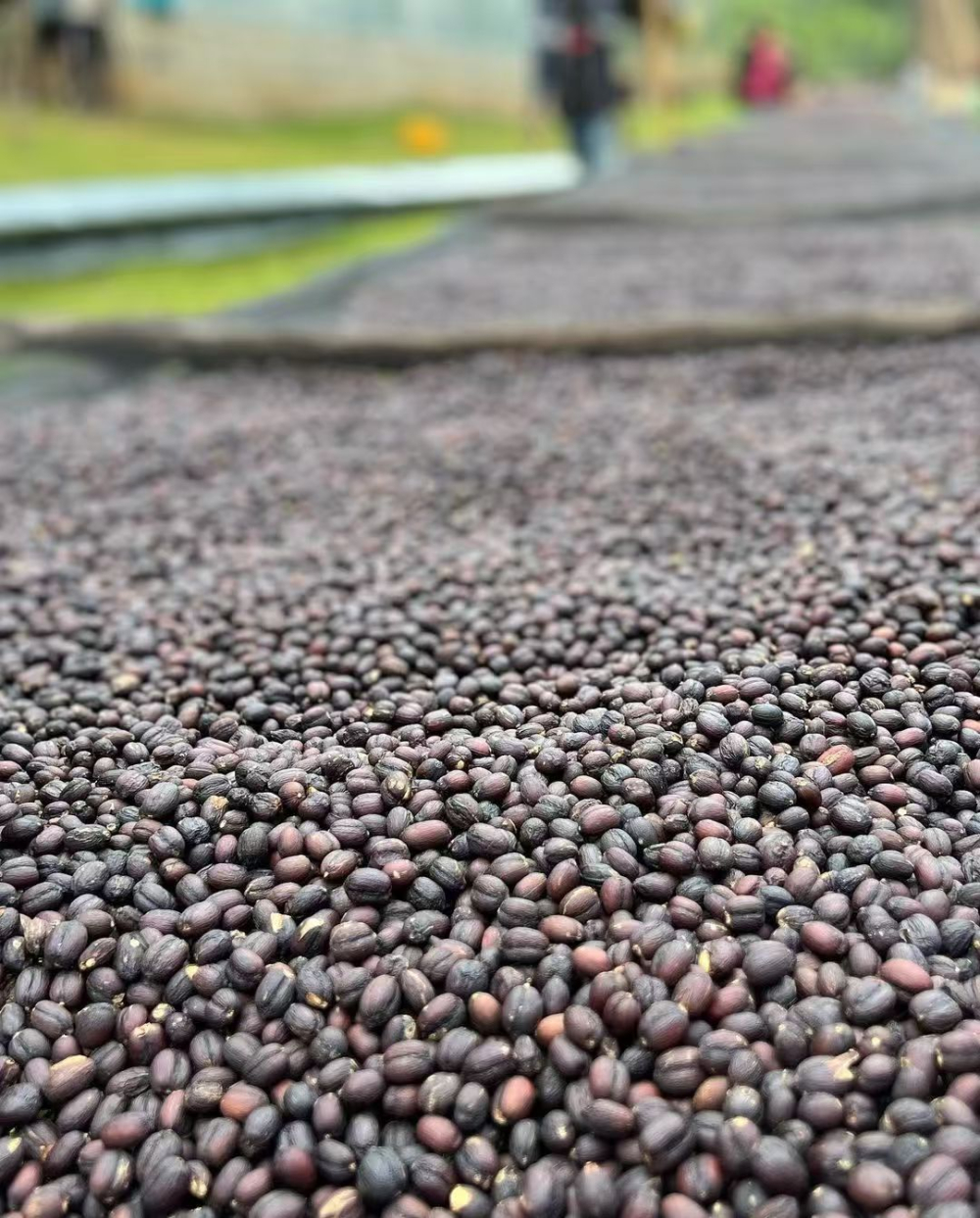
Flavor of Sun-Dried Beans
The flavor of sun-dried coffee beans is usually more intense, with richer layers, a fermented aroma reminiscent of wine, and very abundant sweetness. Below, Front Street Coffee introduces two representative sun-dried coffee beans.
1. Front Street Coffee Ethiopia Huakui
Region: Sidama Guji Hambela
Processing Station: Buku Able
Altitude: 2,350 meters
Variety: Local heirloom varieties
Processing Method: Sun-dried
This new-crop Huakui coffee continues the sun-drying method, and in sun-rich Ethiopia, its coffee quality is beyond doubt. The cup is full of the sweetness of berries and tropical fruits, with the fermented feel unique to sun-drying, and the mouthfeel is like freshly squeezed juice.
2. Front Street Coffee Panama Elida Estate Natural Typica
Region: Boquete, Panama
Estate: Elida Estate
Altitude: 1,850 meters
Variety: Typica
Processing Method: Sun-dried
Panamanian coffee has always been known for the floral aroma and bright acidity of washed processing, but here there are also sun-dried coffee beans of a completely different style that are unforgettable. This Typica from Elida Estate uses refined sun-drying, which does a good job of ensuring coffee quality and preserving a distinct sun-dried flavor, with a very intense fermented wine aroma and the sweetness of fruits such as citrus and raisins.
The above content is compiled by CoffeeHunters, a coffee news website.


