







What is java coffee and what does Mandheling from the Lintong region taste like?
Mandheling is an Indonesian coffee known for a rich, full body with caramel and dark chocolate flavors, low acidity, and noticeable bitterness. It suits drinkers who prefer a heavy mouthfeel. The name comes from an ethnic group in the Lintong area of Aceh Province, a region known for rubber rather than coffee trees.
Coffee first reached Indonesian soil in 1696, when the Governor of Malabar gifted Arabica seedlings to the Dutch Governor in Batavia; floods destroyed that first batch, a second shipment arrived in 1699, and the first harvest came in 1701. Mandheling's wet-hulled processing shapes what the coffee tastes like, and a three-pour method highlights its sweetness and nutty finish.
Indonesian Mandheling coffee is renowned among coffee lovers worldwide for its rich, full-bodied taste and caramel, dark chocolate-like flavors. It has low acidity and pronounced bitterness, making it especially suitable for drinkers who prefer a heavy mouthfeel. This article will start from its historical origins, tracing the beginnings of coffee cultivation in Indonesia and the origin of the name Mandheling, and focus on the flavor characteristics of Mandheling from the Lintong producing region and the reasons behind the wet-hulled processing method. At the same time, Front Street Coffee will share pour-over recommendations for dark-roasted Mandheling, including dripper selection, coffee dose, grind size, water temperature, coffee-to-water ratio, and a three-pour pouring plan, to help you better present this classic origin bean's rich sweetness and nutty finish.
For more specialty coffee knowledge, welcome to follow: Front Street Coffee (Frontsteet Coffee).
The reason Indonesian Mandheling coffee has become popular around the world lies in its rich, full-bodied tactile sensation and the interwoven flavors of caramel and dark chocolate. This characteristic has also led many coffee lovers to regard Mandheling as the representative of a rich mouthfeel. After medium-dark roasting, this bean has extremely low acidity and clearly discernible bitterness, making it very friendly to drinkers who pursue a heavy taste, and Japanese consumers are especially fond of it. Speaking of Japan, there is also an intriguing story between it and Indonesian Mandheling, which Front Street will tell you below.
The first coffee plants appeared on Indonesian soil in 1696. At that time, the Governor of Malabar presented Arabica coffee as a gift to the Dutch Governor stationed in Batavia (present-day Jakarta, Java). However, the first batch of planted seedlings was destroyed by floods. In 1699, the Governor of Malabar in India sent a second batch of seedlings again, and in 1701 Indonesia welcomed its first coffee harvest, thus opening a new chapter in Indonesia's coffee history.
Where did the name Mandheling come from?
Mandheling was originally the name of an ethnic group in the Lintong area of Aceh Province, a region mainly known for rubber production and not for growing coffee trees. So how exactly did the name of what we now call Mandheling coffee come about? The answer is below.
During the colonial period, a Japanese soldier once drank a coffee with an excellent flavor and asked the rubber production department then based in North Sumatra (that is, the pwn company at the time) to help find this coffee. The person in charge of pwn then went to multiple producing regions and collected quite a few high-quality coffee beans to send to Japan for tasting. One of the beans won the Japanese over quite strongly, and they asked what coffee it was. The person in charge of pwn originally wanted to explain that their rubber department was located near Mandailing, but out of consideration that the commercial source should not be disclosed, he said the name MANDHELING. The term Mandheling thus spread from there.
Indonesia is a traditional producing region with a long history of coffee cultivation, and the coffee here has formed a distinctive regional flavor. Mandheling coffee beans are precisely the classic representative of Indonesian coffee. In Front Street's daily bean series, Front Street selected Mandheling from the Lintong producing area as the representative of Indonesian coffee flavor.
[Front Street's daily bean series is a group of high-value producing-region beans. Perhaps in some respects they are not as good as beans from famous estates, but through this group of beans, you can taste the main flavors of major producing regions in a highly cost-effective way, thus allowing coffee beginners to determine their preferred producing regions at a very low price. In the same producing region, washed processing represents a bean's main flavor, while natural processing adds aroma on top of the washed base. Therefore, for Blue Mountain it is recommended to drink washed, and for aromatic beans it is recommended to drink natural, such as Geisha. Front Street's daily beans express the basic flavor of the producing region, so except for Brazil semi-washed, they are all washed. And washed is the most basic flavor of an origin, which is also why the daily bean series are all washed.]
Characteristics of Lintong Mandheling Lintong Mandheling comes from the Lintong highlands in north-central Sumatra, not far from Lake Toba. Front Street Coffee's entry-level daily bean from the Indonesian Mandheling producing region comes from exactly here. Lintong Mandheling also uses the unique wet-hulled method, resulting in low acidity and high body.
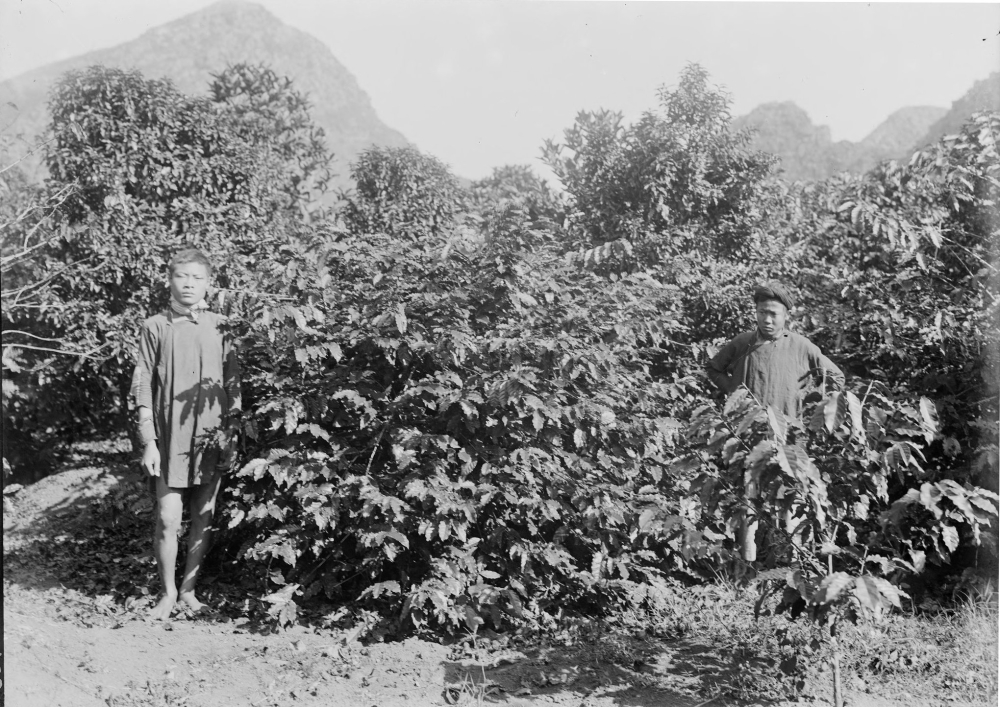
Indonesia is hot and humid all year round, with scarce sunlight for long periods, and humidity stays between 70% and 90% year-round, so relying solely on natural processing is obviously impractical. For Sumatra, with its unpredictable weather, even if washed processing is used for coffee beans, it is still very difficult to spare a continuous week of fine sunny weather to complete drying. Thus the wet-hulled processing method came into being: after first completing the washing process, the coffee beans still with parchment are sun-dried for one to two days, bringing the bean moisture content down to 30% to 50%, after which the parchment is removed and sun-drying continues. This method can speed up the drying of coffee beans and greatly shorten the time required for drying.
Mandheling coffee is easy to identify in both flavor and bean appearance. Because wet-hulled processing removes the parchment while the coffee beans are still in a semi-soft, semi-hard state, under strong sun drying the beans easily crack and form a "goat hoof" shape, so they are also called goat hoof beans; these are not defective beans.
Recommended pour-over method for Mandheling
Mandheling coffee beans are usually dark-roasted, presenting a rich and aromatic mouthfeel, so Front Street recommends choosing a Kono dripper. This helps enhance the coffee's rich mouthfeel; if you do not have a Kono dripper, you can also substitute a V60 dripper.
The standard dose is 15g for one serving, and the selected coffee beans are recommended to rest for 4 to 7 days (with the roast date as day one), so the brewed coffee will have a better flavor.
In terms of coffee grind size, the grind for brewing Mandheling should be coarser than for light-roasted coffee beans. Because Golden Mandheling is dark-roasted, its structure is looser and it more easily absorbs water and releases coffee substances. If it is ground to the fineness of light-roasted beans, it is easy to brew out burnt bitterness; if ground coarser, the coffee will become thin and tasteless, with a mouthfeel as thin as water. The suitable coarseness is a 70% pass rate on a No. 20 sieve. As for water temperature, Front Street recommends brewing with water at 87 to 88°C. Many cases of brewed burnt bitterness come from water that is too hot. Of course, water that is too cool will also make the coffee flat and tasteless.
For the brewing coffee-to-water ratio, Front Street recommends using 1:15. Although some brewing methods suggest using 1:13 or a smaller coffee-to-water ratio, which tastes richer, part of the reason for such a reduced ratio is also to avoid the bitter, miscellaneous flavors in the tail end, and correspondingly, it will also affect the finish. Front Street believes that as long as the relationship between water temperature and grind size is well controlled, using a 1:15 coffee-to-water ratio can better express the overall flavor experience of Mandheling.
For the brewing method, use the commonly used three-pour pouring method. Dividing into three pours can better express Mandheling coffee's rich mouthfeel and caramel sweetness. The specific water distribution is: the first pour is 30ml for blooming, fully wetting the coffee grounds and allowing degassing, in order to better extract the coffee's flavor substances later; the second pour is 100ml, mainly to wash out Mandheling's golden foam.
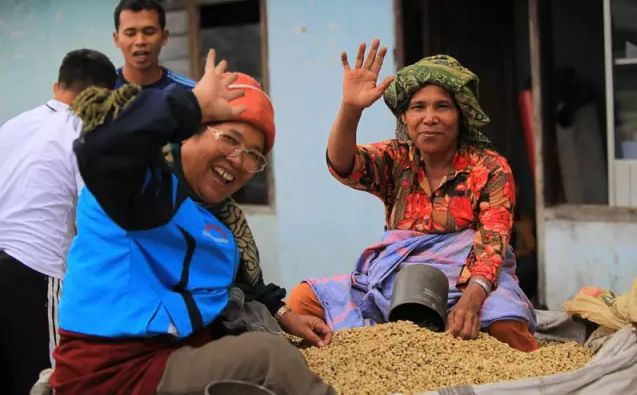
The final pour is a gentle 95ml center pour, which can improve the coffee's sweetness and overall express a substantial, rich mouthfeel, with caramel sweetness and chocolate, nutty flavors.
The above content is compiled by CoffeeHunters, a coffee news website.


