







What Makes Panama Geisha Coffee From Finca Sophia Distinct?
Finca Sophia sits on the southwestern slope of Volcán Barú in Panama at 1,900 to 2,150 meters, making it one of Central America's highest coffee plantations. The roughly 19-hectare experimental farm grows almost exclusively Geisha and won the Washed category at its first reliable of Panama competition in 2017, recognized for white florals, layered fruit notes, and notable sweetness.
Founded in 2008 on land left fallow after over-cultivation, the estate consulted other Panamanian growers before planting, and its small scale favors small-batch output rather than volume. How the roasting process is handled matters for a delicate variety like Geisha, since careful profiling helps preserve the floral and fruity character that judges reward.
When Geisha coffee took the world by storm, Panama's Hacienda La Esmeralda was undoubtedly renowned, but there were still many low-key yet exceptional estates overshadowed by its brilliance. Finca Sophia is one of them—situated on the southwestern slope of Volcán Barú at an altitude of 1,900 to 2,150 meters, it is one of the highest coffee plantations in Central America. This micro experimental farm grows almost exclusively Geisha, conquering judges with delicate white florals, complex fruit notes, and astonishing sweetness, winning the Washed category championship in its very first Best of Panama competition in 2017. What flavor experience will the 2022 vintage sun-dried Geisha that Front Street Coffee has procured this time bring? Let us step into the story of Finca Sophia together.
After Geisha coffee rose to fame, coffee estates around the world rushed to plant this variety, and even Yunnan, China joined the trial cultivation. Panama's Hacienda La Esmeralda is certainly the cream of the crop, but the country actually has quite a few other outstanding estates whose fame has been overshadowed by La Esmeralda. Today, Front Street would like to introduce one such excellent Geisha origin—Finca Sophia, which is also the highest-altitude coffee plantation in Panama.
Finca Sophia
According to Front Street Coffee, Finca Sophia devotes almost all of its land to growing Geisha. Geisha's wonderful white floral and fruity notes have captivated countless coffee lovers. According to feedback from Best of Panama judges, Finca Sophia's Geisha exhibits extraordinary flavors—beyond florals, good sweetness, and acidity, its floral character is more like an interwoven fusion with various fruit notes.
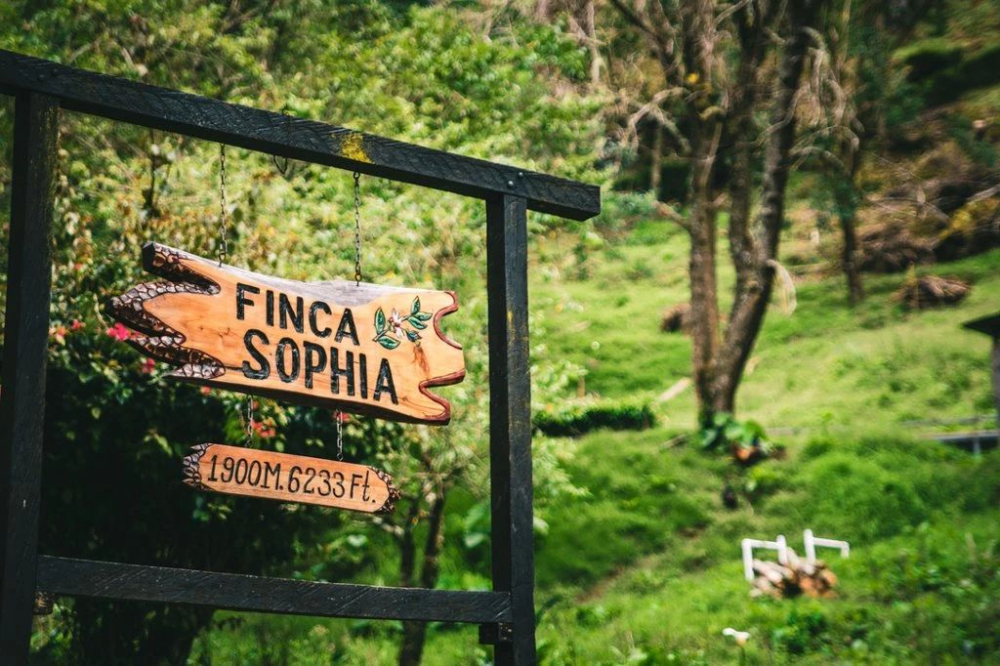
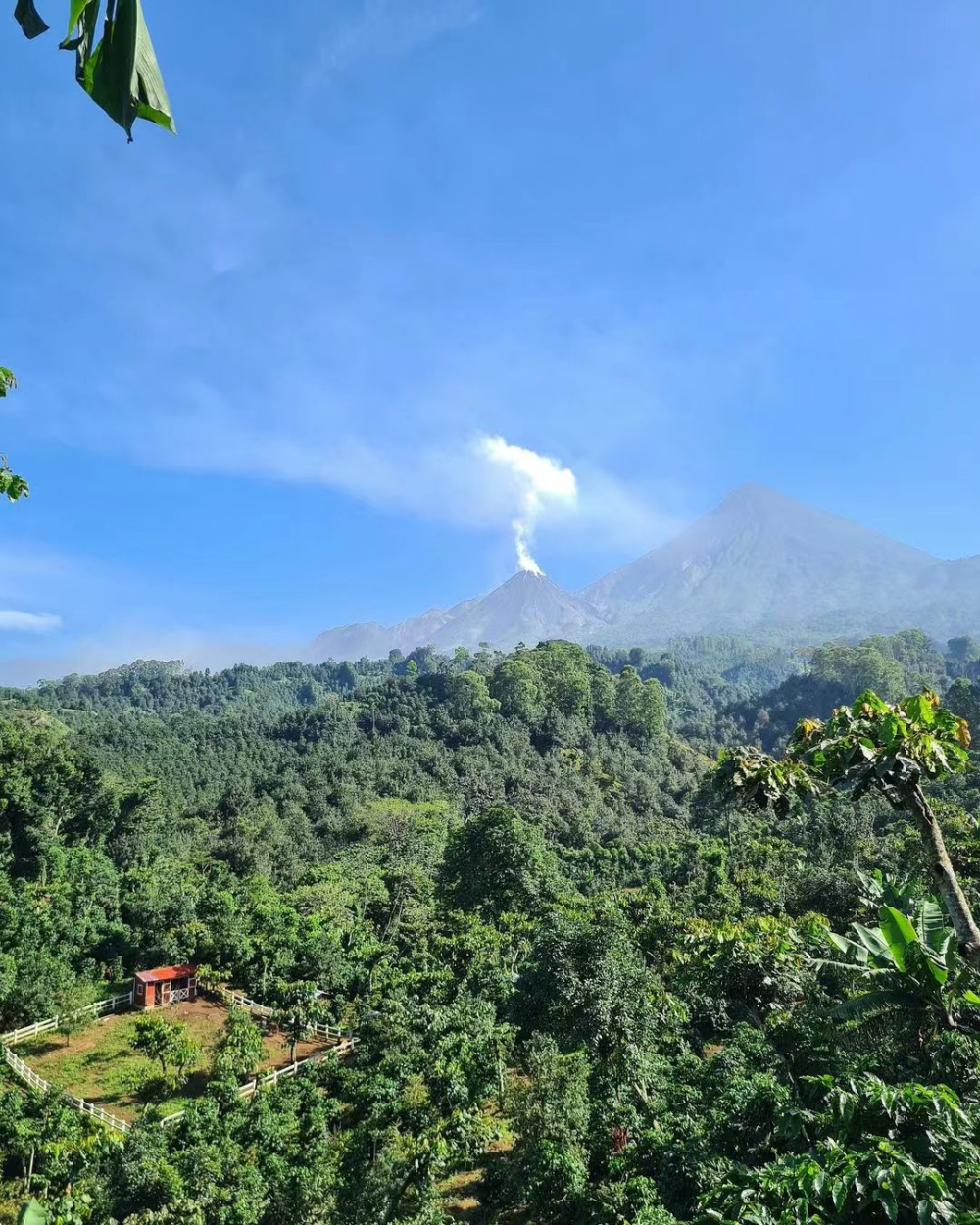
Finca Sophia was founded in 2008, located on the southwestern slope of Volcán Barú in Panama, covering approximately 19 hectares, with coffee cultivation at altitudes between 1,900 and 2,100 meters. Compared to other renowned Panamanian estates, Finca Sophia is extremely small in scale, more like an experimental farm, unable to produce in large quantities and able to focus only on small-batch, ultra-high-quality coffee output.
This land was originally abandoned due to over-cultivation, left untended for a long time with wild grass growing rampant, and the soil conditions were less than ideal. Before deciding to plant coffee, the estate owner first took soil samples and consulted other Panamanian coffee growers for their opinions. At the time, many believed that while such soil could grow coffee, the difficulty would be very high. Despite the less-than-optimistic feedback, the estate owner ultimately bought the land. In 2008, Willem Boot purchased this extremely high-altitude estate from Ricardo Koyner, owner of Hacienda Kotowa, and named it Finca Sophia, located in the town of Volcán, Panama.
Front Street has previously explained that the higher the altitude at which coffee is grown, the more outstanding the flavor tends to be. Finca Sophia sits at an altitude of 1,900 to 2,150 meters, making it one of the highest coffee estates in Central America. Since the estate's founding, Willem and his partners have continuously explored the altitude limits of growing the world's finest coffee.
Perhaps it was a self-fulfilling prophecy—when Finca Sophia first attempted to grow coffee from 2009 to 2011, it was hit by mold, and not a single coffee tree survived. But the estate owner did not give up. Between 2011 and 2012, cultivation techniques were adjusted and replanting was carried out, allowing the coffee trees to adapt to the high-altitude environment on their own.
Hard work pays off. Under the estate owner's meticulous care, Finca Sophia's coffee beans enjoyed a bountiful harvest in 2016, and in 2017, its first entry into the Best of Panama (BOP) competition won the Geisha Washed category championship in one fell swoop. Several years later, in 2020, Finca Sophia competed again, taking home the Washed category championship and the Natural category runner-up. The coffee beans that Front Street Coffee has procured this time are precisely Finca Sophia's 2022 vintage sun-dried Geisha coffee beans.
The estate's name is taken from Sophia, the goddess of wisdom in Greek mythology, and its logo design was inspired by a type of highland dove (called Torcaza in Spanish) that inhabits the estate. The estate is co-owned by Willem and his American partner Equator Coffee Roasters, with daily management entrusted to local Panamanian coffee farm operators.
There was a small episode involving Sophia Geisha in competition, and Front Street believes it was precisely this episode that made Sophia Geisha even more famous and impressive. A senior American judge raised a question during discussion, arguing that this coffee, which received a high score of 93+ from 12 judges, should be honey-processed, because its complex flavors and highly balanced sweetness-acidity made one suspect it was not the coffee's own flavor but rather the result of the processing method. However, when the results were revealed, it was a fully washed Geisha, and all the stunning flavors came from the plant itself. The flavors described by the judges included intense orange blossom, white peach, ripe grapes, blackcurrant, bright citrus acidity, berries, sparkling acidity, syrupy mouthfeel, and a long finish.
The champion batch of Geisha Washed category coffee was harvested from March 10 to 14, 2020. After picking, the fruit was depulped, fermented for 36 hours, washed, and then the coffee beans were placed on raised beds for approximately 8 days of first-stage drying, followed by machine second-stage drying until the moisture content dropped to 11.5%.
Front Street Coffee believes that as Panama's highest-altitude estate, Finca Sophia's large diurnal temperature difference causes coffee to grow extremely slowly, and the high altitude combined with climatic conditions creates astonishing flavor expression. In addition to Geisha, the estate also grows the Catuai variety, but since the estate is not large, most areas are reserved for Geisha, so Sophia's Caturra is only supplied to the American market. It is said that the Caturra coffee produced by this estate is equally rich and captivating in flavor.
Having obtained a Geisha coffee bean, how should it be roasted?
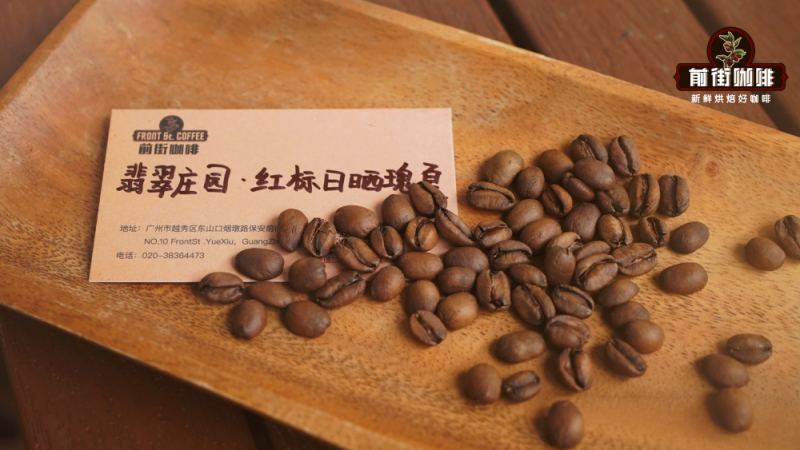
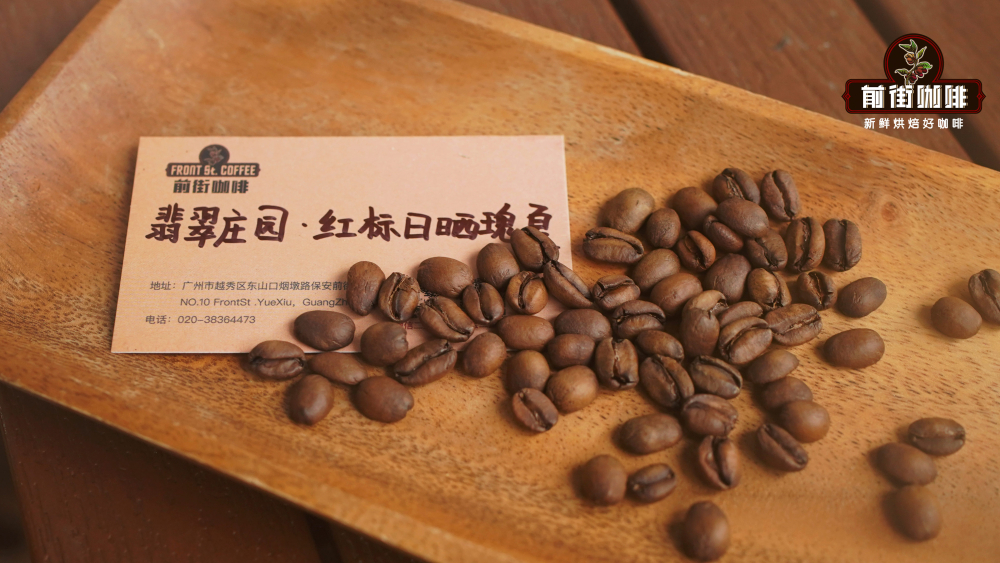
In order to preserve Geisha coffee's captivating floral and fruity aromas and fully showcase its characteristics, extra effort must be put into the roasting process. Geisha is typically grown at altitudes above 1,500 meters, and the beans we have obtained are from 1,700 meters, plump in shape, medium-sized, with thick and elongated beans tapering at both ends. Front Street Coffee's roaster uses a light roast. Through cupping comparison, this Finca Sophia sun-dried bean, when ground, presents dry aromas of melon and rose; upon slurping, it exhibits orange, melon, apple juice, rose, and oolong tea notes, with high sweetness and a full-bodied finish.
Front Street Coffee's roaster reminds: During roasting, note that Geisha's roasting curve should not be too long, otherwise the flavors will become dull. After first crack, the temperature rise should not be too high; Geisha's beans taper at both ends and are prone to scorching, so a temperature rise of below 6°C is ideal, and a light roast better reveals the tea rose aroma.
Front Street Coffee Brewing Recommendations
For coffee brewing, Front Street recommends using freshly roasted coffee beans to experience the coffee's rich flavors to the fullest. The coffee beans shipped by Front Street Coffee are all within 5 days of roasting, because Front Street understands deeply how greatly freshness affects flavor. Front Street's roasting philosophy is "freshly roasted good coffee," ensuring every customer who places an order receives coffee in its freshest state. The coffee resting period is approximately 4 to 7 days, so when customers receive it, it is at its optimal flavor.
Of course, some customers need Front Street to help grind the coffee, which is no problem, but Front Street must remind: once coffee beans are pre-ground, there is no need for further resting, because the pressure from carbon dioxide inside the packaging during transport also rounds out the coffee's flavor, so ground coffee can be brewed immediately upon receipt. However, ground coffee must be used up promptly, because after exposure to air it oxidizes quickly, flavors dissipate faster, and quality declines accordingly. Therefore, Front Street recommends buying whole beans and grinding fresh for each brew to better taste the coffee's flavors.
Front Street's Geisha coffee brewing parameters:
Dripper: Hario V60, Water temperature: 90°C, Coffee dose: 15g, Coffee-to-water ratio: 1:15, Grind size: medium-fine (80% passing through China standard No. 20 sieve)
Panama Finca Sophia Geisha Washed
Estate: Finca Sophia
Region: Volcan
Altitude: 1,900-2,150 meters
Variety: Geisha
Processing: Washed
Flavor: Bright citrus acidity, berries, sparkling acidity, syrupy mouthfeel, long finish
Of course, Front Street Coffee also has multiple Geisha coffees from different origins, such as Panama Boquete Geisha, Panama Deborah Geisha, and Ethiopia Gesha Village Red Label Geisha; there are also some excellent Geisha blends, such as Colombia Hanami Geisha, Costa Rica Mirazu Geisha, and Panama Butterfly Geisha. These let you enjoy Geisha flavors at very affordable prices—truly worth trying!
The above content is compiled by CoffeeHunters, a coffee news website.


