







As the world's largest coffee producer, Brazil's coffee cultivation history, producing regions, and grading system are all worth understanding in depth. This article, from the perspective of Front Street Coffee, sorts through the origin story of Brazilian coffee, the meaning of the grade markings on green bean burlap sacks, and the terroir differences among the six major producing regions, with a focus on the characteristics of the Cerrado region. At the same time, the article also compares the flavor differences between Brazilian and Colombian coffee, and includes specific information and pour-over parameters for Front Street's Brazilian Cerrado everyday drinking beans, helping coffee enthusiasts brew a cup of low-acid, full-bodied Brazilian coffee with nutty and chocolatey sweetness at home.
For more specialty coffee knowledge, please follow the WeChat public account: Front Street Coffee
Among friends who are just getting into coffee, quite a few have not yet appreciated the charm of coffee's acidity, while also being rather averse to bitterness. In such cases, the baristas at Front Street Coffee usually recommend Brazilian coffee beans from Front Street's everyday drinking series. Take the Brazilian Cerrado coffee beans as an example—their characteristics are relatively low acidity, excellent body, a smooth and sweet entry, and a nutty aroma.
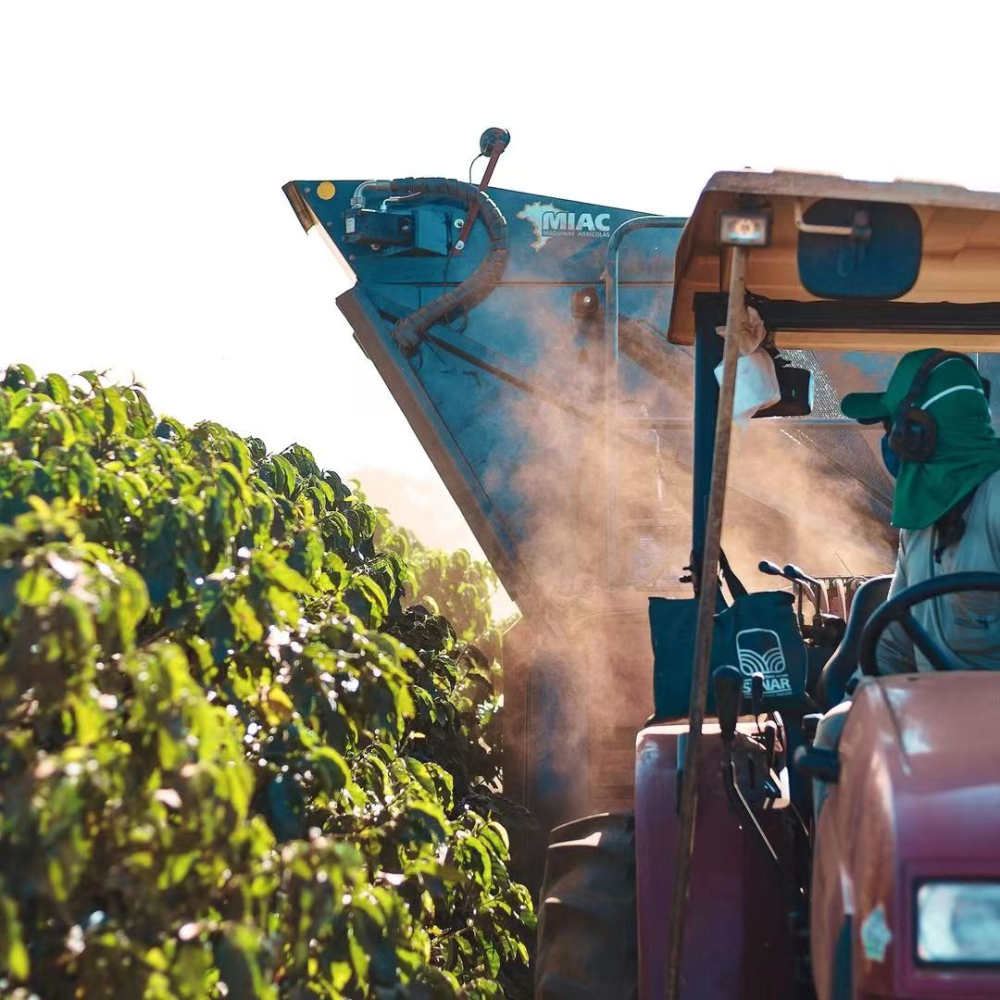
It should be noted that Brazil ranks first in the world in coffee production, and the climatic conditions, transportation conditions, and production scale of its various coffee-growing regions all have a profound impact on price trends in the international coffee market. For example, in the 2020/2021 season, Brazil suffered a once-in-a-century drought, and coffee production fell from more than 70 million bags (60 kg each) in the previous season to more than 50 million bags, while market prices rose by nearly three times.
History of Coffee Cultivation in Brazil
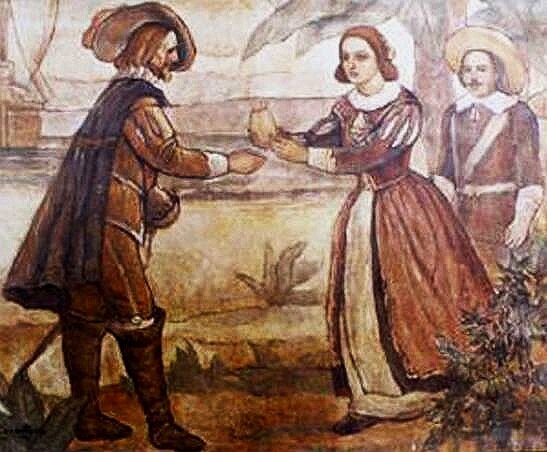
Brazilian coffee enjoys a prominent position today, but if we turn back time 300 years, not a single coffee tree could be found on this land. Brazil's ability to sit firmly in the top spot among global coffee-producing countries is owed to a Portuguese military officer named Francisco de Melo Palheta. James Hoffmann writes in The World Atlas of Coffee that during this officer's diplomatic mission to French Guiana, he met and charmed the local governor's wife. On his return trip, the governor's wife gave him a bouquet of flowers, and coffee seeds were hidden within the bouquet. After returning to Brazil, Francisco planted the seeds, and the coffee trees quickly adapted to the local environment and gradually spread southward.
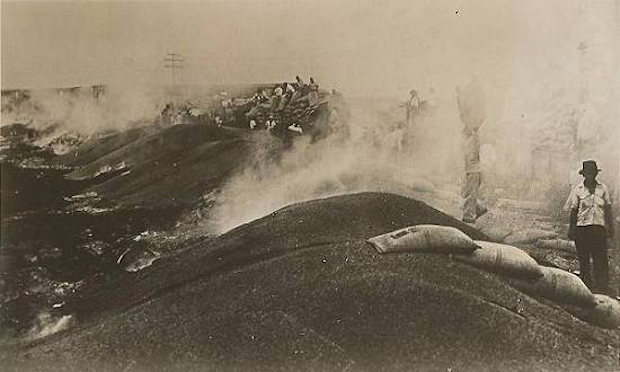
By 1830, Brazil's coffee production already accounted for 30% of the world's total; by 1840 it had risen to 40%. Around 1920, Brazil's coffee production even accounted for 80% of the world's total. Around the 1930s, coffee export revenue accounted for half of Brazil's total export revenue. With the arrival of the Great Depression, Brazilian coffee prices depreciated by nearly 90%. After the export market collapsed, more and more coffee piled up in warehouses, and prices plummeted accordingly. The Brazilian government ultimately decided to destroy billions of pounds of coffee.
Brazilian Coffee Bean Grades
When it comes to coffee bean grading, everyone may be more familiar with Ethiopia's G1 and G2 grades. Observant friends will easily notice that various burlap sacks holding green coffee beans are hung in Front Street Coffee stores, and the information marked on the sacks is like the coffee beans' ID card.
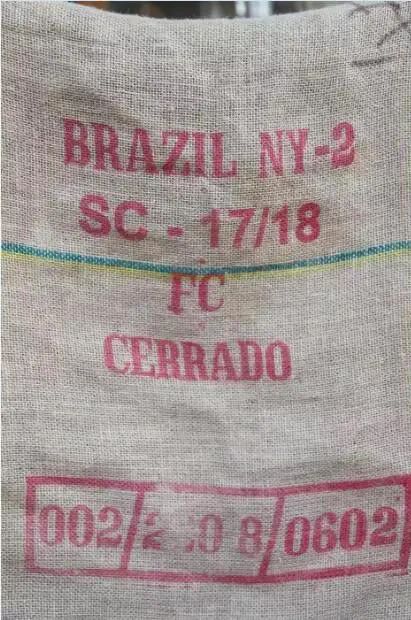
Among them, on burlap sacks of Brazilian green coffee beans, you can often see wording such as "Brazil NY.2 SC – 17/18 FC." The information most people can grasp at first glance is 17/18 screen size, while the rest is not very clear. Below, Front Street will explain it one by one.
In "Brazil NY.2 SC – 17/18 FC," the first word naturally refers to Brazil. The remaining content needs to be broken into 3 parts to understand, corresponding respectively to defect rate, green bean size, and cup quality.
[Defect Rate]
The defect rate is divided into 8 levels, with the grade determined by the number of defective beans contained in every 300 grams of green beans.
[Bean Size]
Green beans are screened using sieves based on 1/64 inch, and sieve sizes typically range from 14 screen to 20 screen.
[Cup Quality]
It is divided into Fine Cup, Fine, Good Cup, Fair Cup, Poor Cup, and Bad Cup. Among these, Fine Cup (FC) and Good Cup (GC) are the most common.
Brazilian Coffee Producing Regions
As Front Street has mentioned in many articles introducing Brazilian coffee producing regions, Brazil's coffee-growing areas are mainly divided into six major producing regions: Bahia, Minas Gerais, Sao Paolo, Mato Grosso and Mato Grosso Do Sul, Espirito Santo, and Parana.
[Bahia]
Coffee cultivation in this producing region began in the 1970s. Thanks to excellent coffee varieties and high-tech agricultural techniques, the coffee here has gradually attracted more and more attention. Most of the Bahia producing region is at higher altitudes, with rainy winters and dry summers.
[Minas Gerais]
Minas Gerais is currently Brazil's most important coffee producing area, with nearly half of the country's coffee coming from here. This region has fertile soil and higher altitudes, making it an ideal place to grow Brazil's most famous specialty coffee. The Cerrado producing region under this major producing area was the first region in Brazil to receive designation of origin. Cerrado means tropical savanna in the local language. The average altitude of the Cerrado producing region is between 800 and 1,300 meters, with humid summers and dry winters.
[Sao Paulo State]
Sao Paulo State is not only a coffee-growing region, but also the location of the coffee export port of Santos. The Mogiana producing region under this state has fertile red soil, an ideal altitude (900 to 1,100 meters), complex terrain, and suitable temperatures.
[Mato Grosso and Mato Grosso Do Sul]
This major producing region has relatively low coffee production, because the highlands here are broad and flat, making them more suitable for grazing.
[Espirito Santo]
This producing region is Brazil's second-largest coffee producing region, but nearly 80% of the coffee trees here belong to the Robusta species. The altitude ranges from 700 to 1,000 meters, and the coffee produced has rich fruity notes and relatively high acidity.
[Parana]
The Parana producing region is called the world's southernmost coffee producing region. It accounts for only 2.5% of Brazil's total area, yet contributes nearly 25% of Brazil's crops. This region lacks high-altitude areas, but its climate is relatively cool, which is conducive to the slow ripening of coffee cherries.
The Difference Between Colombian Coffee and Brazilian Coffee
Colombia and Brazil are the top two countries in Arabica coffee bean production, and the two countries share a border. So where exactly lies the difference between Colombian and Brazilian coffee beans? Through cupping, Front Street has found that the coffees produced by these two countries each have their own strengths.
Colombia has complex terrain, high altitudes, and low latitudes, and its superior natural conditions nurture a batch of high-quality coffee beans. The characteristics of Colombian coffee are a rich chocolate flavor along with a jam-like sweetness; every sip is like fruit-flavored chocolate. Front Street's Colombian Huayueye is a typical example.
Brazilian coffee cultivation mostly uses the sun-drying method. The coffee cherries ripen quickly under abundant heat, and Brazilian coffee beans have a softer texture, thus developing a soft-bean flavor profile. Han Huaizong describes soft-bean flavor in his book Specialty Coffee Studies as follows: low acidity, strong nutty notes, good chocolatey sweetness and body, but with a slight woody and earthy flavor, while floral and orange notes are not obvious. In other words, the characteristics of Brazilian coffee are low acidity, mild and easy to drink, full-bodied, and sufficiently sweet.
If you want to experience the differences in flavor and mouthfeel between Brazilian coffee beans and Colombian coffee beans, you can try Front Street's everyday drinking bean series. This series consists of coffees selected by Front Street that represent the regional flavors of some famous producing countries, including Brazil and Colombia.
For the Brazilian everyday drinking beans, Front Street uses beans from the Cerrado producing region, and for the Colombian everyday drinking beans, Front Street uses beans from the Huila producing region.
Information on Front Street Brazilian Cerrado Coffee Beans
Producing region: Brazil Cerrado
Altitude: 1,000 meters
Variety: Red Bourbon
Processing method: Semi-washed
Flavor: Nuts, chocolate, cream, peanut, caramel
Information on Front Street Colombian Huila Coffee Beans
Producing region: Colombia Huila
Altitude: 1500-1800m
Variety: Caturra
Processing method: Washed
Flavor: Nuts, dark chocolate, caramel, soft fruity acidity
The brewing method is also very simple. Front Street recommends pour-over, with the specific parameters as follows:
Dose: 15g
Coffee-to-water ratio: 1:15
Water temperature: 88 degrees Celsius
Grind size: 75% passing through a No. 20 sieve
Dripper: Kono dripper
Pouring method: Three-stage
In the first stage, pour 30ml and let it bloom for 30 seconds; in the second stage, pour 100ml in a circular motion from the center outward; after the water level drops slightly, begin the third stage, pouring 95ml; once the coffee liquid has finished dripping, end the extraction. Total time is 2 minutes.
For more coffee bean information, please follow Coffee Workshop (WeChat public account: cafe_style)
For professional coffee knowledge exchange, please add WeChat ID: kaixinguoguo0925
The above content is compiled by CoffeeHunters, a coffee news website.


