







How Do You Brew Stale Beans in a Coffee Pot?
Coffee tastes ideal within four to six weeks of roasting, and after that the floral aroma and fruity acidity fade. Beans past their peak can still be brewed in a coffee pot if you adjust the grind size, slow the blooming pour and use a gentler circular pouring technique to wet the grounds evenly.
Stale grounds release little gas, so water runs through the coffee bed too fast and the cup turns out weak. Beans still within their shelf life can also be reused around the home: they absorb odors, work as a natural dye, and can sit at the bottom of an ashtray instead of being thrown away.
The optimal flavor period for coffee usually refers to 4 to 6 weeks after roasting. After this time, the floral aroma, fruity acidity, and chocolatey sweetness will noticeably weaken or even disappear. Although there is no way to restore coffee beans to a fresh state, you can still improve the taste by adjusting the grind size, the blooming pour, and the circular pouring technique. In addition, coffee beans past their optimal flavor period but still within their shelf life do not need to be thrown away in a hurry. Front Street Coffee tried several down-to-earth reuse methods, such as removing odors, making natural dyes, and spreading them at the bottom of ashtrays, which are both practical and help reduce waste. This article will systematically introduce the key points for brewing stale coffee beans and the many uses of expired beans.
The optimal flavor period of coffee is not the same as its shelf life. It refers to the stage when coffee beans expand most noticeably after being soaked in hot water, when the aroma is liveliest, the oils are most abundant, and the sweet aftertaste is clearest after drinking. It usually falls within 4 to 6 weeks after roasting is completed.
Once past the optimal flavor period, the floral aroma, fruity acidity, and chocolatey sweetness we look forward to will greatly diminish, or even disappear completely. Although the condition of the coffee beans cannot be reversed, the extraction plan can be adjusted to modify the flavor and make the coffee easier to drink.
The blooming step appears to be about releasing gas, but in essence it is about fully wetting all of the coffee grounds, including both the surface and the inner core. When gas is released, the coffee grounds swell, the gaps between the particles are pulled closer, and the speed at which water flows into the lower pot slows down, giving the water enough time to penetrate into the inner core of the coffee grounds. Stale coffee beans, however, show almost no reaction after pouring. Water quickly passes through the gaps in the coffee bed into the lower pot, with no time at all to penetrate the inner core. As a result, the surface looks wet while the inner core remains dry, and the brewed coffee naturally tastes weak.
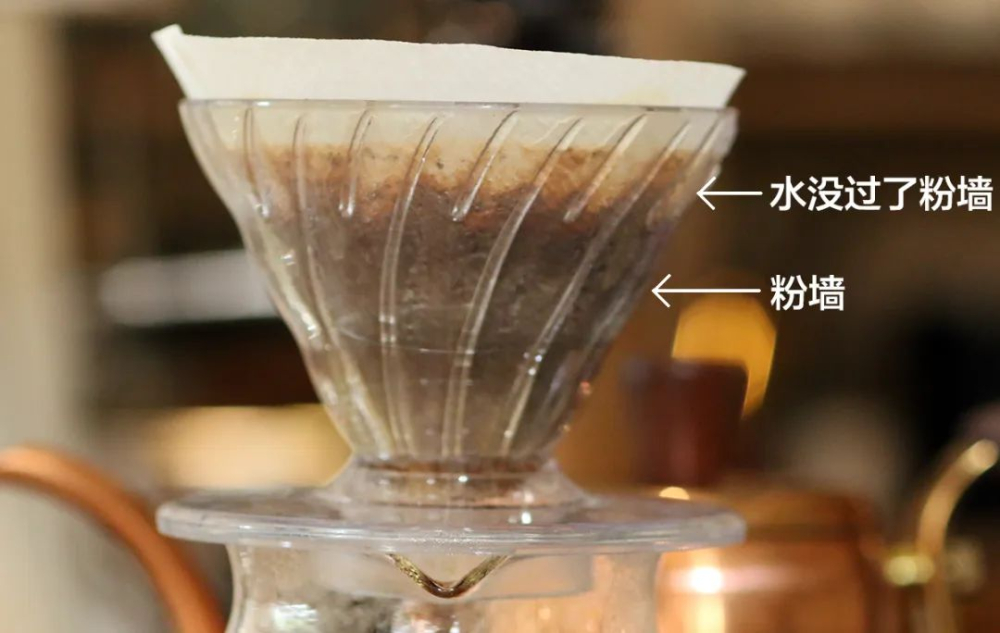
During the subsequent pours, because there is little gas release, the foam becomes very thin, and most of the coffee grounds tend to settle at the bottom, clogging the drainage holes and then producing bitter, harsh flavors from being steeped too long. Therefore, during the blooming stage, the pouring time should be extended as much as possible, for example by using a smaller stream so the water has enough time to wet the coffee grounds. The soaking time should not be too long either. Taking Front Street Coffee's test as an example, pour 30 ml of water over 15 g of grounds in 13 seconds, then wait 5-7 seconds before continuing to pour. The total blooming time is about 20 seconds. After that, pour as usual, but be careful not to make the circles too large, otherwise it is easy to wash the already scant coffee bed back to the bottom and cause "added clogging." Also do not raise the water level too high, because stale coffee grounds mostly lack "vitality" and will quickly sink. Even if the water level is raised, there are not enough coffee grounds to serve as a filter bed, and instead some water will flow away along the ribs. This is also one of the reasons the coffee has no flavor.
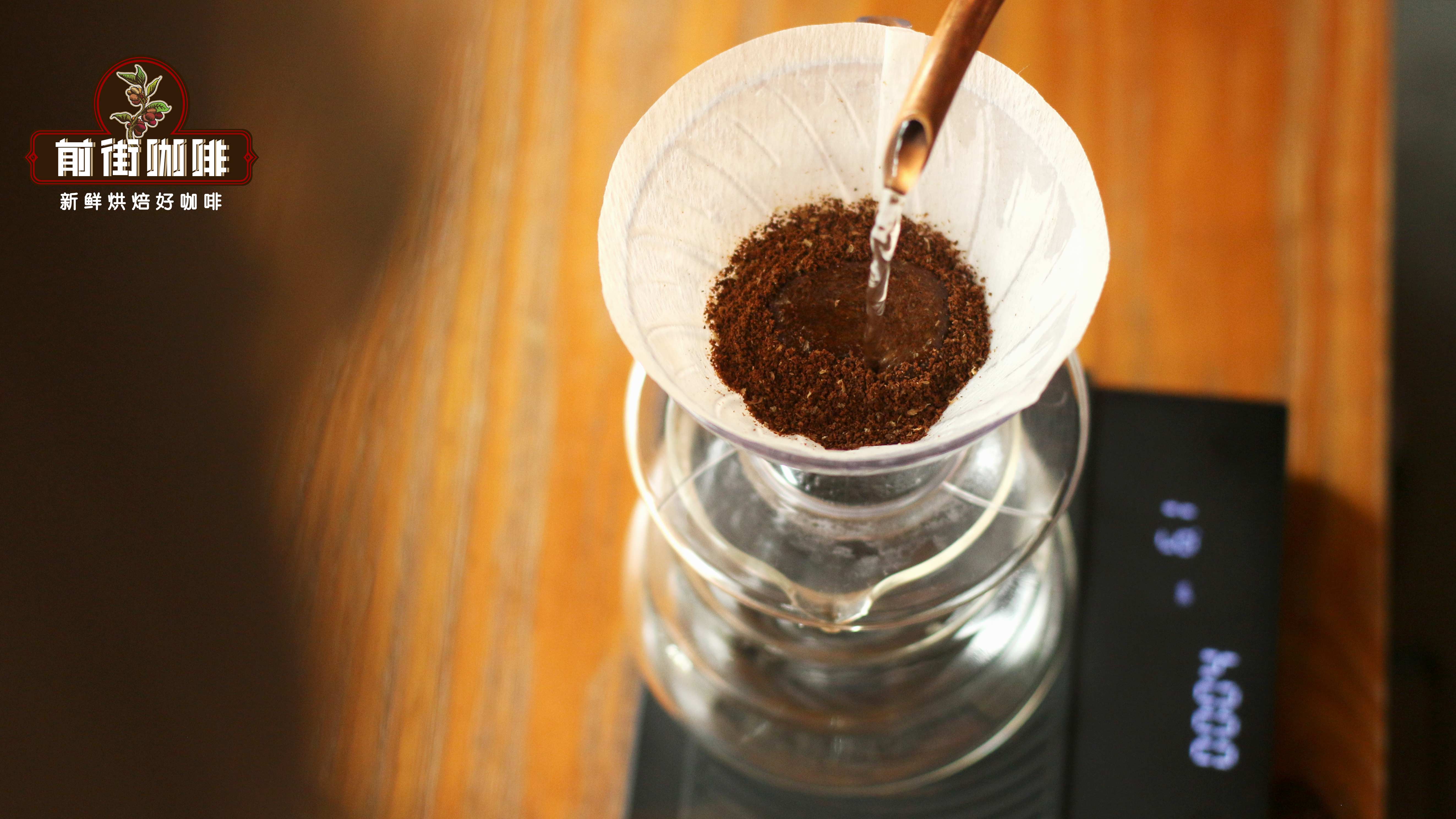
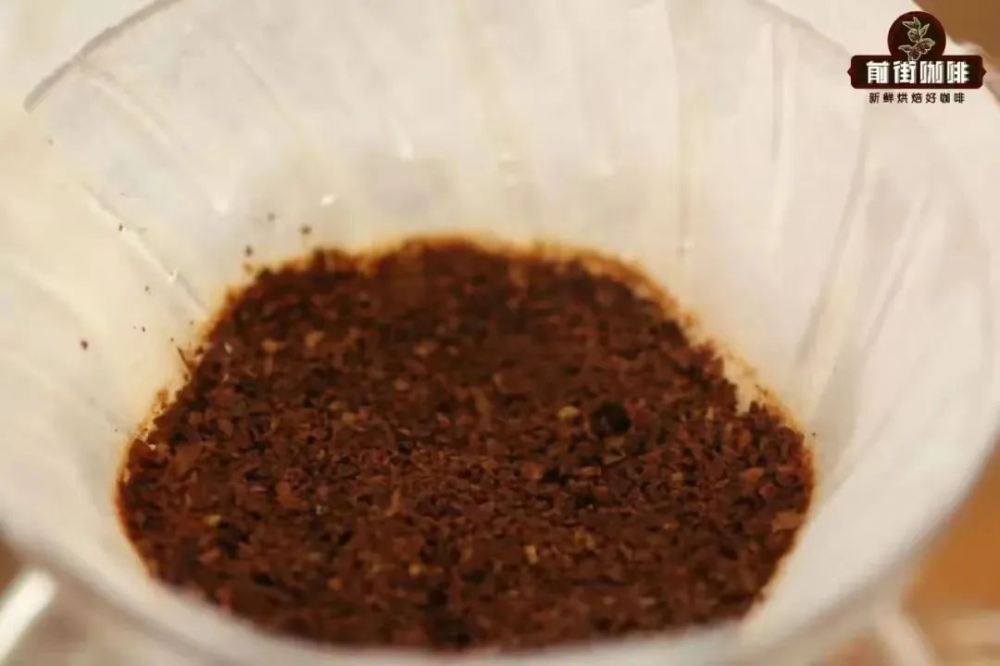
Just as stale coffee beans do not expand during blooming, the coffee bed shows no reaction after pouring. Many friends think blooming is only about degassing, so they skip this step when brewing stale coffee beans. In fact, when brewing stale coffee beans, even more attention should be paid to the pouring method during blooming.
To sum up, the following adjustments can be made when dealing with stale coffee beans. The first is grind size. Front Street Coffee recommends a slightly coarser grind than usual. For example, Front Street Coffee normally uses a 10 setting on the EK, so in this case switch to 10.5 to avoid clogging and the bitter, harsh flavors it causes.
These methods only make corresponding changes based on the state changes during brewing. They improve things compared with the usual brewing method, but the part of the flavor that dissipates because the coffee beans have lost freshness cannot be rescued by technique.
Of course, coffee beans that are past their optimal flavor period but still within their shelf life can be consumed with peace of mind. The shelf life of coffee beans is generally about 1 year. However, friends may still struggle with this: what should be done with expired coffee beans? Worrying about eating them, yet feeling it is a waste to throw them away.
In fact, expired coffee beans can still be put to good use. It is said online that coffee grounds can be used as fuel, fertilizer, dish soap, pet flea remover, ant spray, exfoliating mask, bath salt, and so on, but some of these uses require high-tech methods and equipment, and some have strict scopes of application. In response, Front Street Coffee tried some of the more down-to-earth uses among them, and the results were very good, so we might as well share them with everyone.
●Removing odors
Coffee is a natural odor adsorbent. Simply put expired coffee into a gauze bag and place it in corners that need odor removal, such as shoe cabinets, refrigerators, and bathrooms, and you can say goodbye to odors. Of course, if you need to remove formaldehyde from a newly renovated home, do not entrust expired coffee with such an important task. After all, it cannot adsorb formaldehyde, let alone decompose it. At most, it can help mask the smell.
●Natural dye
If you have preschool children at home, you can absolutely use expired coffee to make dye and create things at home such as play dough and Easter eggs. It is natural and non-toxic, and it can also make learning fun and strengthen parent-child bonding.
●Ashtray companion
If expired coffee beans are ground into granules and spread across the bottom of an ashtray, a coffee aroma will be released when you tap ash or stub out a cigarette, and cleaning the ashtray later also becomes much easier.
Friends, let us take action together, try reusing waste, and restore the beauty of life.
The above content is compiled by CoffeeHunters, a coffee news website.


