







Is SOE Espresso Really Better Than Blended Coffee Beans?
Blend beans remain the standard base for espresso because they deliver a full, balanced cup. SOE espresso uses a single-origin lot instead and puts one origin's character forward. The real difference lies in recipe logic: blends combine several beans in a set ratio, while SOE lets one coffee stand alone.
Blends come in two types by timing: pre-roast blending mixes origins before roasting, and post-roast blending roasts each bean separately first. Blending serves balance, aroma and body, letting beans cover each other's gaps. Practical ratios for hot lattes and hot Americanos differ accordingly.
The choice between espresso blends and SOE espresso has always been a hot topic among coffee lovers. Why are blend beans still the mainstay of espresso today? Compared with single-origin espresso, what are their respective flavor advantages and suitable scenarios? From the perspective of Front Street Coffee, this article systematically sorts out the definition of blended coffee, the difference between pre-roast blending and post-roast blending, the three core purposes of blending, and the real differences in flavor between blend beans and SOE. At the same time, combined with the practical extraction plan for Front Street Sunflower Warm Sun Blend, it shares the specific ratios for hot lattes and hot Americanos, and recommends Front Street Classic Espresso Blend for friends who prefer a rich mouthfeel. Whether you are a beginner just getting into espresso or a veteran who wants to understand the logic of formula beans more deeply, you can gain practical reference from it.
To get more specialty coffee knowledge, welcome to follow: Front Street Coffee (Frontsteet Coffee)
When making espresso, blended coffee beans are the most common raw material choice. Their full and rich taste has won praise from a large number of coffee lovers. Recently, SOE has gradually become popular, and many people compare it with blend beans. So what unique advantages do blend beans still have today? Front Street Coffee (FrontStreet Coffee) will talk about some of our understanding of blended coffee below.
What exactly is blended coffee?
Blended coffee is also called mixed coffee. The method is to combine several single-origin coffee beans in a certain proportion so that the strengths of each bean can be fully displayed. Because blend beans are made up of coffee beans from different origins, it is easier to obtain a balanced taste. For example, if a certain bean has a smooth mouthfeel but insufficient aroma, another bean with a prominent aroma can be added, allowing the coffee beans to make up for each other's shortcomings, achieving complementarity or enhancement in taste, and ultimately forming a new flavor with richer layers. Divided by blending timing, blended coffee has two types: pre-roast blending and post-roast blending. Pre-roast blending means mixing coffee beans from different origins before roasting and then roasting them together; post-roast blending means first roasting each bean separately and then mixing them afterward.
Which tastes better, SOE or blended coffee?
Some friends may wonder: why mix coffee beans together? Isn't a single coffee bean the best? Actually, that is not the case. In Front Street's view, every bean has its strengths and weaknesses. For example, if a certain bean produces thin crema when extracted with an espresso machine, it can be supplemented by adding a bean with rich crema; another example is that if a certain bean makes espresso that is too sour, too bitter, or too sweet, another bean that complements it can also be found for blending, thereby obtaining the ideal coffee flavor. Wouldn't that be more complete?
Whether pre-mixing green beans (pre-roast blending) or roasting separately and then mixing (post-roast blending), it all depends on the characteristics of the coffee beans in the formula, and both methods are reasonable. The advantage of post-roast blending is that different roasting degrees can be used for each bean, allowing each component to display its own best state.
We often habitually compare the flavor of espresso blends with SOE, but this comparison is actually not very fair. The reason is simple: espresso blends all have clear purposes, and these purposes can roughly be grouped into three categories.
1. Lower costs
Some cafes mix lower-quality coffee beans into better-quality beans, reducing raw material costs while increasing sales profits.
2. Create long-term stable flavor
It must be admitted that coffee is ultimately an agricultural product. The same origin may taste different in different harvest seasons and even in different batches within the same year. This is where the shortcoming of a single origin lies - it is hard to confidently guarantee that next year you can still drink the same single-origin coffee that satisfied you this year (beans whose flavor is dominated by processing method are not included here; in addition, other links from origin to cafe may also cause the beans you buy to differ in taste from before).
Therefore, one purpose of blending is to create a product that can be supplied for a long time and has long-term stable flavor. When a certain bean in the formula fails to meet quality standards or changes in a new harvest season, a similar bean can be found to replace it, thereby achieving the effect of stable flavor.
3. Create flavors that a single coffee bean cannot present
Sometimes a single-origin coffee bean is like a person, with both strengths and weaknesses, while blending is like forming a team, letting each person's strengths fill in each other's weaknesses, ultimately achieving a mutually enhancing effect.
For example, using a bean with higher sweetness to blend with a bean with higher acidity can achieve a balance of sweetness and acidity; or adding several Brazilian beans to the formula to improve the overall body. These are all purposes that blending aims to achieve.
These different purposes also determine the flavor direction of blended coffee. For example, if the purpose is to reduce costs, then naturally better-quality coffee beans will not be used, and there is no need to examine the flavor too deeply. Front Street Coffee (FrontStreet Coffee) believes that if the goal is to create flavors that a single coffee bean cannot produce, or to spare no expense in using high-quality and distinctive single-origin coffee beans for blending, then as long as the formula is appropriate, making coffee better than SOE is not difficult at all. So the key to blended coffee still depends on its blending purpose and unit price. After all, we cannot compare the flavor of a blend costing 50 yuan per pound with an SOE costing 100 yuan per pound!
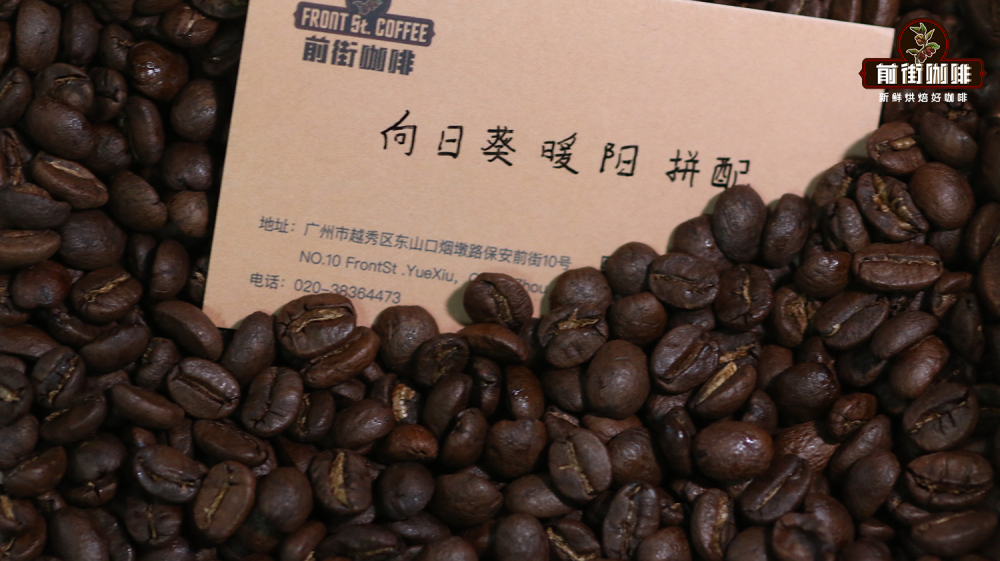
At present, Front Street's espresso blended coffee drink uses Sunflower Warm Sun Blend. This formula is composed of Honduras Sherry and Ethiopia Yirgacheffe Red Cherry. After repeated adjustment by Front Street Coffee (FrontStreet Coffee) baristas, a relatively ideal blending ratio of 7:3 was obtained. The espresso made with it has obvious fruity acidity, along with berry aroma and wine aroma, and a comfortable sweet aftertaste. Front Street is confident that its flavor is fully comparable to SOE.

Espresso can also be made into single-origin coffee. If single-origin coffee beans are used, the resulting coffee can be simply called SOE coffee. Coffee made this way allows you to taste the most basic flavor of the origin.
In Front Street's view, the characteristic of espresso blends is that they can amplify the strengths of a certain coffee bean and conceal its shortcomings, allowing each bean to be fully utilized. Why not do it? Of course, it is not that the more coffee beans in a blend, the better the flavor. The more beans used, the more complex the factors that need to be considered, and it is hard to take every detail into account, making the flavor more and more chaotic. So Front Street believes that controlling the types of blend beans to two to four is about right.
How should espresso be drunk?
For this kind of espresso blend beans, few Chinese people choose to drink them directly in the form of espresso. They are usually used as a base, with milk or water added to make a latte or Americano.
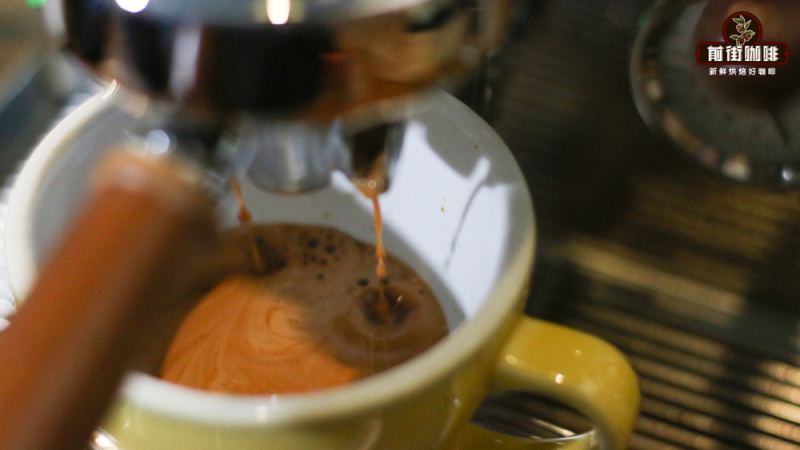
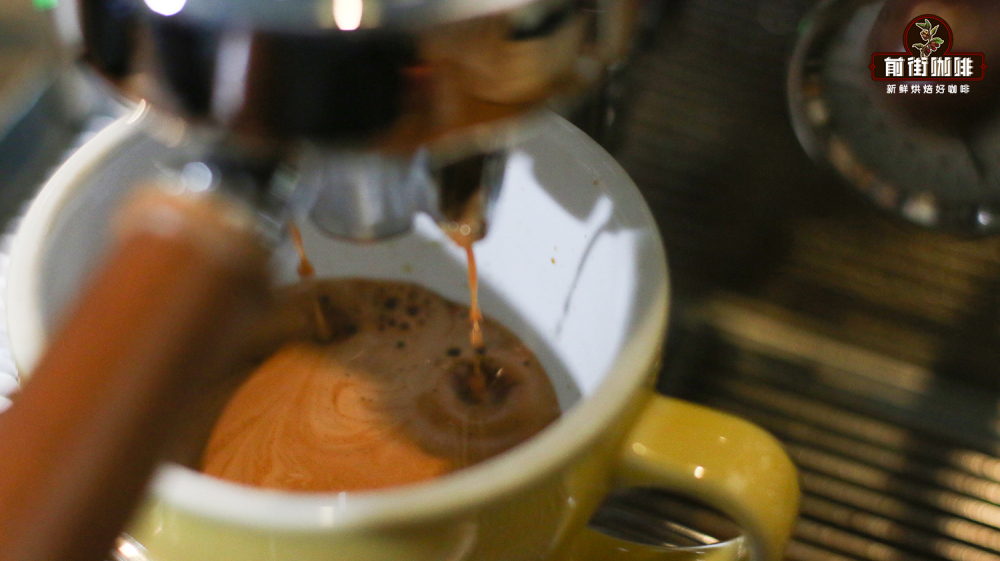
The extraction plan for espresso is to use Sunflower Warm Sun Blend coffee beans, extracting 40g of espresso liquid from 20g of coffee powder in 26 seconds.
Hot latte: the ratio used by Front Street is 40g espresso with 240g steamed milk.
Hot Americano: the ratio used by Front Street is 40g espresso with 200g hot water. It is smooth on the palate, with obvious aroma, fruity sweetness and acidity, and slight bitterness.
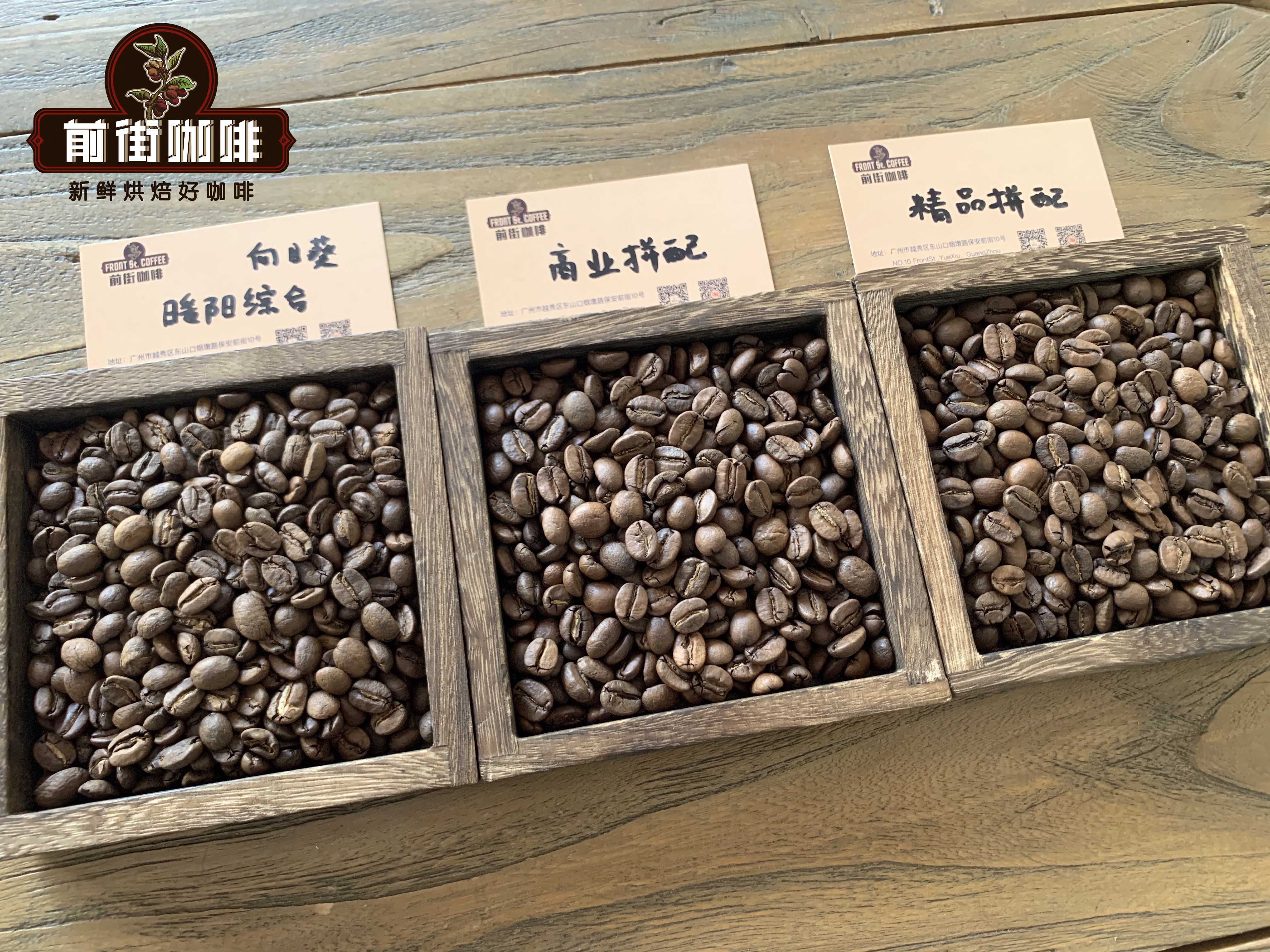
For friends who like rich and aromatic coffee, Front Street Classic Espresso Blend is recommended. This is a formula composed of three origins: Brazil, Indonesia, and Vietnam. It uses a deep roast, which can maximize the rich and aromatic note of the coffee and also allow everyone to easily extract rich and dense coffee crema. It is very suitable whether making an Americano diluted with water or a latte paired with milk. It can be purchased and ordered at the Front Street Taobao store or the Front Street Tmall flagship store.
The above content is compiled by CoffeeHunters, a coffee news website.


