







Admittedly, when it comes to brewing coffee, different groups of people hold completely different views.
In the eyes of "old-school coffee drinkers" who keep everything simple, making a cup of coffee takes only three steps: grind the beans, dump the grounds, pour water, and once it finishes dripping, you can start drinking—any extra step feels like a waste of time. But from the perspective of a shop that needs to ensure consistent output, like Front Street Coffee, a good cup of coffee is inseparable from mastering various parameters, so the brewing framework must be set according to the characteristics of the coffee beans.
And if you're a passionate pour-over enthusiast, you'll most likely be obsessed with all kinds of tricky techniques, gear, and complex data, and may even come up with your own "exclusive extraction recipe."
Compared with the three groups of experienced people above, many friends who come to Front Street Coffee stores are still in the beginner stage—either not yet started or just starting out. These "newbies" who have just entered the brewing world usually begin by searching online for various pour-over tools, learning different brewing methods, watching all kinds of video tutorials, and even memorizing certain coffee jargon—only to find during hands-on practice that their eyes have learned but their hands haven't, and the coffee they brew turns out to be a mess.
For these friends, Front Street Coffee doesn't recommend agonizing too much over what grind size, technique, water temperature, or extraction yield to use. Instead, start by getting a feel for it, then pay attention to a few principles and details, pair them with coffee beans that suit your taste, and first try to brew a cup of coffee you're happy with.
Step one: prepare the necessary equipment—a pour-over kettle for pouring water, a dripper and filter paper to hold back the coffee grounds, a grinder for grinding coffee beans, an electronic scale with a timer function, a thermometer for measuring hot water, and a server for the coffee (a cup can also work as a substitute). When it comes to the electronic scale and thermometer, many people buy them depending on the situation, but Front Street Coffee believesthey each play a fairly important role, andthey don't cost much, soif you want to specifically improve your brewing skills, it's best to have both.
Inpour-overcoffee bean selection, we can roughly divide them into three categories: acidic, balanced, and full-bodied. Friends who like acidic coffee can go straight for floral, citrus, and berry notes; if you're after a balanced taste, you can choose beans that have both fruity and roasted aromas (such as toast, nuts, chocolate); and if you prefer a fuller-bodied coffee type, it's recommended to go straight for a dark roast.Here we're using Front Street Coffee'sKaffa Forest, which has floral notes, citrus acidity, and a slight aroma of melon seeds and nuts, belonging toa medium-light roast.

Now that the equipment is ready and the coffee beans are on hand, let's start brewing right away~
Weigh beans + grind: Before grinding, we need to first weigh out the amount of beans for one cup of coffee. Here we're using Front Street Coffee's regular output specification of 15g of beans. If you choose not to buy an electronic scale, you can refer to this Front Street Coffee article"No Scale? Let Me Teach You to Measure Coffee Weight with a Spoon!", and then make a judgment based on the containers you have at home.

After weighing the coffee beans, take out an extra 2–3 beans and put them into the grinder to grind into powder. When the particles are close to the size of granulated sugar, pour all the remaining coffee beans into the hopper and grind them into powder. If it's much coarser than sugar, adjust the setting finer by 3–5 notches; if it's finer than sugar, adjust the setting coarser by 3–5notches. (This method can onlyhelp usroughlydetermine the grind setting. To find the most suitable coarseness for the coffee beans, you still need to take the subsequent brewing situation into account.)

Prepare hot water: Although Front Street Coffee has discussed in many articles how the water temperature parameter affects coffee flavor, for beginners practicing, memorizing too much data only adds unnecessary trouble. So Front Street Coffee recommends everyone simply choose a conservative value—90°C. It's not only suitable for many types of coffee beans at the same time, but also helps us avoid the results of over-extraction and under-extraction as much as possible. If you don't have a thermometer, after boiling the water, leave the lid off at room temperature of 25–30°C for about 2 minutes 30 seconds to 3 minutes, and it will drop to 90°C.

Pouring water: When brewing tea, we habitually pour in hot water based on the amount of tea leaves. Actually, coffee is the same—less water means a stronger taste, more water means a weaker one. When just starting out, Front Street Coffee recommends using a 1:15 coffee-to-water ratio, meaning 15g of coffee grounds correspond to 225g of hot water. If you find the brewed coffee too strong and bitter, next time pour in a bit more hot water, making the ratio 1:16 or 1:17. Same as before, friends without an electronic scale can refer to another Front Street Coffee article"No Electronic Scale? How to Brew Coffee Blind?", and judge the amount of water by feel.
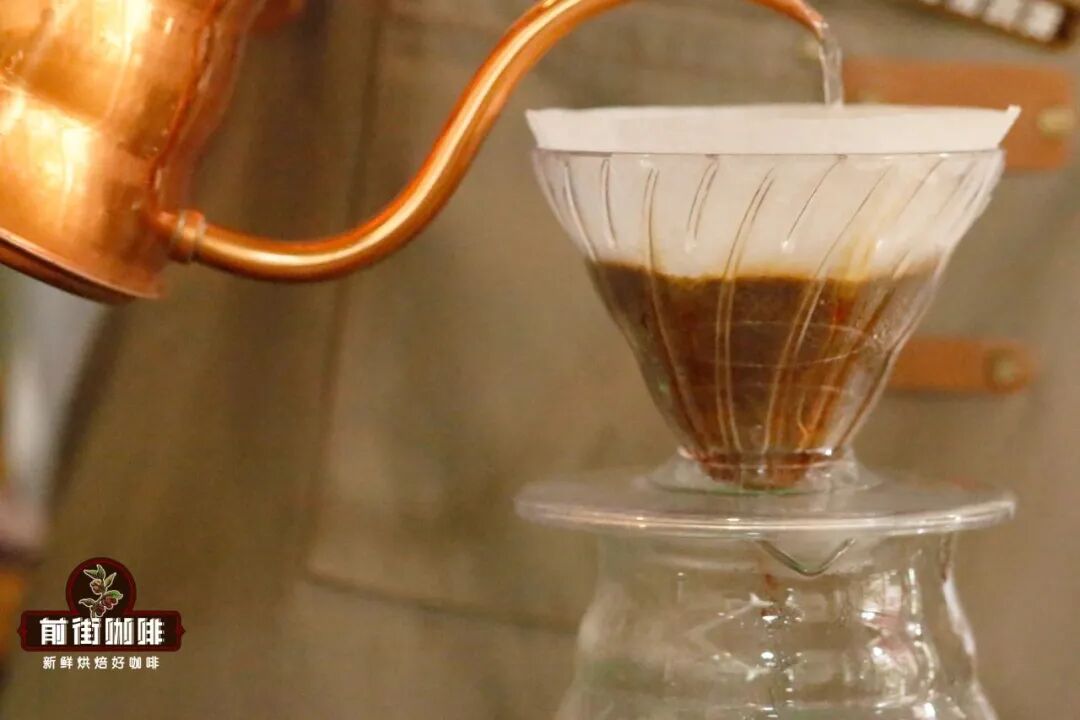
The pouring technique is both the most basic part of pour-over coffee and the parameter with the most variety of play, capable of bringing out different characteristics in coffee. But when you're still at the beginner stage, you may not understand the "secrets" of it at all. In fact, without fancy techniques, beginners can alsobrew delicious coffee. We just need to, within about 2 minutes,make sure all the hot water is poured onto the coffee grounds, andlet them fully contact, and that's enough.
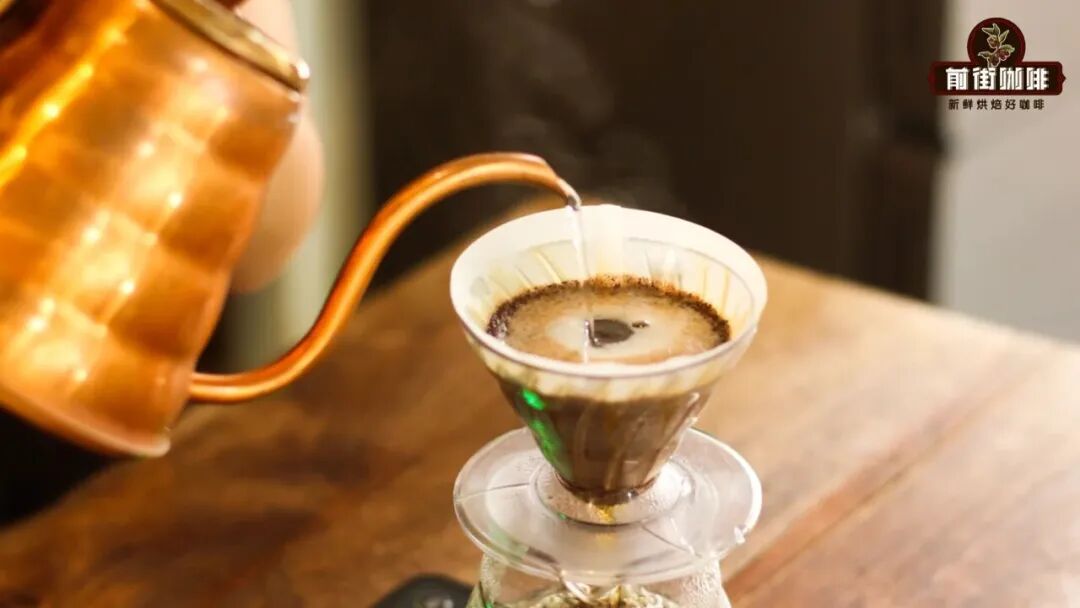
For example, Front Street Coffee's usualthree-stage extractionof 15g Kaffa Forest coffee grounds, with the corresponding 225g of water split into three pours. The electronic scale readings: 30g, 125g, 225g.
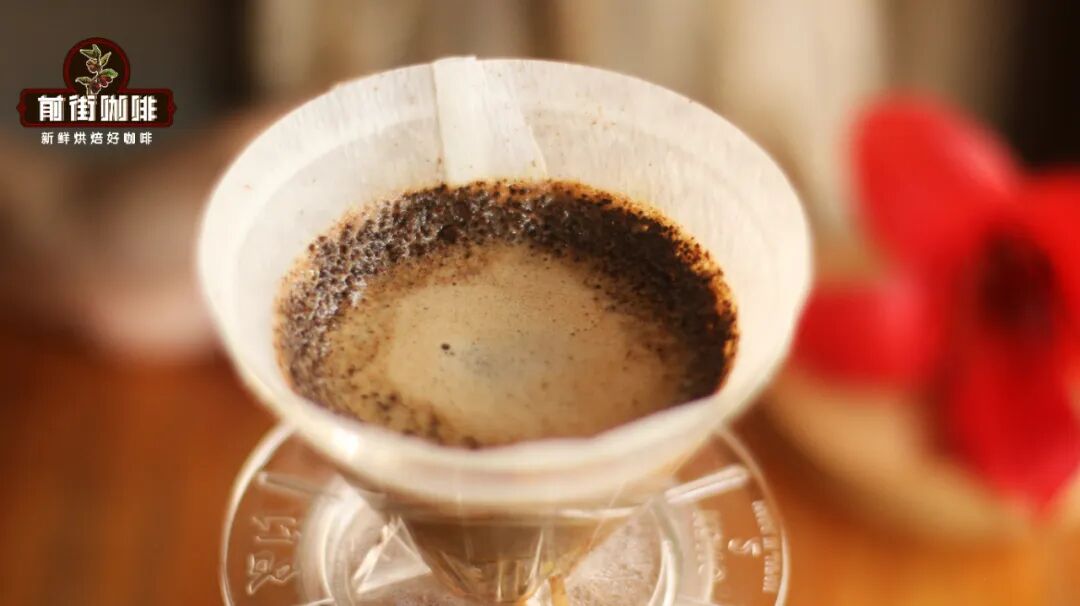
Whenthe dripping time falls between 1 minute 50 seconds and 2 minutes 10 seconds, and the coffee grounds have formed a nice "bowl shape," and it tastes moderately strong, that means there's no major problem with your pouring.
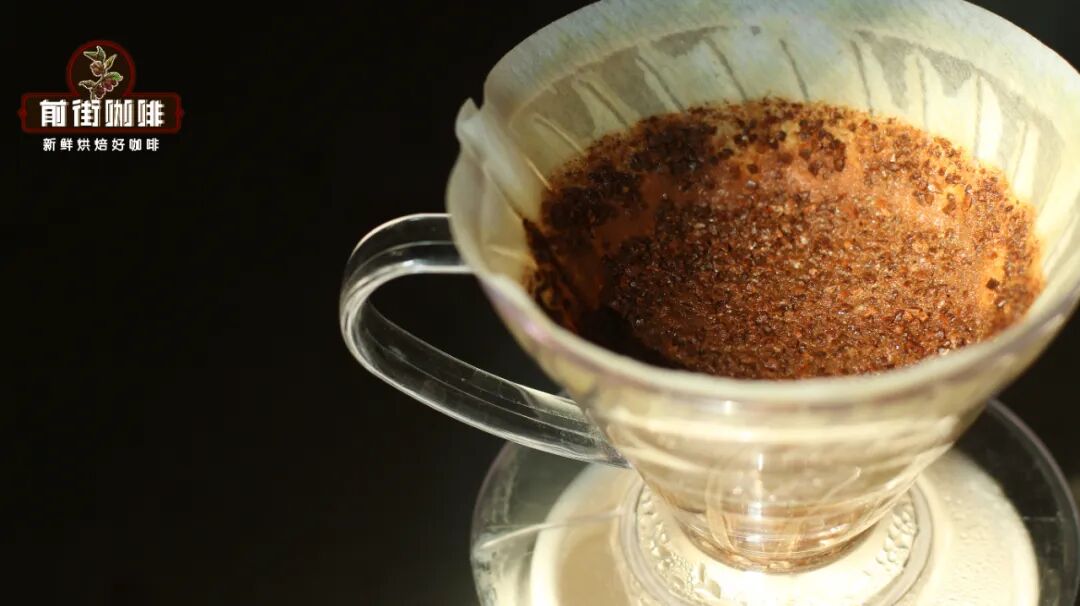
If your extraction time is under 1 minute 40 seconds and the taste is on the weak or sour side, that may be caused by too strong a flow. Front Street Coffee recommends brewing with a gentler, slower stream. Conversely, if the time is over 2 minutes 20 seconds and the taste is strong and bitter, the coffee grounds may have been soaked too long. Next time you can increase the flow and pour in circles.
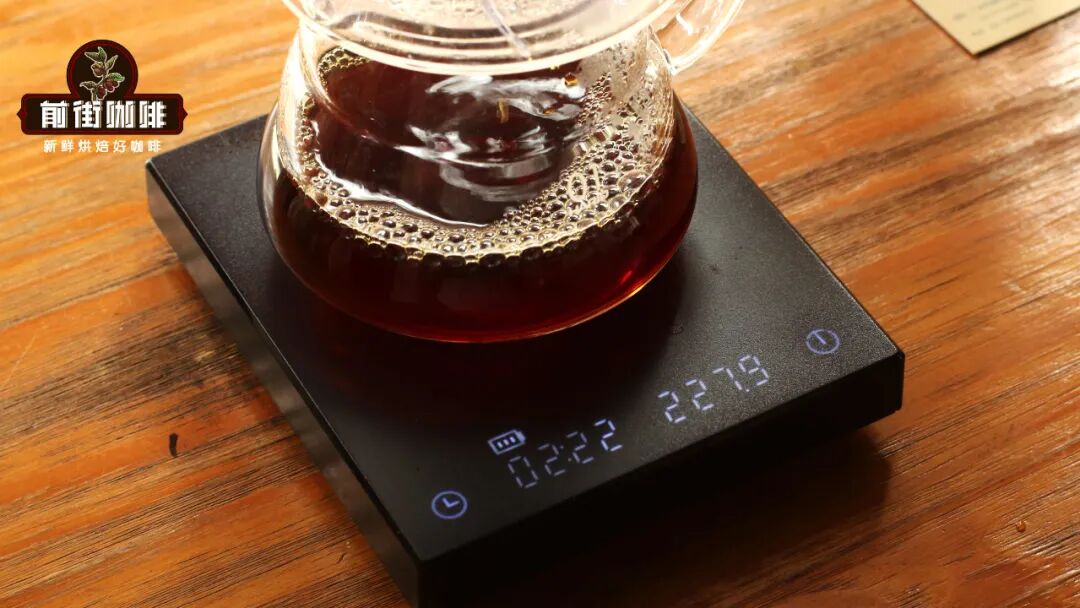
Once you've successfully brewed a delicious cup of coffee, itmeans youhave roughly grasped the brewing steps, and it also shows you've gained some understanding of individual parameters. You can keep getting more familiar with them in future practice and make improvements. And if you want to improve your brewing skills, you need to try to understand how they change coffee flavor, and what relationships exist between the various parameters, then apply them flexibly in brewing.
The above content is compiled by CoffeeHunters, a coffee news website.


