







How does the Kenyan coffee grading system classify AA beans?
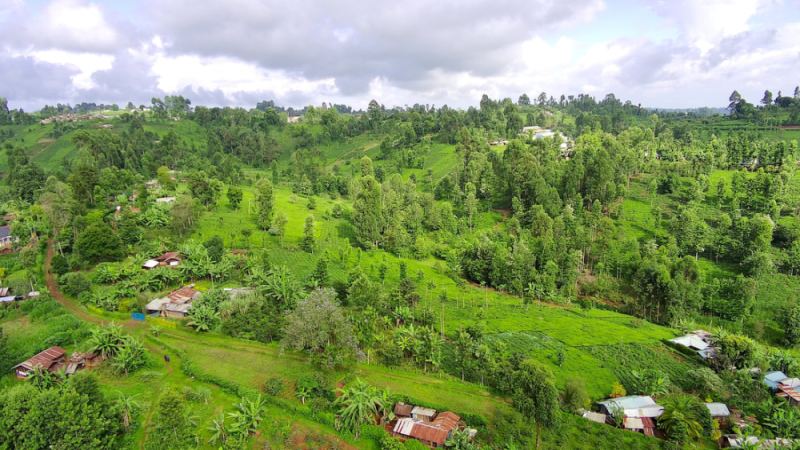
In Kenya's coffee grading system, AA is a size grade, not a flavor score. Beans in this class are screened at roughly 7.2 millimeters and above, which is why the label appears so often on specialty lots. Kenya's seven main producing regions include Thika, Nyeri, Kirinyaga, and Muranga, and the foothills of Mount Kenya and the Aberdare Range are core growing areas.
Grade alone does not guarantee quality, so the cup still depends on variety and processing. Kenyan lots commonly use the SL28 and SL34 varieties with the K72 washed process, producing berry juice body and plum-like acidity. A Thika Asali AA TOP example shows how roasting curves, cupping reports, and brewing parameters turn origin, variety, and process into the final cup.
In the landscape of African specialty coffee, Kenya has always held a pivotal position. Unlike Ethiopia's bright acidity, Kenyan coffee is renowned for its full-bodied berry juice character, plum-like acidity, and solid sweetness. Many coffee enthusiasts often hear the term "Kenya AA," but what exactly does it represent? How does Kenya's coffee grading system work? This article will start with Kenya's seven major producing regions, trace the origins of the two classic varieties SL28 and SL34, analyze the famous K72 washed processing method, and detail the AA grade classification standards. At the same time, Front Street Coffee will share the roasting curve, cupping report, and brewing parameters for this Kenya Thika Asali Honey Processing Station AA TOP, taking you through the entire process of Kenyan coffee from origin to cup.
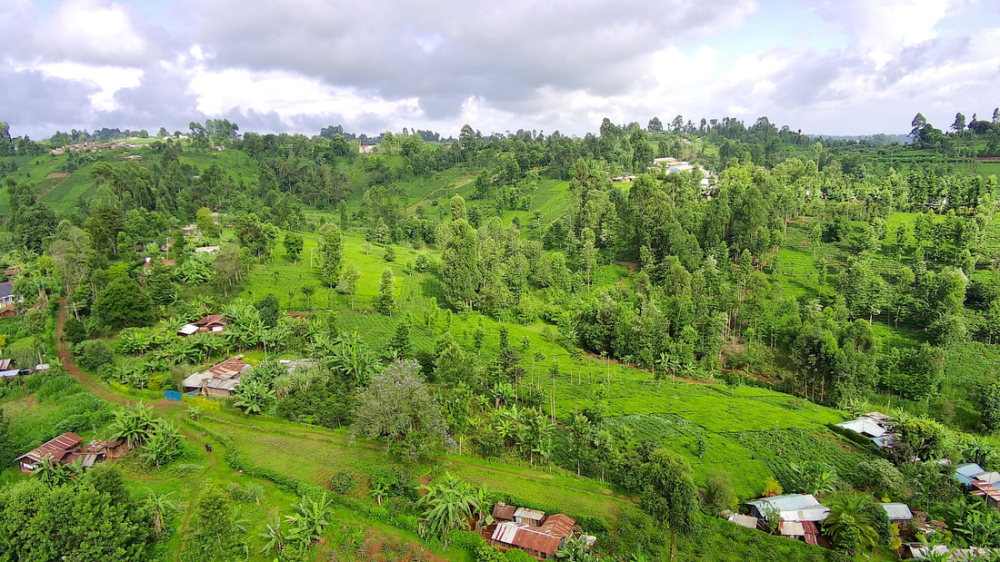
When it comes to African coffee, most people's minds first turn to either Ethiopia or Kenya. Ethiopian beans win with their clear, clean acidity, while Kenyan beans impress with their intense berry juice mouthfeel—such as a tomato juice-like texture and plum-like acidity. Many friends ask the baristas at Front Street: what exactly does Kenya AA mean?
Kenya AA is actually a grade in Kenya's coffee classification system. Next, please follow Front Street's footsteps as we get to know this East African coffee-producing country comprehensively, from producing regions, varieties, roasting, and cupping to brewing.
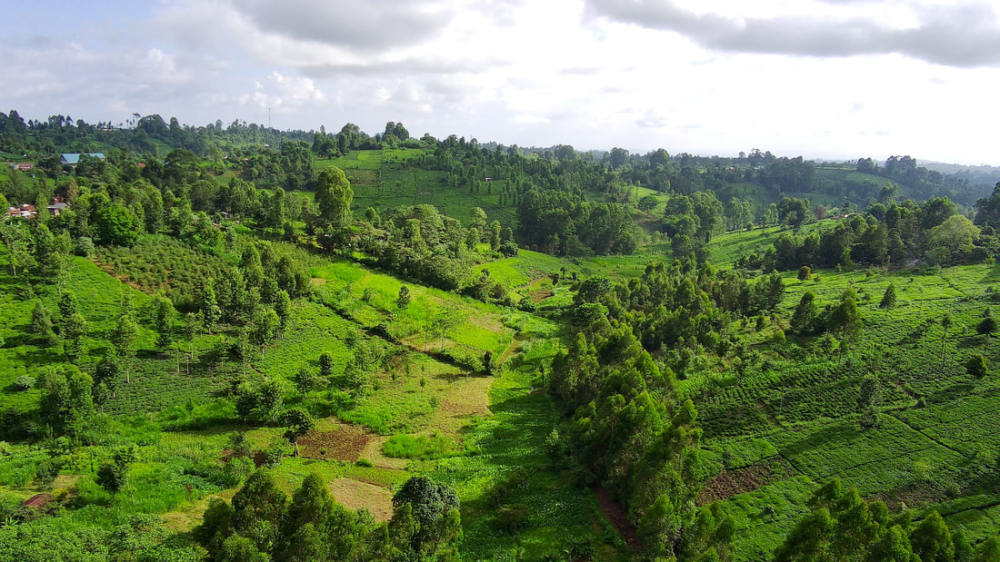
Kenyan Coffee Producing Regions Kenya is located in East Africa, with the equator passing through its center and the East African Rift Valley running north to south. The country borders Somalia to the east, Tanzania to the south, Uganda to the west, Ethiopia and Sudan to the north, and faces the Indian Ocean to the southeast. Kenya's terrain is dominated by plateaus, with an average elevation of about 1,500 meters. Mount Kirinyaga (Mount Kenya) in the center rises to 5,199 meters and is snow-capped year-round, making it Africa's second-highest peak.
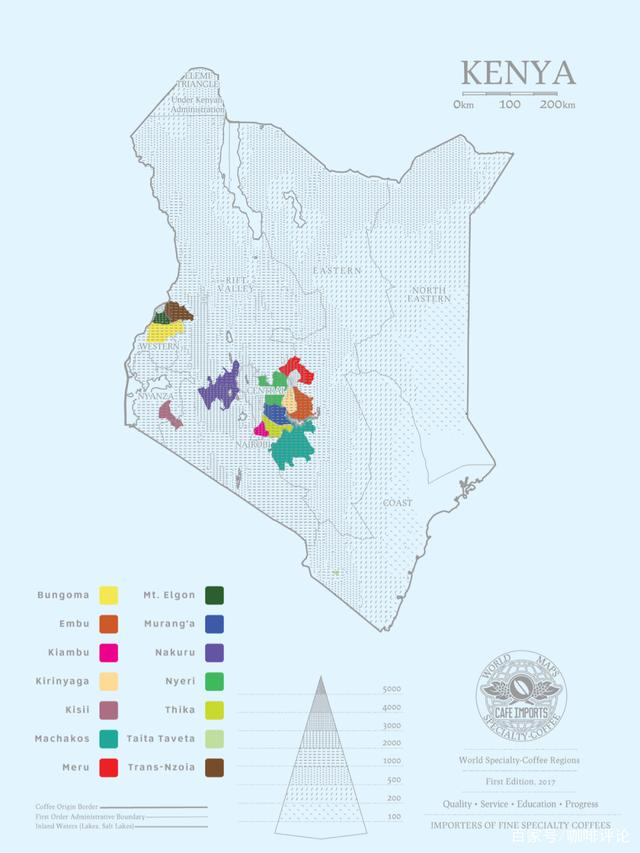
Kenya's seven most famous coffee-producing regions are: Thika, Kirinyaga, Mt. Kenya West, Nyeri, Kiambu, Ruiru, and Muranga. Among them, the foothills of Mount Kenya and the Aberdare Range are the core cultivation areas. Specialty coffee mainly comes from the Thika, Nyeri, Kirinyaga, and Muranga regions.
Nyeri Region: Nyeri is located in central Kenya and is home to the extinct volcano Mount Kenya. Its red soil nurtures Kenya's finest coffee. Agriculture plays an extremely important role in Nyeri, and coffee is its main crop. The region is dominated by cooperatives formed by smallholder farmers, with large estates being relatively rare. The elevation range is between 1,200 and 2,300 meters. The harvest period is divided into two seasons: October to December is the main crop season, and June to August is the fly crop season.
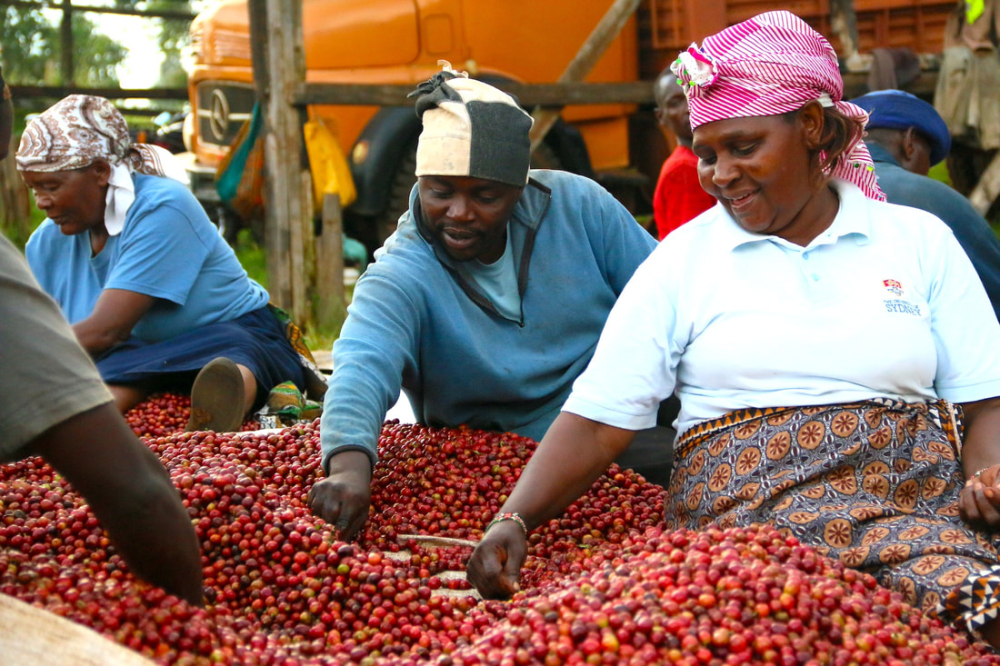
Muranga Region: This region belongs to the Central Province, with about 100,000 coffee farmers cultivating here. As an inland producing region, Muranga was once chosen by the first missionaries as a settlement because the Portuguese prohibited them from living in coastal areas. It also benefits from volcanic soil, and the number of smallholder coffee farmers exceeds that of estates. The elevation ranges from 1,350 to 1,950 meters. The harvest period is likewise October to December for the main crop and June to August for the fly crop.
Kirinyaga Region: Kirinyaga is located on the slopes of Mount Kenya, adjacent to the Nyeri region. The coffee produced here is renowned worldwide for its intense flavor, rich complexity, and solid mouthfeel, and it ranks alongside Nyeri as one of Kenya's current top two producing regions. Producers in this region are mostly smallholder coffee farmers who join cooperatives; the cooperatives provide centralized washing stations, and farmers deliver their harvested coffee cherries to the stations for processing.
"Kirinyaga" originally referred to Mount Kenya. During the British colonial period, the colonists found the name difficult to pronounce and remember, so they changed the mountain's name to "Mt Kenya" and stopped using "Kirinyaga." Mount Kenya is Africa's second-highest peak; although located in the tropics, its summit is perpetually covered in snow—the original meaning of Kirinyaga is precisely "white peak." Mount Kenya is not only a UNESCO protected area but also one of tourists' favorite attractions, with wildlife grazing in herds on its surrounding foothills and grasslands. The word "Kirinyaga" comes from the Kikuyu people and means "white mountain," regarded as the dwelling place of the gods. The Kikuyu are Kenya's largest ethnic group, accounting for one-fifth of the total population. The region's elevation ranges from 1,300 to 1,900 meters. The harvest period is October to December for the main crop and June to August for the fly crop.
Thika Region: Thika is a small town near Kenya's capital, Nairobi. A large number of coffee fields are distributed around Nairobi. Thika itself is an industrial town, but it is surrounded by farmland and waterfalls. There are approximately two thousand coffee growers in the Thika area. Thika's coffee-growing history in Kenya can be traced back to the late nineteenth century, when coffee trees were introduced from neighboring Ethiopia to the north. After local variety improvement, commonly seen varieties now include Bourbon, Kents (SL34, SL28), Typica, and Riuri 11. Today about ninety percent of the planted varieties are SL34 and SL28. The new variety Batian, released in 2007, has not yet been widely promoted. The coffee flavor in this region shows bright fruit acidity, a thick berry juice character, and honey-like sweetness. The elevation is approximately 1,550 to 1,750 meters.
Kenyan Coffee Varieties SL28 Coffee Variety
SL28 is one of Africa's most famous and highly regarded varieties. After being selected in Kenya in the 1930s, it spread to other parts of Africa (especially Uganda's Arabica-growing areas) and has now spread to Latin America. SL28 is suitable for cultivation at medium to high elevations and has drought tolerance, but it is relatively susceptible to major coffee diseases. SL28 can be seen in many parts of Kenya, and even at 60 to 80 years of age, the trees still maintain high yields.
SL28 is a single variety selected in 1935 from a drought-tolerant population in Tanganyika. In 1931, a senior coffee official from the Scott Agricultural Laboratories (A.D. Trench) led visitors to Tanganyika (present-day Tanzania). According to historical records, he noticed a variety growing in the Modi area that appeared tolerant to drought, disease, and pests. Seeds were collected and brought back to the Scott Laboratories, where their drought tolerance was verified.
SL34 Coffee Variety
SL34 was first selected in the late 1930s at Kenya's Scott Agricultural Laboratories. It was selected from a tree at the Kabete Loresho estate in Kenya, a tree known as the "French Mission."
In 1893, French missionaries established a mission in Kenya's Taita Hills and planted Bourbon coffee seeds from Reunion Island there. In 1899, coffee seedlings from Taita were brought to another French mission at St. Austin (near Nairobi), and seeds from there were distributed to settlers willing to grow coffee—this is the origin of "French Mission" coffee. Because historically French missionaries shipped coffee seeds directly from Reunion Island, people generally understood "French Mission" to be the Bourbon variety. However, recent genetic testing shows that SL34 is related to the Typica genome. Therefore, the claim that SL34 was selected from French Mission has also sparked controversy.
Front Street cupped the coffee beans of the two varieties separately and found that SL28 and SL34 have quite similar flavors, both presenting complex and changeable berry-like acidity and a caramel-sweet finish. Compared with SL28, SL34 has a heavier mouthfeel, with acidity leaning more toward berries such as blackberry; the overall sweetness and acidity are balanced, with a caramel finish. SL28, after the temperature drops, tends toward blueberry-like acidity, with acidity rising slightly and sweetness also higher, consistent with Bourbon's characteristic high sweetness.
Kenyan Coffee Bean Processing Method—Kenya 72-Hour Washed
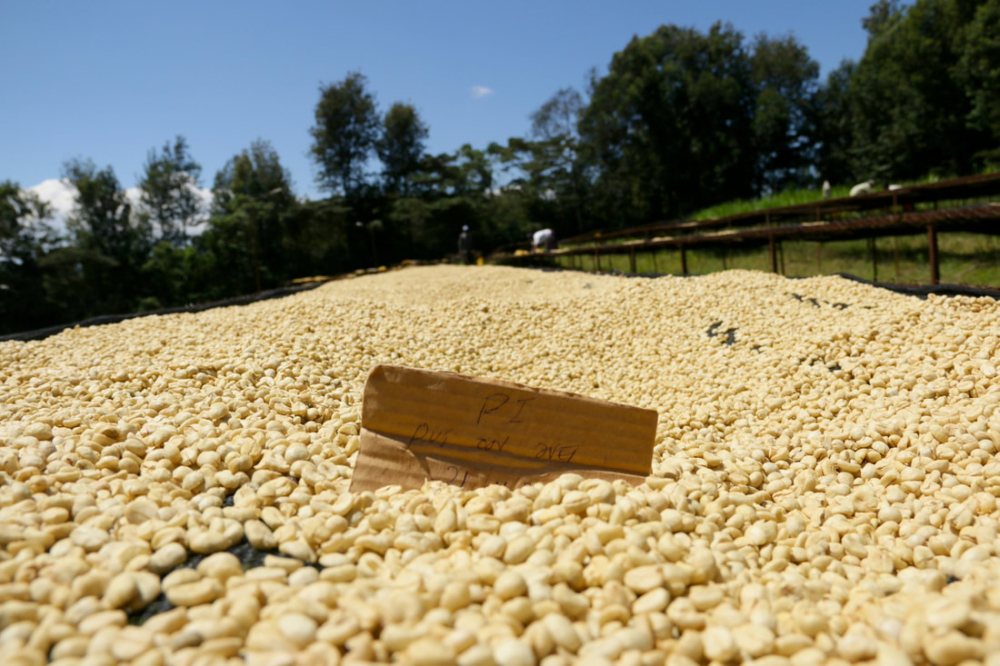
Kenya uses a repeated fermentation-then-washing cycle method: post-processing is carried out on the day of harvest, the finest coffee cherries are selected, pulped, and then fermented for 24 hours, after which they are washed with clean river water. Then they are fermented again with clean river water for 24 hours and washed again. This cycle is repeated three times, totaling 72 hours, so it is called the Kenyan-style 72-hour fermentation washed processing method, or [K72] for short. Front Street believes that the Kenyan 72-hour fermentation washed processing method allows the coffee beans to undergo a long fermentation at low temperatures, and only after final drying and dehydration is the entire process completed, enabling the beans to present a brighter, cleaner, and fuller flavor.
Kenyan Coffee Bean Grading AA Plus (AA+): AA grade with particularly excellent cup quality (flavor, mouthfeel). AA: Screen Size 17-18. AB: Screen Size 15-16, accounting for the majority of production. C: Screen Size smaller than AB. TT: Lighter-weight beans blown out from AA and AB grade beans by an airflow sorter. T: Lighter-weight beans blown out from C grade beans by an airflow sorter. E Elephant Bean: Large mutated beans formed by two beans fused together, also called elephant ear. PB Peaberry: Classified by shape, unrelated to flavor and weight.
Region: Kenya Thika
Processing Station: Asali Honey Processing Station Elevation: 1,550-1,750 meters Grade: AA TOP Variety: SL28, SL34 Processing Method: Kenya 72-hour washed
Front Street Roasting Suggestions Preheat the roaster to 200°C and charge the beans, set the damper to 3, turn on the heat after 30 seconds, adjust the flame to 160, and keep the damper unchanged. The turning point is at 1 minute 34 seconds; maintain the flame. At 5 minutes 30 seconds, the beans turn yellow, the grassy smell dissipates, and the dehydration stage begins; lower the flame to 130 and enter the Maillard reaction at a lower flame. At 178°C, lower the flame again to extend the Maillard reaction time, and open the damper to 3.5.
At 7 minutes 45 seconds, dehydration is complete, and the flame is lowered to 80. At 8 minutes 30 seconds, wrinkles and dark streaks appear on the bean surface, and the toasty aroma turns into coffee aroma; this is the prelude to first crack, so listen carefully for the sound of first crack. First crack begins at 8 minutes 52 seconds; open the damper fully to 5 and lower the flame to 50 to reduce the degree of caramelization. At the start of first crack, heat absorption is relatively strong, so it is recommended to maintain heat during this stage to prevent stalling. First crack development takes a relatively long time, which helps reduce acidity and develop flavor. Post-first-crack development time is 2 minutes 10 seconds, dropping at 191.6°C.
Front Street Cupping Report The wet aroma presents ripe tomato and floral notes; on the palate there are cherry tomato and plum flavors, with bright acidity, a clean mouthfeel, medium body, outstanding mid-palate sweetness, and a juicy character; the finish is berry aroma and yellow sugar sweetness, accompanied by green tea aroma.
Front Street Brewing Suggestions
FrontStreet Coffee, considering that this bean uses a medium-light roast profile, will choose a higher water temperature and a faster-flow dripper. The main goal is to extract its bright acidity with high temperature, but not to over-extract due to high temperature, so a faster-flow V60 dripper was chosen.
Coffee-to-water ratio: 1:15, 15g coffee: 225ml water
Water temperature: 90°C~91°C Grind size: fine granulated sugar (78% passing through a No. 20 standard sieve)
Pour 30 grams of water for the first stage and bloom for 30 seconds, then pour 95 grams (the scale shows about 125 grams), finishing the pour in about 1 minute. When the water level drops to two-thirds of the coffee bed, pour the remaining 100 grams (the scale shows about 225 grams), finishing the pour in about 1 minute 40 seconds. Dripping is complete at 2 minutes 00 seconds; remove the dripper to finish extraction.
Brewed flavor: on the palate there are plum and cherry tomato flavors; the acidity is intense and full-bodied, with outstanding mid-palate sweetness and a juicy character; the finish is berry aroma and yellow sugar sweetness, accompanied by green tea aroma.
The above content is compiled by CoffeeHunters, a coffee news website.


