







How should Blue Mountain coffee beans be brewed as pour-over?
Brewing Jamaican Blue Mountain coffee at home starts with the green bean itself. Authentic Blue Mountain No. 1 must be Typica variety grown between 910 and 1,700 meters in Saint Andrew, Saint Thomas, Portland, or Saint Mary, and it is washed processed. Selecting that grade first keeps the dark chocolate, nut, and caramel profile within reach before any brewing decision.
From there, a three-stage pour-over controls the cup. Match water temperature, grind size, and coffee-to-water ratio to the bean, then pour in stages so extraction stays even. The washed processing and grading standards behind the green bean set the ceiling, while pour-over technique determines how much of that classic Blue Mountain flavor actually reaches the cup.
Blue Mountain coffee has long been regarded as a jewel among coffees, its rich and mellow taste captivating countless enthusiasts. To recreate an authentic cup of Jamaican Blue Mountain coffee at home, you first need to understand its origin background, washed processing method, and grading standards, then master the matching brewing parameters and techniques. Starting from Front Street's Blue Mountain No. 1 coffee beans, this article sorts out the core knowledge of Blue Mountain coffee and provides a complete pour-over procedure—including equipment preparation, water temperature and grind size selection, coffee-to-water ratio, and the specific details of three-stage pouring—to help you consistently extract the classic Blue Mountain flavor interwoven with dark chocolate, nuts, and caramel.
Among the various coffee categories, Blue Mountain coffee stands out as the finest, and its rich, full-bodied taste is often unforgettable after just one sip. For friends who love the Blue Mountain flavor, Front Street has specially compiled a set of brewing ideas for Blue Mountain coffee in this article.
Introduction to Jamaican Blue Mountain Coffee
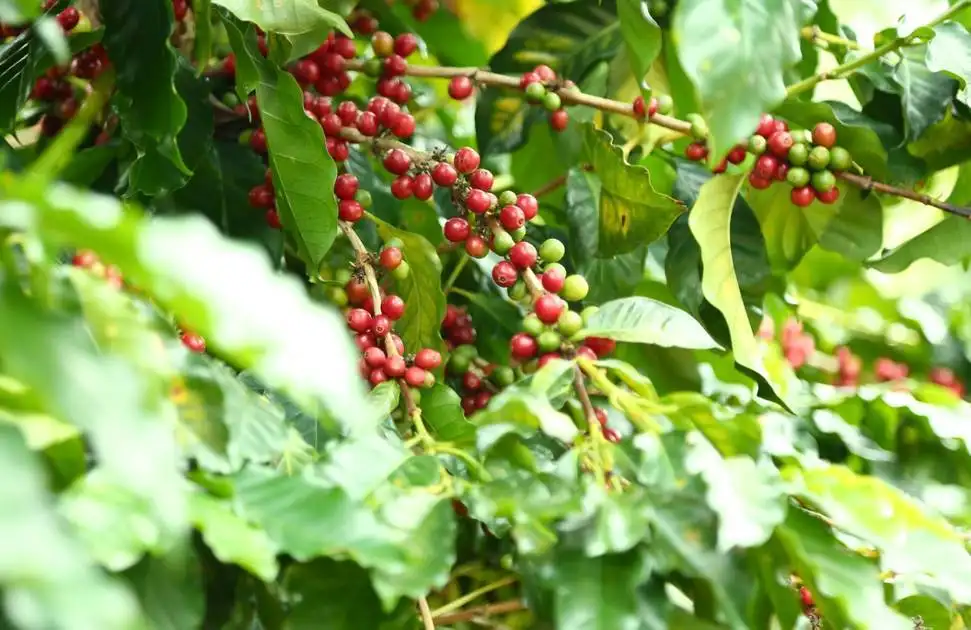
The hometown of Blue Mountain coffee is Jamaica in the Caribbean, with production concentrated in the Blue Mountain range in the eastern part of the country. This area is surrounded by the sea, and when sunlight falls on the mountains, it gives off a charming blue sheen—hence the name Blue Mountain. Blue Mountain is not only scenic with crisp, clear air, but also home to the highest peak in the Caribbean, reaching 2,256 meters above sea level, attracting tourists year-round for vacations. Located within the coffee-growing belt, Blue Mountain has nutrient-rich volcanic soil, cool temperatures, and abundant sunshine and rainfall. The large temperature difference between day and night at high altitude allows the coffee cherries enough time to accumulate nutrients, thereby generating richer aromatic compounds.
Truly high-quality Jamaican Blue Mountain coffee must come from Typica variety grown at altitudes between 910 and 1,700 meters, covering four administrative regions: Saint Andrew, Saint Thomas, Portland, and Saint Mary. The Blue Mountain coffee selected by Front Street comes from Jamaica's Clifton Estate, is washed processed, and belongs to the top grade of Blue Mountain coffee—Blue Mountain No. 1 coffee.
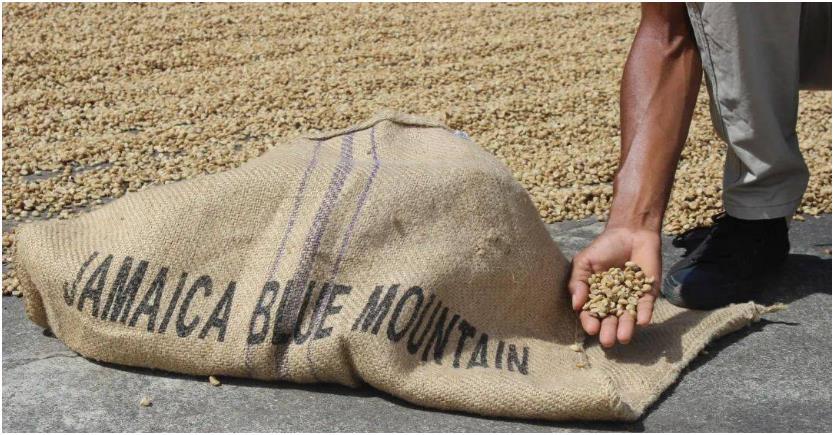
The washed processing procedure is roughly as follows: after manually picking ripe coffee cherries, they are immersed in water, and floating defective beans are removed. Then the skin and pulp are stripped off, and the beans are left to rest in fermentation tanks for 12 to 18 hours. After fermentation, the beans are put back into the tank and pushed repeatedly; through the friction between beans and the washing of water currents, the coffee beans are cleaned until their surface is smooth. Then the beans are spread out under the sun to dehydrate and dry. When the moisture content drops to 12%–14%, they can be bagged and stored to rest, and before export they must also be sent for quality inspection. The washed process can greatly reduce the proportion of defects, more fully preserve the aroma of the Blue Mountain coffee beans themselves, and make the mouthfeel notably cleaner.
Before export, Blue Mountain coffee green beans must also undergo strict quality inspection and grading. The Jamaica Coffee Industry Board (CIB), authorized by the Jamaican government, conducts detailed testing of green beans according to export grade standards, item by item, on indicators such as size, color, defects, and flavor. First, the defect rate of Jamaican Blue Mountain coffee must be below 3%, and then it is divided into four grades according to bean size. Among them, the highest grade, Jamaican Blue Mountain No. 1 coffee, requires green beans of 17 screen size or above, with a moisture content of about 10%–12.5%. After roasting, it presents just the right acidity, sweetness, bitterness, body, and aroma—this is the classic Blue Mountain flavor.
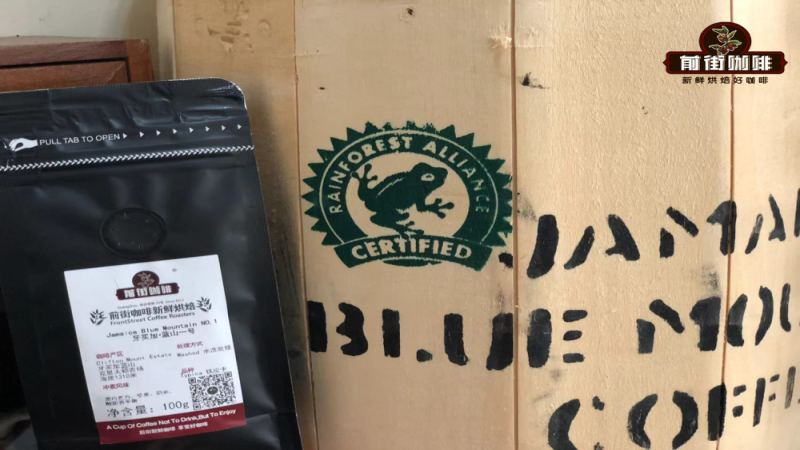
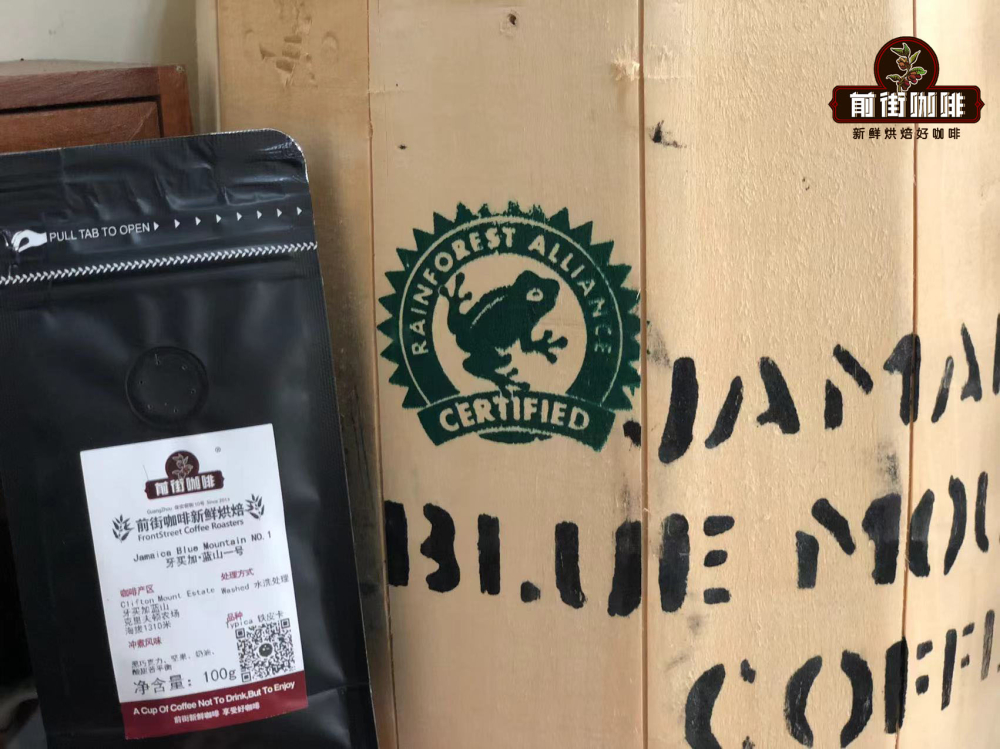
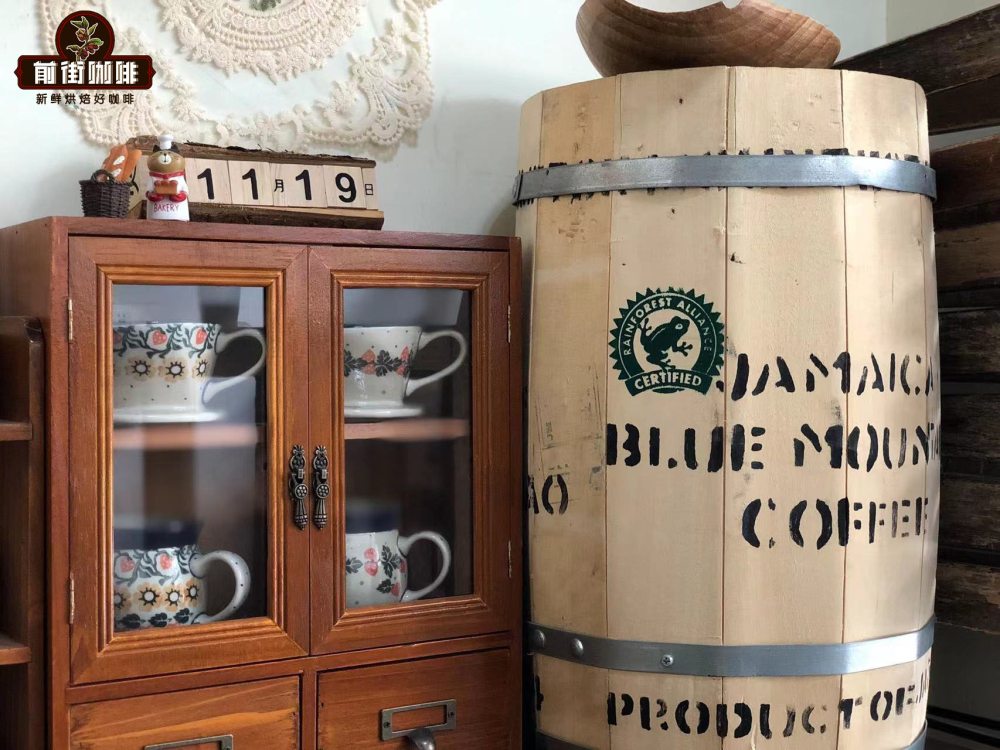
Jamaican Blue Mountain coffee that passes inspection is packaged and transported in handmade oak barrels, which is also one of the signs of authentic Blue Mountain. Oak barrels can absorb and release moisture from inside and outside while blocking the escape of coffee bean aroma, thereby maintaining a more stable moisture content and making the roasting process more controllable. At Front Street's Dongshankou store, there is an oak barrel of Blue Mountain No. 1 green coffee beans produced by Clifton Estate. When you drink coffee there, you might want to take a look.
The CIB suggests that the roast level of Blue Mountain coffee should highlight its traditional flavor, and Front Street's roaster operates accordingly, choosing a medium-dark roast so that Blue Mountain No. 1 coffee has both a rich body and gentle fruit acidity. Through cupping, Front Street identified flavors of dark chocolate, nuts, caramel, cream, and toffee in Blue Mountain No. 1 coffee. The various flavors are balanced and harmonious, and the overall taste is well-rounded.
Pour-Over Blue Mountain No. 1 Coffee Beans
Surely some friends are eager to try and brew a fragrant cup of Blue Mountain No. 1 coffee themselves. Front Street suggests first determining suitable brewing parameters, as this better showcases the flavor layers of Blue Mountain No. 1 coffee beans.
1. Pour-Over Preparation
Freshly roasted coffee beans, pour-over kettle, server, grinder, dripper, filter paper, thermometer, timer scale.
An excellent cup of coffee is inseparable from fresh coffee beans. The Blue Mountain No. 1 coffee launched by Front Street uses in-season Blue Mountain green beans, and the beans shipped after ordering are all freshly roasted within 5 days. Roasted coffee beans need 4–7 days of degassing and resting before entering the stable stage with the fullest aroma, so when you receive them, they are basically at their best tasting period. There is no fixed combination of pour-over equipment; products with various flavor orientations are available on the market. Front Street believes you can choose according to personal preference, as long as they meet the basic functions. Front Street has also noticed that some friends do not have grinding equipment at home. Front Street can pre-grind on your behalf, but it is recommended to drink it as soon as possible, because coffee grounds lose aroma more easily than coffee beans, and the flavor will noticeably fade if stored too long.
2. Brewing Parameters
For coffees with different roast levels, Front Street matches corresponding brewing parameters. Taking today's Blue Mountain No. 1 coffee beans as an example, they are medium-dark roasted, with a more complete caramelization reaction than light-roasted beans, and they also release bitter large-molecule substances more easily. To avoid extracting too many off-flavors, Front Street will appropriately lower the water temperature: the brewing water temperature for light-roasted coffee is 91–93°C, while for medium-dark roasted coffee beans Front Street recommends 87–88°C.
The finer the grind, the more substances dissolve within the same extraction time. To keep the extraction yield of Blue Mountain No. 1 coffee from being too high and producing a strong bitter taste, Front Street will coarsen the grind and use a medium grind: store EK43s setting 10.5, with a 75% passing rate on the Chinese standard sieve. Because the grinding performance of a grinder is affected by maintenance condition, burr size, years of use, and other factors, Front Street suggests using a No. 20 cupping correction sieve (aperture 0.85 mm) to confirm the grind size, which also helps grasp the direction for adjustment.
Front Street uses 15 grams of coffee grounds for a single cup, with a coffee-to-water ratio of 1:15. This ratio is not only easy to operate but also the concentration range most easily accepted by the public. Front Street suggests that, without causing extraction imbalance, the strength can be adjusted according to personal taste: for a richer mouthfeel, use a 1:13 or 1:14 coffee-to-water ratio; for a lighter, clearer cup, choose 1:16 or 1:17.
There are many pour-over techniques, and Front Street Coffee (FrontStreet Coffee) baristas uniformly use three-stage pouring, which is also the pouring method most often recommended by Front Street. Compared with other techniques, three-stage pouring is easier to control in terms of time and water volume, and the extracted coffee has clearer flavor layers.
Dose: 15 grams of coffee grounds
Coffee-to-water ratio: 1:15
Water temperature: 88°C
Grind size: 75% passing rate on No. 20 standard sieve.
Dripper: KONO dripper
Brewing technique: three-stage pouring
3. Blue Mountain No. 1 Coffee Pour-Over Steps
First rinse the KONO dripper with water so the filter paper fits the wall of the dripper better, discard the water in the server, and add 15 grams of ground coffee.
Use 30 grams of 88°C hot water to evenly wet the coffee bed and start the timer, letting it bloom for 30 seconds. This step aims to release carbon dioxide from the coffee, laying the foundation for stable subsequent extraction while also releasing aroma.
After 30 seconds, pour the second stage of hot water, pouring in a small stream in circles around the center, and stop at 125 g. Try to keep the stream steady and avoid the edge of the filter paper. When the coffee bed drops to half the height of the dripper, continue pouring in the same manner until 225 g, then remove the dripper after all dripping is complete. Timing from the start of pouring, the extraction time is 2'00".
Gently swirl the coffee liquid in the server to mix it evenly, then pour it into a cup to taste. Blue Mountain coffee will show different layers as the temperature changes.
In addition to pour-over, classic methods such as siphon, French press, moka pot, and AeroPress can also present the unique taste of Blue Mountain No. 1 coffee. Front Street believes that a good coffee can be interpreted through multiple extraction methods, and if you have the conditions at home, you might as well try them one by one.
For professional coffee knowledge exchange and more coffee bean information, please follow Coffee Workshop (WeChat public account: cafe_style)
For more specialty coffee beans, please add the private WeChat of Front Street Coffee (FrontStreet Coffee), WeChat ID: qjcoffeex
The above content is compiled by CoffeeHunters, a coffee news website.


