







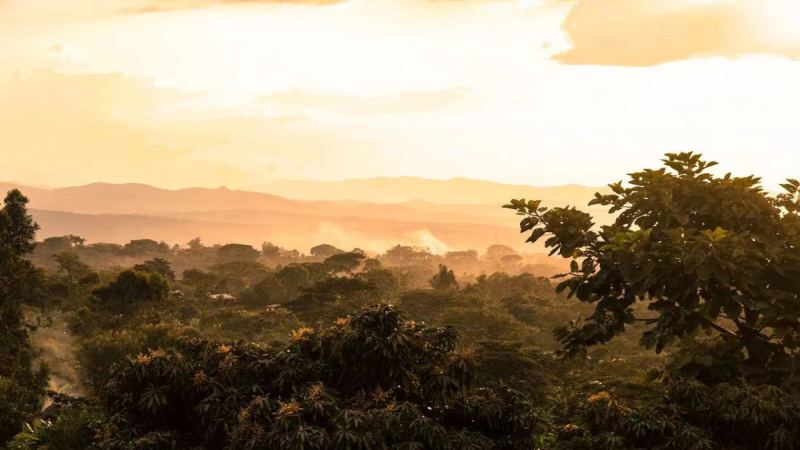
Ethiopia is the global gene bank of coffee, possessing four major cultivation systems—forest, semi-forest, garden, and plantation—which have given rise to nine distinctive producing regions including Yirgacheffe, Sidamo, and Harrar. This article systematically reviews the altitude, processing methods, and flavor profiles of each region, and presents the cupping performance and brewing recommendations for several representative beans from Front Street Coffee. From the Gutingding Cooperative to Huakui and Red Cherry, from washed to natural, this guide offers a comprehensive understanding of this coffee nation hailed as the "Flavor of Kings," helping you find the perfect cup of Ethiopian flavor for you.
For more specialty coffee information, please follow: Front Street Coffee (Frontsteet Coffee)
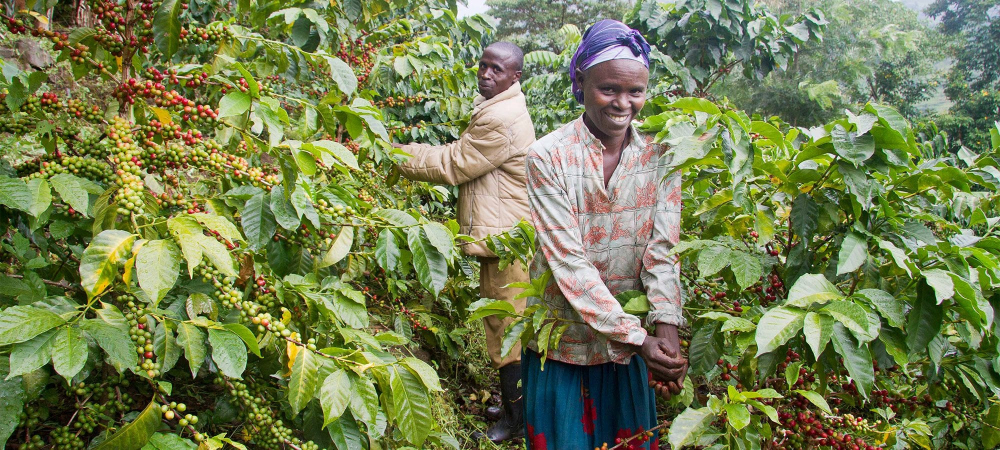
Ethiopia's coffee cultivation system is arguably the most diverse in the world, encompassing four types: forest coffee, semi-forest coffee, garden coffee, and plantation coffee. About ninety percent of coffee comes from garden, forest, and semi-forest systems, while large-scale corporate plantations are extremely rare in Ethiopia—perhaps it is precisely this model that has given birth to so many specialty coffees.
Forest coffee: refers to wild coffee growing in primary forests, protected by the local government and harvested by designated personnel.
Semi-forest coffee: farmers periodically enter the woodland to prune shade trees or coffee branches, improving light penetration and boosting yields; even so, annual output remains limited.
Garden coffee: smallholders interplant coffee with other cash crops on their own land, mostly under ensete trees, creating a distinctive landscape. This is also Ethiopia's predominant production method.
Plantation coffee: state-owned enterprise-run plantations focused on efficient, large-scale production.
These four systems are distributed across Ethiopia's nine major producing regions: Gimma, Sidamo, Yirgacheffe, Harrar, Limu, Illubabor, Gimbi (Lekempti), Teppi, and Bebeka. Overall, each region has its own distinctive flavor. Beans from western Teppi, Bebeka, Illubabor, and the northwestern Lake Tana area are notably larger, with wild flavors but lower fruit acidity; central Limu and south-central Yirgacheffe and Sidamo display rich fruit tones, floral aromas, and bright acidity, with relatively consistent quality; eastern Harrar combines the wildness of the west with the fruitiness of the south-central regions, but quality fluctuates considerably.
Ethiopia's ancient heirloom varieties have extremely complex genetics, and combined with diverse processing methods such as natural, washed, and semi-washed, they create an endless variety of flavors. Calling it the "Flavor of Kings" is no exaggeration.
The Nine Major Specialty Regions of Ethiopia
Yirgacheffe (Specialty Region): Altitude 1700–2400m | Garden Coffee System |
Yirgacheffe was originally part of the Sidamo region but was separated due to its unique flavor. In addition to the town of Yirgacheffe, it also encompasses three sub-regions: Wenago, Kochere, and Gelena/Abaya. Therefore, under the new grading system, Yirgacheffe A, Wenago A, Kochere A, and Gelena/Abaya A command higher prices than their B-grade counterparts. Besides washed and natural, the semi-washed Yirgacheffe introduced in recent years is also worth trying.
Through comparative cupping, Front Street Coffee (FrontStreet Coffee) has found that coffee beans from the Yirgacheffe region typically carry bright citrus acidity and delicate white floral notes, with an almond finish and a tea-like sweet aftertaste.
Representative Bean – Front Street Coffee (FrontStreet Coffee) "Yirgacheffe Gutingding Cooperative Coffee Beans"
Region: Yirgacheffe, Gedeo Zone
Altitude: 1900–2300m
Variety: Ethiopian Heirloom
Processing: Washed
Flavor: Citrus, black tea, caramel, almond, green tea
Representative Bean – Front Street Coffee (FrontStreet Coffee) "Yirgacheffe Red Cherry Coffee Beans"
Region: Yirgacheffe, Aricha Processing Station
Altitude: 2300m
Variety: Ethiopian Heirloom
Processing: Natural
Flavor: Citrus, berries, fruit fermentation, honey, creamy mouthfeel
Sidamo (Specialty Region): Altitude 1,400–2,200m | Garden Coffee System |
Flavor is similar to Yirgacheffe; finely washed or natural Sidamo also possesses floral and orange notes, with a status no less than Yirgacheffe. The two regions share similar varieties, with medium-sized beans and some short, small-seeded types that farmers often sell separately. The common Kurmie has weak disease resistance; Wolisho is tall and robust; Deiga has a medium tree shape—these three are the primary varieties in the specialty natural series Biloya and Aricha.
Through comparative cupping, Front Street Coffee (FrontStreet Coffee) has found that compared to Yirgacheffe, coffee from the Sidamo region has greater body, combining bright citrus acidity with a rich, berry-juice-like mouthfeel—exceptionally juicy.
Representative Bean – Front Street Coffee (FrontStreet Coffee) "Sidamo Huakui Coffee Beans"
Region: Sidamo, Hambela
Processing Station: Buku Able Processing Station
Altitude: 2250–2350m
Variety: Ethiopian Heirloom
Processing: Natural
Flavor: Citrus, strawberry, passion fruit, fermentation, black tea
Limu (Specialty Region): Altitude 1200–2000m | Garden, Forest, Semi-Forest, Plantation Coffee Systems |
Production is relatively small, mainly exported to European and American markets; hard to find in Taiwan but popular in Europe and the US. It has three processing methods: washed, natural, and semi-washed. Limu's body is noticeably lighter, and its floral and citrus flavors are inferior to Yirgacheffe and Sidamo, but it has an added grassy note and brown sugar aroma, with bright fruit acidity.
Harrar (Specialty Region): Altitude 1,500–2400m | Garden Coffee System |
Harrar exclusively uses natural processing. It is an ancient eastern city, but coffee is not grown within the city itself—Harrar coffee refers to coffee produced in the Hararghe highlands of the greater Harrar area. Annual rainfall is only 1,000mm, and all coffee is naturally processed. In terms of flavor, Harrar coffee is known for its unique "wild complexity," a typical representative of ancient early flavors, and is called one of the "Twin Stars" alongside Yirgacheffe.
If Harrar's defective beans can be sorted clean, it's easy to taste berry notes with a pleasant fermented wildness. However, affected by various factors, Harrar coffee quality has been unstable in recent years, and the grading system is not rigorous enough. When purchasing, be sure to cup or taste before buying.
Gimma (Commercial Bean Region): Altitude 1350–1850m | Forest/Semi-Forest System |
Gimma is the capital of the Kaffa forest or Kaffa Province. The English spelling is inconsistent—maps mostly use "Jimma," but coffee jute bags spell it "Djimmah." This is Ethiopia's largest producing region, accounting for one-third of exports. The Kaffa forest is famous for its primitive wild varieties. Gimma is the collection and distribution center for Kaffa coffee in this area; farmers habitually transport coffee picked from forest areas to Gimma, where hundreds of varieties are mixed together and sold as commercial beans, masking the aromas of many delicious varieties.
Although washed specialty Gimma lacks the orange and floral notes of Yirgacheffe, its flavor profile is quite clean and translucent, similar to Central American specialty coffees. Commercial-grade specialty Gimma is very common in Taiwan; with luck, you can find excellent value Gimma that offers a lemon-peel-like freshness, no less than Sidamo. Overall, Gimma has better flavor than Brazil's mass-market Santos and is a good choice for making mid-to-low-priced blends.
Illubabor (Commercial Bean Region): Altitude 1350–1850m | Forest/Semi-Forest Coffee System |
Located in western Ethiopia bordering Sudan, this is the westernmost producing region. Its coffee genetic diversity is second only to the Kaffa forest. Beans are noticeably larger than Yirgacheffe and Sidamo, with lower fruit acidity, good body, and balanced flavor. Coffee from here is mostly blended into Gimma and rarely sold independently.
Gimbi, Lekempti (Commercial Bean Region): Altitude 1500–1800m | Forest/Semi-Forest Coffee System |
This region produces both natural and washed beans. The beans resemble Harrar's longberry type, and a small amount of specialty-grade coffee is popular in Europe and the US. Mostly referred to as "the poor man's Harrar," its fruit acidity and fruitiness are superior to Illubabor, with a bright flavor.
Teppi, Bebeka (Commercial Bean Region): Altitude 500–1900m | Garden/Forest/Semi-Forest Coffee System |
The two regions are close in location, with Teppi north of Bebeka. There are corporately managed coffee plantations, and in recent years garden systems have been promoted to increase farmer income, with annual output of about 3,000 tons. Both areas have wild coffee with low yields. The flavor is quite different from Harrar and Yirgacheffe, with low fruit acidity being the biggest characteristic. Suitable for blends, available in both natural and washed.
Lake Tana Area (Alternative Region): Altitude 1840m | Forest System |
Monastery coffee. Surrounding forest coffee annual output is extremely small—less than 10 tons—so it can hardly be called a producing region. The lakeside area's Orthodox monasteries, churches, religious murals, and mythology have created the world's most "divine" coffee.
European monks established the local coffee cultivation industry, which was later taken over by coffee communities or cooperatives in villages around the town. There are no dedicated plantations here; coffee trees are naturally scattered throughout forests and gardens. During harvest season, the Ethiopian Coffee Trading Company comes to town to purchase coffee beans collected by farmers.
In addition to the town of Yirgacheffe, it also includes three sub-regions: Wenago, Kochere, and Gelena/Abaya.
1. Cultivation System and Environment: The mountain villages of the Yirgacheffe region are cool and foggy, with spring-like weather year-round—gentle summer breezes, cool but not hot, rainy but not damp, and no cold damage in winter—making it the optimal environment for growing Arabica. There are no large coffee plantations here; coffee farmers interplant coffee with other crops, typically under ensete trees, creating a unique landscape.
2. Processing Methods: Ethiopia's traditional natural processing is relatively rough with heavy off-flavors, drawing criticism. In 1959, the Yirgacheffe region introduced the South American washed processing method. Most regions generally adopt washed processing, where coffee cherries are depulped, fermented, and washed to remove the mucilage layer, then dried.
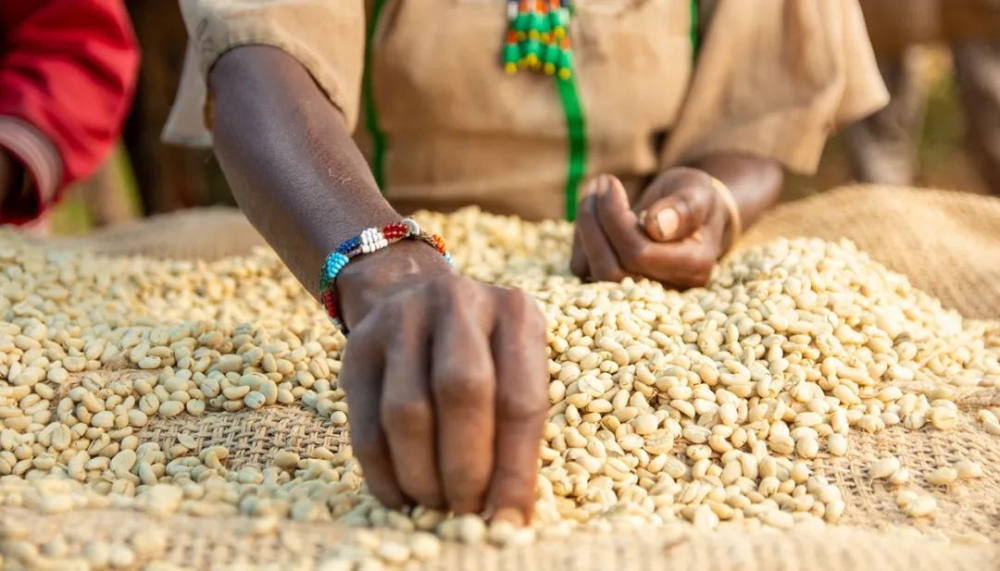
Since 2006, some processing stations in certain regions have adopted refined raised-bed natural processing. This labor-intensive raised-bed drying method isolates coffee cherries from the ground, preventing earthy off-flavors during drying and producing exceptionally clean fruit flavors. After more than two weeks of sun-drying, the dark brown coffee cherries are professionally stored, awaiting flavor maturation. Before sale, the dried cherry pulp and parchment are removed, then unripe and over-fermented beans are sorted out. Strict quality control has greatly improved the quality of natural beans.
Representative Bean – Front Street Coffee (FrontStreet Coffee) "Yirgacheffe Kochere Coffee Beans"
Region: Yirgacheffe, Kochere Cooperative
Altitude: 1650–1800m
Variety: Ethiopian Heirloom
Processing: Washed
Flavor: Lemon, floral, honey, oolong
Front Street Coffee (FrontStreet Coffee) Barista Brewing Sharing
For brewing, Front Street selects freshly roasted Gutingding Cooperative coffee beans. After roasting, coffee goes through a 4–7 day resting period before entering its optimal flavor window; after this period, aromas accelerate their dissipation and flavor and mouthfeel deteriorate significantly. Front Street understands the importance of coffee freshness, so all shipped coffee beans are freshly roasted within 5 days. When customers receive them, they are at peak flavor and can be brewed immediately.
Based on past experience, since Ethiopian beans lean toward floral and fruity profiles, Front Street's roaster chooses a light roast to preserve more floral notes and fruit acidity. Yirgacheffe coffee grows at higher altitudes and is denser; light roasting does not significantly alter the bean's internal structure, so higher water temperature and a finer grind are needed. Front Street uses a V60 dripper to better highlight the layers of sweet and acidic flavors.
Dripper: V60
Water temperature: 92°C
Grind size: 80% passing through No. 20 standard sieve
Coffee-to-water ratio: 1:15
Coffee dose: 15g
Using a three-stage extraction: after grinding the coffee and placing it in the filter paper, start pouring 30g of water from the center for a 30-second bloom. Keep the pour steady with a small stream in circular motions from inside out throughout. For the second stage, pour 95g of water. Once the coffee liquid has mostly drained, begin the third stage with 100g of water. Once all the coffee has filtered through, remove the dripper. Total time is about 2 minutes, with a tolerance of about 10 seconds.
The washed Gutingding has fresh white floral notes, with uplifting lemon and berry acidity on entry, lingering citrus and green tea aromas, an overall clean and translucent cup, and a finish with a touch of honey sweetness.
The above content is compiled by CoffeeHunters, a coffee news website.


