







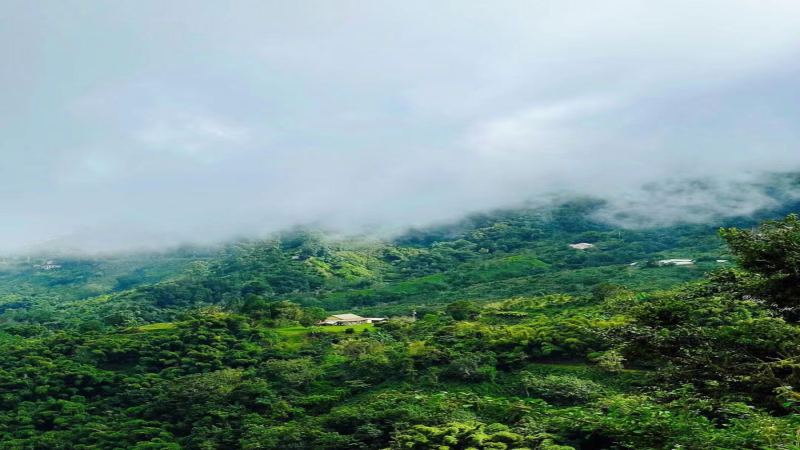
How does the Blue Mountain coffee grading system work?
The Jamaica Coffee Industry Association, known as CIB, sets the legal boundaries of the Blue Mountain growing area and controls quality through grades and barrel packaging. Coffee cultivation there dates to the early 18th century, but international fame came after 1953, when CIB divided and positioned production zones. The Typica variety carries the cup's balanced character.
Jamaica is a small island, so land suited to coffee is scarce and output is limited, peaking near 15,000 tons in 1932. The government legislated as early as 1891 to station professionals in key areas, and in 1944 set up a central coffee settlement office requiring exported green bean batches to pass quality checks.
Blue Mountain coffee has long occupied the position of a byword for good coffee in the minds of Chinese people, but many are actually unclear about its place of origin, grading standards, varietal characteristics, and that period of history so deeply tied to Japan. This article begins with the founding of the Jamaica Coffee Industry Association, sorts out the legal definition of Blue Mountain coffee growing areas, the breeding and inheritance of the Typica variety, CIB's quality control system and barrel packaging tradition, and reconstructs the historical background of Japan obtaining priority purchasing rights. It also provides practical methods for identifying genuine and fake Blue Mountain coffee, including the types of certificates and key points for verifying Blue Mountain barrels, helping coffee lovers identify authentic Blue Mountain amid the confusing market information.
When Blue Mountain coffee is mentioned, almost everyone knows it. In the perception of most Chinese consumers, Kopi Luwak and Blue Mountain coffee have long occupied the position of the most expensive and best coffee. Even by 2021, when Geisha, COE competition beans, and other specialty coffees had become widely known within the industry, the name Blue Mountain was still deeply rooted in public memory, equated with good coffee.
Why exactly is Blue Mountain coffee so famous?
Coffee cultivation in the Blue Mountain region can be traced back to the early 18th century, but its true rise to international fame must be dated from 1953. The Jamaica Coffee Industry Association (CIB, established in 1948) carried out detailed regional division and positioning of coffee production in the Blue Mountains. Jamaica has a limited land area and is an island, so land suitable for growing coffee is even scarcer, limited only to the Blue Mountain range, and production is therefore constrained (at its peak in 1932, about 15,000 tons). Under such conditions, the only way to increase returns was to pursue a specialty route.
To rectify the coffee industry, the Jamaican government legislated as early as 1891 to station professionals in key production areas to guide cultivation and green bean processing, with the goal of improving yield and quality, but the results were not obvious. In 1944, the government established a central coffee settlement office, requiring all exported green bean batches to pass quality appraisal and grading. In 1948, Jamaica recognized Blue Mountain's potential, issued the Coffee Industry Regulation Act, and formally defined the now well-known "Blue Mountain coffee" growing area.
According to the strict definition of that regulation, Blue Mountain coffee production areas are distributed within four administrative districts: St. Andrew, St. Thomas, Portland, and St. Mary. Only Typica variety coffee planted within this range at an altitude between 3,000 feet (about 915 meters) and 5,500 feet (about 1,700 meters) is eligible to be named Jamaica Blue Mountain.
In 1950, The Jamaica Coffee Industry Board (CIB) was formally established and granted official authority to improve, control, and maintain the quality and reputation of Jamaican coffee. The board also introduced the Certificate of Authenticity, which had a profound impact on the industry. According to Jamaican agricultural product laws, any individual or organization engaged in coffee processing or roasting sales must obtain a coffee dealer license. The Jamaican government not only established a complete coffee grading system, but also stipulated a highly recognizable packaging form (the Blue Mountain barrel), and registered a trademark for the Blue Mountain coffee name, supervising the use of the name for exported coffee throughout the process through CIB authorization.
This set of standards directly promoted quality inspection of Blue Mountain coffee, and the Blue Mountain trademark thus went international, laying the foundation for becoming a "coffee myth" in later years.
From the perspective of cultivation techniques, Jamaica's earliest coffee planting followed the technical system of its colonial ruler Britain, and in terms of seed selection it has persisted for three hundred years in growing Typica, a high-quality variety within Arabica. Before that, the region had already accumulated at least two hundred years of coffee-growing experience. As long as all cultivation indicators are strictly implemented and modern management is introduced, producing good coffee is theoretically a natural outcome.
In terms of quality control, Jamaica is among the few places in the world that are strict. Taking Blue Mountain No. 1 green beans as an example, Jamaica's standard is to screen beans of 17 mesh or above, with the defect rate controlled within 3%. When Front Street receives the green beans, the beans are emerald green, plump and uniform, with almost no seriously defective beans visible. Blue Mountain No. 1, No. 2, No. 3, and Blue Mountain peaberry are the only coffees in the world exported in wooden barrel packaging, with three specifications: 70 kg, 30 kg, and 15 kg. This both reflects the style of Blue Mountain coffee and its level of quality control. The Blue Mountain barrel has therefore also become a marker for identifying the authenticity of Blue Mountain coffee.
There is also a historical interlude in the middle of this, namely Japan's aid to Jamaica. The plan was good, but implementation needed funding, and Jamaica happened to lack money. In 1969, Japan provided loan assistance to Jamaica for its coffee industry, and in the following years purchased large quantities of Jamaican coffee, helping Jamaica get through its difficulties. Understanding this background makes it clear why Japan had priority purchasing rights for Blue Mountain coffee. Nearly 90% of Blue Mountain coffee was bought by the Japanese. Before 2000, the only coffee that could rival Blue Mountain coffee in fame was Kopi Luwak.
When Blue Mountain coffee was at its peak of glory, it coincided with China's reform and opening up, when foreign goods poured in large quantities, and coffee beans were among them. At that time, coffee was far from being as ubiquitous as it is now; only reception hotels were equipped with coffee. It was during this period that Blue Mountain coffee's reputation spread into China and became a household name. Most people had never drunk Blue Mountain coffee, but as long as someone had, it became a source of boasting, spreading from one to ten and from ten to a hundred, and Blue Mountain coffee was thus pushed onto the altar.
How can you identify genuine and fake Blue Mountain coffee beans?
A kind of Blue Mountain-flavored blended coffee often appears on the market, and so-called "Blue Mountain blend" actually has nothing to do with Blue Mountain. This situation arose because early Blue Mountain coffee was scarce and expensive, so operators used mixed beans with dark roasting to blend out a coffee close to Blue Mountain's taste. Therefore, in domestic and international markets, conscientious merchants will clearly state that this is Blue Mountain blend, blended Blue Mountain, Blue Mountain flavor, or Blue Mountain-style coffee beans, rather than true Blue Mountain coffee.
According to official CIB information, the first record of mainland China importing Blue Mountain coffee was in 2011, when the Hangzhou Coffee and Western Food Association imported 1,000 barrels of Blue Mountain coffee (70 kg specification). So since 2011, China has had Blue Mountain coffee through formal channels, and the era of Japan monopolizing Blue Mountain has ended.
As for how to distinguish genuine from fake Blue Mountain, some people may teach you to start from bean appearance, aroma, and taste. But most people do not have deep knowledge of coffee beans, so the simplest way to judge whether it is truly Blue Mountain is to ask the shop to show the Blue Mountain coffee certificate and Blue Mountain barrel.
There are three types of certificates:
(1) A quality certificate issued by the Jamaica Coffee Board.
(2) An authorized sales certificate issued by the Blue Mountain coffee manufacturer.
(Blue Mountain coffee is distributed by 4 Jamaican government-licensed processing manufacturers and exported by 16 licensed exporters.)
(3) Jamaica Blue Mountain Coffee Certificate of Origin.
Front Street Coffee's Blue Mountain is Blue Mountain coffee beans from an export company designated by the National Coffee Board, with green beans packed in wooden barrels and Rainforest Alliance certified.
What does Blue Mountain coffee taste like?
Since Blue Mountain coffee is so famous, what is unique about its flavor? The excellent quality of Blue Mountain coffee beans creates a clean cup. In the era when medium-dark roasting predominated, Blue Mountain coffee usually presented a balanced state of acidity, sweetness, and bitterness, with light nutty and chocolate notes, and a very comfortable finish after drinking. It represents the highest coffee quality of an era and is truly the king of coffee.
The above content is compiled by CoffeeHunters, a coffee news website.


