







How should SOE espresso parameters be adjusted for milk drinks?
SOE, short for Single Origin Espresso, is espresso pulled from beans of a single producing region. It sets no rule about variety, roast level or recipe, and it is not a quality guarantee: espresso amplifies both the good and the faulty flavors in the bean, so grind and roast level shift the cup noticeably.
Light-roasted SOE tends to read as sharply acidic and unstable, which is why blends are easier for beginners. The guide works from purpose to formula to flavor adjustment, giving separate parameters for drinking straight, adding water for an americano, or adding milk for a latte, with two starter beans named for practice.
SOE has been appearing frequently in coffee shops in recent years, but making a satisfying cup of SOE at home is not simple. This article starts from the basic definition of SOE, analyzes its core differences from espresso blends, and provides a complete extraction approach from clarifying the purpose, applying a formula, to flavor adjustment, targeting common problems such as shallow-roasted SOE being prone to sharp acidity and unstable flavor. Whether you want to drink it straight, add water to make an Americano, or add milk to make a latte, you can find corresponding parameter adjustment methods. The article also recommends specific beans such as Front Street Coffee. Huakui SOE and Front Street Coffee. Mozart SOE to help you get started quickly in practice.
The term SOE has become increasingly common in coffee shops in recent years. What exactly does it refer to? If you suddenly want a cup, how should you go about it to get a satisfying result?
What is SOE?
SOE is the abbreviation of "Single Origin Espresso," called single-origin espresso in Chinese. This term was proposed in contrast to blended espresso. Simply put, SOE is an espresso made from coffee beans from only one producing region. It does not limit the green bean variety, roast level, or extraction scheme, nor can it be directly equated with the quality level of coffee. Espresso extraction is merely a production method and does not promise that it will taste good.
Espresso multiplies the flavors in coffee, whether advantages or defects. Single-origin beans come from a single producing region, and their shortcomings are likewise easily amplified, so factors such as roast level and grind size will noticeably affect the final taste. To make a delicious SOE, there are certain requirements for technique at every stage.
In comparison, blended coffee beans have a clear advantage in extraction stability, which is also why beginners are better off starting with espresso blends. If you are trying espresso for the first time, you can buy the same one used in coffee shops, Front Street Coffee. The espresso coffee bean recommended by many baristas - Front Street Black Cocoa Blend. The taste is balanced, delicious and not expensive, making it an affordable household staple bean.
Is light-roasted SOE bound to be sharply acidic?
To highlight the characteristics of single-origin beans, the roast level of SOE is usually not too dark. If you want to present delicate floral aromas, you can control it at a medium-light roast; if you like berry flavors, you can try the sun-dried Front Street Coffee. Huakui SOE coffee beans; if you want prominent sweetness, buy the raisin honey-processed Front Street Coffee. Mozart SOE coffee beans.
There used to be a saying that light-roasted beans are not suitable for espresso and will be sharply acidic and unpleasant. Indeed, espresso made from light-roasted beans is more acidic than that made from dark-roasted beans; this is determined by the roast level itself. In addition, espresso extraction schemes are often relatively fixed. With pour-over, people distinguish brewing parameters for light and dark roasts, but on the espresso side the usual scheme is still followed, so sharp acidity is unavoidable. Therefore, to extract good flavor, you need a clear approach to let the coffee show the bean's own aroma and fruity acidity.
Clarify the purpose
Many people have not thought one thing through: what are you extracting this espresso for - drinking it straight, adding water, or adding milk? This directly affects the entire extraction scheme. For example, if drinking it straight, the espresso needs to be softer; if adding water, the flavor should be more complete; if adding milk, the espresso needs to be more concentrated.
First apply the extraction formula
Just as when you normally dial in the grind, first use a standard formula: 1:2 coffee-to-liquid ratio, 25-30 seconds. Using this formula first is mainly to establish a grind size baseline. Fine-tuning may still be needed later, but at least it will not deviate too far.
Adjust according to flavor and purpose
Coffee extracted with the general formula usually has no major problems in grind or flow rate. If the flavor is not right, targeted handling is needed.
The most common problem is being too sharply acidic, with too short an aftertaste. This problem is generally the easiest to solve. First observe whether the flow rate at this grind size is reasonable, for example, at what second the first drop of coffee liquid comes out. If it is 4-5 seconds, you can appropriately grind finer; if it is 7-8 seconds, then no adjustment is needed.
Next is to extend the extraction amount, usually by 10-15g. The appearance of sharp acidity and a short aftertaste in the coffee liquid is mainly due to a low extraction yield. Increasing the extraction amount will make the espresso less stimulating, gradually balanced, and highlight sweetness. Of course, this method will lower the coffee's concentration, and is generally suitable for drinking straight or adding water to make an Americano.
For example, using Front Street Coffee. Sun-dried Huakui SOE coffee beans, the extraction parameters are 20.6g to extract 55g of coffee liquid, with a time of 34 seconds. Drunk straight, it is soft with berry sweetness; made into an Americano, it is full-bodied and solid with guava and ripe strawberry aromas.
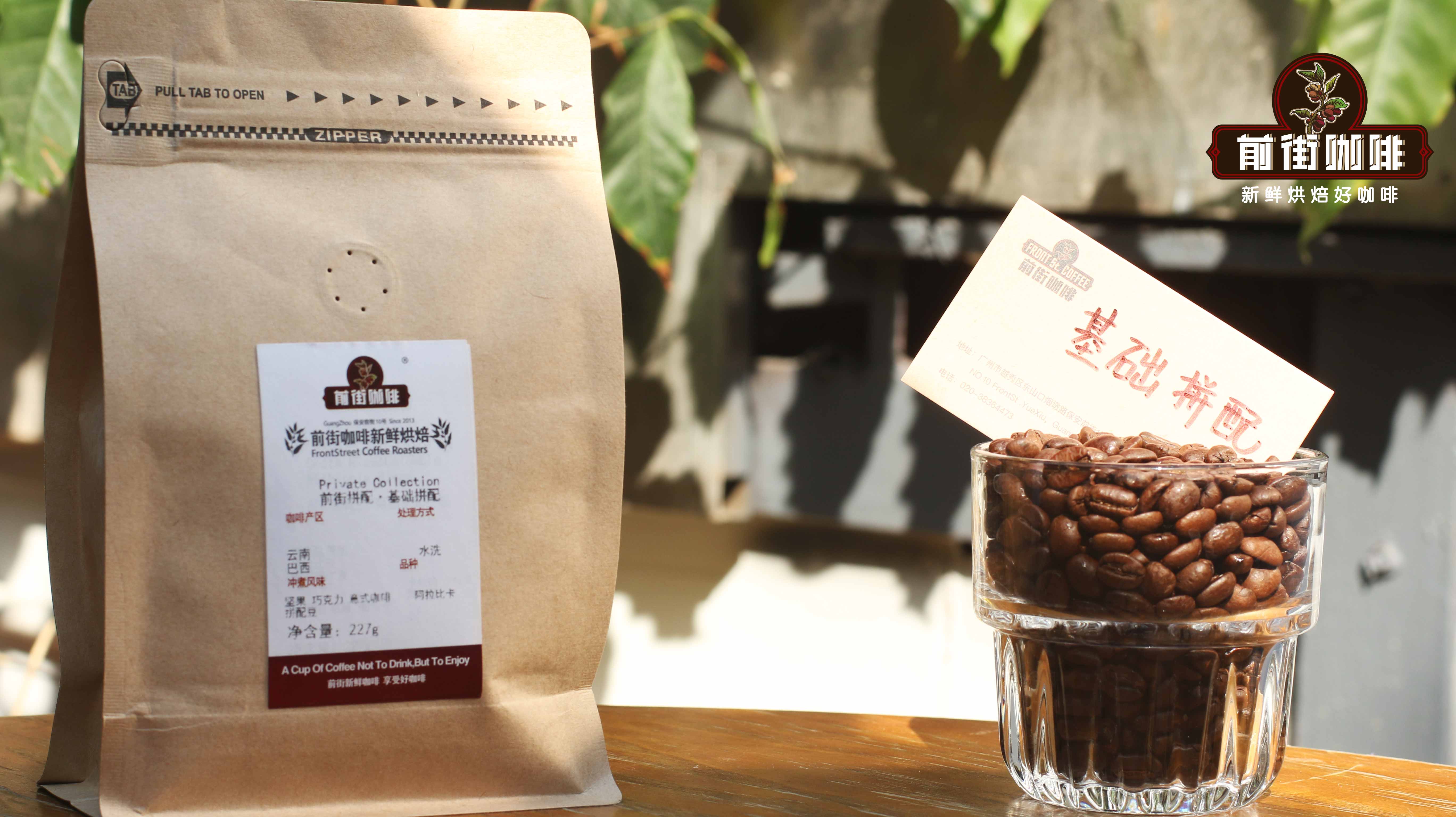
When making milk coffee, the grind is often made finer to compensate for the low extraction yield. Subsequent adjustments should not be boxed in by the formula's data. Even if the extraction time exceeds 30 seconds, it is acceptable as long as the milk coffee tastes good. This solves the problem of insufficient coffee flavor in SOE milk coffee. If a sour and astringent feeling appears in the milk coffee, then you still need to extend the extraction amount to solve it.
The second common problem is that the coffee liquid extracted using the formula has unpleasant flavors, such as grassy notes, almond notes, or burnt bitterness. This is best checked using the one-into-three method. If the target coffee liquid is 40g, use three cups to catch the front, middle, and back segments of coffee liquid at about 13g each. Taste the three cups separately and see which cup has the unpleasant flavor. If only the back segment has it, then you only need to reduce the extraction amount. If the first cup or all three cups have it, then you need to adjust the grind size.
The third problem is that the coffee liquid is too weak and has no flavor. This is a problem many friends have reported to Front Street. Front Street has also summarized some reasons, which is that most friends think the espresso grind size is a fixed value, and that once the setting is dialed in for one bean, other coffee beans can also use it. Actually, this is not the case. So if there is a problem of the coffee liquid being too weak or thin, it is generally because the grind size was not set accurately. Of course, if you want to compare the richness of light-roasted SOE beans with traditional dark-roasted espresso beans, then it really cannot compare.
The above content is compiled by CoffeeHunters, a coffee news website.


