







What makes honey-processed Geisha coffee taste so sweet?
Costa Rican honey-processed coffee is known for a honey-like sweetness, and the Geisha blend from Mirazu Estate in Tarrazu shows it clearly. The blend combines Geisha, ET47, SL28, and MAICO beans processed with the raisin honey method, then roasted and brewed as a pour-over. Water temperature, grind size, coffee-to-water ratio, and staged pouring all shape the final cup of sweetness and floral aroma.
Tarrazu, south of San José, sits at roughly 1,200 to 1,600 meters and most Costa Rican specialty coffee comes from there, with harvest from November to March. The coffee bean process matters as much as origin: honey processing leaves mucilage on the parchment during drying, which raises sweetness. Green bean analysis, roasting curves, and cupping reports guide the pour-over parameters.
Costa Rican coffee is famous for its honey-like sweetness, and honey-processed beans in particular stand out for their pronounced sweetness. From the perspective of Front Street Coffee, this article first introduces the characteristics of Costa Rica's producing regions and the superior conditions of Tarrazu, then focuses on the Geisha blend from Mirazu Estate—composed of Geisha, ET47, SL28, and MAICO, using the raisin honey processing method. It then shares in detail green bean analysis, roasting curves, cupping reports, and pour-over parameters, including water temperature, grind size, coffee-to-water ratio, and staged pouring technique. Whether you want to understand the principles of honey processing or replicate a pour-over that combines sweetness and floral aromas, you will find practical reference here.
Costa Rican coffee has always won over many seasoned enthusiasts with its honey-like sweetness. Guests often walk into Front Street Coffee and ask the baristas which pour-over tastes sweet; at that point the baristas bring out beans from Costa Rican producing regions and explain them one by one patiently. Why does this country's coffee give the impression of being sweet as honey? Below, Front Street introduces Costa Rican coffee beans.
Costa Rican Producing Regions
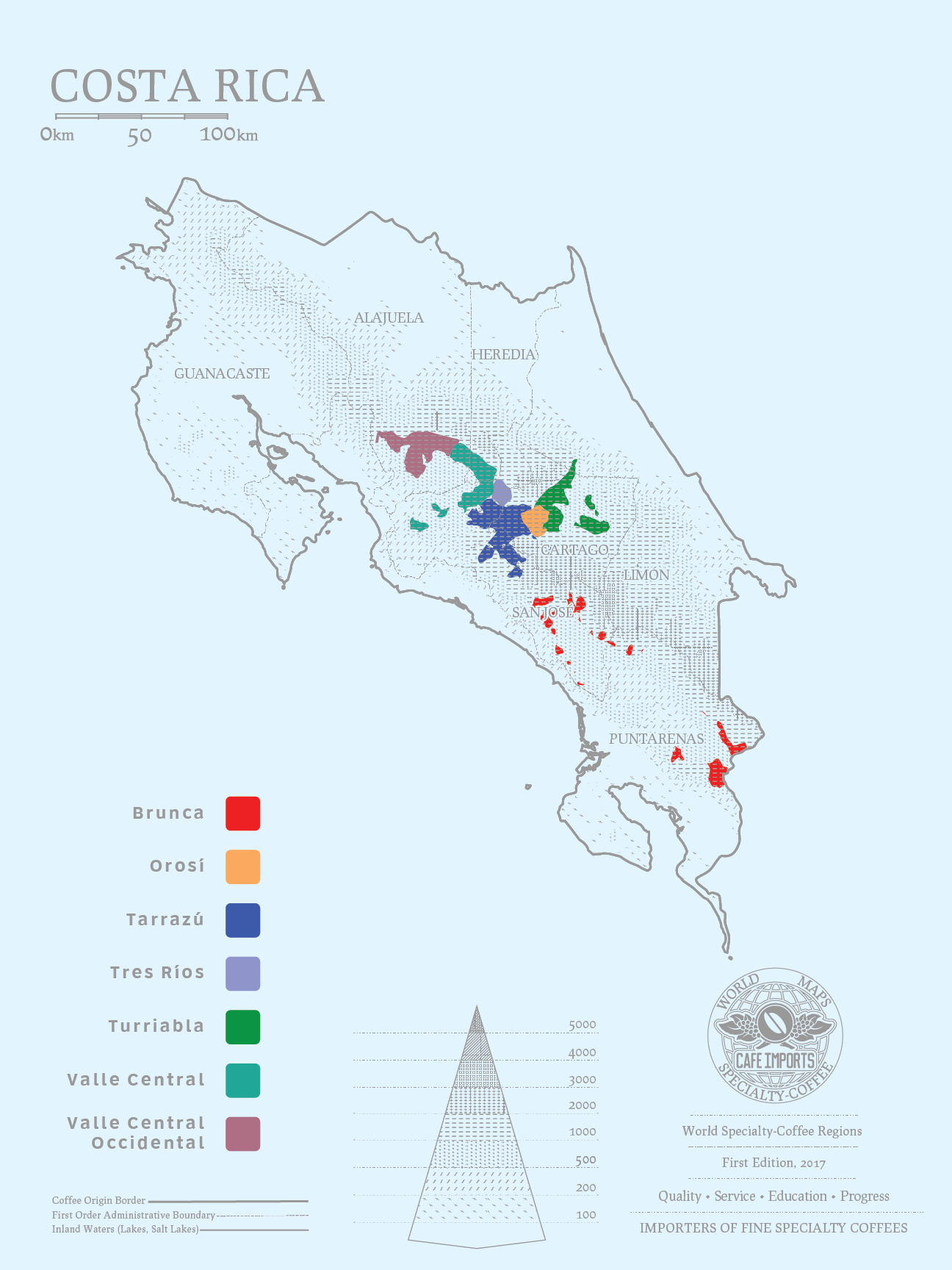
Costa Rica is located in Central America and was the first country in the region where coffee was introduced and cultivation began, giving it a rather long coffee history. The volcanic soil here is fertile and drainage conditions are ideal, especially in the Central Plateau, at an altitude between 1,200 and 1,600 meters, with the harvest season lasting from November to March of the following year. It is further divided into three sub-regions: San José, Heredia, and Alajuela. Within the region are three high-altitude volcanoes—Irazu, Barva, and Poas—which continuously provide nutrients to the surrounding coffee trees. The dual advantages of microclimates and fertile volcanic soil give the beans in this area outstanding characteristics, such as chocolate and cocoa notes, bright fruit acidity, and elegant aromas.
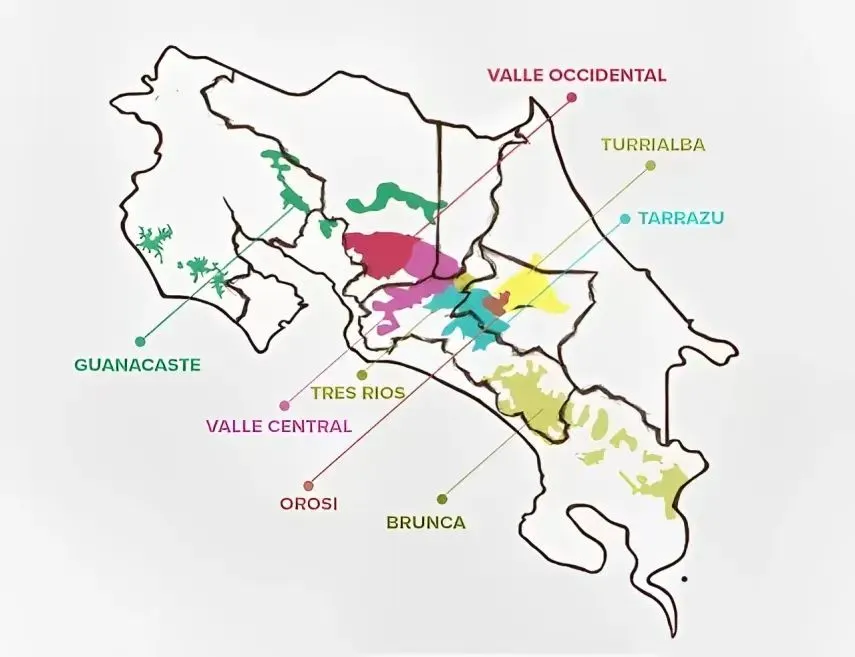
Costa Rica has eight major coffee producing regions in total: Valley Central Occidental, Valley Central, Tarrazu, Tres Rios, Orosi, Brunca, and Turrialba. Most specialty coffee comes from Tarrazu.
Tarrazu is located south of the capital San José and is one of the country's most closely watched coffee-growing areas. "La Minita Tarrazu" is a well-known local product, but its output is quite limited, about 72,600 kilograms per year, grown on a plot called "La Minita." This land is owned by the British McAlpine family, which has managed it for the last three generations, with the La Minita estate in the Tarrazu region producing only 160,000 pounds annually. In fact, this land can produce more than 450 tons of coffee each year. However, La Minita Tarrazu coffee is grown without the use of artificial fertilizers or insecticides, and harvesting and sorting are all done by hand, specifically to avoid the damage that air-jet sorting can cause to coffee beans to some extent.
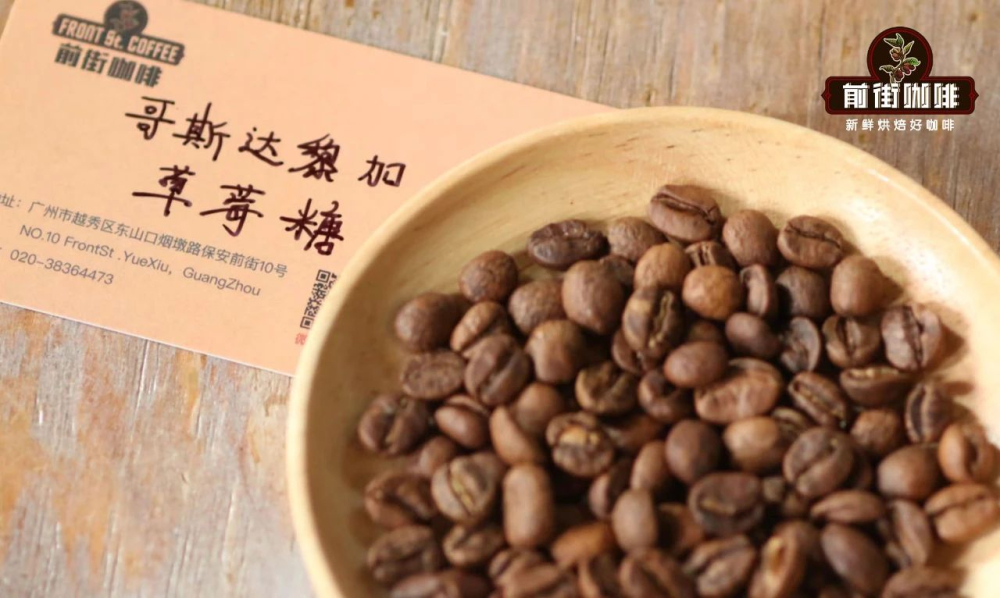
Costa Rican coffee has consistently been known for balanced flavor, rich chocolate notes, and a smooth mouthfeel. Tarrazu is located south of the capital San Jose and is one of Costa Rica's most valued coffee-growing areas. Front Street believes Tarrazu coffee beans are plump, with a rich BODY, smooth mouthfeel, intense chocolate and nut aromas, moderate acidity, and an inviting fragrance. Front Street Coffee's Costa Rican representative—Mirazu Estate Geisha blend coffee beans.
Country: Costa Rica Estate: Mirazu Estate Altitude: 1700m Processing method: Raisin honey processing Varieties: Geisha, ET47, SL28, MAICO
Costa Rica Mirazu Estate
Mirazu Estate is very small, and the entire estate is managed by Esteban and his family. Esteban Sanches was originally a family member of the neighboring Little Candle Estate. Because he had his own insistence about coffee beans, he independently founded Mirazu Estate. In the processing plant, that small wet-processing machine was designed and assembled by Sanches himself.
In the coffee farm, Sanches said that the quality of coffee must start with the trees themselves. Although machines can separate good from bad, if the quality grown is good enough, there is no need for machines to distinguish superior from inferior. He also said that God has given us a beautiful environment, and we care for the coffee beans with love; this is giving back and sharing. Thanks to everyone's help, he was able to fulfill his dream, and he is willing to share his experience and results with other farmers so that everyone's coffee dreams can come true. Coffee Bean Varieties
The Costa Rican Geisha blend purchased by Front Street Coffee this time is composed of 50% Geisha coffee beans and 50% a mixture of ET47, SL28, and MAICO. These beans all come from the same estate and are then blended into a single-origin coffee bean.
It is worth mentioning the two varieties ET47 and SL28. ET47 is a native variety from Ethiopia. In the 1990s, the Costa Rican Coffee Institute introduced many such tree species and gave them to farmers in the Tarrazu region to grow as research material for leaf rust resistance. The original goal of breeding SL28 was to mass-produce coffee beans that combined high quality with resistance to pests and diseases, while in some producing regions the breeding goal was mainly high yield and did not consider disease resistance. Thanks to its Bourbon genes, although SL28's yield later fell short of expectations, its bronze leaf color and broad-bean-shaped seeds have excellent sweetness, balance, and complex, varied flavors, as well as distinctive citrus and smoked plum characteristics.
This bean is a Geisha blend—can it still be considered a single-origin coffee bean? Front Street believes it certainly can. All the coffee varieties in this coffee bean come from Mirazu Estate, all belonging to the same single origin, so it is a single-origin coffee bean. Why do we say this? Front Street will give an example: Ethiopian coffee varieties are numerous and complex, and local coffee trees are basically planted mixed together and then harvested mixed together, which is also why Ethiopian coffee beans vary in size. As long as coffee beans are grown within the same producing region, whether a single variety or a mix of varieties, they all belong to single-origin coffee beans. Coffee beans like Ethiopia's are effectively natural blends, while this Geisha blend is effectively a post-blend.
Coffee Bean Processing Method
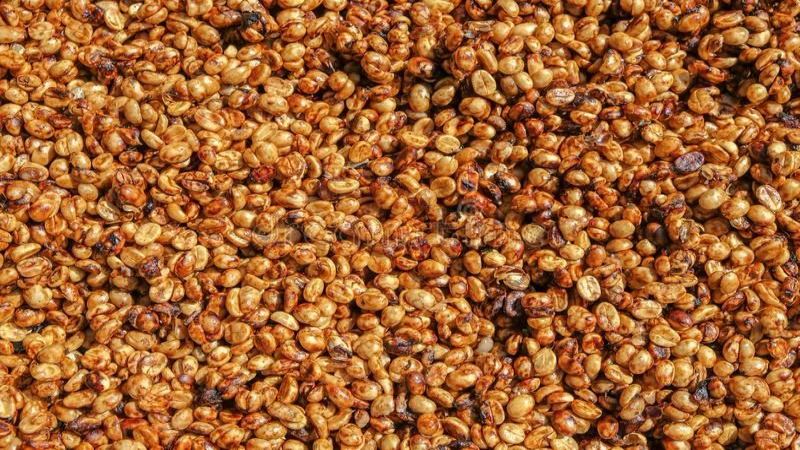
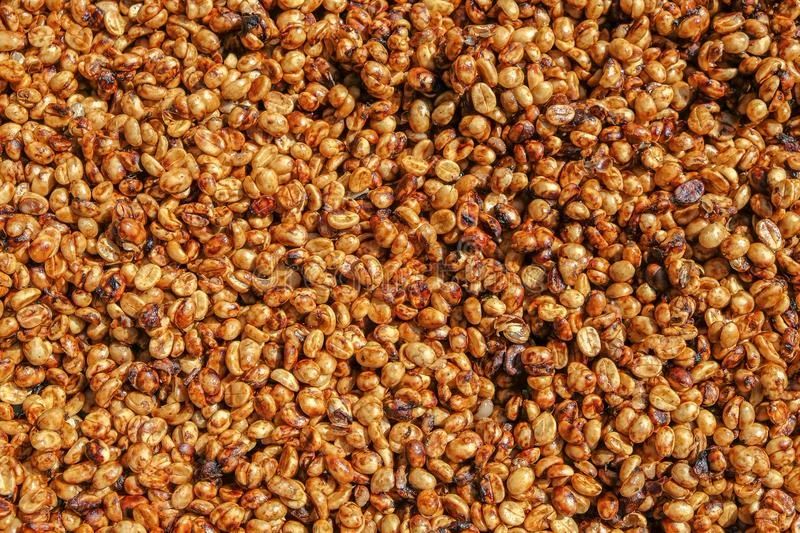
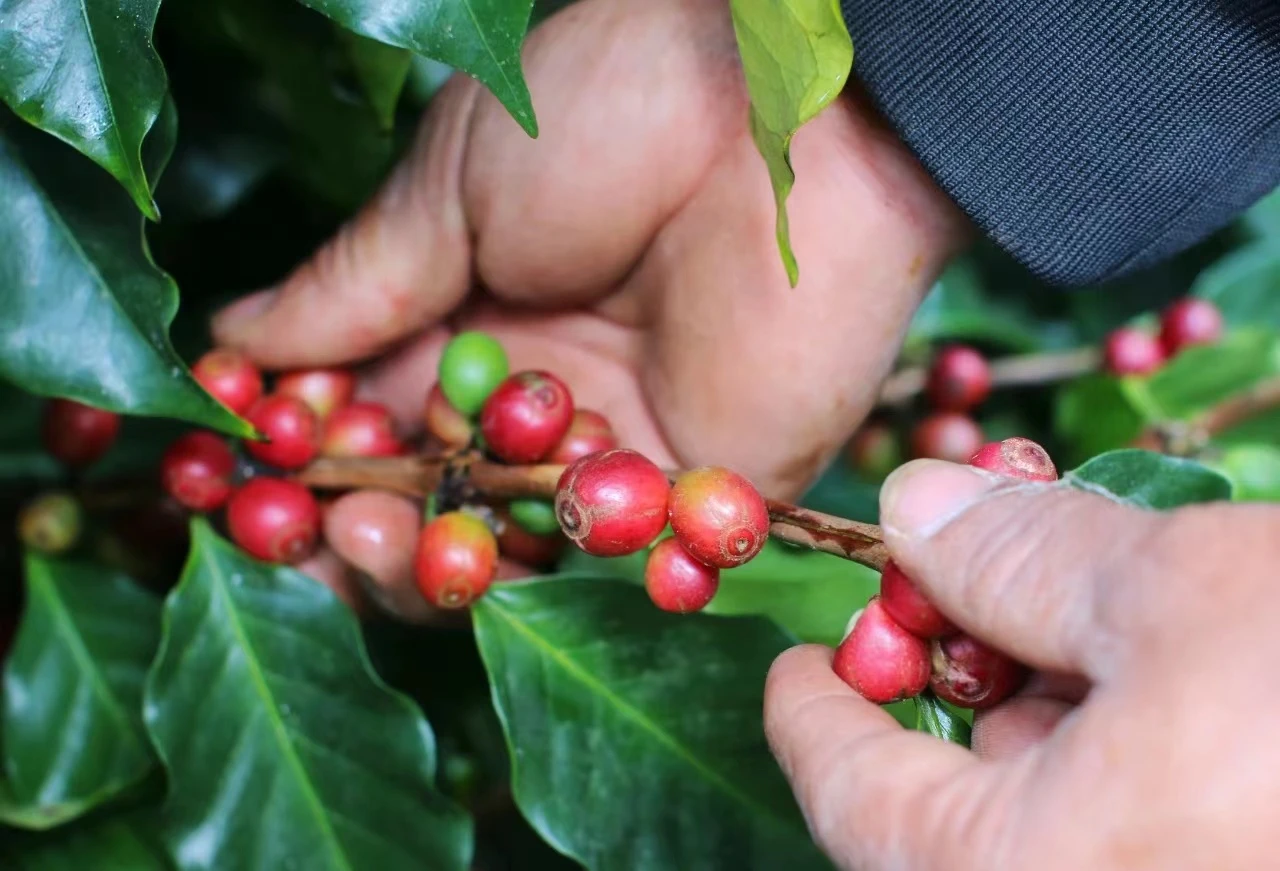
The raisin honey processing method retains 100% mucilage and uses a zero-water processing method. This increases the difficulty of the honey processing method, which requires strict control of timing. On the day the coffee cherries are harvested, the harvested coffee fruit is poured into a large water tank; ripe, plump fruit sinks to the bottom, while underdeveloped or overripe fruit floats to the surface, and these floating beans need to be removed. The selected coffee cherries are placed on raised beds to dry for at least three days, then the cherry skin is removed, the mucilage is retained, and then drying continues.
At this stage, climate factors are key to the success of honey processing. During drying, these coffee cherries must be turned constantly to ensure even drying, but the frequency of turning must be well controlled—dry slowly to ensure the coffee undergoes fermentation, but not so slowly that over-fermentation occurs. Front Street believes that this very sweet raisin honey processing method can give the coffee a white wine-like mouthfeel and balanced acidity, with a relatively intense fermented aroma.
Front Street Coffee Green Bean Analysis
This batch of Costa Rican Tarrazu Geisha coffee purchased by Front Street Coffee is composed of 50% Geisha coffee beans and a mixture of ET47, SL28, and MAICO. The Geisha variety coffee beans provide this coffee with jasmine aroma, while the other varieties give it richer strawberry and berry flavors, and the raisin honey processing method enhances the sweetness of this coffee. To highlight this bean's floral aroma and fermented sweetness, Front Street's roaster used a medium-light roast for this coffee bean.
Front Street Coffee Roasting Recommendations Roaster Yangjia 800N semi-direct fire, roasting amount 300g.
Preheat the roaster to 200°C, lower to 175°C for charging, adjust the gas to 120, open the damper to 3, turning point at 1'32", maintain the gas; at 114°C keep the gas unchanged and open the damper to 4. At 6'15" the beans turn yellow, the grassy smell disappears, and the dehydration stage begins; at 140°C lower the gas to 100 and keep the damper at 4. At 9'00" dehydration is complete, the bean surface shows wrinkles and dark patches, and the toast aroma turns into coffee aroma, marking the prelude to first crack; at this point listen carefully for the sound of first crack. At 10'25" first crack begins, open the damper fully to 5, and keep the gas unchanged. After first crack, develop for 1'30" and drop at 193.5°C.
Front Street Coffee Cupping Report Front Street Coffee conducts cupping within 8-24 hours after the sample coffee beans are roasted. The cupping bowls generally used by Front Street Coffee's baristas are 200ml ceramic bowls, marked with 150ml and 200ml scale lines. According to SCAA standards, the water TDS is about 150ppm; too low a TDS easily causes over-extraction, while too high a TDS affects the mouthfeel and easily causes under-extraction. The water temperature used for cupping is 94°C. According to SCAA cupping standards, the grind size is controlled so that the passing rate through a No. 20 standard sieve (0.85 mm) is 70%-75%. Ratio: 11 grams of coffee powder plus 200 milliliters of hot water, that is, 1:18.18, so that the extracted concentration falls exactly within the golden cup range of 1.15%-1.35%. Steeping time: 4 minutes.
Dry aroma: dried fruit, berries Wet aroma: floral, berries Flavor: raisin, berries, nuts, creamy mouthfeel
Front Street Coffee Brewing Suggestions and Insights Water temperature: 90-91°C
Grind size: EK43s setting 10 (caster sugar size)
Coffee-to-water ratio: 1:15
Dose: 15 grams *Regarding grind size, Front Street determines it through sieving. Based on the grind recommendations provided by the Specialty Coffee Association of America SCA for pour-over coffee, and combined with practical verification in actual operation, using different grind sizes to brew produces clearly different results, and the grind size for each coffee bean will differ somewhat; this is the significance of sieving. If you do not have a sieve at home, Front Street Coffee suggests judging by observing the flow rate: if the flow is too fast, the grind is coarse; if the flow is too slow, the grind is fine.
Front Street brewing method: In the first stage, pour 30 grams of water for a 30-second bloom, then pour 95 grams (about 125 grams on the scale), finishing the pour in about 1 minute. When the water level drops to 2/3 of the coffee bed, pour the remaining 100 grams (about 225 grams on the scale), finishing the pour in about 1 minute 40 seconds. Dripping is completed at 1'55''-2'00'', then remove the dripper to finish extraction.
Brewed flavor: jasmine aroma, strawberry and raisin flavors on the palate, with a finish of strawberry candy and nut flavors, and a creamy mouthfeel.
The above content is compiled by CoffeeHunters, a coffee news website.


