







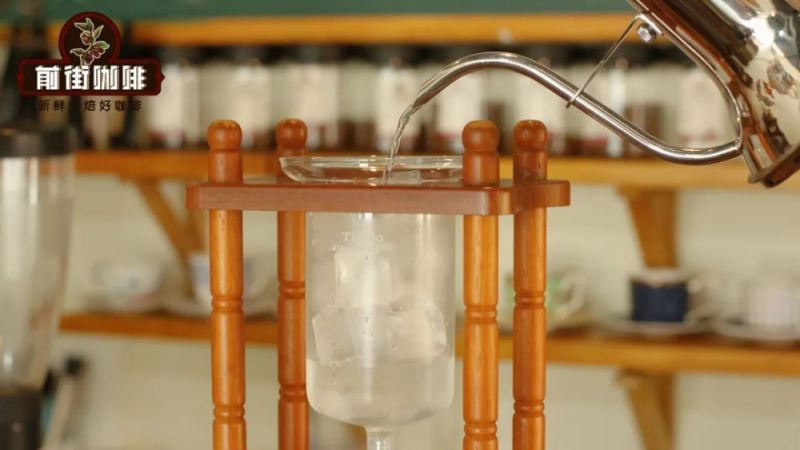
What should you watch when you use a drip coffee maker for cold brew?
Using a drip coffee maker for cold brew means slow extraction with ice water, cold water, and ice cubes over several hours rather than a hot brew cycle. Because the process runs long and uses a large amount of grounds, the drink is typically priced higher than iced Americano, and a single cup can cost around 40 yuan.
Four details decide the result: bean selection, grind size, coffee-to-water ratio, and drip rate, plus storage shelf life after brewing. Low-temperature extraction keeps bitterness low, so light to medium roasts with floral, fruity, or fermented notes work well, especially single-origin beans. Checking the machine's flow control and filter fit helps before the first batch.
Cold brew coffee, as a low-temperature extracted coffee beverage, is favored by many coffee lovers for its refreshing taste and rich flavor. But what details should be noted when making a good cup of cold brew coffee? From the choice of coffee beans, grind size, coffee-to-water ratio, to the drip rate and storage method, every step affects the final flavor. This article will explain in detail the key points of making cold brew coffee, and recommend several Front Street Coffee beans suitable for cold brew, while also answering common questions about cold brew coffee pot brands and prices.
For more specialty coffee knowledge, please follow: Front Street Coffee (Frontsteet Coffee)
Cold brew coffee, also known as water-drip coffee or ice-brewed coffee, is a brewing method that slowly extracts coffee grounds using a mixture of ice water, cold water, and ice cubes. The whole process takes a long time, usually several hours, and consumes a large amount of coffee grounds, so cold brew coffee is often priced higher than iced Americano; for example, a single cup of Front Street cold brew coffee is priced at 40 yuan.
What counts as a high-quality cup of cold brew coffee? There is no unified standard—everyone has their own method and criteria. When making cold brew coffee, you need to pay attention to multiple details such as bean selection, grind size, coffee-to-water ratio, drip rate, and storage shelf life, which will be explained one by one below.
1. Coffee beans for making cold brew
Both cold brew and ice drip are low-temperature extraction methods, with water temperature controlled between 0-7°C. The advantage of low-temperature extraction is its lower extraction efficiency, which reduces the release of large-molecule bitter compounds, so cold brew coffee tastes more refreshing, with rich layers of acidity and sweetness.
Since ice drip cannot extract a large amount of aromatic substances from coffee grounds like hot water does—especially the large-molecule aromatic compounds that are prominent in medium-dark roasts, which are hard to dissolve in ice water—it is generally recommended to choose light to medium roast coffee beans with prominent floral and fruity notes, obvious acidity and sweetness, or fermented aromas.
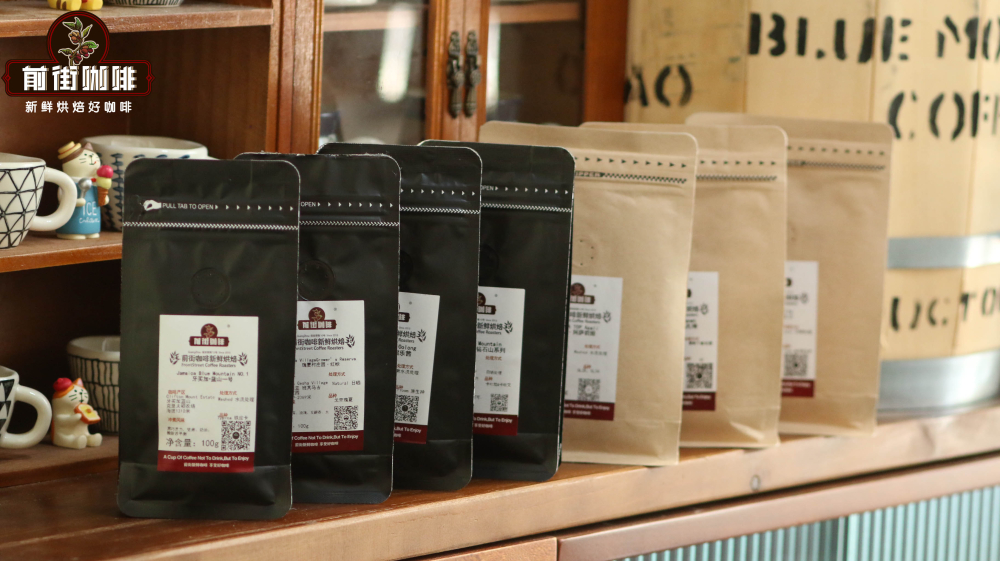
Among them, single-origin coffee beans with unique flavors are the first choice. If you like highly sweet iced coffee, you can try Front Street Coffee Xizhua, Front Street Coffee Strawberry Candy, Front Street Coffee Elto—beans with rich ripe fruit flavors; if you prefer bright acidity, start with Front Street Coffee Little Tomato, Front Street Coffee Fruit Ding Ding, Front Street Coffee Huakui. Of course, Front Street sometimes blends two beans together to make cold brew coffee with more complex flavors. For example, today’s recipe is 20 grams of Front Street Strawberry Candy plus 40 grams of Front Street Red Cherry; the result has candied fruit, sweet orange, and rose aromas, with a refreshing lemon and berry note in the finish.
Front Street recommends that coffee beans for making cold brew are best used around 20 days after the roast date. This is because freshly roasted coffee beans release a large amount of carbon dioxide. When ice water drips onto the ground coffee, gas continues to be released, the coffee bed tends to swell and puff up, eventually forming channeling, which leads to uneven extraction and a noticeable drop in coffee flavor.
2. The importance of leveling the coffee grounds
Cold brew coffee must be tamped. Many people don’t understand why cold brew also needs tamping.
It should be noted that tamping for cold brew coffee does not mean pressing it very firmly. Instead, first gently tap the grounds so that the structure of the coffee grounds in the filter cylinder remains uniform, then use a flat-bottom tamper to gently level it. When tamping, never press firmly like you would for espresso. If pressed too tightly, since cold brew coffee does not have pressure-assisted extraction like a coffee machine, it is easy for water to accumulate in the coffee bed and the coffee liquid cannot filter through smoothly. Moreover, the cold brew filter paper or filter disc is usually located at the bottom, unlike a coffee dripper which has venting ridges, so the degassing effect after the coffee grounds are soaked is also affected, ultimately leading to uneven extraction of the entire coffee puck.
3. Pre-wetting
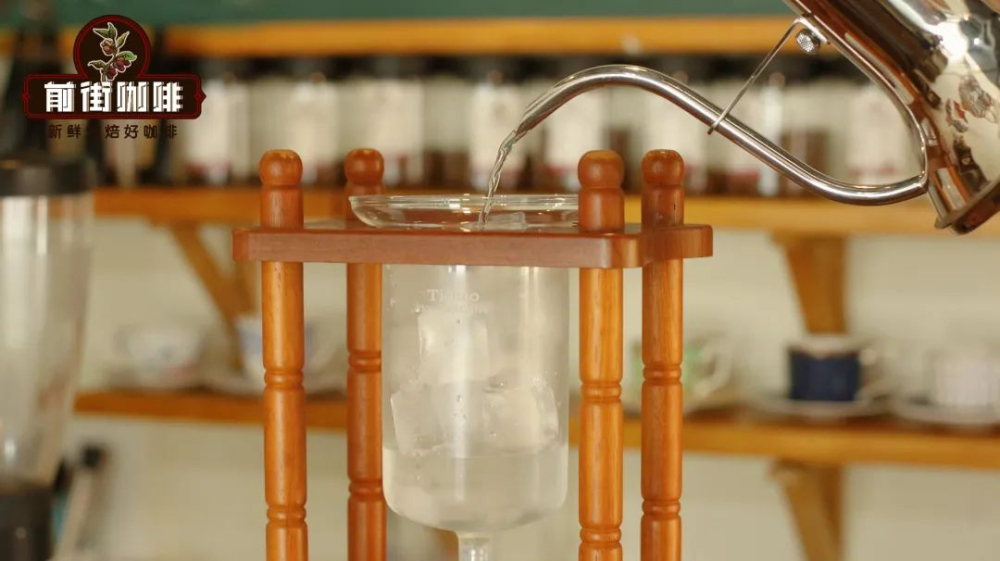
Using ice water for pre-soaking is actually similar to the blooming step in pour-over and can improve extraction and consistency of the final cup. Under cold brew’s low-temperature, filtration-dependent extraction conditions, dripping directly may lead to uneven wetting of the coffee bed, with some grounds over-extracted and others not participating in extraction at all. Pre-wetting in advance can also shorten the preparation time.
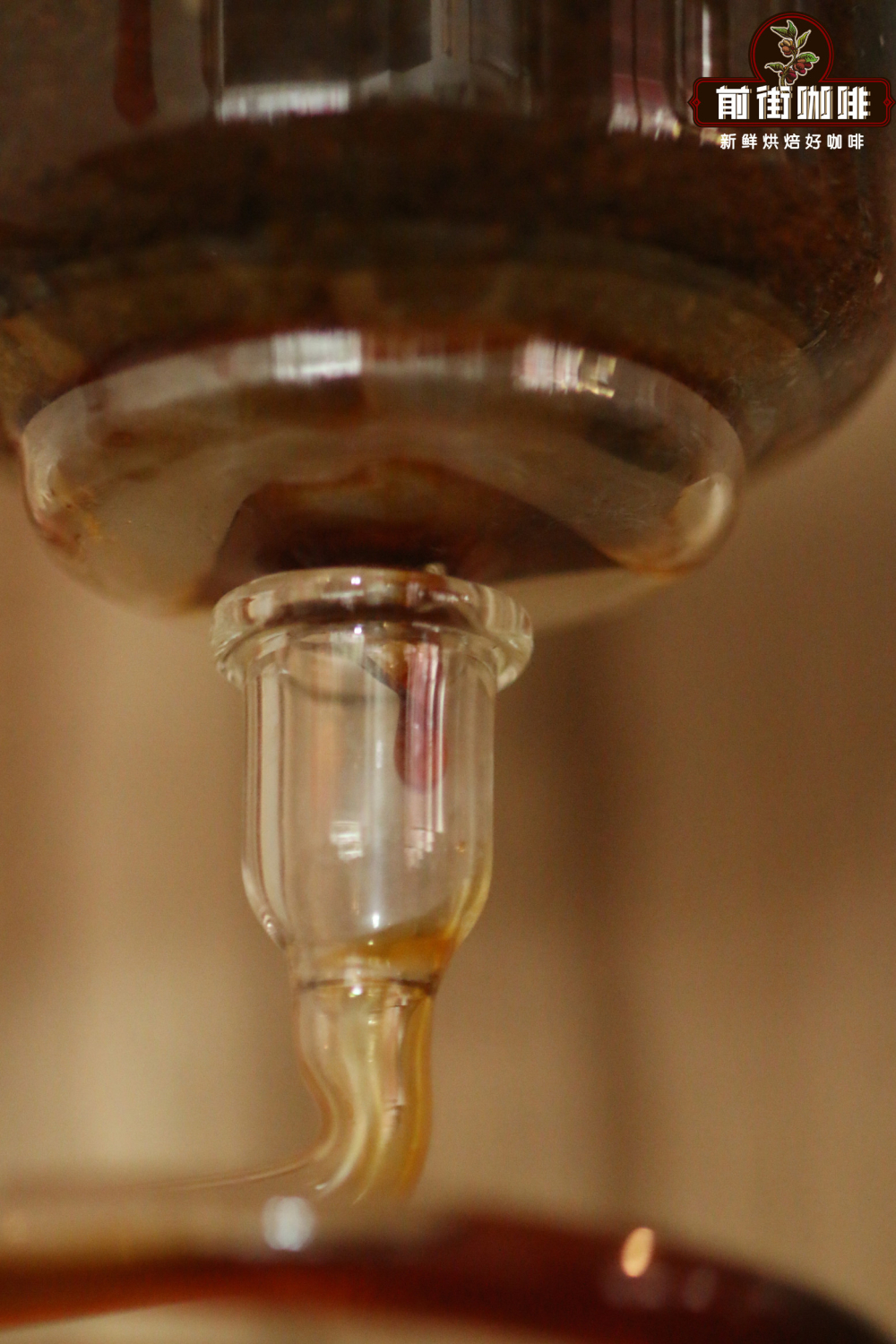
4. Place a round filter paper on top of the coffee grounds chamber
Reserve enough pre-soaking and venting space for the coffee, and the extracted coffee flavor will be more complete and clean. After leveling the coffee grounds, we cover them with a piece of filter paper. This increases the contact area between water droplets and coffee grounds and ensures even extraction. When water droplets fall and hit the coffee grounds, a small pit gradually forms on the surface. The water flow follows this pit downward instead of spreading outward, which would prevent the coffee grounds in the chamber from being fully wetted and cause under-extraction. Laying a piece of filter paper can avoid this situation.
5. Find the right coffee grind size
The grind size for Front Street cold brew coffee is 80-85% passing through a China standard No. 20 sieve. As is well known, if coffee grounds are ground too coarse, the coffee taste will be weaker; if ground too fine, the coffee will be strong and bitter. By the same logic, if the coffee grounds are too coarse, there will be no flavor; if too fine, they easily clog and cannot drain properly, which in turn makes the coffee bitter. So choosing the right grind size is very important.
This time, we use the refreshing Kenya Little Tomato coffee beans to make it. At low temperatures, the extraction rate is lower, so Front Street recommends using a slightly finer grind than for pour-over. Here, we use a China standard No. 20 sieve with an 82% passing rate. The store’s EK43S grinder setting is 9.5, and for the hand grinder C40, 20-22 clicks.
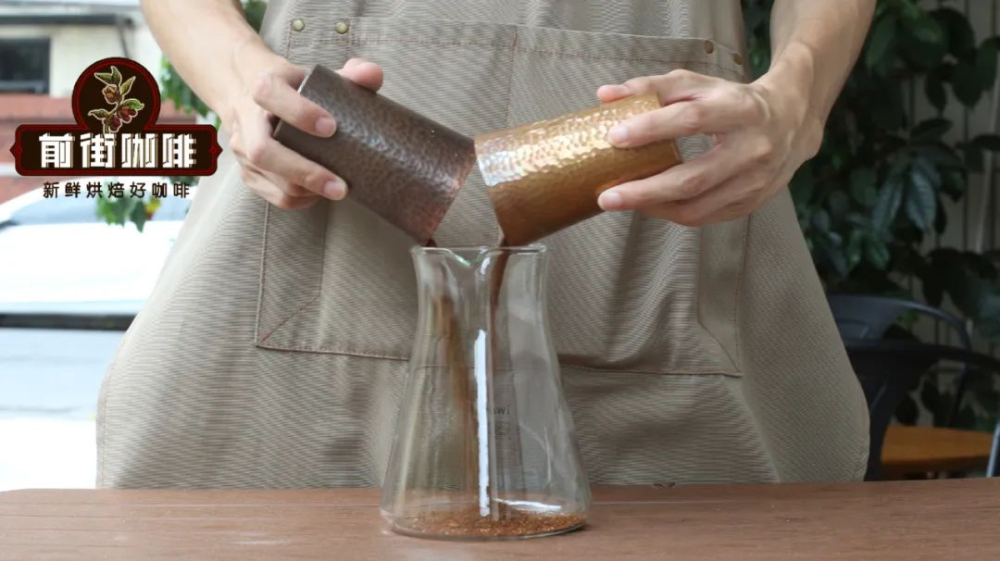
6. Control the drip rate and coffee-to-liquid ratio
The flow rate for ice drip is similar to pour-over, but it is calculated in drops per second. The slower the flow rate, the longer the total time required, and over-extraction is more likely. Front Street generally extracts at 7 drops per 10 seconds; the flow rate can be adjusted according to personal preference. The coffee-to-water ratio is 1:10. Because the cold brew coffee produced by Front Street is diluted with ice cubes before drinking, a higher concentration is used. If making it at home, you can extract at 1:12 to 1:14.
When Front Street makes cold brew, it grinds 60 g of coffee beans into powder, places a round filter paper in the coffee chamber, pours in the coffee grounds, and finally lays another piece of filter paper on the surface, then wets the coffee grounds with water. This can save dripping time and avoid uneven extraction. Fill the upper pot with an ice-water mixture, i.e., ice and water at 1:1, to extract a total of 600 g of coffee liquid.
7. Drink after refrigeration
Front Street usually pours the finished cold brew coffee into a glass bottle with a sealing gasket and lets it sit in the refrigerator for 12 hours before drinking. Pouring it into a glass bottle helps mix coffee liquids of inconsistent concentration, and choosing a container with good sealing performance ensures it is not contaminated by the outside—the refrigerator surface may look clean, but in fact it contains a large number of microorganisms invisible to the naked eye.
Placing it in the refrigerator for 12 hours of low-temperature fermentation gives the cold brew coffee a fragrant fermented aroma, and the original flavors also become richer. Fermentation is very common in daily life. Uncontrolled fermentation will cause food to spoil, while a low-temperature environment can effectively slow this process. Front Street has also verified that cold brew coffee made from most coffee beans is most delicious after being chilled for 12 hours.
The above content is compiled by CoffeeHunters, a coffee news website.


