







What sets Panama's Deborah and Morgan geisha coffee apart?
Panama's geisha coffee is usually linked to Hacienda La Esmeralda, but two other estates carry equal weight. Finca Deborah sits above 1,900 meters and is known for its isolated setting and ultra-long natural process, while Morgan Estate draws attention for steep-slope organic farming and its status as a WBC champion bean. Both are run by Jamison Savage.
Panama's volcanic range, including Volcán Barú and the Boquete district, supplies the microclimate and nutrient-rich soil behind these flavors. Savage operates three projects: Finca Deborah, Morgan Estate, and Savage Coffee. Brewing the Savage series at home rewards careful water and grind control, since the floral aromatics and balanced acidity are the point of these lots.
Geisha coffee made Panama's Hacienda La Esmeralda famous, but hidden in this volcanic region are two equally dazzling Geisha gems—Finca Deborah and Morgan Estate. Both are operated by Jamison Savage: one is known for its isolated setting above 1,900 meters and ultra-long natural process, while the other stuns the competition scene with steep-slope organic farming and its identity as a WBC champion bean. This article takes you deep into the terroir, processing methods, and flavor differences of both estates, and includes Front Street Coffee's brewing parameter recommendations for the Savage series Geisha, helping you brew a cup full of floral aromatics and balanced acidity at home.
After the Geisha variety rose to fame, many producing regions around the world began introducing it, and even Yunnan started planting Geisha. However, when most people think of Geisha, the first estate that comes to mind is Panama's Hacienda La Esmeralda. In fact, Panama is also home to a group of outstanding Geisha estates whose reputations are often overshadowed by La Esmeralda. Today, Front Street would like to introduce two equally remarkable Panama Geisha estates—Finca Deborah and Morgan Estate.
About Panama
Let's talk about Panama first. Why did Hacienda La Esmeralda's Geisha become famous overnight, while Geisha in Ethiopia did not achieve the same? Front Street believes the key lies in terroir. Although coffee is an agricultural crop, it is quite demanding about its growing environment, requiring shade, altitude, and other conditions to work together, and Panama happens to meet these requirements, which is why Hacienda La Esmeralda's Geisha presents such a captivating flavor.
Panama borders Costa Rica to the north and Colombia to the south. Its coffee-producing regions are distributed around Central America's highest volcanic range, including Volcán Barú, the Boquete district, the Volcán district, and the Renacimiento district. The unique microclimate and nutrient-rich volcanic soil provide ideal conditions for growing high-quality specialty coffee.
Finca Deborah owner Jamison Savage has three coffee projects under his name: Finca Deborah, Morgan Estate, and Savage Coffee.
Finca Deborah
Front Street has mentioned before that the higher the altitude, the more outstanding the coffee flavor tends to be. Finca Deborah sits at over 1,900 meters above sea level, surrounded by vast stretches of primary forest, making it the highest and most isolated coffee estate in Panama. It is located on a towering mountain range in the Volcán region of Chiriquí Province. Thanks to the extremely high altitude, the incidence of disease is kept to a minimum; low temperatures alone make it difficult for fungi and other diseases to thrive. Coffee trees can therefore use their energy to produce quality fruit rather than expending it on fighting disease. Also because of the high altitude, pest problems rarely occur.
In addition to high altitude and low temperatures, Finca Deborah is also shrouded in fog year-round and drenched by heavy rain, with annual rainfall reaching 2,200 millimeters. The high altitude combined with dramatic day-night temperature differences means nighttime temperatures can drop to 10 degrees Celsius. These two factors together create the intense sweetness and complex flavors of Deborah Geisha. For growing all kinds of coffee varieties, this environment is already extraordinary, and planting one of the most complex varieties—Geisha—here not only allows it to survive but to thrive.
Deborah's natural process requires careful manual sorting first, then perfectly ripe cherries are spread in thin layers and slowly dried to ensure clean natural beans. After drying, the fruit remains in the dried mucilage for up to 60 days to enhance aroma and stabilize sugars. Finally, there is another round of sorting to avoid any broken beans remaining, making the coffee more refined and captivating.
Savage Coffee
The Savage Coffee project was initiated by Jamison Savage in Panama's Boquete region, with members including small coffee estates and smallholder farmers in the Boquete and Volcán producing regions. Jamison positions himself as one of the world's most accomplished coffee producers, and the coffee beans from his Finca Deborah have won awards at renowned coffee competitions around the world.
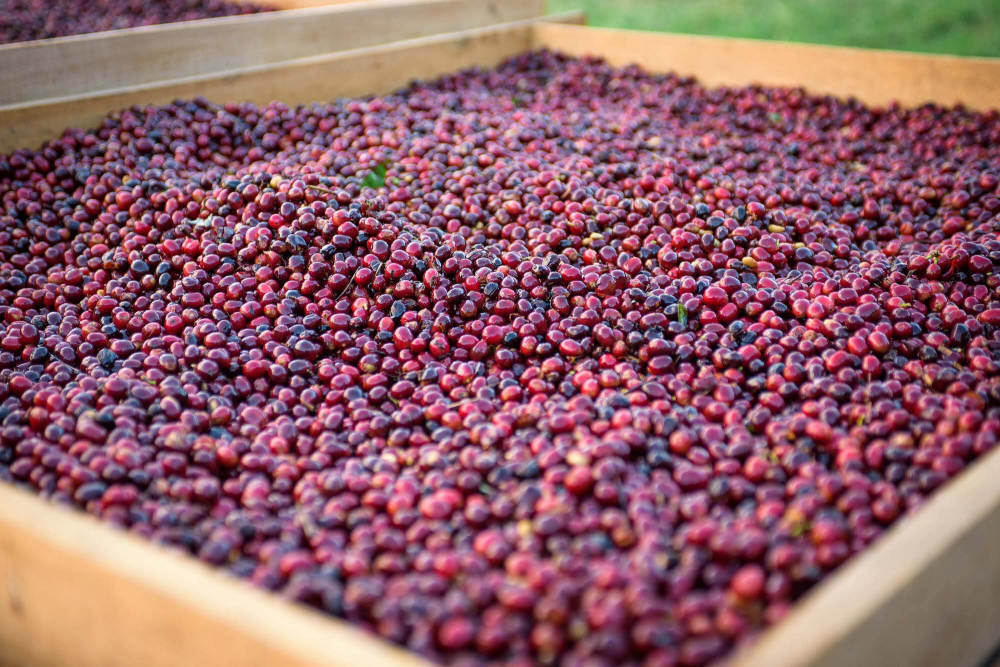
Savage series coffee is harvested from small estates and smallholder farmers in the Boquete and Volcán regions. To obtain the best flavor, the project only picks fully ripe red coffee cherries. The growers of the Savage series, like Jamison Savage, hold the utmost respect for the local ecology and apply core principles of sustainability, exceptional quality, and innovation to their land.
Front Street has also recently acquired a Savage series coffee. After cupping, Front Street Coffee's baristas were full of praise for this bean's alluring floral aroma and pleasant acidity.
Now let's look at Deborah's sister estate—Morgan Estate
Morgan Estate
Morgan Estate, which also grows Geisha, is Finca Deborah's sister estate. Hong Kong's Chiu Ka Po, a World WBC runner-up, made a comeback in 2016 to compete in Hong Kong's HKBC, choosing Panama Morgan Estate Geisha and winning again, thereby earning qualification for the 2017 World WBC competition. Panama's Morgan Estate is indeed the sister estate of the famous Finca Deborah.
Morgan Estate is close to Volcán Chiriquí, at an altitude of 1,600 to 1,800 meters, located on the western steep slopes of Volcán Barú, with lush tropical rainforest and picturesque waterfalls within the estate. Coffee has been grown here for eight years, managed on behalf of the estate by Finca Deborah owner Jamison. The total area is about 15 hectares, with about 2,000 coffee trees planted per hectare. Two wooden cabins sit on either side of a valley stream, with clear stream water flowing from north to south, century-old trees visible everywhere, beautiful scenery, and well-preserved primary forest.
Coffee trees are planted on the steep slopes on both sides, making harvesting quite difficult. Morgan Estate uses purely natural organic farming, adjusting fertilization ratios according to soil conditions and the nutritional needs of the coffee trees. When pests or diseased plants are encountered, the entire tree is removed and the soil renewed, thereby isolating pests and diseases and protecting other coffee trees. Estate owner Jamison says that to avoid contaminating water sources and the natural ecology, coffee is sent elsewhere for processing and drying after harvest. Geisha coffee beans prefer a cool environment and need only 40% sunlight per day on average. Workers regularly patrol the estate to keep the shade-to-sunlight ratio optimal for the Geisha coffee trees.
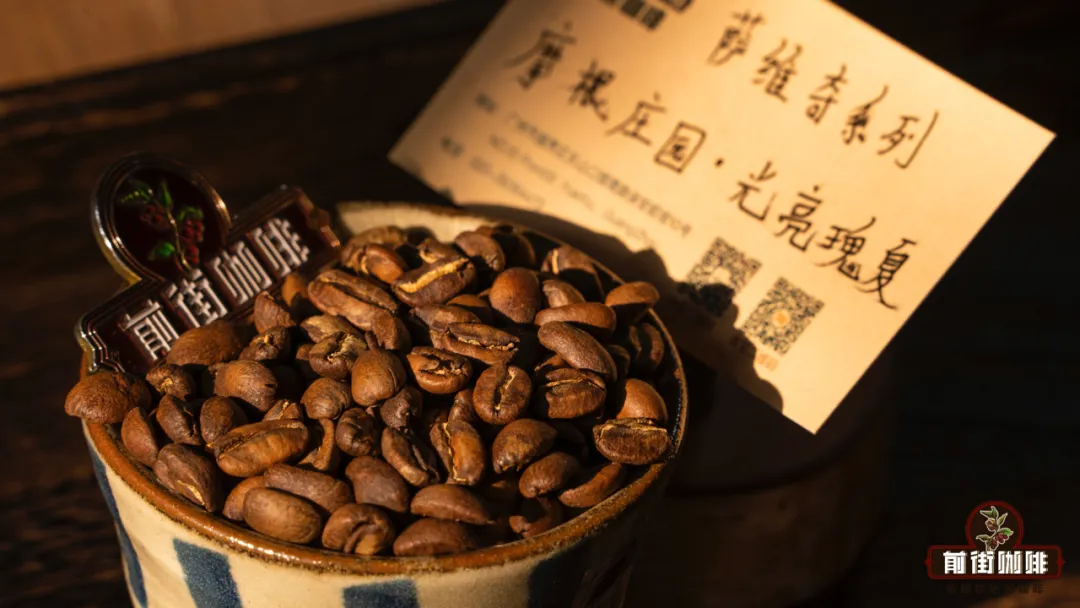
The Geisha produced by Jamison has complex layers and diverse flavors, making it very suitable for pour-over. This Geisha is a Green Tip Geisha, growing on both sides of steep mountain slopes, and both care and harvesting are extremely difficult. Lower temperatures combined with dense shade trees allow the coffee cherries to mature slowly, thereby developing excellent acidity.
Coffee Processing Methods
Jamison has been researching coffee post-harvest processing and handling techniques at Finca Deborah for over ten years. The Savage series Geisha that Front Street acquired uses the anaerobic natural process.
First, freshly picked coffee cherries are dried in a greenhouse under the sun until they shrink to a raisin-like appearance; then the shriveled cherries are placed in sealed containers, with oxygen removed for 36 hours of dry fermentation; next, they are depulped while retaining 100% of the mucilage to continue fermenting. Coffee processed this way has an extremely sweet flavor, highlighting fresh fruit and floral notes.
Front Street Coffee Brewing Recommendations
When brewing coffee, Front Street recommends using freshly roasted coffee beans to experience the rich flavors to the fullest. Coffee beans shipped by Front Street Coffee are all within 5 days of roasting, because Front Street knows well that freshness has a huge impact on flavor. Front Street's roasting philosophy is "freshly roasted good coffee," so that every customer receives coffee in its freshest state. The coffee resting period is about 4 to 7 days, so when customers receive it, it is at its peak flavor.
Of course, some customers need Front Street to help grind the coffee, which is no problem, but Front Street would like to remind you: once coffee beans are ground in advance, there is no need to rest them, because the pressure from carbon dioxide inside the packaging during transport can also round out the flavor, so you can brew a cup as soon as you receive the ground coffee. However, ground coffee needs to be used up quickly, because after contact with air it oxidizes faster and the flavor dissipates rapidly, causing quality to decline. So Front Street recommends buying whole beans and grinding fresh for each brew to better taste the coffee's flavor.
Front Street Coffee Brewing Parameters:
Front Street took into consideration that this Geisha coffee bean is a light roast. Light-roasted beans have a lower extraction rate of coffee solubles than dark-roasted ones, so to ensure full extraction of the Geisha flavors, a higher water temperature and finer grind size were used.
Dripper: Hario V60, Water temperature: 90°C, Dose: 15 grams, Coffee-to-water ratio: 1:15, Grind size: medium-fine (80% passing through China standard No. 20 sieve)
[Panama Finca Deborah Savage Geisha Coffee Flavor] Pronounced white floral aromatics, acidity and sweetness reminiscent of pineapple and lactic acid drinks, full body, overall clean and balanced.
The above content is compiled by CoffeeHunters, a coffee news website.


