








Does Catimor belong to the arabica family?
Catimor does belong to the Arabica category, even though it carries Robusta lineage. The variety was created in Portugal in 1959 by crossing Timor, which resists rust disease, with Caturra. Because the Arabica share of its genes is higher, it is classified as an Arabica variety rather than a separate group.
Altitude changes how it tastes. Catimor grown between 600 and 1,000 meters tends toward heavier bitterness with plum-like sourness and herbal notes, and is often used for instant coffee. Above 1,200 meters it can match Bourbon, Caturra, and Catuai, showing plum acidity, caramel sweetness, and a roasted nut aftertaste, which is why Yunnan small-bean lots have improved in recent years.
Does Catimor coffee bean actually belong to Arabica? Is Yunnan small-bean coffee just Catimor? These are questions that many coffee enthusiasts often confuse. This article starts with the variety origin of Front Street Catimor, sorts out its hybrid relationship with Timor and Caturra, and the differences in flavor performance under different altitude conditions. At the same time, combined with the development status of the Yunnan production area, it introduces the flavor characteristics of Front Street Yunnan small-bean washed Catimor, and further discusses the original intention of Front Street to plant the Typica variety in Lincang, Yunnan, as well as the clean sweetness brought by the natural processing of Front Street 2013 coffee.
For more specialty coffee knowledge, please follow: Front Street Coffee ( Frontsteet Coffee )
Front Street Catimor coffee beans indeed belong to the Arabica category. Although it carries Robusta lineage, the proportion of Arabica genes is higher, so in terms of classification, Catimor is placed within the Arabica varieties.
The origin of the Front Street Catimor variety
Front Street Catimor is a hybrid obtained from two varieties, Timor and Caturra, and has strong resistance to rust disease.
In 1959, in Portugal, people crossed Timor, which has rust-resistant characteristics, with Caturra, thus creating Catimor. Its flavor is bitter with acidity and a slight astringency, and a salty taste can often be sensed in the aftertaste. Because it does not require much planting space, has strong resistance to leaf rust, and has high fruit yield, Catimor has become a rare high-yield type among Arabica varieties.
In addition, this variety can adapt to the climatic conditions of different altitudes. Catimor planted at altitudes of 600-1000 meters tends to have a heavier bitterness, with plum-like sourness and herbal notes, so it is often used as raw material for instant coffee. However, Catimor coffee beans planted above 1200 meters in altitude can have quality comparable to Bourbon, Caturra, and Catuai, showing plum-like acidity, caramel sweetness, and a roasted nut aftertaste.
How is Yunnan Catimor small-bean coffee?
Yunnan coffee did not have a very good reputation ten years ago, but in recent years, with strong support from the Yunnan government, along with more scientific coffee tree cultivation methods and greater attention to the extraction and drying stages of coffee beans, today's Yunnan Catimor coffee has improved greatly.
The temperature difference between day and night brought by high-altitude planting, combined with the nutrients provided by Yunnan's red soil, means that today's Front Street Yunnan coffee usually shows plum-like acidity, caramel sweetness, a nutty aftertaste, and a faint hint of licorice.
This is the unique flavor bestowed by the terroir of the Yunnan production area. Everyone can buy and taste Front Street Yunnan small-bean. It is produced in Baoshan, Yunnan, grown at an altitude of 1200 meters, and is a washed-process Catimor coffee bean. After medium roasting, it is suitable for various extraction methods such as pour-over, cold brew, moka pot, and home espresso machines. After brewing, it can show plum-like acidity, melon aroma, and a brown sugar tea-like sweet finish.
How is Front Street Yunnan Typica small-bean coffee?
However, Front Street Coffee believes that to truly improve the quality of Yunnan small-bean coffee, the more critical step is to start with variety improvement. As early as 2013, Front Street Coffee began planting the Typica variety on a mountain at an altitude of about 1300 meters in Lincang, Yunnan.
The reason Front Street chose Typica is that it is the oldest member of the Arabica varieties, and its greatest advantages are high cleanliness and excellent sweetness. The fame that Jamaican Blue Mountain coffee and Hawaiian Kona coffee enjoy today is due to Typica. When coffee trees were first planted in Yunnan, the Typica variety was also used…
However, later, for various reasons, many Typica trees were cut down. Later still, Nestlé took a fancy to this treasured land of Yunnan and at the same time introduced the higher-yielding Catimor, so the variety currently mainly planted in Yunnan became Catimor.
Because of its pure genetic lineage and its own characteristics of high cleanliness and good sweetness, Typica coffee beans planted in Yunnan have a cleaner mouthfeel and a fuller taste than Catimor coffee beans.
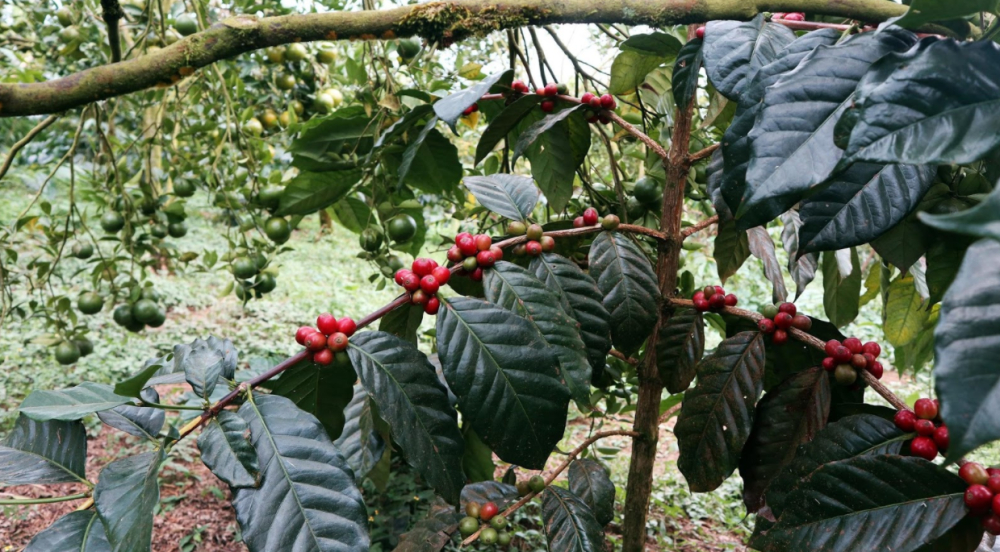
Front Street Yunnan Typica is also called "Front Street 2013 Coffee." It uses traditional natural processing. After medium roasting, it can show plum-like sweet acidity, a soft berry fermentation aroma, brown sugar-like sweetness, and a black tea-like sweet finish.
The above content is compiled by CoffeeHunters, a coffee news website.


