







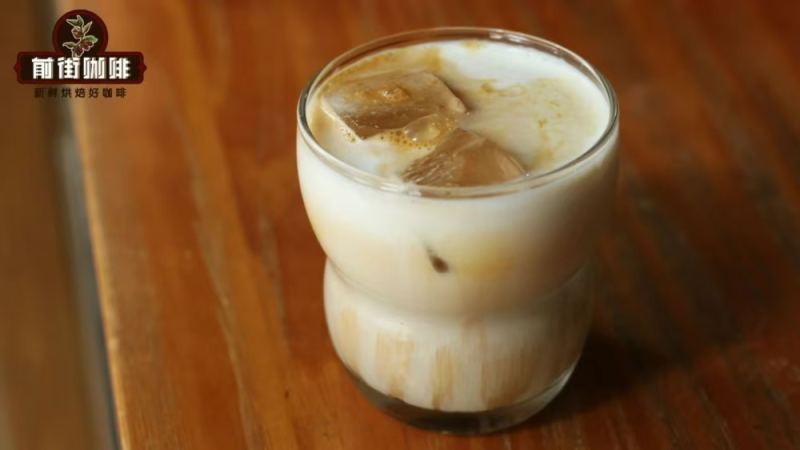
Today, the drinks on café menus are incredibly diverse. To cater to more people's tastes, adding various dairy products and flavored syrups to coffee is also very common. But have you ever heard of coffee with condensed milk?
Adding condensed milk is to mask the strong bitterness of the coffee
In Vietnam, the aroma of coffee drifts through every street and alley. Their coffee is mainly made from Robusta beans, usually roasted until they are oily and black, and the extracted coffee liquid is rich in oils, typically presenting flavors of hazelnut, grain, and caramel, with a pronounced bitter and burnt taste. Compared to fresh milk from European countries, Vietnamese people prefer the lactose sweetness of condensed milk, so they came up with the idea of using the sweetness of condensed milk to mask the strong bitterness in coffee. Locally, this drink is called "ca phe sua da," translated as Vietnamese drip coffee.
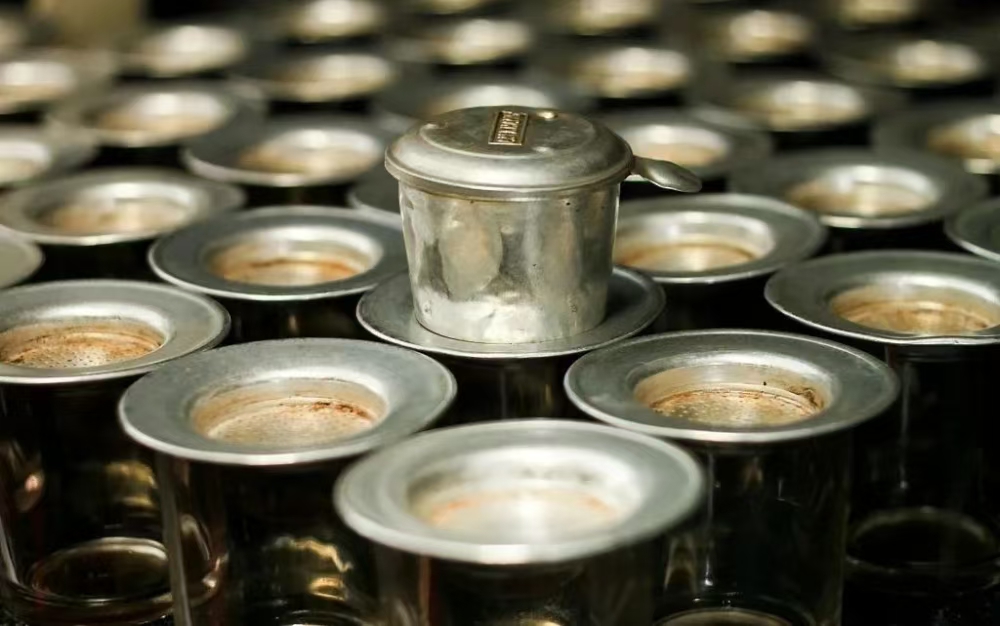
If we order a Vietnamese drip coffee locally, the shop will first put some milky white condensed milk into the cup, then place a drip filter on top of the cup, pour in hot water, cover it, and then wait for the dark coffee liquid to drip through naturally. The barista will also thoughtfully provide you with a small spoon to stir it evenly before drinking. The cloying sweetness of the condensed milk perfectly neutralizes the intense bitterness of the Robusta black coffee, resulting in a milk coffee with coffee flavor and lactose sweetness.
Besides Vietnam in Southeast Asia, Spain in Europe also has a habit of drinking "coffee + condensed milk." They like to call this coffee "Café Bombón." It is essentially espresso paired with condensed milk, served in a mini small cup.
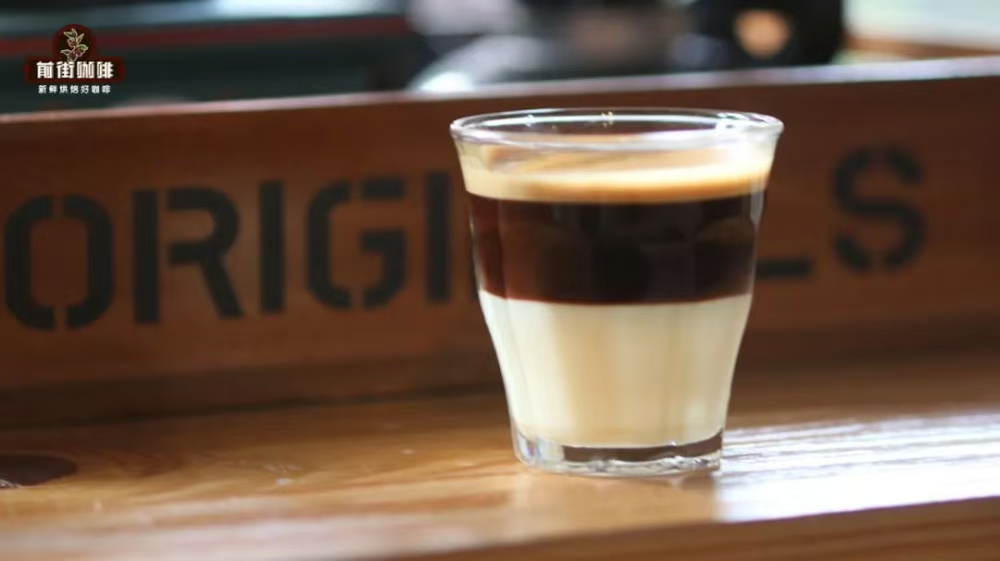
Front Street Coffee has also replicated this drink before. Take a 90-120ml glass cup—glass is for better appearance. Pour in condensed milk at a 1:1 ratio with espresso. For example, if the espresso used at Front Street Coffee is 40g, then add 40g of condensed milk. Then pour the espresso over the condensed milk. Because condensed milk has a higher density, without external force, the espresso is difficult to blend with the condensed milk, forming a very beautiful "black and white" pairing. On the palate, it's like "turtle jelly with condensed milk"—the mouthfeel is much thicker than drinking plain espresso, and it's no longer bitter.
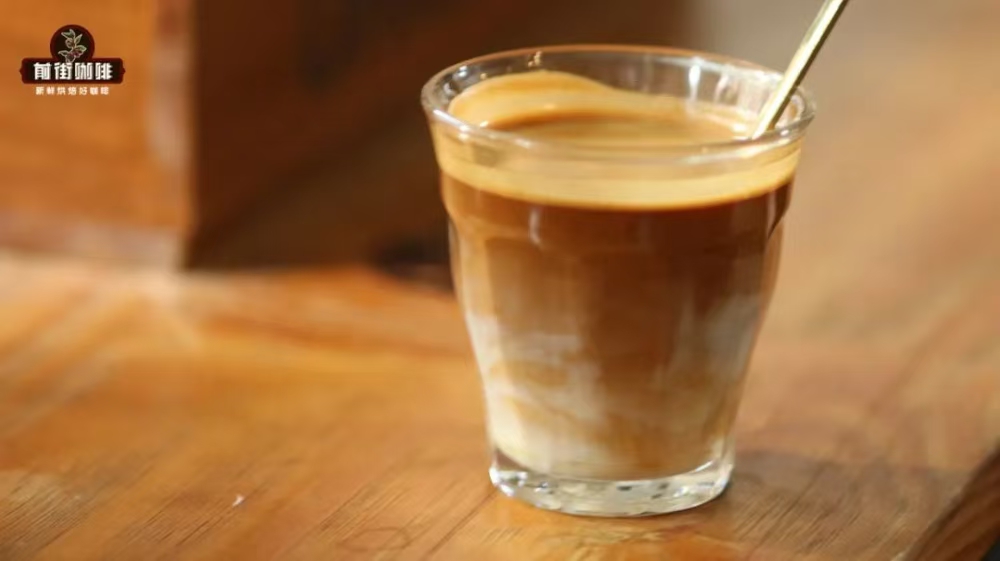
The "with condensed milk" way of drinking is certainly not limited to the above two. In recent years, a "Spanish Latte" made with coffee + milk + condensed milk has also become a popular item on café menus. For example, the coffee chain store Arabica has launched this popular coffee.

Is there a difference between a Spanish Latte and a Latte?
A Spanish Latte is made up of espresso, fresh milk, and condensed milk. In other words, it's a regular latte with added condensed milk. The addition of condensed milk allows even those who can't accept bitterness to enjoy the rich coffee aroma.
Now that we know the difference between a Spanish Latte and a regular latte, making it is very simple. Front Street Coffee will first extract a 40ml shot of espresso, add 10g of condensed milk to the base, stir thoroughly, then steam 200ml of fresh milk to a suitable temperature of 55-65°C, and finally incorporate it into the coffee liquid. The Spanish Latte is then complete. If making an iced Spanish Latte, Front Street Coffee first adds 75g of solid ice cubes to the cup, pours in 200ml of cold milk, then adds 10g of condensed milk to the extracted espresso and pours it over the surface. Stir well with a straw before drinking.

Since the espresso served at Front Street Coffee's stores uses their own roasted "Sunflower Warm Sun Blend," which is a blend of Ethiopian sun-dried Red Cherry coffee beans (30%) + Honduran Sherry Barrel coffee beans (70%). The extracted espresso presents flavors of vanilla, cream, whiskey, and berries. Paired with milk, it tastes like vanilla chocolate milk. Adding condensed milk highlights the sweetness of lactose and sucrose.
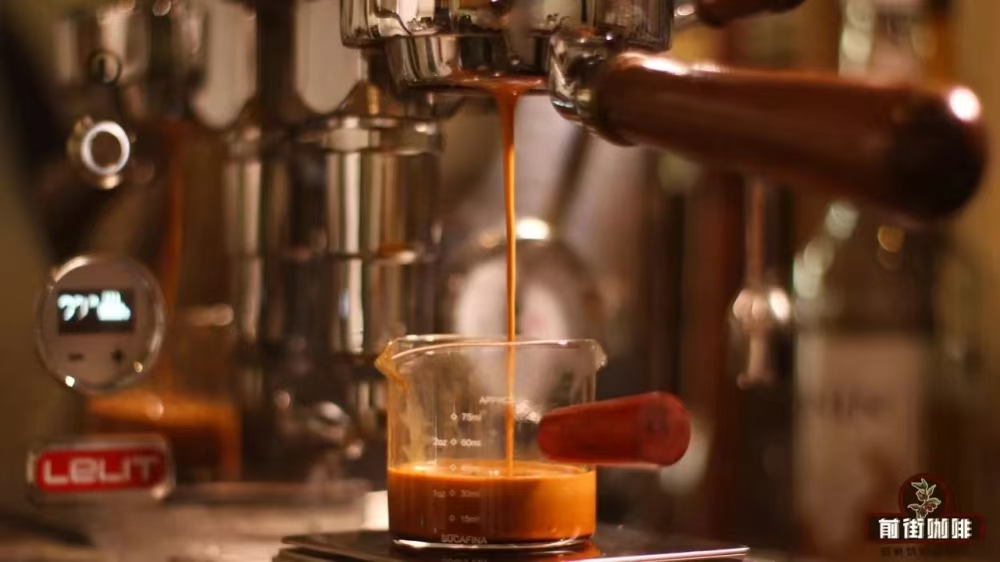
Stir before drinking—the mouthfeel is extremely rich and silky! And you can't taste any bitterness of the coffee at all. Essentially, it's not much different from drip coffee; both use condensed milk to balance the bitterness of the coffee, just with different coffee varieties and extraction methods.
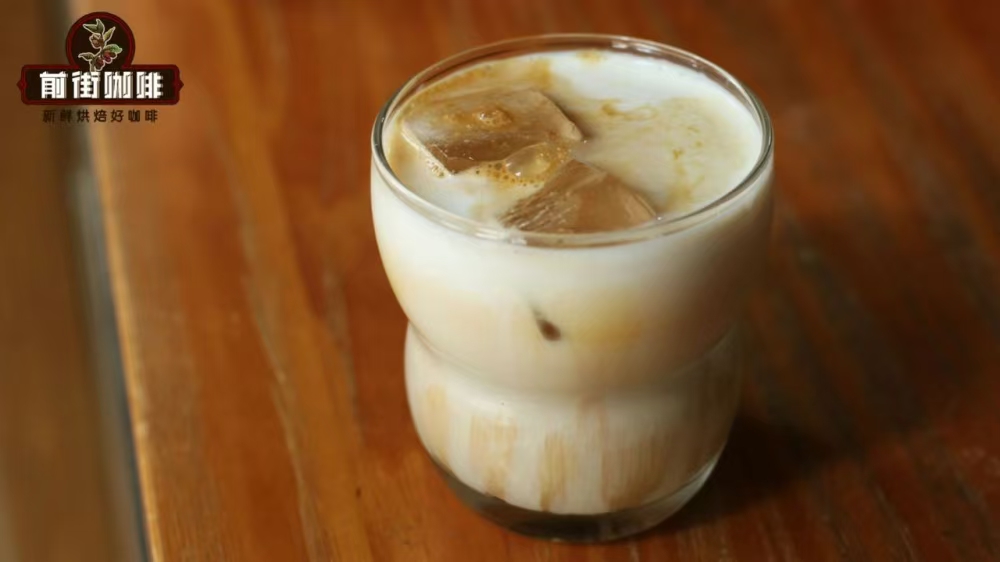
But not everyone can accept the sweet and cloying Café Bombón, so the Spanish Latte was derived, using milk as a buffer to make the condensed milk less sweet and cloying. And because of the condensed milk, the entire latte gains a certain level of complexity—it can be said to be mutually complementary.
For professional coffee knowledge exchange and more coffee bean information, please follow Coffee Workshop (WeChat public account cafe_style)
For more specialty coffee beans, please add the private WeChat of Front Street Coffee (FrontStreet Coffee), WeChat ID:qjcoffeex
The above content is compiled by CoffeeHunters, a coffee news website.


