







What Is SOE Coffee and How Does It Differ From Blends?
SOE coffee means Single Origin Espresso: espresso pulled from beans grown in one origin rather than a blended recipe. Because the beans usually come from a single farm or region, the cup shows that origin's specific character, such as the citrus notes of a Yirgacheffe or the cherry tomato flavors of a Kenya, rather than the balanced, consistent profile a traditional Italian blend is built to deliver.
SOE beans are normally roasted lighter than dark espresso blends so the origin stays readable, which makes extraction harder. Shops often grind finer, extend the shot time, and raise the dose, then cut back on milk or water in drinks so the coffee is not drowned out. Batch-to-batch variation in weather, growing conditions, and roasting also makes stable results tougher to guarantee.
Many coffee enthusiasts wonder why SOE is not on Front Street Coffee's menu. Behind this lies a realistic consideration of single-origin espresso stability and cost. Starting from the definition of SOE, this article will analyze its fundamental differences from traditional Italian blends in roasting, extraction, and serving logic, explain why SOE is often more expensive than blends, and share the specific parameters Front Street uses to extract SOE with Brazil Queen Estate Yellow Bourbon. Finally, it lists four Front Street single-origin beans suitable for making SOE and their flavor performance, helping readers fully understand this coffee category.
Many friends have asked Front Street's baristas what exactly SOE is, why so many specialty coffee shops now put it on their menus, while FrontStreet Coffee has never included it. The reason is that SOE is espresso extracted from single-origin coffee beans, and coffee beans can vary in flavor between batches of the same bean due to changes in weather, growing conditions, and roasting, making it difficult to ensure that every cup of espresso maintains stable performance.
What is SOE coffee?
Single Origin Espresso, that is, espresso from a single origin, is called "Single Origin Espresso" in English. Although SOE stands for single-origin espresso, it does not automatically equal specialty coffee. If single-origin beans with high flavor distinctiveness are chosen to make SOE, it can present a highly recognizable espresso. For example, Front Street Yirgacheffe's citrus notes and Front Street Kenya's cherry tomato flavors, with the high pressure of an espresso machine, the coffee flavor is further amplified, so the flavor performance is often more prominent than pour-over.
What are the key points for making SOE?
The coffee beans selected for SOE are usually not roasted too dark in order to highlight the characteristics of the origin, making extraction more difficult than with traditional dark-roasted espresso beans. Front Street believes that, on the one hand, extraction parameters should be adjusted to increase the extraction yield, such as extending the extraction time, making the grind finer, and increasing the dose.
On the other hand, when using SOE beans as the base to serve espresso drinks, the ratio of espresso to milk or water also needs to be readjusted. Reduce the amount of milk or water so that the coffee flavor is more prominent and the overall taste is not too weak. In addition, making SOE places extremely strict requirements on the beans—although SOE performs impressively, because it comes from a single origin, its shortcomings are also easily amplified, and factors such as roast level and particle size will directly affect the final flavor.
How does Front Street extract SOE with Front Street Brazil Queen Estate Yellow Bourbon?
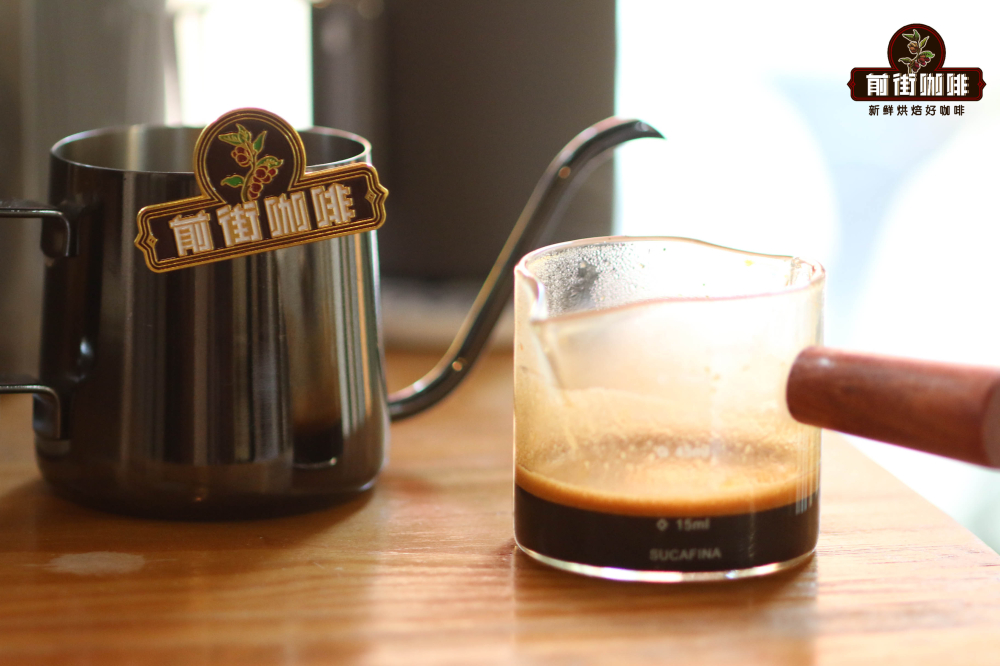
Coffee dose 20g, coffee liquid yield 40ml, extraction time 27 seconds, grind setting Galileo Q18 2.0.
SOE flavor description: chocolate, cream, nutty aroma, syrupy mouthfeel, medium bitterness, medium-high acidity.
Why is SOE often more expensive than blends?
When ordering a cup of blend coffee, baristas usually do not give much description; but if it is switched to single-origin beans, they will specifically emphasize "SOE," mainly to distinguish it from blends. Traditionally, single-origin coffee beans are mostly used for drip extraction, such as pour-over. Pressure-based espresso, however, habitually uses blends, in which producers combine beans from different origins and use dark roasting to highlight a rich, full-bodied, mainly bitter taste, with flavors basically fixed in the profile of caramel, dark chocolate, nuts, and cocoa.
SOE, which emphasizes a single origin, uses a lighter roast and presents a lighter mouthfeel different from the traditional bitter profile, such as Ethiopian beans with flavors dominated by citrus and floral notes. Higher distinctiveness makes it easier for consumers to remember the characteristics of SOE, but from a cost perspective, higher-quality single-origin beans are naturally more expensive, so an extra charge is only logical.
Which coffee beans are suitable for making SOE?
The first condition for a good cup of coffee is good-quality coffee beans, and SOE should also use higher-quality single-origin coffee beans. Front Street's roasting principle is "freshly roasted good coffee," hoping that every customer can drink freshly roasted coffee beans full of aroma. All shipped coffee beans are freshly roasted within 5 days. Below, taking coffees on Front Street's bean list as examples, it introduces which beans are suitable for making SOE.
1. Front Street Yirgacheffe Natural Red Cherry Coffee Beans
This Front Street Yirgacheffe Natural Red Cherry coffee bean was originally used for pour-over drip brewing, showing very high sweetness and a strong fruity aroma. When used to extract espresso (grind setting needs to be adjusted), the crema on the surface is fine, the color tends toward pale yellow, and it smells of sweet berries. It has sweet and tart berries with caramel, and a clean mouthfeel. Adding steamed hot milk brings out honey-like sweetness.
2. FrontStreet Coffee · Ethiopia Sidamo Huakui Coffee Beans
Region: Guji Hambela Altitude: 2300 meters Variety: local heirloom Processing method: natural process Flavor: tropical fruit, strawberry, citrus, floral
The Sidamo region is located in southern Ethiopia, extending east to the Arsi and Bale administrative regions and west to the Gamogofa administrative region. Sidamo coffee is cultivated between 1400m and 2000m above sea level. Most of the Sidamo region uses the natural process to process green coffee beans. Front Street believes that the natural process gives coffee beans from the Sidamo region rich fruity aromas and a smooth mouthfeel.
3. Front Street Costa Rica Musician Series Mozart Coffee Beans
Anaerobic honey processing allows the coffee beans to retain the mucilage layer for sealed fermentation before drying, maximizing the sweetness of the coffee beans. This Front Street Costa Rica Mozart coffee shows rich rose floral notes and the high sweetness of raisins when brewed as pour-over. Extracted as SOE, it presents thick tropical fruit and fermented flavor notes.
4. Front Street Colombia Diviso Estate Sidra Coffee Beans
It is recommended to use Front Street Colombia Sidra coffee, which can be ordered directly through the Front Street Taobao store or Front Street Tmall flagship store. This coffee comes from Diviso Estate in the Huila region, grows at an altitude of 1700 meters, and uses double anaerobic natural processing. It has very rich grape, passion fruit, and citrus flavors. Made into SOE Sidra americano, it has a refreshing and clear grape juice profile, cool and pleasant.
The above content is compiled by CoffeeHunters, a coffee news website.


