







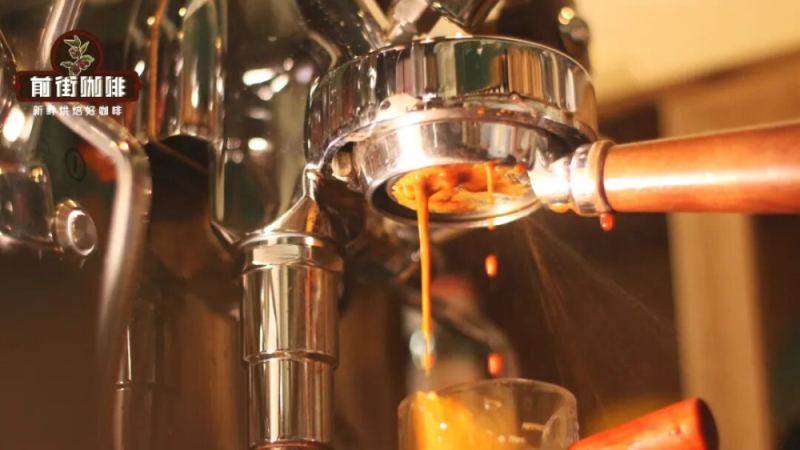
Why does espresso spray during coffee extraction?
Espresso relies on fine grinding, high pressure and a short shot time. When the puck has an uneven density, pressurized water takes the path of least resistance, rushing through the weakest spot and spraying from one corner of the filter basket. This channeling leaves weak aroma, thin body, sharp acidity, burnt bitterness and astringency, and can pool water or pinholes in the puck.
The coffee extraction process beverage depends on puck preparation: distribution, tamping, dose control and clump-free grounds. A bottomless portafilter reveals the spraying but does not by itself correct an uneven bed. Beginners are advised to start with suitable fresh beans, since espresso magnifies every characteristic of the raw coffee and makes flaws easier to taste in the finished shot.
Making a perfect espresso is the pursuit of many coffee lovers. However, in practice, espresso suddenly spraying, channeling, or showing signs of perforation often catches people off guard. These phenomena not only affect the uniformity of coffee extraction, but also lead to weakened aroma, thinner body, and even unpleasant flavors such as sharp acidity and burnt bitterness. This article will deeply analyze the causes of channeling, from puck preparation details, portafilter knocking, dose control, to coffee grounds clumping and more, helping you find the root of the problem and providing practical solutions. At the same time, we will also discuss whether a split portafilter can truly solve channeling issues, and share Front Street Coffee's classic espresso blend recommendation to help you easily improve the quality of your espresso.
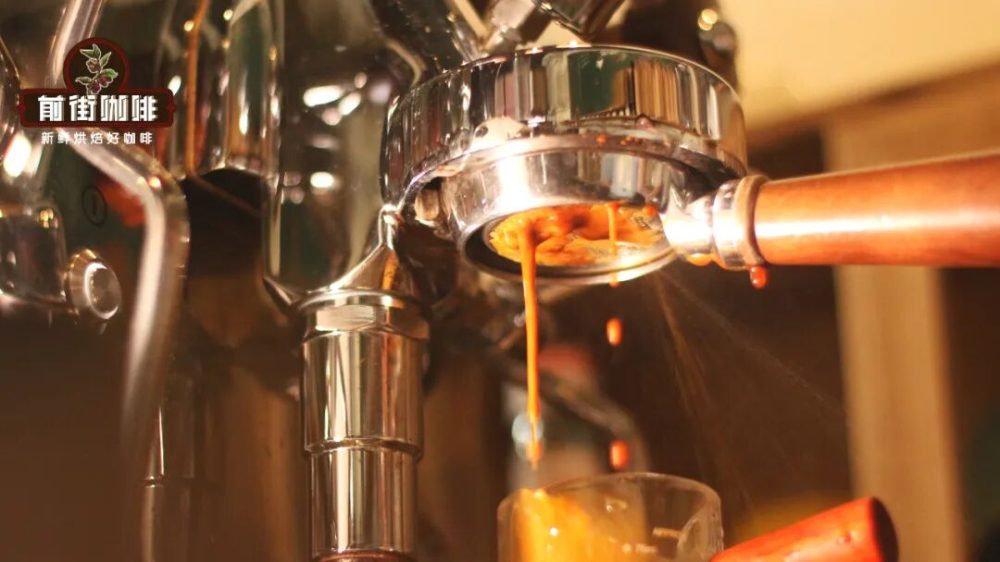
Why does espresso suddenly spray out?
To understand this phenomenon, we must first start with the three key elements of a standard espresso: fine grinding, high pressure, and short time. In other words, it uses high-pressure hot water to penetrate a finely ground and firmly tamped coffee puck within tens of seconds.
Just as people choose to take a detour when facing difficulties, high-pressure water also prioritizes finding the path of least resistance. Once density is uneven somewhere inside the puck, the pressurized hot water will rush straight to the weakest spot, then quickly spray out from one corner of the bottom of the filter basket.
If you are using a bottomless portafilter at this time, you will see this portion of espresso quickly become lighter and whiter, releasing more violently as it goes on, and even splashing everywhere — this is what baristas often call "channeling."
In addition to spraying, channeling also leads to uneven coffee extraction. After removing the portafilter, you may sometimes find water pooling in the filter basket, or small holes appearing in the coffee grounds. When tasting, the espresso usually has weak aroma, thin body, off-flavors, and unpleasant sensations such as sharp acidity, wateriness, burnt bitterness, and astringency.
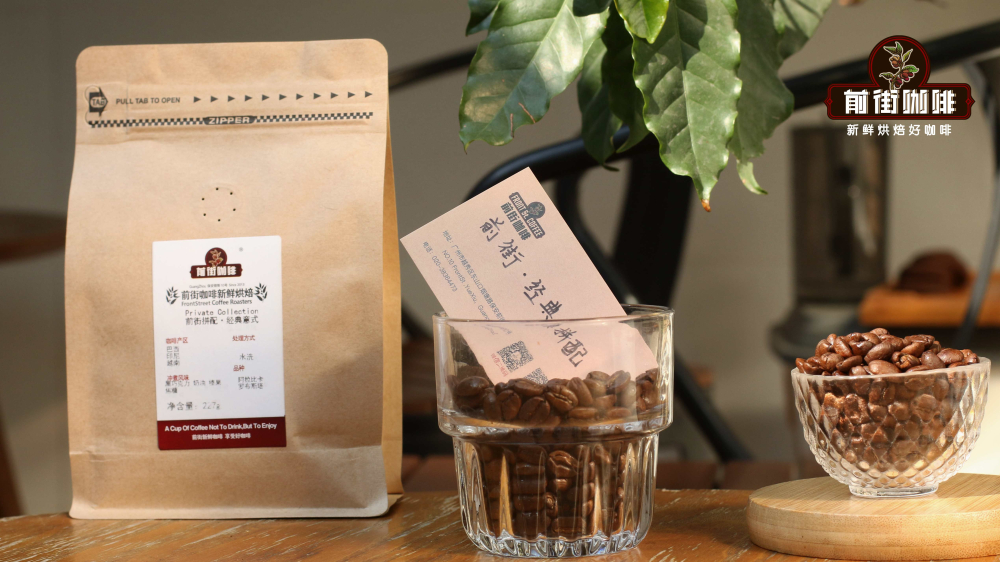
Front Street believes that for beginners just starting out, choosing the right raw materials is more important than anything else. Because espresso has an intense and stimulating taste, it easily magnifies the characteristics of the coffee beans themselves, making acidic coffee even more acidic, so do not use light-roasted coffee beans; as the most essential part of espresso, crema has always been favored by everyone, and if you want to easily produce espresso crema with a roasted aroma, it is best to choose medium-dark roasted Front Street. Classic Espresso Blend.
Front Street Classic Blend is a tribute to the once-popular "Mamba Coffee." It is an espresso blend combining Indonesian Mandheling beans and Brazilian beans, carrying the wild aroma of Mandheling and the smooth mouthfeel of Brazilian beans, creating a complementary and harmonious flavor profile. Front Street Classic Espresso Blend adds Robusta to the Mamba recipe, fully enhancing the crema, making the body of the espresso stronger and the flavor expression more stable. It is suitable for home brewing and for latte art.
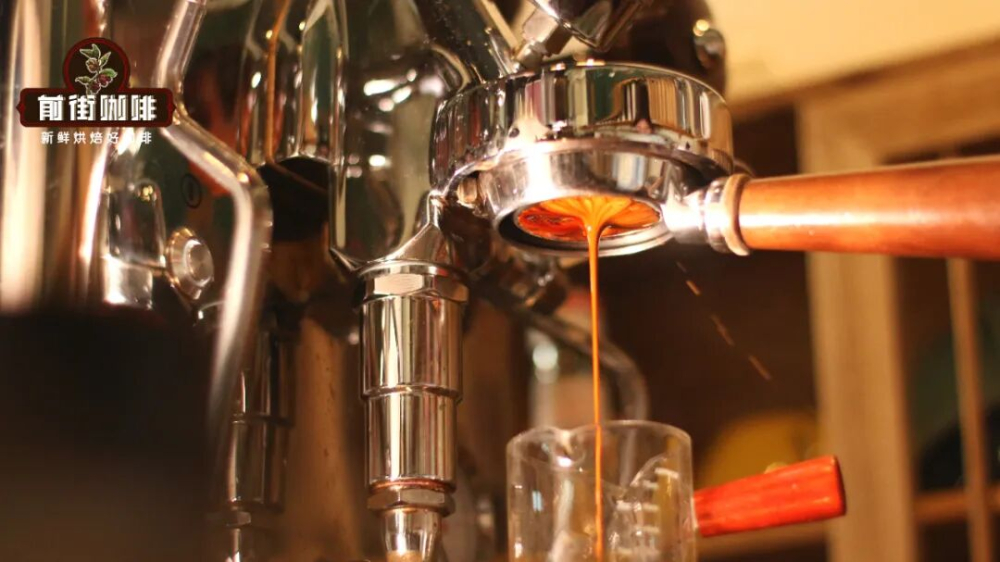
In fact, channeling can be said to be everywhere. Even for battle-hardened baristas who have mastered various brewing equipment and techniques, they still encounter "channeling problems" when making espresso — it's just that the intensity of the "spraying" may not be so dramatic, and with bar experience they can quickly adjust. But for home baristas without much operational experience, they need to first find the problem, and then "prescribe the right remedy."
What situations can cause channeling?
1. During puck preparation, details are not done well
Whether in video tutorials or popular science articles, we are always told about the importance of puck preparation for espresso extraction. The purpose of puck preparation is simple: to distribute the coffee evenly and flatly in the filter basket, so that hot water can fairly penetrate every particle, thereby keeping their extraction states as consistent as possible. But often, the simpler the detail, the easier it is to overlook.
For example, some friends are always too impatient during operation. Before the coffee bed is leveled, they pick up the tamper and tamp. At this point, a gap or a less noticeable small pit will form at the edge of the puck. When locking onto the group head for extraction, the seemingly insignificant depression gives hot water an opportunity, causing perforation and spraying.
2. After puck preparation, knocking the portafilter
You should know that it is not only perforation of the puck that counts as channeling; gaps between the puck and the filter basket also count as channeling. Knocking after puck preparation is often the culprit behind "hole-punching."
According to Front Street's observation, these friends usually move more forcefully. When locking in the portafilter, they do not find the right angle before pushing it up, so they hit the group head. At this point, the originally firmly tamped puck may already have been cracked, greatly increasing the possibility of "hole-punching." If there is no problem with your puck preparation technique, but spraying often occurs when you make espresso, pay attention to whether you have this bad habit and avoid it in time.
3. Insufficient dose or grinding too fine
In theory, assuming even puck preparation, the greater the resistance the water encounters, the slower the flow rate, and the richer the flavor usually obtained from extraction. But when the coffee is ground too fine, the density of the puck after tamping becomes very high, creating enormous resistance to water. By the time actual extraction begins, the hot water under high pressure urgently needs an outlet, so it drills through a weaker spot in the puck, or sneaks out along the edge of the filter basket.
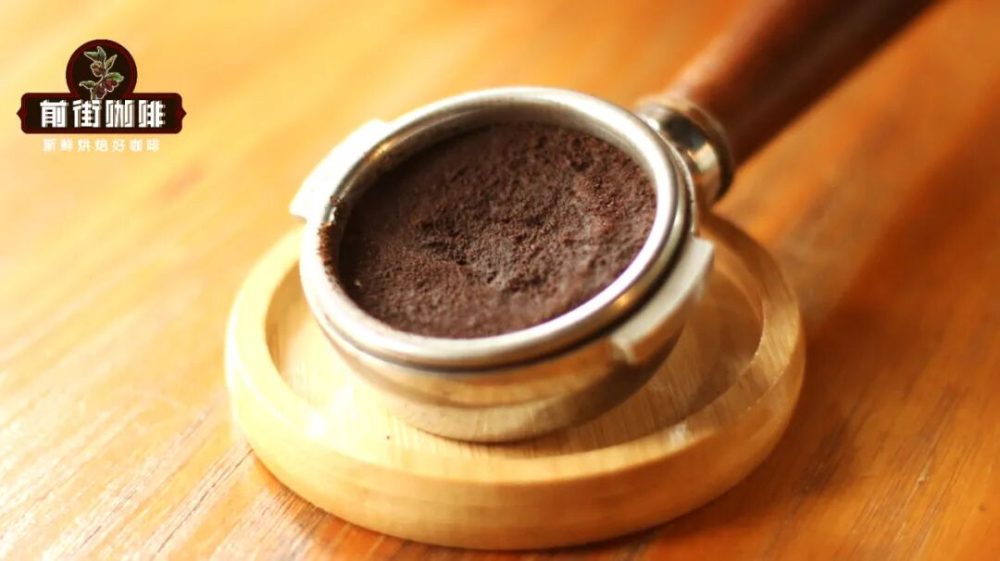
In addition, too small a dose can also cause espresso spraying. When the dose is too small, a certain distance forms between the puck and the shower screen. During extraction, the surface coffee grounds will churn violently, and channeling can occur at any time. After pulling out the portafilter, we will find that the surface coffee grounds are muddy, accompanied by perforation.
If we are not sure whether the grind setting is correct, we can also judge by referring to the espresso extraction formula: 1:2 coffee-to-beverage ratio, time 25-30 seconds, dose depending on the filter basket capacity. For example, the reasonable capacity of the filter basket used by Front Street is 20g, so use 20g of coffee grounds to extract 40g of espresso, with time controlled at 25-30 seconds. If the espresso takes a long time to drip out (more than 7 seconds), the final extraction time also exceeds 35 seconds, and the later stage of the shot is obviously pale, then it indicates that the flow rate is too slow due to overly fine grinding, and the coffee needs to be ground coarser.
4. Coffee grounds clumping
During the process of grinding espresso coffee, intense friction generates static electricity (the grinding quality of the grinder also affects this). The result is that lighter coffee particles clump together to form lumps. Especially on rainy days with higher humidity, and when grinding deep-roasted coffee beans rich in oils, this kind of clumping most commonly occurs.
Although we may not see anything unusual after tamping firmly, such clumps usually have a denser structure. The water that originally had to pass through here has no choice but to find another path, choosing a place with less resistance to flow away, and then "perforation" happens again. The solution is simple: use a needle distribution tool or a similar tool (such as a toothpick) to stir the coffee grounds in the filter basket, which breaks up clumped grounds and makes the density distribution of the puck more uniform.
Can a split portafilter solve the "channeling" problem?
At this point, some friends may think: if spraying is more likely to occur when using a bottomless portafilter to make espresso, then would switching to a bottomed split portafilter solve it?
Obviously not. Although the structure of a split portafilter can indeed allow espresso to be released along two fixed channels as expected, if the puck is uneven (or the above situations occur), hot water will still choose to drill through places with larger gaps. On the surface, the flow rate of the espresso may not seem to have much of a problem, and it will not splash everywhere like with a bottomless portafilter, but internally it has actually already formed a situation where part is over-extracted and part is under-extracted. When the portafilter is removed, concrete evidence of "perforation" can also be seen.
The above content is compiled by CoffeeHunters, a coffee news website.


