







Why do Rainforest Alliance coffee farms matter for Blue Mountain?
Clifton Estate in Jamaica's Newcastle area is one of the island's oldest coffee farms and holds Rainforest Alliance certification. The Sharp family owns it, with 250 total acres and 180 planted, averaging 4,300 feet, about 1,310 meters. It grows 100 percent Arabica Typica and uses washed processing, producing Blue Mountain No. 1 with balanced acidity, body and aroma.
Traceability is the point of estate coffee: knowing the exact plot, cooperative or farming family behind a bag explains why microclimate, variety and processing shape the cup. For buyers comparing Rainforest Alliance coffee brands, certification signals verified environmental and social practices, and Rainforest Alliance certified organic coffee adds organic production to that. Clifton's green bean grading and roast curves show how the estate standard reaches the brewed cup.
Why is estate coffee worth tracing back to its roots? In the world of specialty coffee, traceability means you can find out exactly which estate and which plot a bean comes from—even down to which family of farmers. The unique microclimate, varietal characteristics, and processing methods behind each bean together shape that inimitable flavor in the cup. This article will take you into one of Jamaica's oldest coffee estates—Clifton Estate—and provide a complete analysis of the allure of Blue Mountain No. 1, from the growing region's environment, varietal characteristics, and washed processing to green bean grading and roasting curves, while also sharing Front Street brand's brewing recommendations and authenticity identification methods for this legendary bean.
Why choose estate coffee beans?
What Front Street understands as estate coffee is precisely the traceability that specialty coffee emphasizes—the ability to identify which estate and which plot the beans come from, or which cooperative or farming household, thereby pursuing the unique regional flavor bestowed by that particular terroir. Only by personally visiting coffee-growing regions and stepping onto the estates can one truly understand where the depth, the captivating aromas, and the varied flavors in coffee come from: Is it the microclimate? The variety? The processing method? Or the unique skills passed down through generations of coffee farmers?
To truly understand the flavor variations and product differences of coffee beans, one must learn about their origin and growers. Different estates present different flavors, and even different hillsides on the same estate may each have their own distinct character. The story behind every single coffee bean is worth coffee lovers' careful exploration.
One of Jamaica's oldest coffee farms: Clifton Farm
Jamaica Clifton Mount Estate
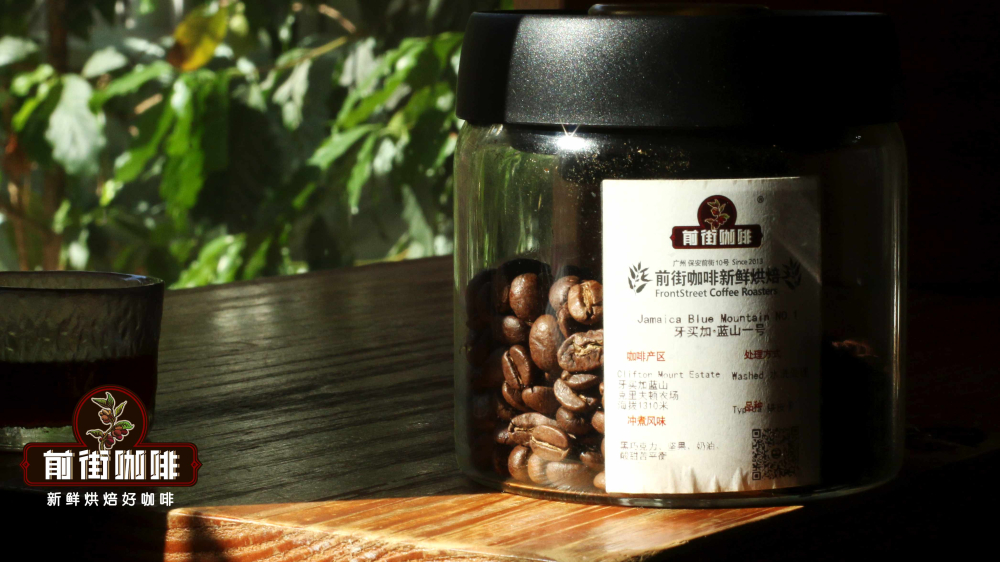
Front Street Clifton Farm Blue Mountain No. 1 Coffee Beans
Estate owner: The Sharp family
Certification: Rainforest Alliance Certified
Location: Newcastle area
Total area: 250 acres
Coffee planting area: 180 acres
Average elevation: 4,300 feet (approximately 1,310.64 meters)
Processing method: Washed
Variety: 100% Arabica Typica
Flavor: Perfect balance of acidity, body, and aroma
01 | Growing Region Introduction
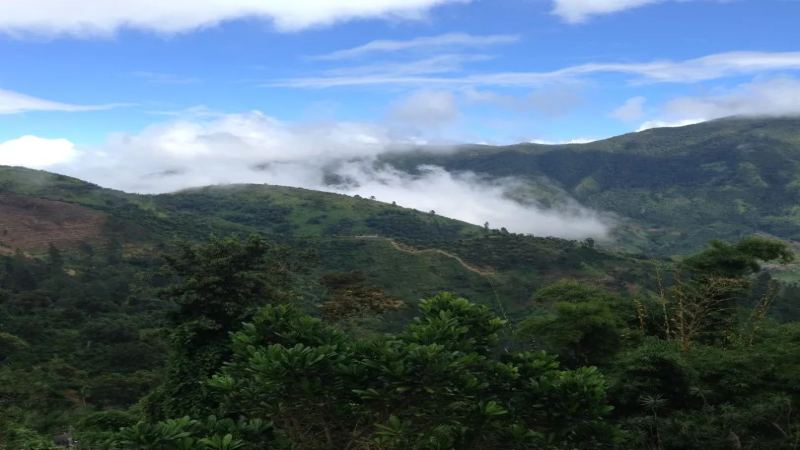
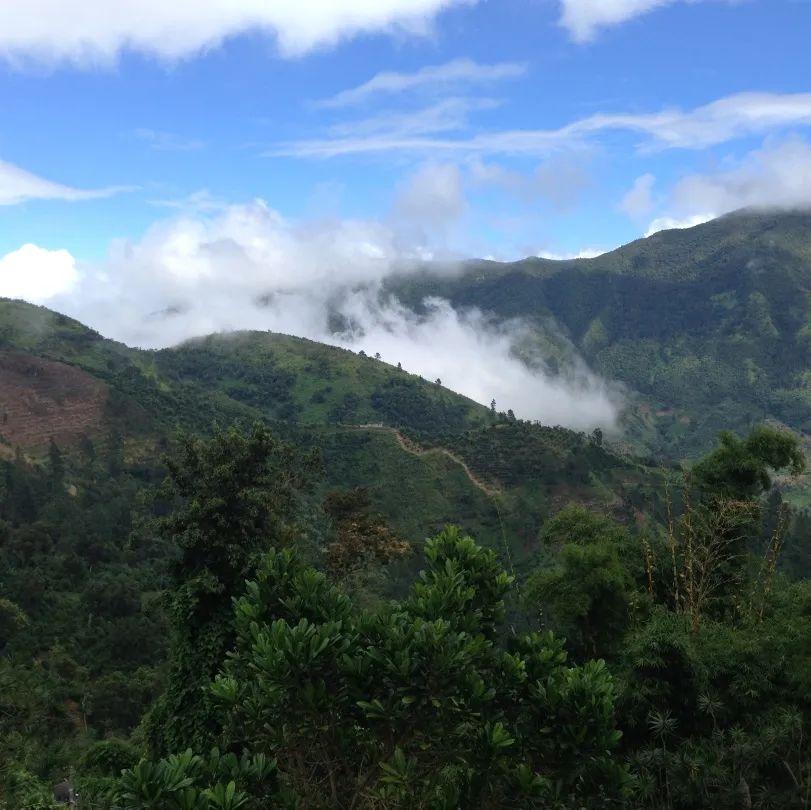
The Blue Mountain range is located in the eastern part of the island of Jamaica. Because the mountain is embraced by the Caribbean Sea, on clear days when sunlight strikes the azure sea surface directly, the peaks reflect the brilliant blue radiance of the water—hence the name Blue Mountain.
The highest peak of the Blue Mountains stands at 2,256 meters above sea level, making it the tallest peak in the Caribbean region and also a famous tourist destination. Located within the coffee-growing belt, it possesses fertile volcanic soil, fresh and pollution-free air, and a humid climate with year-round mist and rain (average annual precipitation of approximately 1,980 mm, temperature around 27°C). It is precisely these climatic conditions and ultra-high elevation that give rise to the world-renowned Jamaica Blue Mountain coffee.
Clifton Farm Introduction
Clifton Mount is the oldest coffee-growing site in Jamaica that is still in normal operation, and of all Jamaica, only Clifton Farm holds the "Rainforest Alliance" certification mark.
The farm is widely recognized as a world-famous source of premium Blue Mountain coffee. Its elegant Great House farm is located in the Newcastle area, situated on the eastern slope of Catherine's Peak at an elevation of 4,300 feet.
Historical Background
As early as the mid-eighteenth century (around 1750), Clifton Farm had already begun cultivating and producing coffee.
According to the 1810 survey records of the Jamaica Institute, Robert Hamilton was the owner of the farm at that time. At that point, Clifton Mount was divided into two parts: the hilltop area had 80 acres of coffee planting land and 427 acres of pasture; the foothill area had 111 acres of coffee and 264 acres of pasture.
The coffee planting area in the Blue Mountain region is only 6,000 hectares, so it is obviously impossible for all coffee labeled "Blue Mountain" to actually come from there. Today's Clifton Farm is the largest estate in the region, yet even by international standards, it remains a small-scale operation. Many local estate owners are simply small landholders whose families have worked this land for two centuries.
The famous British painter and writer Miss Marianne Ross once visited Jamaica and spent five months on Clifton Mount. In her autobiography "Recollections of a Happy Life," she mentioned the Clifton Inn where she stayed: this inn belonged to a local widowed gentleman who did not wish to continue living in the inn himself, but instead rented it out weekly to different people, giving more people the opportunity to experience the cold air at 5,000 feet elevation and to stroll through Jamaica's finest and oldest coffee plantation.
Clifton Mountain Village
Front Street Blue Mountain coffee's cultivation and processing area is located at an average elevation of 4,300 feet (approximately 1,310.64 meters). Sufficient elevation, the shade provided by gentle afternoon clouds and mist wreathing the mountain forest, ample sunshine, and mineral-rich planting soil together provide excellent growing conditions for the coffee trees and also extend the maturation period of the coffee cherries.
In 1953, the Jamaican government established the Jamaica Coffee Industry Board (CIB) to oversee and guarantee the quality of Jamaican coffee. Jamaica was the first country in the world to designate specific geographic locations to particular coffee brands, which is quite similar to how the French wine industry established the AOC (Appellation d'Origine Contrôlée) system.
All coffee exported from Jamaica must be shipped through the CIB and undergo rigorous inspection by trained quality control experts to ensure that all exported products are 100% authentic Jamaica Blue Mountain coffee.
Sharp family members: Jason, Lawrence (father), and Richard
As early as the mid-eighteenth century (around 1750), Clifton Farm had already begun cultivating and producing coffee. According to the 1810 survey of the Jamaica Institute, Robert Hamilton was the owner at that time, and today the farm is managed by the Sharp family.
Sharp inspecting red cherries
Clifton's high elevation and long history are certainly important, but its processing method is also uniquely ingenious. This wonderful and distinctive processing technique gives Clifton, beyond the signature round and smooth mouthfeel of Blue Mountain No. 1, additional rich layers including a subtle floral aroma.
This is precisely why Clifton is so highly sought after and expensive—prices exceeding ten thousand per barrel are the norm.
02 | Washed Processing Method
Blue Mountain coffee exclusively uses the washed processing method.
The washed method uses fermentation and water flow to remove the skin, pulp, and mucilage. Farms using the washed method must build washing channels and have access to a continuous supply of fresh water. During processing, the skin and pulp are first removed, and the beans are allowed to ferment for 12 to 18 hours. The fermented beans are then placed in channels and moved back and forth, using the friction between the beans and the force of flowing water to wash the coffee beans until they are smooth and clean.
After washing, the coffee beans are still wrapped in the parchment layer, with a moisture content of about 50%, and must be dried in the sun to reduce the moisture content to 12% to 14%. Afterward, the coffee beans are sorted and placed in dedicated storage bins. These steps must be strictly controlled, otherwise the coffee quality will be affected.
Certification: Rainforest Alliance Certified
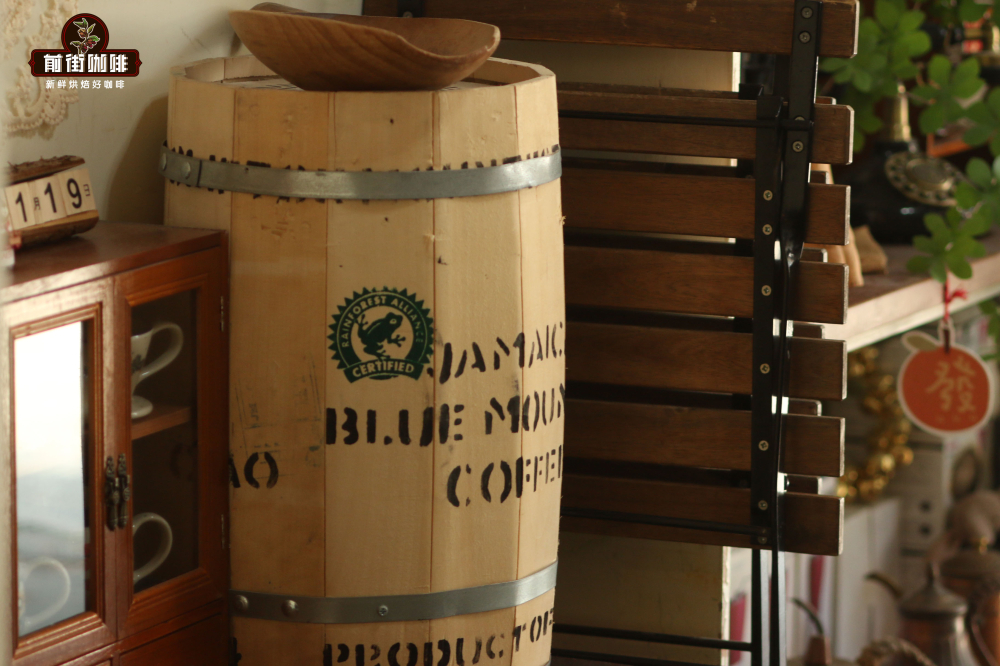
Products with the certification mark printed on the coffee sack or barrel are certified products. Farms must comply with the "Sustainable Agriculture Network Standards" to obtain certification (the Rainforest Alliance frog). Clifton Estate is the only coffee estate to have obtained RFA Rainforest Alliance frog certification.
03 | Green Bean Analysis
Blue Mountain coffee is further divided into four grades, from highest to lowest quality: NO.1, NO.2, NO.3, and PB (Peaberry). According to CIB standards, only coffee grown at elevations above 666 meters may be called Jamaica High Mountain Coffee; coffee grown outside the Blue Mountain range can only be called Jamaica Coffee.
Among these, the basic standards for Front Street Blue Mountain green beans at the NO.1 grade are: screen size 17 and above, defect rate below 3%, moisture content around 13%, etc.
Variety: Typica
04 | Roasting Analysis
How should one roast to bring out the best flavor of 【Front Street Jamaica Blue Mountain】?
In short, Blue Mountain must be roasted "thoroughly" from inside to outside, and on the basis of proper roasting, use good roasting techniques to fully express this bean's flavors.
The caramelization reaction is one of the most critical stages affecting coffee flavor. After six to seven minutes of roasting, the green beans have absorbed a large amount of heat energy, initiating pyrolysis reactions and producing the first crack sound. Some sugars convert into carbon dioxide, moisture continues to evaporate, and new aromatic compounds gradually form, creating what is known as coffee oils, which combine with hundreds of aromatic substances including nicotinic acid, citric acid, quinic acid, malic acid, acetic acid, and caffeine.
Roasting curve: Charge when drum temperature rises to 170°C, set airflow to 3; after 1 minute adjust heat to 140°C, airflow remains unchanged; roast until 5 minutes 10 seconds, temperature 153°C, bean surface turns yellow, grassy smell completely disappears, dehydration is complete, adjust heat to 115°C, airflow to 4;
At 8 minutes 00 seconds, the bean surface shows rough wrinkles and dark patchy streaks, the toasty bread smell clearly transitions to coffee aroma, which can be defined as the prelude to first crack—at this point one must carefully distinguish the sound of the first crack point; at 8 minutes 12 seconds first crack begins, reduce heat to 90°C, open airflow fully (adjusting heat requires extra care—do not reduce it so much that you cannot hear the cracking sounds), drop the beans at 201.3°C.
Front Street Blue Mountain Coffee Cupping:
Cupping characteristics: Acidity, body, and aroma achieve a perfect and subtle balance. The acidity is bright and delicate, the body is velvety smooth, and the aroma has a gentle penetrating quality accompanied by floral, spicy, and citric notes. After entering the mouth, there is a hint of cocoa in the finish.
The taste is very clean, complex, and extremely mild, with a chocolate-like sweetness and very strong body. The flavor is rich and mellow; the coffee's sweetness, acidity, and bitterness are perfectly balanced, with absolutely no bitterness—only a moderate and perfectly calibrated acidity, and a lingering fruit flavor in the finish.
Dry aroma: roasted peanut, hazelnut, melon, chocolate
Wet aroma: oolong tea, caramel, honey, dark chocolate, almond skin, silky mouthfeel, brightness
05 | Brewing Analysis
Front Street genuine Blue Mountain daily brewing dripper choices: V60 dripper, Kalita wave, and KONO are all suitable.
KONO parameters: 15g coffee, water temperature 89°C, grind size 4, water-to-coffee ratio approximately 1:15, total time about 2 minutes.
Technique: Bloom with 25-30g water for 30 seconds; first pour to 120g and pause, using a vertical stream, small flow, slow circling; second pour to 225g, with slightly faster flow and circling speed to reduce fines clogging the dripper and causing over-extraction.
Front Street genuine Blue Mountain extraction recommendations:
French press: grind size 3.5-4, water temperature 90°C
Siphon: grind size 4, water temperature 89°C
AeroPress: grind size 2.5, water temperature 88°C
How to identify authentic vs. fake Blue Mountain?
1. Appearance of Front Street genuine Blue Mountain: Blue Mountain green beans are bluish-green in color, uniform in appearance, medium-to-small in size, with slightly upturned ends, and expand significantly in volume after roasting, becoming very plump.
2. Grinding Front Street genuine Blue Mountain: Genuine Blue Mountain coffee beans grow at high elevations, so their cellular structure is relatively loose; when hand-grinding, it feels crisp and continuous, without any resistance.
3. Aroma of Front Street genuine Blue Mountain: The aroma is very intense and dense; so-called blended Blue Mountain coffee lacks this aroma.
4. Taste of Front Street genuine Blue Mountain: Genuine Blue Mountain coffee has a balanced, rich mouthfeel, with no single flavor particularly prominent or lacking—this is something other coffee beans struggle to achieve, and it is the most critical point of identification. Blue Mountain estate beans have a more restrained aroma and a relatively more intense mouthfeel.
Front Street genuine Blue Mountain and "Blue Mountain flavor" are two different concepts. So-called Blue Mountain flavor typically refers to coffee roasted from other bean varieties to imitate the similar mouthfeel of Blue Mountain coffee. "Blue Mountain blend" beans are mixed, with significant differences in shape, making them relatively easy to identify.
Also, do not trust "premium Blue Mountain" sold for just a few dozen yuan per pound or "Blue Mountain coffee" at just over ten yuan per cup.
Not everything labeled "Blue Mountain" is genuine Blue Mountain. We hope the above content helps everyone distinguish.
The above content is compiled by CoffeeHunters, a coffee news website.


