







What makes Golden Mandheling coffee different from regular Mandheling?
Golden Mandheling is an Indonesian Arabica bean from Sumatra that carries the Mandheling name but costs far less than its reputation suggests. The PWN Golden Mandheling sold by Front Street Coffee is priced at 89 yuan per 227g, which works out to a modest cost per cup. Only beans screened and wet-hulled by PWN earn the Golden Mandheling label.
Mandheling itself is not a variety but a general term for Arabica coffee beans grown on Sumatran plateaus and slopes between 750 and 1500 meters, most commonly Ateng and TimTim. The name is often traced to a wartime misunderstanding between a Japanese soldier and a local shop owner. Golden Mandheling adds PWN's stricter screening and wet-hulling before roasting.
Golden Mandheling sounds noble, but in reality it is affordably priced—the PWN Golden Mandheling sold by Front Street Coffee is only 89 yuan/227g, which works out to a low cost per cup. But exactly how does it differ from regular Mandheling? Why can only beans produced by PWN be called "Golden Mandheling"? This article, from the origin of the Mandheling name and its producing region and varieties, to PWN's strict screening and wet-hulling process, and then to Front Street's roasting and brewing recommendations, gives you a complete overview of this Indonesian specialty bean's background and flavor characteristics, helping coffee lovers see the true value of Golden Mandheling.
For more specialty coffee knowledge, please follow the WeChat public account: Front Street Coffee (FrontStreet Coffee)
"How is Golden Mandheling different from other Mandheling? Are the beans really golden? Or is it as expensive as gold?" Because of the Chinese translated name, Golden Mandheling often makes people mistakenly think it is very expensive. In fact, it is not as costly as imagined. Front Street Coffee (FrontStreet Coffee)'s Front Street PWN Golden Mandheling currently on sale is priced at 89 yuan/227g, quite affordable. So for coffee beans also bearing the Mandheling name, exactly what is the difference between Golden Mandheling and regular Mandheling?
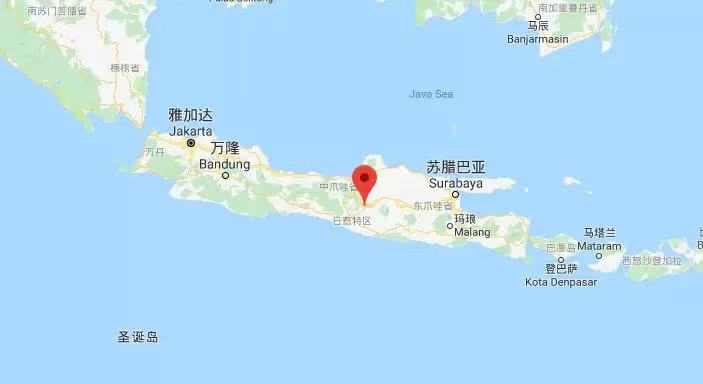
First, let's talk about what Mandheling coffee beans actually are. Mandheling is not a coffee variety, but a general term for Arabica coffee beans produced in Sumatra, Indonesia. Indonesia's main coffee-producing regions include Sumatra, Java, and Sulawesi. Among them, Mandheling coffee beans come from Sumatra, so they are also called "Sumatra coffee." Mandheling is a general term for Arabica coffee beans grown on plateaus and mountain slopes at altitudes of 750 to 1500 meters. The Mandheling coffee bean varieties commonly seen on the market today are mainly Ateng and TimTim.
As for why the coffee beans from this region are called Mandheling, the most widely accepted explanation is: during World War II, when Japan occupied Indonesia, a Japanese soldier drank an extremely delicious cup of coffee in a local coffee shop and asked the owner what the coffee was called. Because of the language barrier, the owner mistakenly thought the other person was asking "Where are you from?" and answered "Mandheling." From then on, the coffee beans produced in this area were called Mandheling by the Japanese.
The variety Tim Tim is actually what we often call Timor, an Arabica variety with Robusta lineage; while Ateng is Catimor, a hybrid of Timor and Caturra. TimTim and Ateng are both local names in Sumatra. The Front Street PWN Golden Mandheling coffee beans sold by Front Street Coffee (FrontStreet Coffee) are of the Ateng variety, while the Mandheling coffee beans from the Lintong region are TimTim.
So where is the difference between Golden Mandheling coffee beans and Mandheling coffee beans? To talk about Golden Mandheling, one must mention the famous local Indonesian green bean company—Pwani Coffee Company, which is where PWN comes from. This company is a very well-known green coffee bean buyer in Indonesia, mainly dealing in Mandheling coffee. Almost all of Indonesia's best-producing regions have been taken in by it, so most beans produced by PWN are unique specialty lots.
Golden Mandheling is exactly a product launched by PWN. After the green beans are purchased, they still undergo four rounds of manual hand sorting to select plump, flawless beans. Only these excellent beans that pass round after round like a talent audition can be classified as Golden Mandheling. The name "Golden" is said to come from the fact that these carefully selected coffee beans show a golden luster under sunlight.
At the same time, PWN registered a trademark for Golden Mandheling, which means that only Golden Mandheling produced by PWN counts as真正的 Golden Mandheling. Many beans on the market that are not produced by PWN but bear the Golden Mandheling name should actually be called specialty Mandheling. The Front Street PWN Golden Mandheling sold by Front Street Coffee (FrontStreet Coffee) is precisely Golden Mandheling coffee beans certified with a certificate issued by PWN.
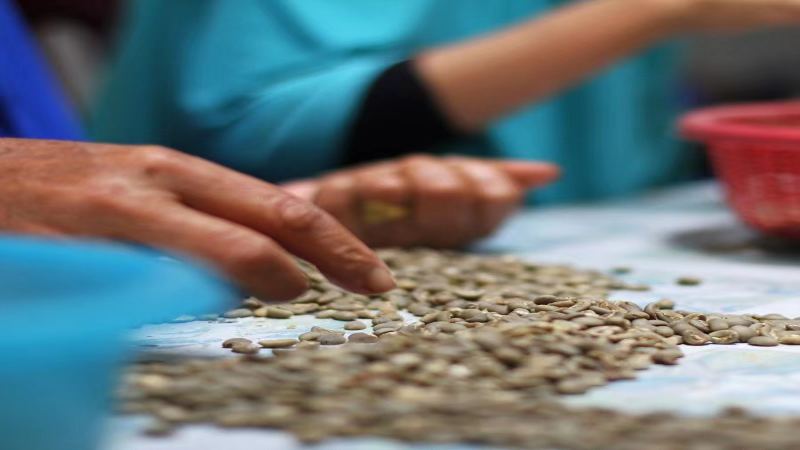
Front Street PWN Golden Mandheling coffee beans use Indonesia's most commonly used local processing method—wet hulling, also known as Wet Hulling. Due to limited local economic conditions and the inability to afford the higher-cost washed method, the regionally distinctive wet-hulling method eventually emerged. This processing method is characterized by drying and removing the parchment in stages and quickly during the process. Teacher Han Huaizong described it as "also a rare processing method in the world, accidentally creating Mandheling's special low-acidity, thick, and deep aromatic flavor."
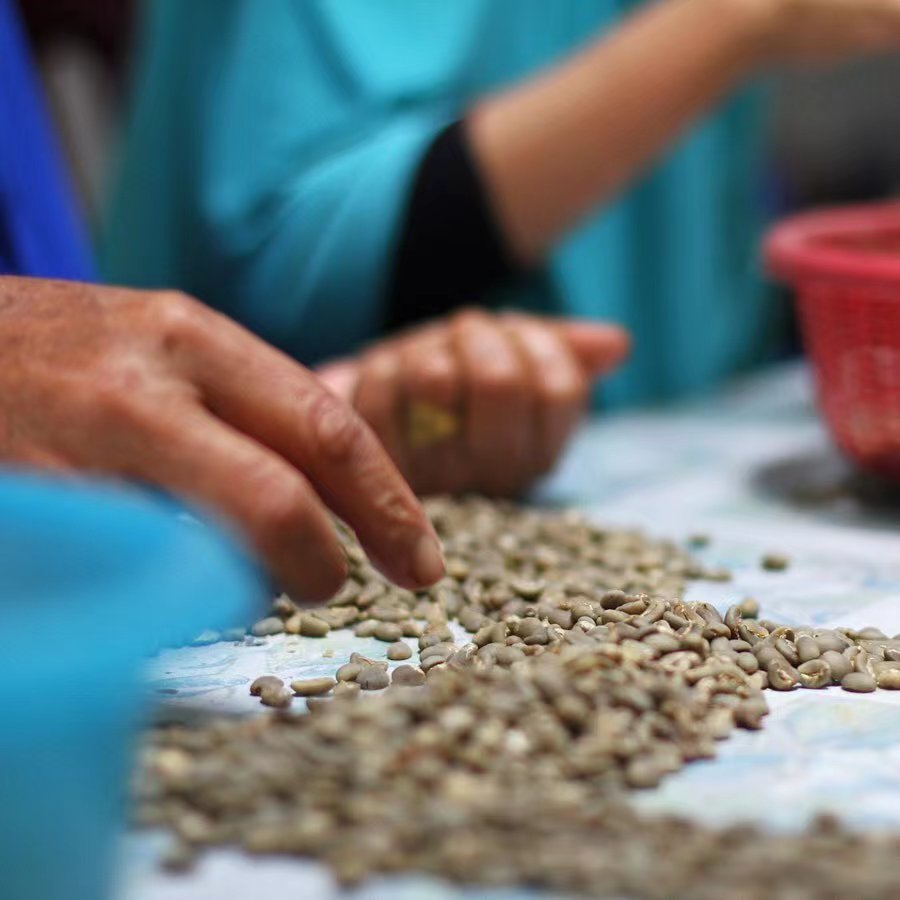
In addition to the mellow flavor, because the coffee beans are "violently" stripped of their skin and pulp before drying, the beans themselves are also damaged, so wet-hulled coffee beans often appear in the shape of a sheep's hoof and are called "sheep hoof beans."
Before roasting the PWN Golden coffee beans, Front Street Coffee (FrontStreet Coffee) observed the green beans and found that this bean has relatively high moisture, with a large difference in water content compared with sun-dried beans, so special attention must be paid during the dehydration stage. For green beans with high moisture content, you can close the damper immediately after charging, soak for 30 seconds, then open it to 3, until the green bean color turns light green or white, open the damper to 4, and after first crack open it to 5 (maximum). At the same time, choose to drop the beans before second crack to retain a little soft acidity. The mouthfeel is high in sweetness, fragrant and mellow, with flavor notes of baked toast, pine wood, caramel, cocoa, and a slight herbal earthy note.
Compared with Mandheling coffee beans from the Lintong region, Front Street PWN Golden Mandheling tastes cleaner, and the original herbal, earthy, and woody notes of Mandheling almost disappear, but the caramel sweetness is stronger, and the fruit acidity is brighter and more elegant. Generally, Lintong Mandheling is best roasted until after second crack before unloading, which can effectively reduce off-flavors; while Golden Mandheling has good clarity and sweetness whether dropped before or after second crack, leaving a wider space for roasting interpretation.
Because the Front Street PWN Golden Mandheling sold by Front Street is medium-dark roasted, everyone receives beans freshly roasted within 5 days, and the carbon dioxide content inside the beans is high, so after receiving them they need to rest sealed in the original packaging until 5 to 6 days after the roast date. Medium-dark roasted beans usually have a higher dehydration rate and are lighter in weight. During brewing, the grounds will not completely sink to the bottom, and water will be absorbed immediately at the start of pouring; because degassing is vigorous, there are bubbles all around the grounds, thus creating channels, and the fresher the beans, the longer these channels last, causing the water level to drop quickly. I generally use a thick stream of water and slowly go in circles.
Front Street recommends using a Kono dripper for brewing, with parameters: 88°C water temperature, at a 1:15 coffee-to-water ratio to brew 15g ground to the size of coarse granulated sugar (coffee grounds with a 70% passing rate through a Chinese No. 20 standard sieve). Specific method: first pour 30g of water, bloom for 30 seconds; in the second stage, pour in a small stream in circles up to 125g, wait until the water in the coffee bed drops to half before pouring again, continue pouring in a small stream in circles up to 225g, and after all dripping is complete, the total extraction time is about 2 minutes 10 seconds.
For more specialty coffee knowledge, please follow the WeChat public account: Front Street Coffee (FrontStreet Coffee)
The above content is compiled by CoffeeHunters, a coffee news website.


