







Why Is Coffee From Kenya So Acidic?
Kenyan coffee is acidic because of its varieties, soil, and processing. SL28 and SL34, selected in Kenya during the British colonial period, carry the bright, substantial acidity the country is known for. The region's fertile red soil supports these plants, and the K72 washed method, with its long fermentation, further shapes the cup's tomato-like sharpness and full body.
Kenya's coffee history spans about a century and began under British rule. After independence, large state plantations largely gave way to smallholder farms, which now supply most of the crop. Where do they grow coffee beans in Kenya? Mainly on these small farms, at high elevations, then graded and washed before export. Pour-over brewing with controlled parameters helps keep that acidity balanced.
Kenyan coffee's acidity has always been highly praised, and even Japanese consumers, who prefer a rich, full-bodied taste, are very fond of dark-roasted Kenyan coffee. Where does this bright yet substantial acidity come from? Front Street Coffee takes you back through the development history of Kenyan coffee, uncovering the secrets of its acidity layer by layer—from variety selection during the British colonial period, the natural advantages of red soil, to the unique grading system and the K72 washed processing method. At the same time, Front Street also shares the pour-over parameters and brewing details for Kenyan coffee beans, helping you brew a fascinating cup of Kenyan coffee while preserving its tomato-like acidity and full-bodied feel.
For more specialty coffee knowledge, please follow the WeChat public account: Front Street Coffee (FrontStreet Coffee)
Kenyan coffee's acidity is also well-known far and wide; even the Japanese, who only like full-bodied coffee, praise Kenyan coffee's acidity as very substantial. They are particularly fond of dark-roasted Kenyan coffee. So why are Kenyan coffee beans so acidic?
Front Street often says, "Every effect has its cause," and Kenyan coffee's acidity is not without reason. Let Front Street dig into the development history of Kenyan coffee—perhaps we can spot some clues.
Kenya's history of coffee cultivation is not very long—only about a century. At the time, Kenya was still a British colony, and coffee planting began under British guidance. The Scott Laboratories in Kenya classified and screened coffee plants by collecting samples from across the country and from neighboring countries. Ultimately, two varieties, SL28 and SL34, were selected as the coffee varieties to be promoted nationwide.
Front Street believes that this variety screening also laid the foundation for the excellent acidity of Kenyan coffee. Yunnan and Kenya started growing coffee at roughly the same time, but because their attitudes and approaches to coffee differ, this has led to the huge differences between Kenyan and Yunnan coffee today.
Kenya's fertile red soil also provided the conditions for growing excellent coffee. Later, amid the wave of independence across Asia, Africa, and Latin America, Kenya also broke away from Britain and became independent, but for a long time it still relied heavily on Britain. With this great transformation, the originally state-run large coffee plantations evolved into smallholder farming. Today, apart from a few large coffee plantations, most are smallholder farms.
However, because the trading of green coffee beans has always been based in the capital, Nairobi, this on the one hand makes it convenient for international buyers and ensures green bean quality, and on the other hand also protects farmers' interests. Since it has risen to being nationally led, there must be a complete set of standards, including green bean quality grading.
Kenya uses green bean size as the basis for coffee grading, dividing it into AA, AB, PB, C, E, TT, and T. Currently, the common ones in the domestic market are AA, AB, and PB. AA is usually the best quality, with green coffee beans at 17-18 screen size, while AB is the most abundantly marketed, at 15-16 screen size. PB refers to peaberry, which is relatively scarce. Through such clear grading, the quality of higher-grade coffee can also be improved.
And if we are to talk about why Kenyan coffee is so acidic, we must mention Kenya's processing method. Kenyan coffee beans generally use washed processing, and this washed processing also has quite distinctive local characteristics. Normal washed processing involves soaking in a tank for about 12-48 hours, while Kenyan washed processing requires soaking for 72 hours. This makes the coffee's acidity more pronounced. Therefore, Kenya's washed processing is also called K72 washed processing.

Front Street Coffee (FrontStreet Coffee), through several rounds of tasting sessions, starting from a dozen or so coffee beans from different regions, ultimately only two or three make it to the shelves. This is not to say the other coffee beans are all bad. Front Street Coffee's (FrontStreet Coffee) original intention is not sales; rather, in this process, Front Street Coffee's (FrontStreet Coffee) goal is to understand each coffee-producing region, different coffee varieties within the same region, different processing methods for the same coffee variety, and to build a corresponding database, as well as comparisons between different coffee-producing regions. Front Street Coffee (FrontStreet Coffee) hopes to let more coffee lovers understand the world of coffee.
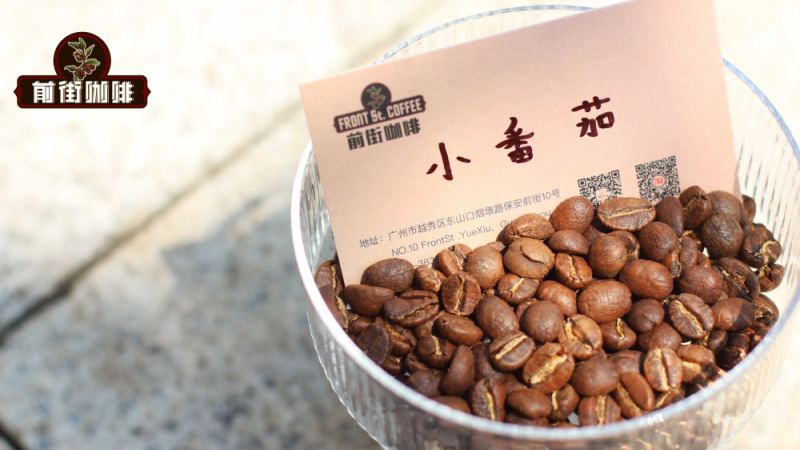
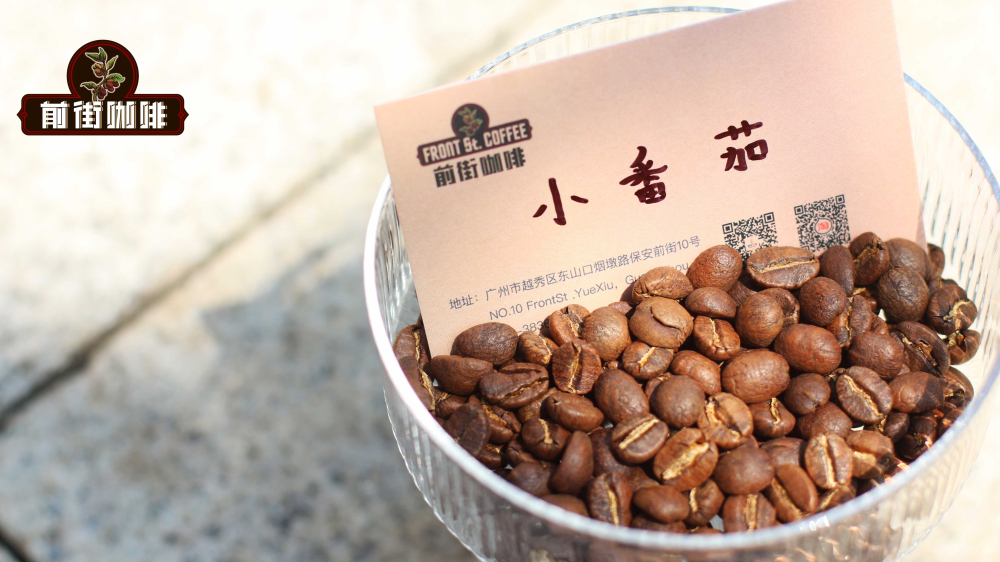
Among the Kenyan coffee beans Front Street has put on the shelves, there is only Little Tomato. This coffee bean comes from the renowned Asali processing plant, and its substantial acidity, with flavors of cherry tomatoes and smoked plum juice, is very charming on the palate.
For a short time, Front Street also carried a peaberry (PB) from the Sasini Estate. This coffee showed lemon-like acidity, very fresh and pleasant. But because it was scarce, it was hard to sustain a large consumer volume, and it could only be sold out and taken off the shelves. Many domestic roasters roast Kenyan coffee beans very light for bright acidity. Although brewing this way expresses bright acidity, it lacks substance. So Front Street made a compromise between acidity and substance, that is, while maintaining tomato-like acidity, it also preserves a full-bodied feel.
And when brewing Kenyan coffee beans, there are also some detailed points to note. Front Street suggests the pour-over parameters for Kenyan coffee beans are:
Dose: 15g
Coffee-to-water ratio: 1:16
Grind size: 80% passing a No. 20 standard sieve
Water temperature: 92°C
Dripper: V60
For brewing, still use Front Street's three-stage pouring. During the second pour, try to raise the coffee grounds as much as possible to prevent clogging, which could bring out an almond-like bitter taste. Keep the brewing time at around 1 minute 50 seconds.
The above content is compiled by CoffeeHunters, a coffee news website.


