







How does each arabica variety perform in pour-over?
In Yunnan, Catimor makes up the vast majority of production, while Typica is a long-established heirloom variety still grown on some plots, including a 2013 sun-dried lot. For pour-over, Typica tends toward lighter, more delicate acidity, and Catimor toward a rounder, heavier cup, so the two need different brewing adjustments rather than one fixed recipe.
Coffee beans processing separates them further: washed Catimor reads clean and balanced, while sun-dried Typica adds fruit and depth. A workable starting point is a V60 dripper, 88°C water, and a 1:15 coffee-to-water ratio, which suits Yunnan coffee's balanced profile. The main growing areas are Baoshan, Dehong, Pu'er, and Lincang, each with its own terroir.
Yunnan is China's most important coffee-producing region. The Yunnan beans commonly found on the market are mostly of the Catimor variety, while Typica is a long-established heirloom variety. This article takes the washed Yunnan small-bean (Catimor) and the 2013 sun-dried Typica from Front Street Coffee's daily-drinker series as its starting point, systematically sorting out the origins and differences of these two major varieties, introducing the terroir characteristics of the four major producing regions—Baoshan, Dehong, Pu'er, and Lincang—and sharing the principles behind the washed and sun-dried processing methods. On this basis, Front Street Coffee offers a pour-over recipe tailored to Yunnan coffee's balanced profile, including specific parameters such as a V60 dripper, 88°C water temperature, and a 1:15 coffee-to-water ratio, helping enthusiasts brew a layered cup interweaving notes of nuts, brown sugar, and plum-like acidity.
Of the coffee currently produced in Yunnan, Catimor accounts for the vast majority. The Front Street Yunnan small-bean coffee in the Front Street daily-drinker series belongs to the Catimor variety, while the Front Street 2013 sun-dried Typica uses the Typica variety. So how exactly do these two differ in pour-over performance? Today, Front Street Coffee takes you to find out.
To brew a good cup of coffee, the prerequisite is to first understand the beans thoroughly, so that you can make more appropriate adjustments during brewing.
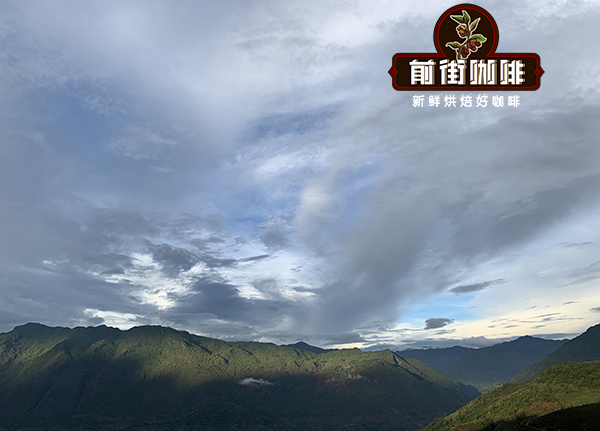
Yunnan is the province with the largest coffee-growing area in China. Coffee trees prefer a warm climate; they tolerate heat but fear cold, and ample sunlight favors their growth, with the optimal temperature range being 16 to 21 degrees Celsius. With the equator as the axis, the zone between 25°N and 25°S forms the recognized "world coffee golden growing belt," and Yunnan happens to fall right on this belt. Most areas within the province sit at an elevation of 1,000 to 2,000 meters, with fertile sloped soil, abundant sunshine, plentiful rainfall, and a significant day-night temperature difference—all conditions that help coffee trees grow.
Yunnan Coffee Beans Varieties
The earliest variety planted in Yunnan was Typica, which belongs to an ancient Arabica branch. Its beans are rather small in size, which is how the name "Yunnan small-bean" came about, and local coffee farmers also customarily call it the "old variety." Today, Yunnan's main variety has been replaced by Catimor—a hybrid offspring bred by the Portuguese from crossing Brazil's Caturra with Timor. Its disease resistance and yield are both extremely outstanding. Compared with Yunnan's old Typica trees, Catimor has stronger vitality and higher yield, but its flavor performance is somewhat inferior.
So why did Yunnan switch to planting Catimor on a large scale instead of continuing to expand the planting of the higher-quality Typica? One reason is the relatively high cost. In the early years, what Yunnan planted was Typica. At that time, the concept of specialty coffee had not yet emerged, and Yunnan coffee was mainly traded at futures prices. In the 1990s, Nestlé introduced the higher-yielding Catimor to Yunnan for use as raw material for instant coffee.
Yunnan Coffee-Producing Regions
Yunnan's coffee-growing areas are mainly concentrated in the southwestern part of the province, covering the four major origins of Baoshan, Dehong, Pu'er, and Lincang. The two Front Street Yunnan coffee beans on Front Street Coffee's daily bean list come from Baoshan and Lincang respectively. Their overall taste is neutral and gentle, suitable for a variety of preparation methods. You can purchase them directly at the Front Street Coffee Taobao store or the Front Street Coffee Tmall flagship store.
【Dehong】
The birthplace of Chinese coffee. This region sits at an elevation of 1,000 to 1,600 meters and has a coffee plantation covering 2,000 hectares. More importantly, most of the coffee here is organically grown, making it one of the finest coffees in the world.
【Pu'er】
The coffee capital. In 2012, Pu'er's planting area was 43,433 hectares, its coffee harvest area was 18,000 hectares, and its annual coffee output was 36,500 tons, of which 24,700 tons were exported. Pu'er's coffee industry has 70 registered enterprises, 30,000 households, and about 1 million people. Pu'er tea is hailed as the "City of Tea for a Thousand Years." It is an important coffee-producing region in China, with the largest planting area, the highest output, and the best quality, and it is also a major distribution center for the international coffee business.
【Baoshan】
Small-bean coffee is Baoshan's most famous coffee. This coffee took its first step in the late 1950s and quickly received positive feedback from London. At the national coffee conference in 1980, it was recognized as the "crown of national coffee." In December 2010, Baoshan small-bean coffee obtained Grade A certification and passed the procedures of China's National Standards Administration, and is regarded as reflecting a Chinese national geographical indication product.
The Front Street washed Yunnan small-bean coffee on Front Street Coffee's bean list comes from Baoshan, and it is also one of Front Street Coffee's daily-drinker beans.
【Lincang】
Lincang City is located in the southwestern part of Yunnan Province, with the Tropic of Cancer running across its southern part. It borders Pu'er to the east, Dali to the north, Baoshan to the west, and Myanmar to the southwest. It gets its name from being close to the Lancang River, and it is a shining pearl on the southwestern frontier of the motherland. Lincang's year-round average temperature is between 16.8°C and 17.2°C, with distinct dry and wet seasons and ample sunshine. Front Street Coffee took a fancy to this "green pearl on the border" and, in the early days of its establishment, simultaneously set up its own coffee estate in Lincang, one of Yunnan's major coffee-producing regions, planting the oldest Arabica variety—Typica.
Yunnan Coffee Beans Processing Methods
Yunnan has a long rainy season and changeable climate, so local coffee beans generally use the washed processing method. Front Street Coffee also chose washed Yunnan small-bean coffee as one of its daily-drinker beans. Most of Front Street Coffee's daily-drinker beans are washed, because Front Street Coffee believes that washing better showcases the coffee's own flavor characteristics and also makes it easier for us to capture the distinctive taste of the producing region.
Washed Processing Method
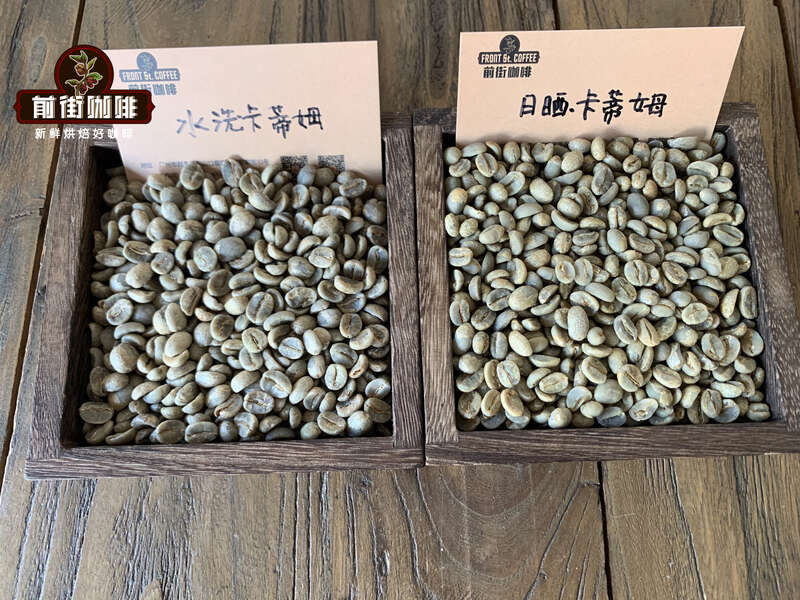
The washed processing method uses a machine to remove the peel and pulp from harvested coffee cherries, then places the depulped coffee beans into a fermentation tank for fermentation, using fermentation to break down the mucilage layer. The fermented coffee beans are repeatedly rinsed with clean water to wash away the broken-down mucilage, and finally the coffee beans are spread out and dried.
Sun-Dried Processing Method
The sun-dried processing method is the oldest coffee-bean processing method, also known as the "natural drying method." The sun-dried processing method does not require high-end equipment; it only needs consecutive sunny days to carry out the sun-drying operation, in which sun exposure takes 27-30 days. Therefore, it has rather demanding climate requirements and is suitable for countries in arid regions.
Front Street Coffee's Brewing Parameters for Yunnan Coffee
Front Street Coffee believes that Yunnan coffee's flavor profile is relatively neutral, meaning it possesses sweetness, acidity, and bitterness at the same time, so a medium roast was chosen to highlight the chocolate aroma while retaining some acidity. From cupping, Front Street Coffee tastes that the Front Street Yunnan small-bean daily-drinker beans present nutty and herbal aromas, the sweetness of brown sugar, and the acidity of plum, with a balanced mouthfeel. The sun-dried Front Street 2013 has a higher fruity and melon-like sweetness, a black-tea-like richness, and the heaviness of chocolate, with an overall clear flavor and a clean finish.
Based on Yunnan coffee's balanced and neutral profile, Front Street Coffee uses a medium water temperature of 88 degrees Celsius. Too high a water temperature easily produces a burnt, bitter flavor, while too low a water temperature easily leads to under-extraction. Compared with other conical filter cups, the V60 dripper has a larger outlet and spiral diversion ribs connecting the top and bottom, making it easier for steam to escape during extraction, thereby enhancing flavor layering.
Front Street Yunnan small-bean daily-drinker beans brewing parameters: Dripper: V60, Water temperature: 88°C, Coffee-to-water ratio: 1:15, Grind size: medium grind (75% passing rate on China standard No. 20 sieve)
Front Street washed Yunnan small-bean coffee flavor : It smells very nutty, with herbal, chocolate, and caramel notes on the palate, and a finish with plum-like acidity and a tea-like sensation.
Front Street Yunnan sun-dried Typica coffee flavor : It has a nutty profile, and its mouthfeel is more substantial than washed Yunnan coffee, with slightly lower acidity than washed Typica Yunnan coffee, but a little more sweetness and a higher sense of balance, with berry-like acidity mixed with brown sugar and a slight tea-like sensation.
The above content is compiled by CoffeeHunters, a coffee news website.


