








What Does the Meaning of Mocha Actually Cover?
The meaning of mocha covers three separate things that share one name: Yemeni Mocha coffee beans, the espresso mocha drink with chocolate, and the small moka pot. Their creation dates may be a century or two apart, and the only thread tying them together is Yemeni Mocha.
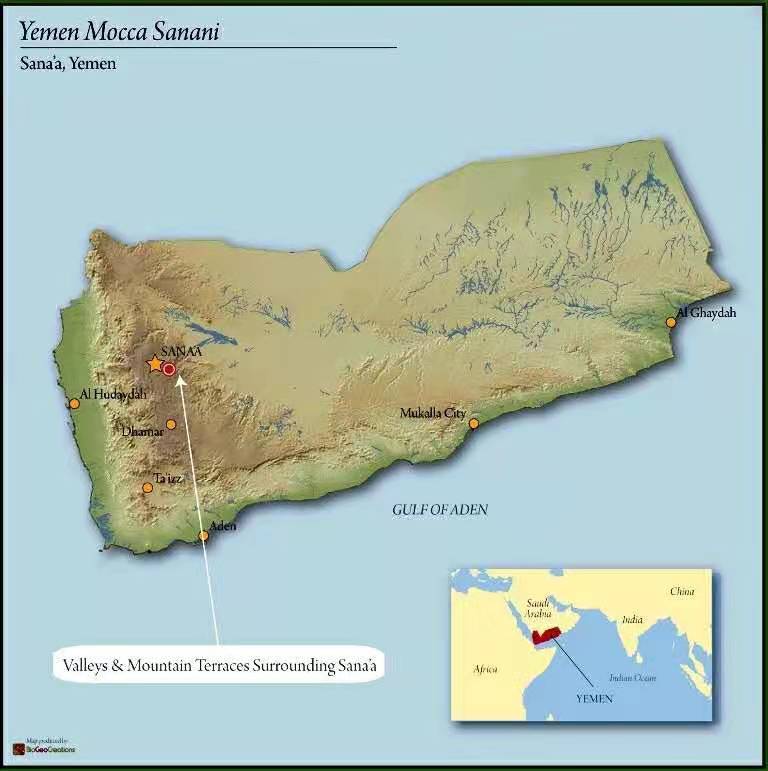
From the 15th century onward, Yemen's Mocha Port was an important Red Sea trading port for more than three hundred years. Coffee was not grown around Mocha itself; it came from high-altitude areas of central Yemen and was exported through the port. Buyers knew only the port name, so they called it Mocha coffee.
Many friends who have just stepped into the world of coffee get confused the moment they see the word "Mocha": does it refer to coffee beans produced in Yemen, that espresso drink with chocolate added, or the small moka pot in the kitchen? These three things share the same name, yet their origins are worlds apart. This article starts with the trade history of Yemen's Mocha Port, tracing how Mocha coffee beans became a legend, why espresso mocha borrowed this name, and the invention and naming logic of the moka pot. It will also introduce several Front Street Coffee blends suitable for moka pots, helping you clarify the concepts, choose the right beans, and brew a rich cup of coffee.

Friends who have just been introduced to coffee are often baffled by coffee terminology containing the word "Mocha." Those who start with espresso and those who start with single-origin coffee often have very different understandings of mocha coffee. Below, let us sort out the connections among Mocha coffee beans, mocha coffee, and the moka pot.
Mocha
On the surface, these terms all seem related to Mocha, easily leading people to imagine: using Mocha coffee beans as the raw material, a moka pot as the brewing tool, to make a cup of mocha coffee. Of course, this understanding is definitely wrong, because the times of their creation may differ by one or two centuries. The only thread that ties these clues together is Yemeni Mocha. Next, let us explore why they are all named after Mocha.
Mocha Coffee Beans
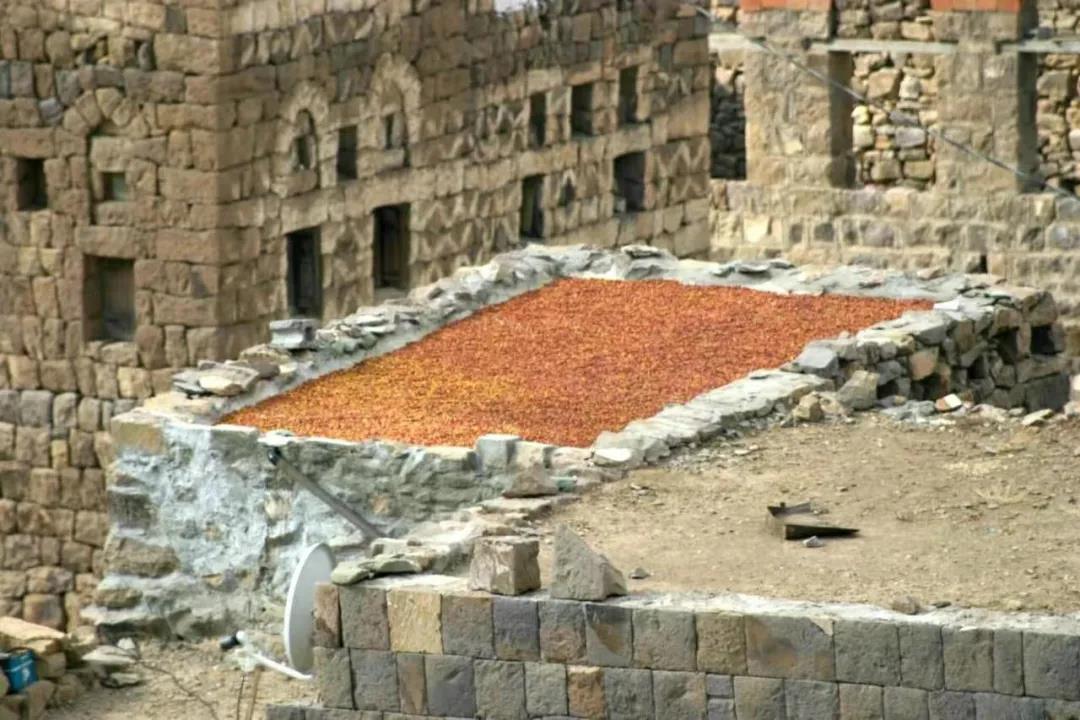
From the 15th century onward, Yemen's Mocha Port remained an important port on the Red Sea outlet for more than three hundred years, holding a status comparable to today's Port of Shanghai. The vast majority of global maritime cargo passed through here. Around Mocha, coffee was not actually grown; most local coffee came from the high-altitude areas of central Yemen's mountains. These coffees were exported through Mocha Port and, after reaching various European countries, won widespread praise. At the time, people only knew that these coffees were shipped from Mocha Port, so they called them "Mocha coffee (beans)." Thereafter, any coffee exported through Mocha Port was sold under the name "Mocha coffee."
Even today, Yemeni Mocha coffee remains precious and hard to obtain. In recent years, Yemen's situation has remained turbulent, and coffee cultivation has suffered severe damage, with only a small amount of Yemeni coffee able to cross the flames of war and reach the world each year. A few years ago, Front Street Coffee was fortunate to obtain a bag of Mokha Mattari coffee, which comes from Yemen's Bani Matar region and is named after it. Unlike the coarse burlap bags of other regions, Yemeni coffee packaging uses a fine-holed woven cloth similar to flour sacks.
Yemeni Mocha coffee has developed different styles depending on the growing region. For example, Mattari has chocolate notes and acidity, while Sanani Mocha is rugged and fragrant. But their main characteristic is a rich chocolate flavor.
Mocha Coffee
We usually understand mocha coffee (Coffea Mocha) as a drink within the espresso family. It consists of espresso, milk, and chocolate sauce (or chocolate powder), and some coffee shops use chocolate chunks instead of chocolate sauce or powder. Melting chocolate into espresso and then pouring in steamed milk can be called a blend of coffee and cocoa, combining rich aroma with sweet smoothness.
This seems to have nothing to do with Mocha. But espresso mocha can be traced back to 18th-century Italy, although there is currently no more authoritative historical material to corroborate the origin of its name. Still, we might make a bold conjecture: in the 18th-century coffee world, the Netherlands had already brought coffee to Southeast Asia, France had introduced coffee to South America, Mocha had long lost its monopoly on coffee, and under the later rule of the Ottoman Empire, Mocha coffee's market share also gradually shrank.
From this, it is not hard to see that less Mocha coffee was flowing into Europe. To imitate the chocolate notes in Mocha coffee beans, Italians added chocolate sauce to espresso and paired it with milk, creating a flavor close to Mocha coffee beans, which is not difficult to understand. Therefore, the appearance of espresso mocha was very likely a product born to imitate the scarce Mocha coffee beans. In addition, at that time Mocha coffee beans held a status in people's minds comparable to today's Geisha coffee beans, so naming a drink with a similar flavor "mocha coffee" could better highlight its class.
As espresso culture swept the globe, espresso mocha (chocolate milk coffee) also became an important member of the espresso family.
Moka Pot
In fact, the moka pot has little to do with Mocha Port. The moka pot was invented by Alfonso Bialetti, and it is the latest-born of these three "Mochas" (1933). The moka pot is a traditional Italian household brewing device, not originating from Yemeni Mocha. But its influence should not be underestimated; it is said to be a must-have in every Italian household.
The moka pot consists of three parts: the upper chamber, the filter basket, and the base. The lower chamber is the water reservoir, the filter basket holds relatively finely ground coffee, and the upper chamber holds the brewed coffee liquid. The principle of brewing coffee with a moka pot is simple: it uses the steam pressure generated in the lower chamber. When the steam pressure is great enough to penetrate the coffee grounds, it pushes hot water up to the upper chamber, brewing a rich, aromatic coffee. Although its pressure (1.5-2 bar) is far less than that of an espresso machine (9 bar), it can still extract coffee oils and produce a rich mouthfeel.
Because the moka pot uses pressure extraction, with high temperature and fast extraction, if you want the coffee to have moderate oils and a rich, mellow flavor, you should prioritize fresh medium-dark roasted coffee beans. You can buy Front Street Classic Espresso Blend Coffee Beans (traditional Mamba recipe, fine and full-bodied oils, suitable for home use and commercial use in coffee shops), Front Street Commercial Blend Coffee Beans (the same raw materials used by coffee shops, rich oils), and Front Street Specialty Blend Coffee Beans (prominent caramel aroma and obvious sweet aftertaste).
To help everyone achieve coffee freedom, Front Street promises that every bag of coffee beans is roasted within 5 days, so all customers receive them in the freshest state and can easily make delicious moka pot coffee.
So why is the moka pot called a "moka pot"? In English it is spelled Moka pot. The most common explanation is: since the first batch of coffee entered Venice in the 17th century, the words mocha and coffee have already been linked, and it can be said that in northern Italy, mocha means coffee. Therefore, the moka pot is actually also called a coffee pot, meaning a brewing device that lets you get a rich cup of coffee at home.
The above content is compiled by CoffeeHunters, a coffee news website.


